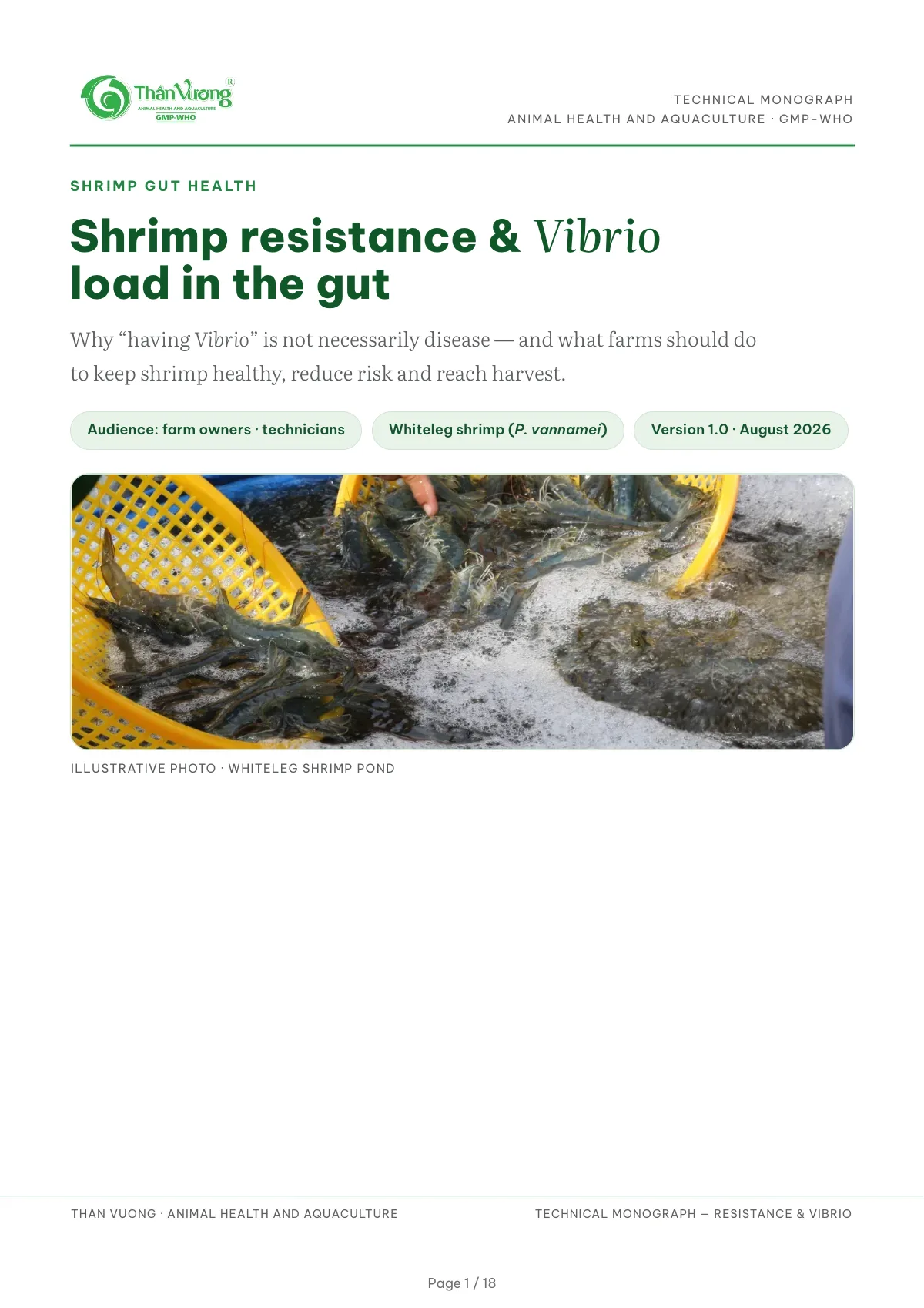
Shrimp resistance & Vibrio load in the gut
Why “Vibrio present” does not always mean disease — and what a farm should do to keep shrimp healthy and finish the crop. An 18-page technical monograph.
Read article

Research, practical guidance and knowledge for every stage of your production cycle.
Why “Vibrio present” does not always mean disease — and what a farm should do to keep shrimp healthy and finish the crop. An 18-page technical monograph.
Read article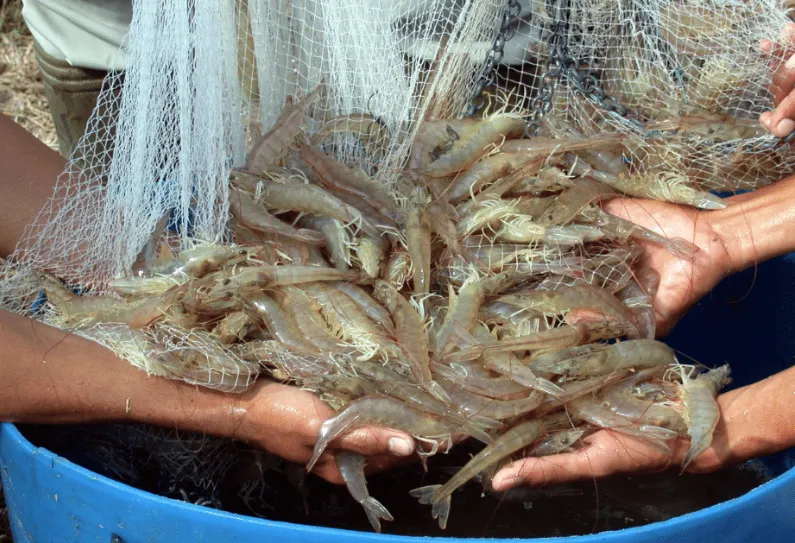
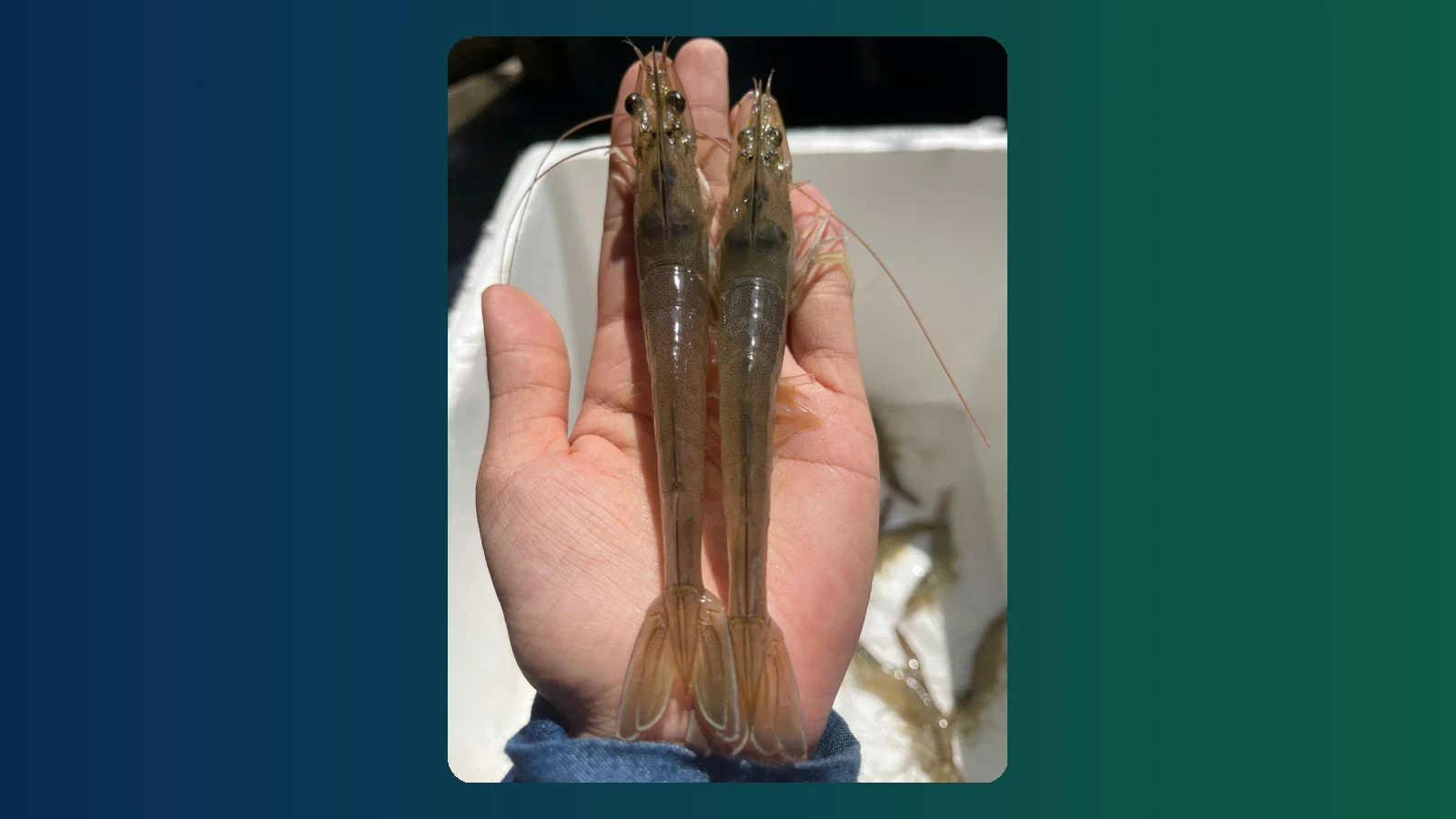
Choose a concern to explore checks and practical guidance.
245 articles in the full library
Showing 12 / 245 articles · All years
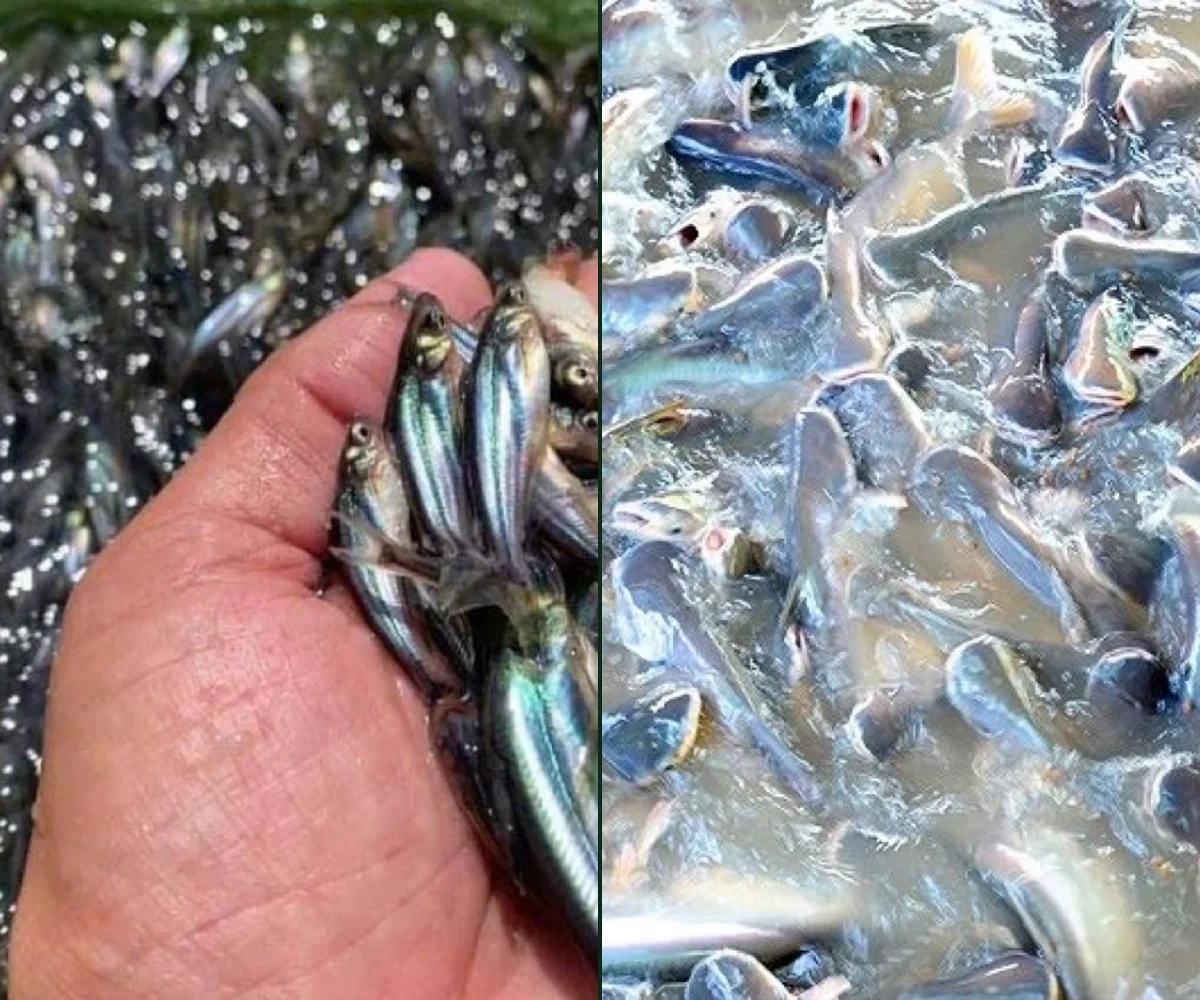
A trial published on 30 October 2026: adding 2 g/kg probiotic to feed containing a digestive enzyme cut FCR in 10 g catfish fingerlings from 1.60 to 1.33 over 90 days; higher doses did no better. In grow-out, 28% protein feed beat 32% on FCR, while 8% fat built up belly fat. Plus two trials on survival.
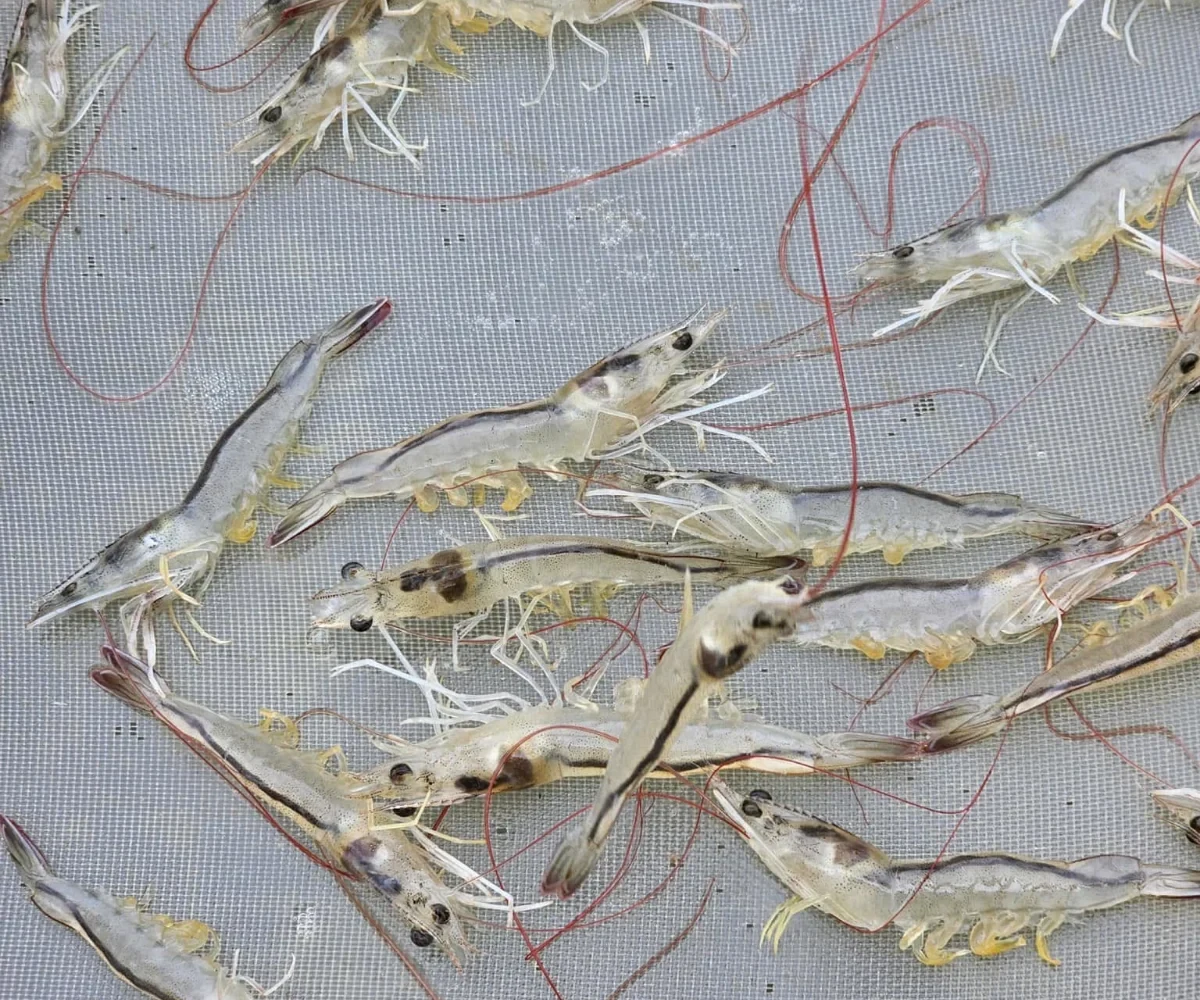
Research & trialsA review of 2021–2026 research: in Chinese outbreaks the white strings were mostly EHP spores; in Indonesia and China some Vibrio species surge in white-feces guts; water at 28–36 °C raises the risk. In the laboratory, shrimp needed both EHP and Vibrio to produce white feces.
Research & trialsA Ningbo University (China) team looked for what healthy shrimp guts have and white-feces guts lack, then fed it back for 14 days before challenge. Four beneficial strains cut deaths from 30.4% to 5.2% (2024); pyruvic acid and glutamine cut them from 45.2% to 12.7% (2026). Results from 50-litre tanks with a Vibrio challenge; no pond trial yet.
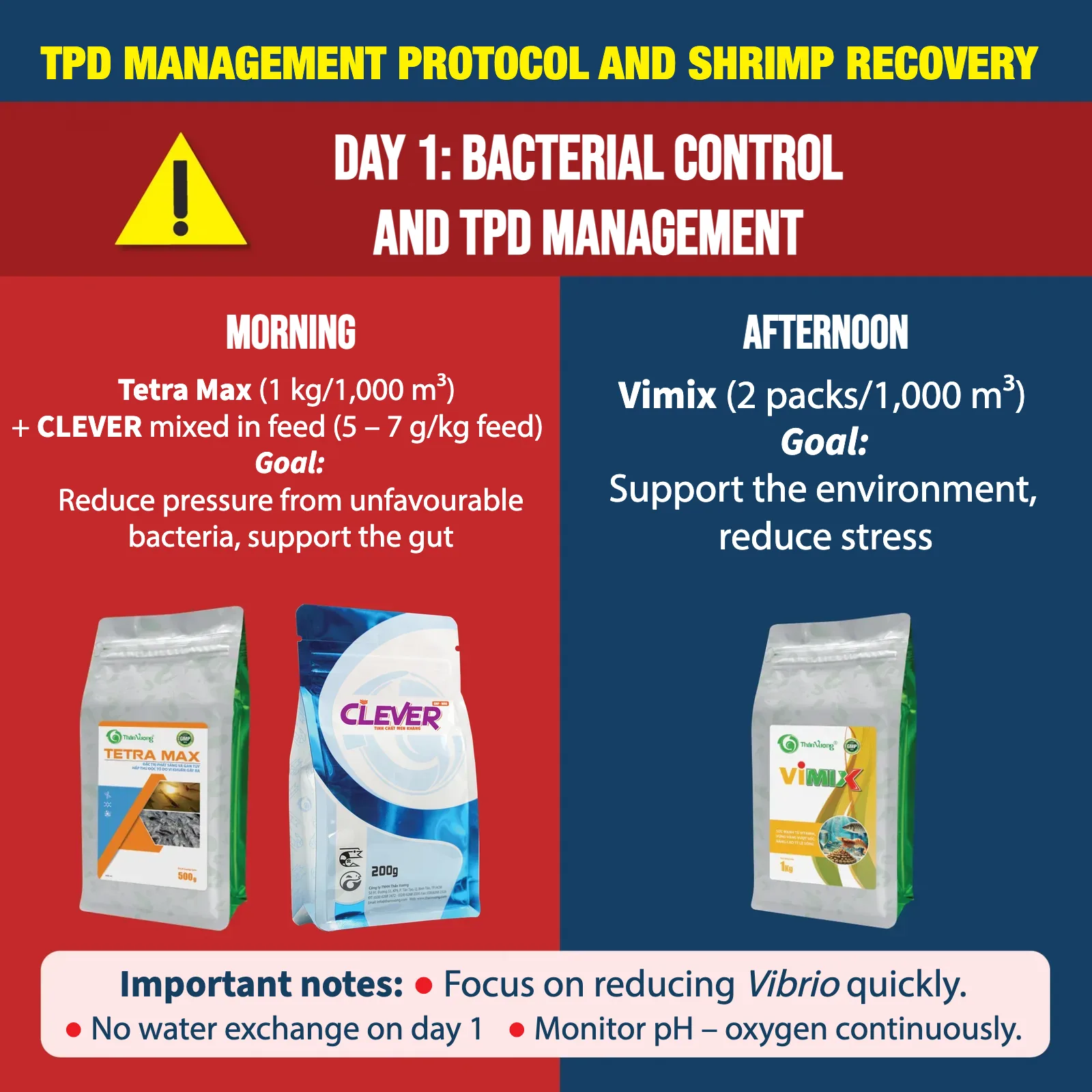
Research & trialsA review of 2013–2026 research: EMS (AHPND) is caused by the PirA–PirB toxin pair, TPD by the VHVP-2 protein. The toxin genes sit on plasmids that move between Vibrio species, so a TCBS Vibrio count cannot tell you whether a toxic strain is present.
Technical article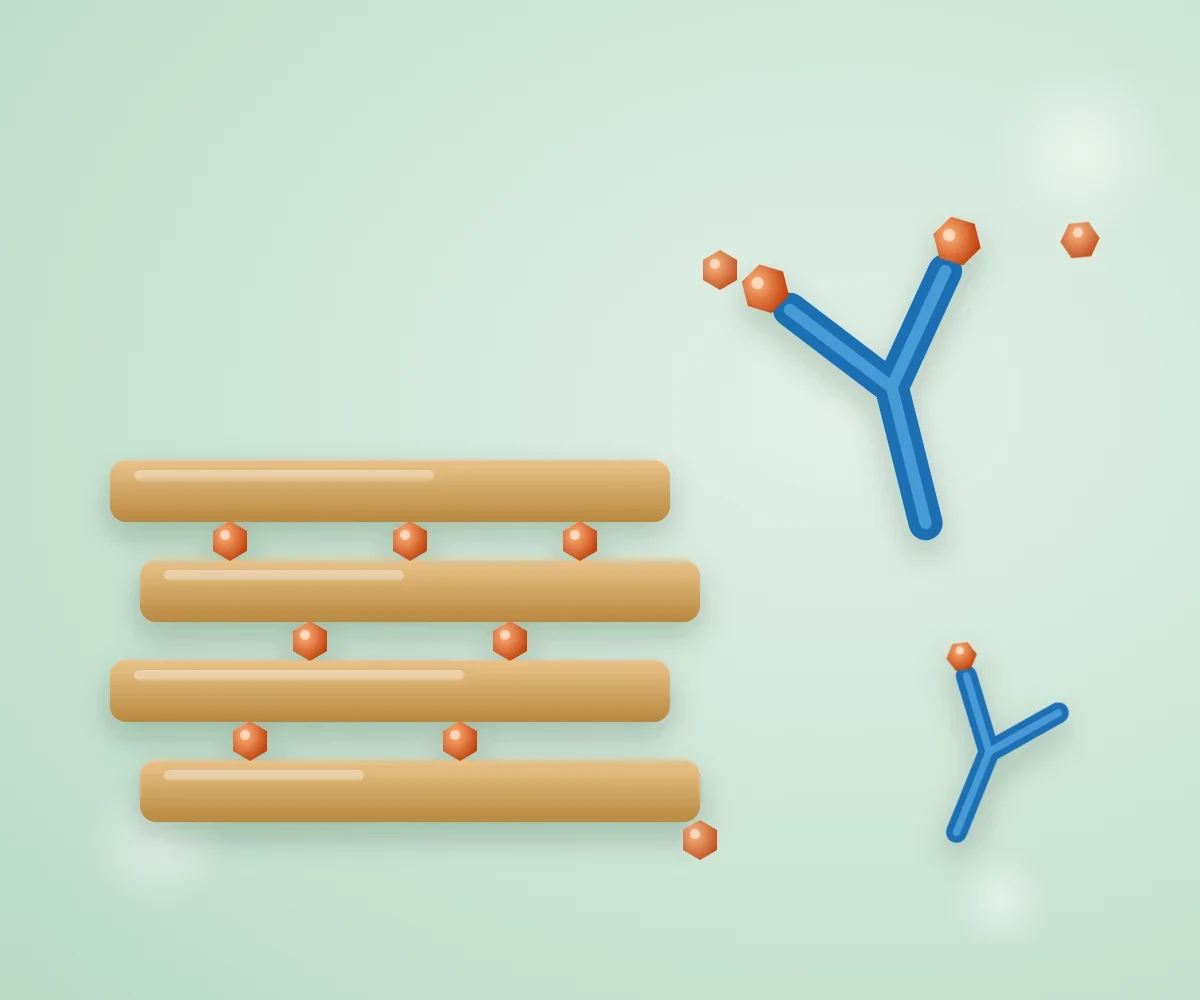
A review of 2019–2026 research: montmorillonite clay at 2.5–5 g/kg feed raised whiteleg shrimp survival to 83–94% versus 40% after an AHPND challenge; antibodies in feed protected shrimp in lab tanks; for TPD there are only small-flask anti-virulence trials. All were used before infection, and there is no pond dose yet.
Research & trials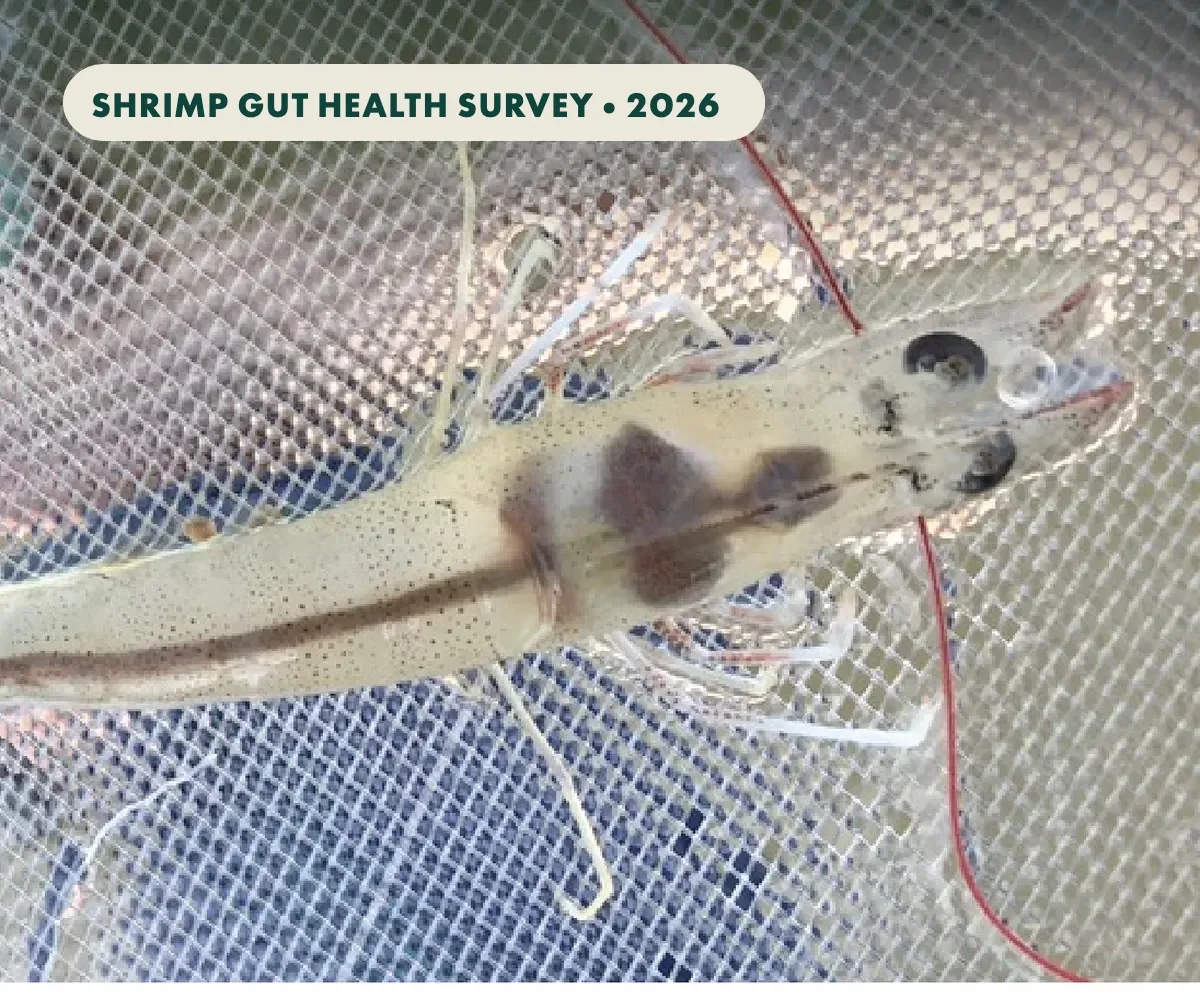
A survey of more than 110 shrimp farms in China, Vietnam, Thailand and Indonesia, with over 5,000 gut samples: 60% of shrimp had poor or critical gut health; those with good gut scores were about 20% heavier on day 60.
Research & trials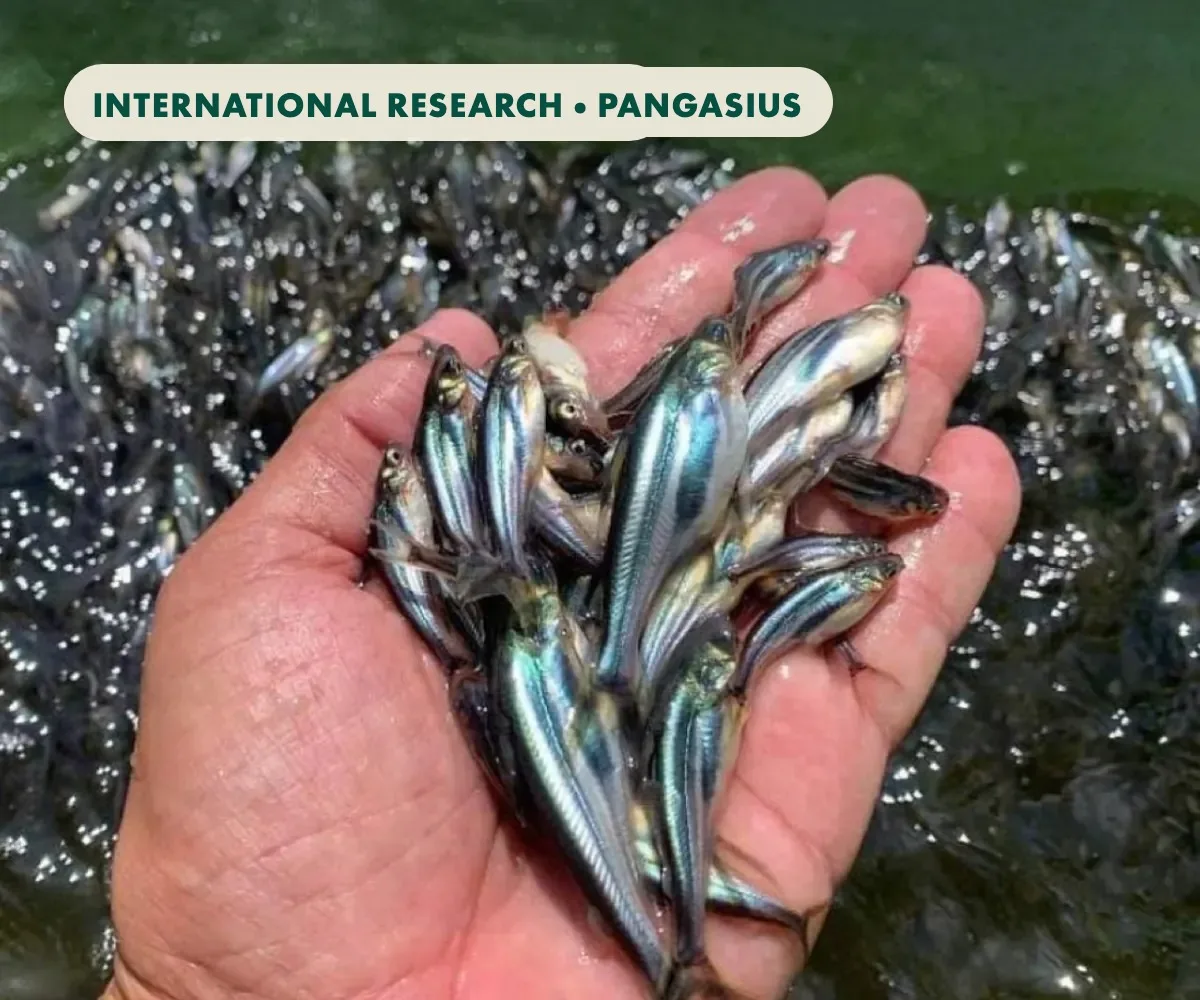
A summary of three 2026 scientific reviews: shrimp larvae need stage-specific nutrition, yeast must be the right form at the right dose, and tilapia disease prevention starts with daily management.
Research & trials
After rain, Mg, K or alkalinity reads below the table: how much is enough? The 1 mg/L × 1,000 m³ = 1 kg rule, what shrimp actually need according to published trials, and a worked 3,600 m³ pond example that needs only about 36 kg of KCl and 61 kg of sodium bicarbonate for the first step.
Technical article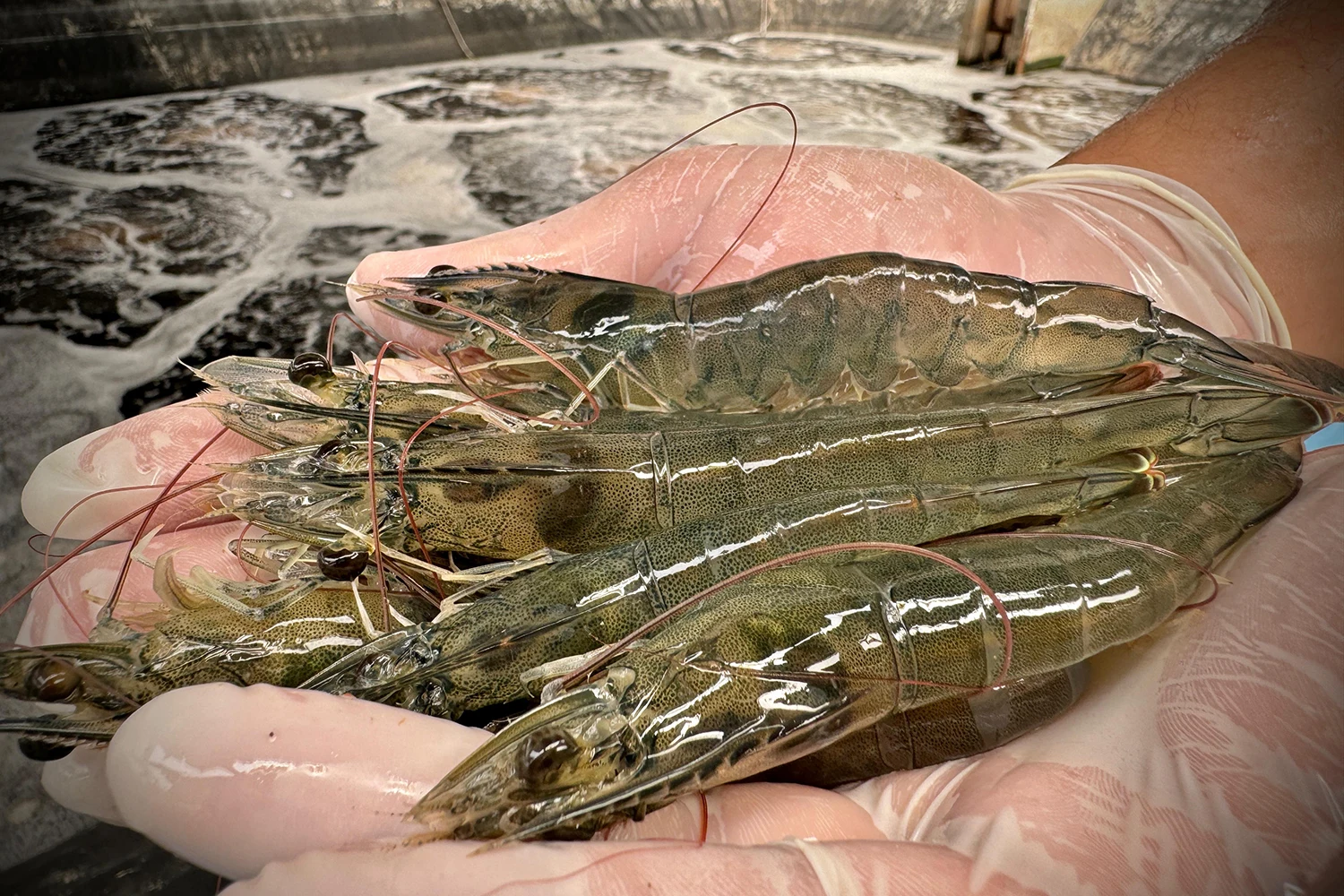
Underwater acoustic sensors can add data on feeding activity that helps farmers adjust their automatic feeders. The technology’s value still has to be verified in the pond, through feed use, growth and environmental conditions.
Practical guidance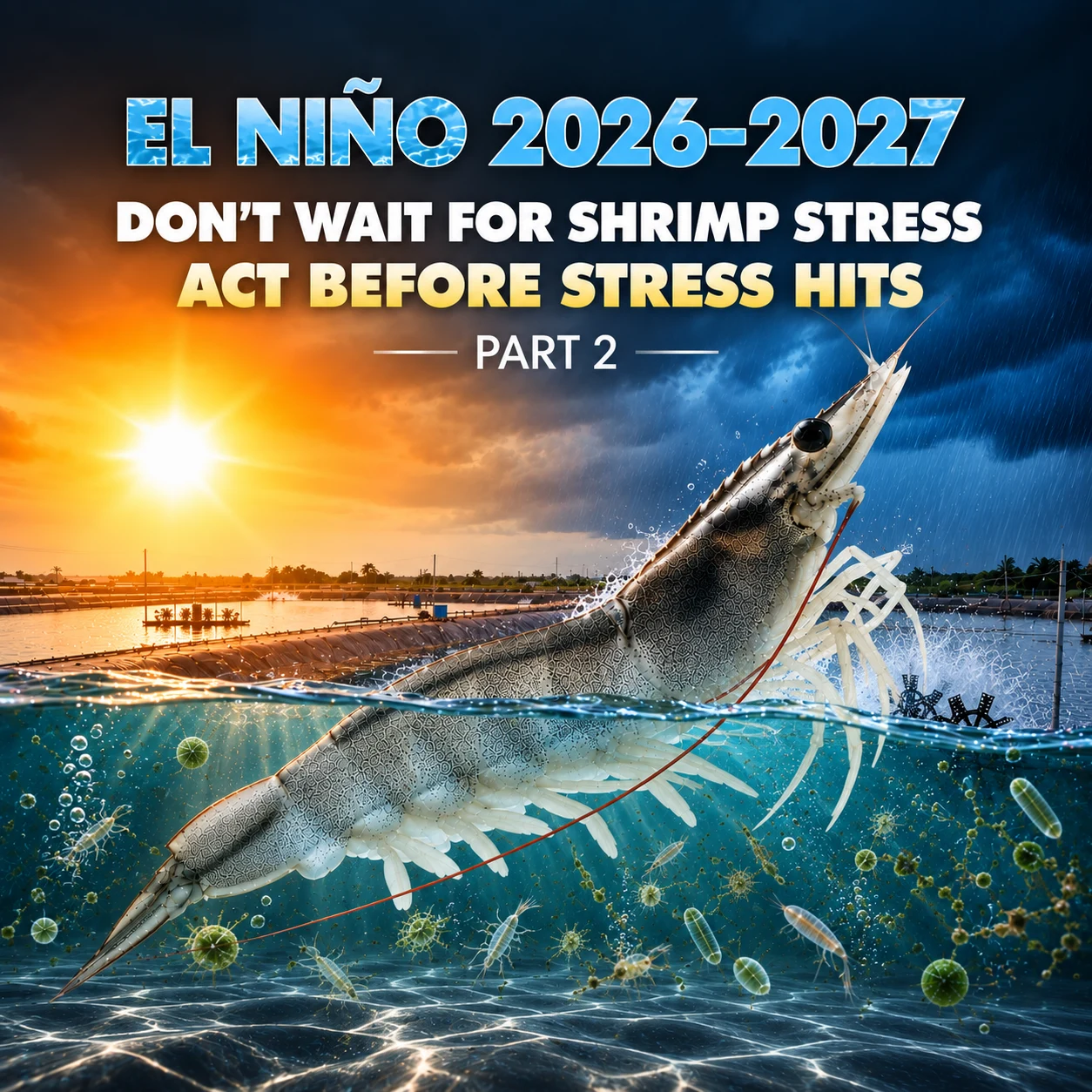
Instead of asking "what do I dose once shrimp are stressed?", the right question is "how much buffer does my pond have left?" This article covers the 9 buffers shrimp farmers should prepare before El Niño 2026-2027 shifts the weather: oxygen, pH, alkalinity, salinity, dietary minerals, algae, bottom organics, feed and backup water — plus a before/during/after-stress priority table.
Technical article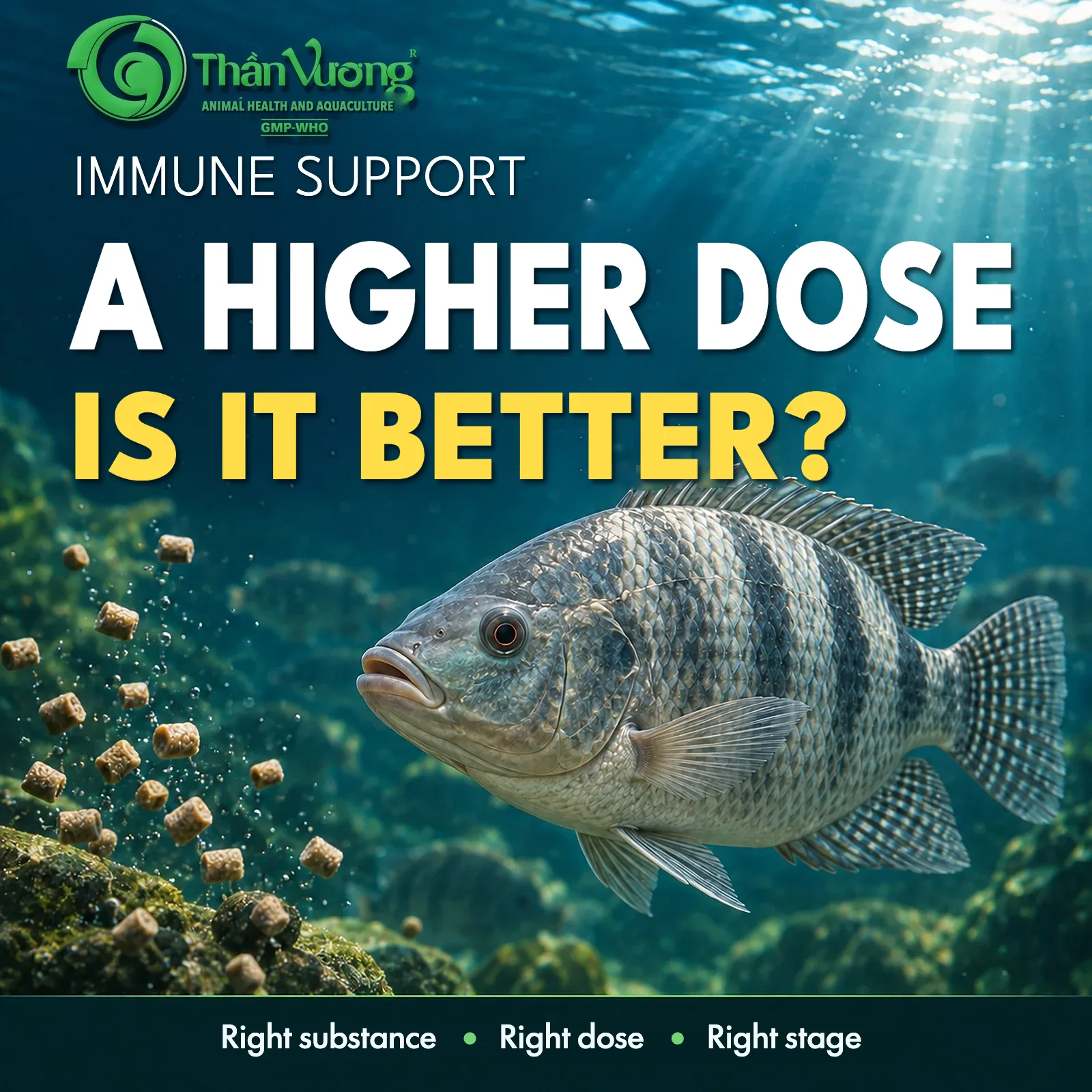
Supporting fish immunity requires the right active ingredient, the right dose, and the right timing for each growth stage. When choosing a supplementation program, farmers should weigh technical evidence, pond conditions, and economic return together.
Technical articleCompare water readings and estimate mineral supplementation.
02Cross-check samples, feeding and biomass within the same period.
03Explore feeding references by stage and adjust to pond observations.
04Track feed, costs and crop results. Vietnamese-language app.
Have your water readings, days of culture and feeding observations ready for a more specific discussion.
Aquaculture technical assistant