Working hours: Mon - Fri | 08:00 - 17:00HOTLINE: 0867 95 7568
Technical Article

Which PCR test catches EHP best? Six assays compared by the University of Arizona

A Scientific Reports study (5 May 2026) compared six real-time PCR assays for EHP head to head: four reached 100% sensitivity, two missed 10–20% of infections. A new assay targeting the spore wall protein gene (SWP) was both sensitive and specific to EHP.

Technical articleShrimpNovember 10, 2026
Click to listen to an AI-narrated summary
Full Article
Which PCR test catches EHP best? Six assays compared by the University of Arizona

A study published on 5 May 2026 in Scientific Reports compared six real-time PCR assays for EHP head to head. A new assay targeting the spore wall protein gene (SWP) was both sensitive and specific to EHP.

Why testing matters

EHP causes long-running growth retardation and cumulative losses rather than acute mortality. Histology can miss light or patchy infections, which makes PCR the main tool for screening post-larvae and monitoring ponds.
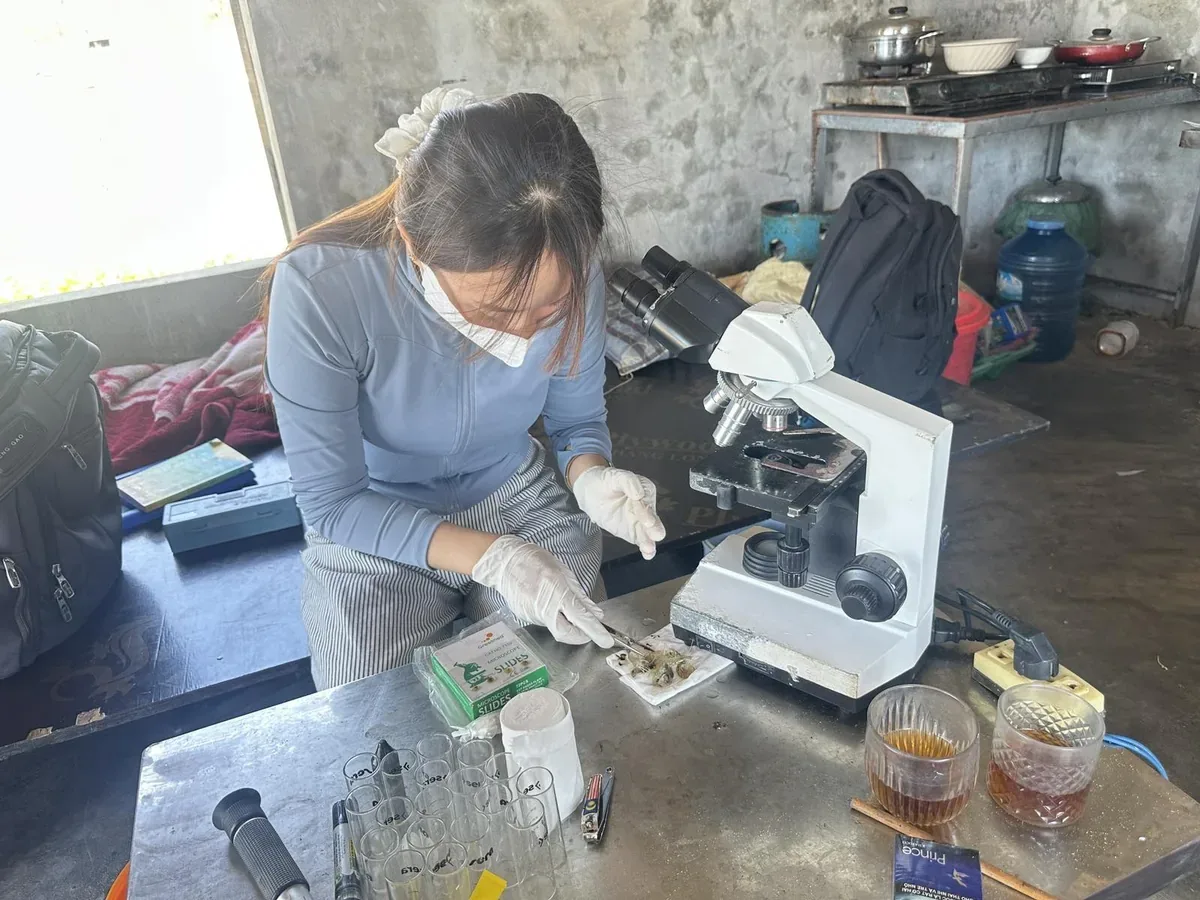
Examining shrimp samples on the farm
Examining shrimp samples on the farm. Light or patchy infections are easily missed, so PCR is needed to confirm them. Photo: Than Vuong.

Several PCR assays target different EHP genes, but until this study nobody had compared them directly. The World Organisation for Animal Health (WOAH) lists EHP as an emerging pathogen.

What the team did

The Aquaculture Pathology Laboratory at the University of Arizona (USA) evaluated six TaqMan assays within the WOAH validation framework: three published assays (SSU rDNA, β-tubulin, NFS1), two in-house assays (DNA polymerase, ATP/ADP translocase) and one newly designed assay (SWP).

The assays were tested on specific-pathogen-free (SPF) whiteleg shrimp infected with EHP through feed. Samples were taken on days 15, 30 and 45 after exposure, 10 shrimp each, plus 10 controls, 40 samples in all. The team also checked for cross-reaction with other pathogens such as white spot (WSSV), IHHNV, acute hepatopancreatic necrosis (AHPND) and NHP.

Results

Forest plot of diagnostic sensitivity with 95% confidence intervals: SWP, SSU rDNA, NFS1 and DNA polymerase 100% (88.4–100); β-tubulin 90% (73.5–97.9); ATP/ADP translocase 80% (61.4–92.3)
Diagnostic sensitivity of six qPCR assays on 30 infected shrimp; dot = estimate, bar = 95% confidence interval (redrawn by Than Vuong from Dinh-Hung et al., Scientific Reports 2026).
Assay (target gene)Diagnostic sensitivityNotes
SWP (new)100%EHP only; most sensitive at low infection levels
SSU rDNA100%Sensitive at low levels, but also amplified a different Enterocytozoon species
NFS1100%PCR efficiency less stable between run days
DNA polymerase100%Stable
β-tubulin90% (27/30)Missed some positives; PCR efficiency out of range
ATP/ADP translocase80% (24/30)Missed the most positives; PCR efficiency out of range

All six assays reached 100% specificity on 10 SPF shrimp and detected EHP at 10 gene copies per microlitre. None cross-reacted with the common shrimp pathogens tested, except that SSU rDNA also picked up a related microsporidian. The authors therefore conclude that the SWP assay currently gives the most specific result and can make EHP surveillance more accurate.

Limits of the study: this was a tank infection trial with a small sample (hence the wide confidence intervals in the chart). The assays have not yet been validated on pond samples from many sites.

What it means for farmers

PCR results are not the same everywhere. A weak assay can report negative when shrimp are already infected. When sending post-larvae or shrimp for testing, choose a reputable laboratory that uses validated methods. Testing post-larvae before stocking remains the first and most important step against EHP.

Need help with an EHP prevention plan for your ponds? Contact Than Vuong’s technical team, hotline +84 867 957 568.

Sources

  1. Dinh-Hung N., Mai H.N., Dhar A.K. Development and comparative evaluation of TaqMan real-time PCR assays for detecting Enterocytozoon hepatopenaei (EHP) in penaeid shrimp. Scientific Reports 2026;16:20648 (published 5 May 2026). DOI 10.1038/s41598-026-52052-2. Open access, CC BY-NC-ND 4.0: this article reports the results only and does not translate or adapt the paper.

This article is a synthesis and interpretation by Than Vuong, not a translation. Numbers come from the original articles; product promotion in the originals has been left out. Charts were redrawn by Than Vuong from the numbers and the 3D models were built by Than Vuong; the originals’ own figures and tables are not reproduced.

Quick Q&A

Frequently asked questions on this topic

What does "Which PCR test catches EHP best? Six assays compared by the University of Arizona" cover?

A Scientific Reports study (5 May 2026) compared six real-time PCR assays for EHP head to head: four reached 100% sensitivity, two missed 10–20% of infections. A new assay targeting the spore wall protein gene (SWP) was both sensitive and specific to EHP.

Which species does this article apply to?

Shrimp

Related Products

Products linked to this topic

GRO C30
ShrimpThan Vuong Blue

GRO C30

Supplies vitamin C to increase resistance and reduce stress

MIX 400
ShrimpThan Vuong Nutrition

MIX 400

Supply minerals, stabilize alkalinity and pH

AQUA PRO4000X
ShrimpThan Vuong Nutrition

AQUA PRO4000X

Microbial control of algae and harmful bacteria in water

BACWAT New
ShrimpThan Vuong Nutrition

BACWAT New

Comprehensive microbial solution for super-intensive ponds

More Reading

Related technical articles

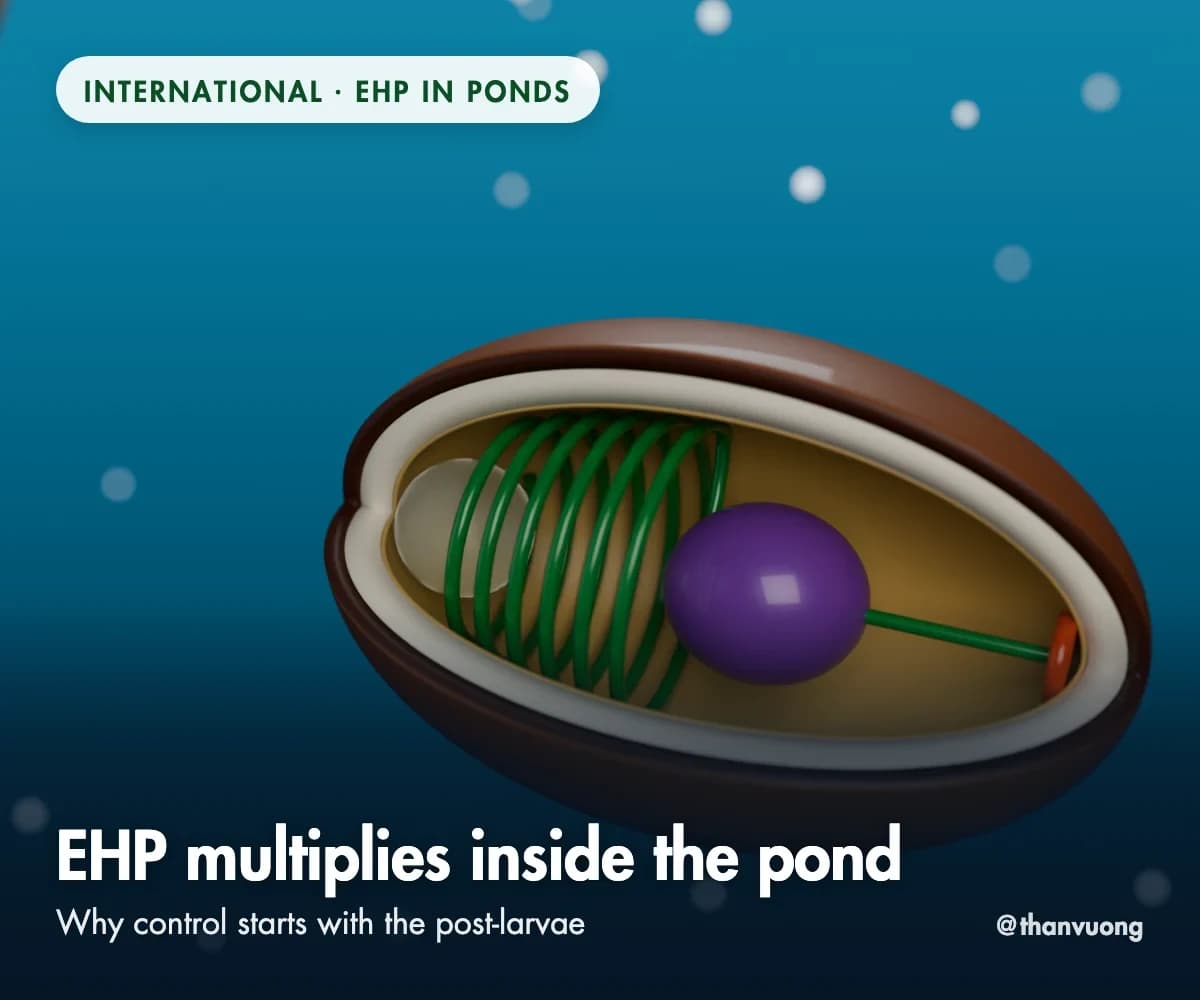
EHP multiplies inside the pond: why control must start with the post-larvae
Technical article•Shrimp•November 10, 2026

EHP multiplies inside the pond: why control must start with the post-larvae

Measurements of EHP spores in pond water from Thailand and Vietnam: on the Vietnamese farms tested, intake water was fairly clean bu[...]

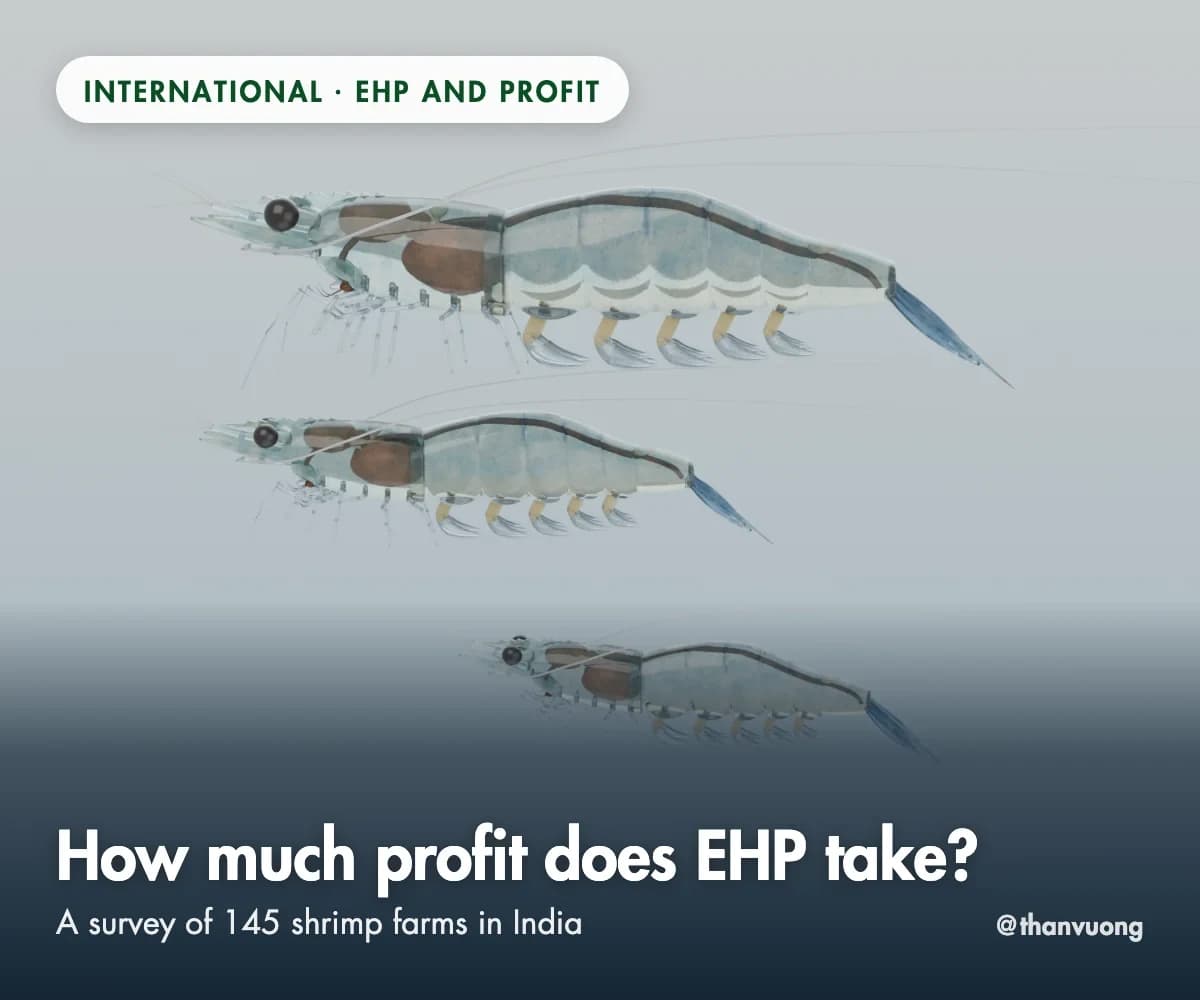
How much profit does EHP take? A survey of 145 shrimp farms in India
Technical article•Shrimp•November 10, 2026

How much profit does EHP take? A survey of 145 shrimp farms in India

A one-year survey in Andhra Pradesh, India: 64% of farms had EHP, pond preparation cost 15–28% more, and losses can exceed 20–30% of[...]

White feces in whiteleg shrimp: the latest research points to EHP, Vibrio and water temperature
Technical article•Shrimp•November 1, 2026

White feces in whiteleg shrimp: the latest research points to EHP, Vibrio and water temperature

A review of 2021–2026 research: in Chinese outbreaks the white strings were mostly EHP spores; in Indonesia and China some Vibrio sp[...]

Ask Than Vuong

Aquaculture technical assistant

Hello there 👋

Describe your pond issue or pick a question below.