In short: early mortality syndrome (EMS, formally acute hepatopancreatic necrosis disease, AHPND) and translucent post-larvae disease (TPD, the "glass post-larvae" farmers talk about) are both caused by Vibrio bacteria. But what kills the shrimp is a toxin, and the toxin genes sit on a separate ring of DNA called a plasmid. Within the same species, Vibrio parahaemolyticus, strains without a toxin plasmid are usually harmless, strains carrying pirA and pirB cause EMS, and strains carrying vhvp-2 cause TPD. This article reviews 2013–2026 research on the two toxins: what they are, how they damage the hepatopancreas and gut, and why counting Vibrio is not enough.
The same Vibrio species: sometimes harmless, sometimes a mass killer
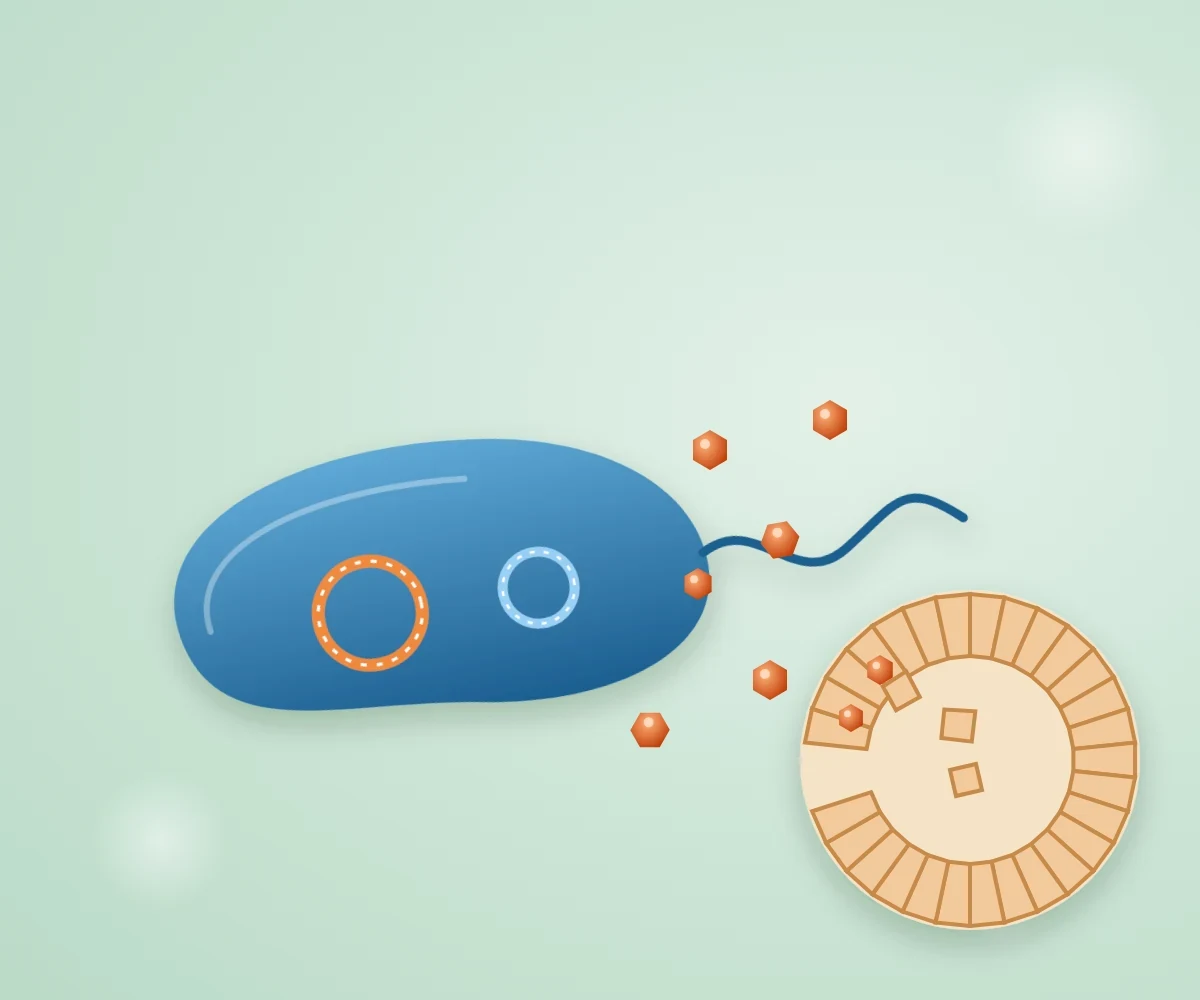
Vibrio parahaemolyticus lives naturally in brackish and sea water, and most strains cause neither EMS nor TPD. The difference is a plasmid: a ring of DNA outside the bacterial chromosome that can pass from one bacterium to another.
- EMS: in 2015, a National Cheng Kung University (Taiwan) team showed that EMS strains carry a ~70 kb plasmid (named pVA1) with two genes, pirA and pirB. Strains that naturally lack these genes, or have them deleted, no longer cause disease.
- TPD: in 2023, the Yellow Sea Fisheries Research Institute (China) found two genes, vhvp-1 and vhvp-2, side by side on a 187,791 bp plasmid (about 188 kb). The TPD strain had three plasmids; the ordinary V. parahaemolyticus strain used for comparison had none.

Because the toxin genes travel with the plasmid, they can move into other Vibrio species. EMS strains have been isolated from V. harveyi, V. campbellii, V. owensii and V. punensis. For TPD, a screen of 6,281 published Vibrio genomes found vhvp-2 in 26 strains, mostly V. parahaemolyticus, on both plasmids and chromosomes. A 2024 survey in China also found several Vibrio species carrying the key TPD toxin genes, all able to cause disease in whiteleg post-larvae.
EMS: the PirA and PirB toxin pair
EMS appeared in China in 2009 and spread across Asian shrimp-farming countries, then to the Americas (2013) and Africa (2017). Figures cited in a 2022 review put losses for 2009–2016 at about USD 11 billion in China, USD 8 billion in Thailand and nearly USD 1 billion in Mexico. In 2013, the University of Arizona Aquaculture Pathology Laboratory (USA) first isolated the agent in pure culture; the strain used, 13-028/A3, came from Vietnam. Immersing shrimp in it killed 100% of the test animals, with lesions identical to those in diseased pond shrimp.
The toxin goes first, the bacteria follow
A 2015 National Cheng Kung University study followed whiteleg shrimp after challenge:
- The bacteria first settle and multiply in the stomach, releasing PirA and PirB.
- By hour 6, PirB is already in the hepatopancreas and tubule cells start to slough off, while the bacteria have not yet reached it.
- Only later are the bacteria and both toxins found in the hepatopancreas. In the terminal stage the tubule epithelium is fully necrotic and bacteria grow on the dead tissue (secondary infection).

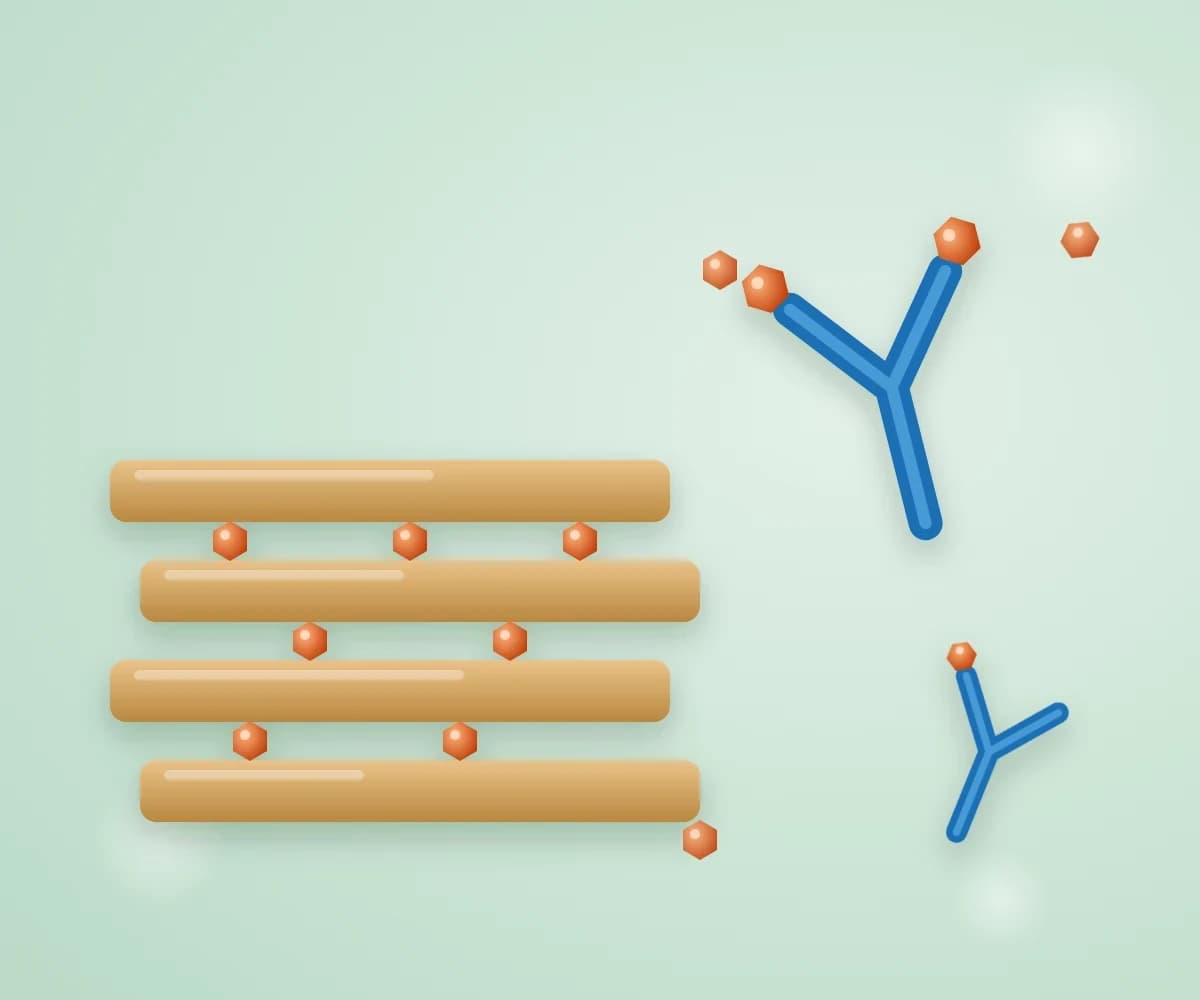
Structurally, PirA and PirB resemble the Cry toxins of Bacillus thuringiensis (Bt), the toxins used in biological insecticides. Later work showed that PirB acts as a lectin: it recognises sugar chains on hepatopancreas cells, while PirA stabilises the complex. In 2021, a Chulalongkorn University (Thailand) team found that the toxin also binds the APN1 protein on shrimp blood cells; when APN1 was reduced, shrimp given the toxin died less. These are laboratory findings, and the full mechanism is still not understood.
Signs and timing
According to the WOAH diagnostic manual (2023 edition):
- Sudden mass mortality (up to 100%), usually within 30–35 days of stocking, sometimes from day 10. Late outbreaks at days 46–96 have been reported in the Philippines.
- Pale to white, shrunken hepatopancreas, sometimes with black spots or streaks; hard to squash between finger and thumb; broken or empty gut; soft shell; shrimp sinking to the bottom.
- Low-salinity water (below 20 ppt) seems to reduce the disease; outbreaks peak in the hot, dry season. In endemic areas, overfeeding, poor seed, poor water, poor feed and algal blooms or crashes make outbreaks more likely.
TPD: the VHVP-2 protein
From late 2019 to early 2020 a new disease appeared in southern coastal China. In spring 2020 it caused the collapse of 70–80% of coastal shrimp nurseries in China. It hits very young post-larvae, worst at PL4–PL7 in the first reports; a typical case can reach 100% mortality in 3 days. Sick post-larvae have a pale or colourless hepatopancreas and an empty gut, so the whole body looks transparent.
Finding the main toxin
The Yellow Sea Fisheries Research Institute team (Liu and colleagues, 2023) worked step by step:
- They broke up TPD bacteria, separated the proteins by size and exposed whiteleg post-larvae to each fraction (3 tanks × 15 post-larvae per group). Only the protein fraction above 100 kDa killed (90% at 32 h), close to live bacteria (100% at 24 h). Smaller fractions killed under 10%.
- That fraction contained two new proteins, named VHVP-1 and VHVP-2 (Vibrio high virulent proteins).
- A V. parahaemolyticus strain with vhvp-1 but no vhvp-2 did not kill post-larvae.
- Deleting only vhvp-2 from the TPD strain: 4.92% deaths at 32 h versus 81.89% for the original strain at the same dose. Putting the gene back restored full virulence.
- Among 179 shrimp samples collected in China in 2020–2021, vhvp genes were found only in typical TPD cases, not in healthy shrimp or shrimp with other diseases.

VHVP-2 is 1,421 amino acids long. It carries regions resembling the Tc toxin family of insect-killing bacteria and the Salmonella protein SpvB, which breaks down the actin skeleton inside cells. The University of Arizona team (2025) classed VHVP as a Tc-like toxin complex. Exactly how VHVP-2 destroys shrimp cells still needs research, as the authors themselves note.
Is the TPD toxin secreted like PirAB?
This is an important difference. In the 2023 study, culture fluid with the bacteria removed killed no more post-larvae than the control; the authors concluded the main toxin is probably not freely secreted, at least under those culture conditions. In 2026, an Ocean University of China team found all three VHVP proteins inside the outer membrane vesicles released by TPD bacteria, small bubbles regarded as toxin "delivery vehicles" of Gram-negative bacteria. So the TPD toxin may reach shrimp cells differently from the EMS toxin, which matters for the "toxin binder" ideas in part 2.
Lesions: hepatopancreas, gut and the muscle around it
- Hepatopancreas tubule and midgut epithelial cells become necrotic, detach from the basement membrane and fall into the lumen (Liu et al. 2023).
- Gut inflammation with a thick layer of blood cells and loss of the gut lining, a feature not seen in EMS (University of Arizona, 2025).
- In 2025, Thailand’s BIOTEC found a new lesion in PL9 post-larvae positive for vhvp-2: necrosis of the thin smooth muscle around the midgut, with no bacteria at the site. The authors argue this would stop gut movement and feeding, and asked other laboratories to check their TPD samples for it.
The younger the post-larvae, the higher the risk
In October 2023, a hatchery in a Southeast Asian country (unnamed at the farm’s request) lost more than 70% of its post-larvae in 5 days. The University of Arizona laboratory confirmed it as the first published TPD case outside China and tested the isolated strain on disease-free post-larvae:

- 15-day post-larvae (PL15), 40 per dose: 105–106 CFU/mL killed 100% within 72 h; even 102 CFU/mL killed 35%. The dose that killed half within 96 h was only about 850 bacteria per mL.
- 30-day post-larvae (PL30), 20 per dose: at most 20% deaths over 7 days (at 104 CFU/mL), without the pale hepatopancreas and empty gut.
An earlier study, cited by the Yellow Sea team, estimated that a TPD strain was about 1,000 times more toxic to post-larvae than an EMS strain. In 2026, a National Cheng Kung University team also isolated a TPD strain from sick post-larvae in Taiwan; genetically it groups with TPD strains reported from China and Southeast Asia. A 2024 survey in China found over 50% positive samples in some areas; marine species such as whiteleg and kuruma shrimp were more susceptible, freshwater species such as giant river prawn may not be affected, but live feed organisms can still carry the pathogen.
How EMS and TPD differ
| EMS (AHPND) | TPD | |
|---|---|---|
| Agent | Vibrio with a ~70 kb plasmid (pVA1) | Vibrio with a plasmid carrying vhvp genes (~188 kb in the original strain) |
| Main toxin | PirA + PirB pair, secreted | VHVP-2 (the bacterium also has VHVP-1, VHVP-3); found in outer membrane vesicles |
| Shrimp stage | Usually the first 30–35 days after stocking | Young post-larvae in hatcheries and nurseries; older post-larvae cope better |
| Organs hit | Hepatopancreas (tubule cells slough), then secondary infection | Hepatopancreas and midgut; also necrosis of the muscle around the gut |
| Signs | Pale, shrunken hepatopancreas; empty gut; sudden mass deaths | Transparent body, colourless hepatopancreas, empty gut; up to 100% dead in 3 days |
| Testing | PCR for pirA, pirB plus histopathology | PCR and qPCR for vhvp-2 (methods published 2023–2026) |
What farmers should know
- The toxin kills the shrimp, not the total Vibrio count. High Vibrio on TCBS is a warning sign but no substitute for toxin-gene testing.
- Test post-larvae by PCR before stocking: pirA/pirB for EMS and vhvp-2 for TPD. TPD is new, so ask your laboratory whether it can test for vhvp-2.
- For TPD, the danger period is the hatchery and nursery. In the lab, 30-day post-larvae coped far better than 15-day ones. Live feed can also carry TPD.
- For EMS, the first 30–35 days need the most care: no overfeeding, stable water and algae, good seed, exactly the factors WOAH lists.
- No toxin-blocking agent is recognised yet. WOAH (2023) states there is no vaccine, no blocking agent and no immunostimulant known to work against AHPND. Toxin binding and neutralising approaches under study are summarised in part 2.
- Use antibiotics only once a bacterial infection is confirmed. Choose a veterinary medicine approved for shrimp, at the labelled dose, for the full course, with the labelled withdrawal period, and run a susceptibility test before choosing the drug: the TPD strain isolated in 2023 was already resistant to beta-lactams, and some EMS strains from Mexico carry a tetracycline-resistance gene (tetB) on a small plasmid (Han et al. 2015). Antibiotics are no substitute for testing post-larvae and keeping the pond stable in the first 30–35 days.
Quick questions
How do EMS and TPD differ?
EMS (AHPND) is caused by Vibrio strains carrying a ~70 kb plasmid with the pirA and pirB genes; mass deaths usually come within 30–35 days of stocking. TPD is caused by strains carrying a different plasmid with the vhvp-2 gene; it hits young post-larvae in hatcheries, sometimes killing 100% in 3 days.
Does a high Vibrio count on TCBS mean EMS or TPD?
Not on its own. The same Vibrio species has harmless strains and toxin-carrying strains. In a 2023 TPD outbreak, a second Vibrio species isolated from the same sick post-larvae was almost harmless when tested. Only PCR for the toxin genes tells you: pirA/pirB for EMS, vhvp-2 for TPD.
How does the PirAB toxin damage shrimp?
The bacteria settle in the stomach and release PirA and PirB. Six hours after challenge, PirB is already in the hepatopancreas and tubule cells start to slough off, before the bacteria get there. In the terminal stage the hepatopancreas epithelium dies and bacteria invade as a secondary infection.
Do larger post-larvae get TPD?
Much less in the lab: with the same strain, 15-day post-larvae (PL15) died 100% within 72 h at 105–106 CFU/mL, while 30-day post-larvae (PL30) peaked at 20% deaths over 7 days. These are tank results.
Is there a drug or agent that blocks the toxin?
According to the WOAH diagnostic manual (2023), there is no vaccine, no toxin-blocking agent and no immunostimulant known to be effective against AHPND. The approaches under study are summarised in part 2 of this series.
Sources
- Lee C.T. et al. The opportunistic marine pathogen Vibrio parahaemolyticus becomes virulent by acquiring a plasmid that expresses a deadly toxin. PNAS 2015;112:10798–10803 DOI 10.1073/pnas.1503129112.
- Tran L. et al. Determination of the infectious nature of the agent of acute hepatopancreatic necrosis syndrome affecting penaeid shrimp. Dis Aquat Org 2013;105:45–55 DOI 10.3354/dao02621.
- Lai H.C. et al. Pathogenesis of acute hepatopancreatic necrosis disease (AHPND) in shrimp. Fish Shellfish Immunol 2015;47:1006–1014 DOI 10.1016/j.fsi.2015.11.008.
- Luangtrakul W. et al. Cytotoxicity of Vibrio parahaemolyticus AHPND toxin on shrimp hemocytes… involves binding of toxin to aminopeptidase N1 receptor. PLoS Pathog 2021;17:e1009463 DOI 10.1371/journal.ppat.1009463. Open access, CC BY.
- Soto-Rodriguez S.A. et al. New insights into the mechanism of action of PirAB from Vibrio parahaemolyticus. Toxins 2022;14(4):243 DOI 10.3390/toxins14040243. Open access, CC BY.
- WOAH (World Organisation for Animal Health). Manual of Diagnostic Tests for Aquatic Animals, chapter 2.2.1 Acute hepatopancreatic necrosis disease, 2023. woah.org.
- Liu S. et al. Vibrio parahaemolyticus becomes lethal to post-larvae shrimp via acquiring novel virulence factors. Microbiol Spectr 2023;11:e00492-23 DOI 10.1128/spectrum.00492-23. Open access, CC BY.
- Dinh-Hung N. et al. Isolation, characterization, and pathogenicity of a Vibrio parahaemolyticus strain causing translucent post-larvae disease in Penaeus vannamei outside China. PLoS ONE 2025;20:e0331862 DOI 10.1371/journal.pone.0331862. Open access, CC BY.
- Mai H.N. et al. Genomic characterization of Vibrio parahaemolyticus strain (AG1) causing translucent post-larvae disease in Penaeus vannamei. Microb Genom 2025;11 DOI 10.1099/mgen.0.001570. Open access, CC BY.
- Srisala J. et al. Novel midgut smooth muscle necrosis (MSMN) in translucent or glass post-larvae of whiteleg shrimp. Sci Rep 2025;15:35544 DOI 10.1038/s41598-025-19591-6. Open access, CC BY-NC-ND.
- Jia T. et al. Prevalence investigation of translucent post-larvae disease (TPD) in China. Aquaculture 2024;583:740583 DOI 10.1016/j.aquaculture.2024.740583.
- Zhang Y., Tan P., Yang M. Characteristics of vhvp-2 gene distribution and diversity within the Vibrio causing translucent post-larvae disease (TPD). J Invertebr Pathol 2024;207:108228 DOI 10.1016/j.jip.2024.108228.
- Kumar R. et al. Pathogenesis and genome characterization of translucent post-larvae disease-causing Vibrio parahaemolyticus in Litopenaeus vannamei. Curr Res Microb Sci 2026;11:100634 DOI 10.1016/j.crmicr.2026.100634. Open access, CC BY-NC-ND.
- Wang L. et al. Proteomic analysis of outer membrane vesicles derived from Vibrio parahaemolyticus causing translucent post-larvae disease. J Invertebr Pathol 2026;217:108620 DOI 10.1016/j.jip.2026.108620.
- Han J.E., Mohney L.L., Tang K.F.J., Pantoja C.R., Lightner D.V. Plasmid mediated tetracycline resistance of Vibrio parahaemolyticus associated with acute hepatopancreatic necrosis disease (AHPND) in shrimps. Aquac Rep 2015;2:17–21 DOI 10.1016/j.aqrep.2015.04.003. Open access, CC BY-NC-ND.
This article is a synthesis and interpretation by Than Vuong. Numbers come from the original papers (full text or abstract); charts were redrawn by Than Vuong and the papers’ own figures and tables are not reproduced. The "What farmers should know" and "In practice" sections are editorial opinion.