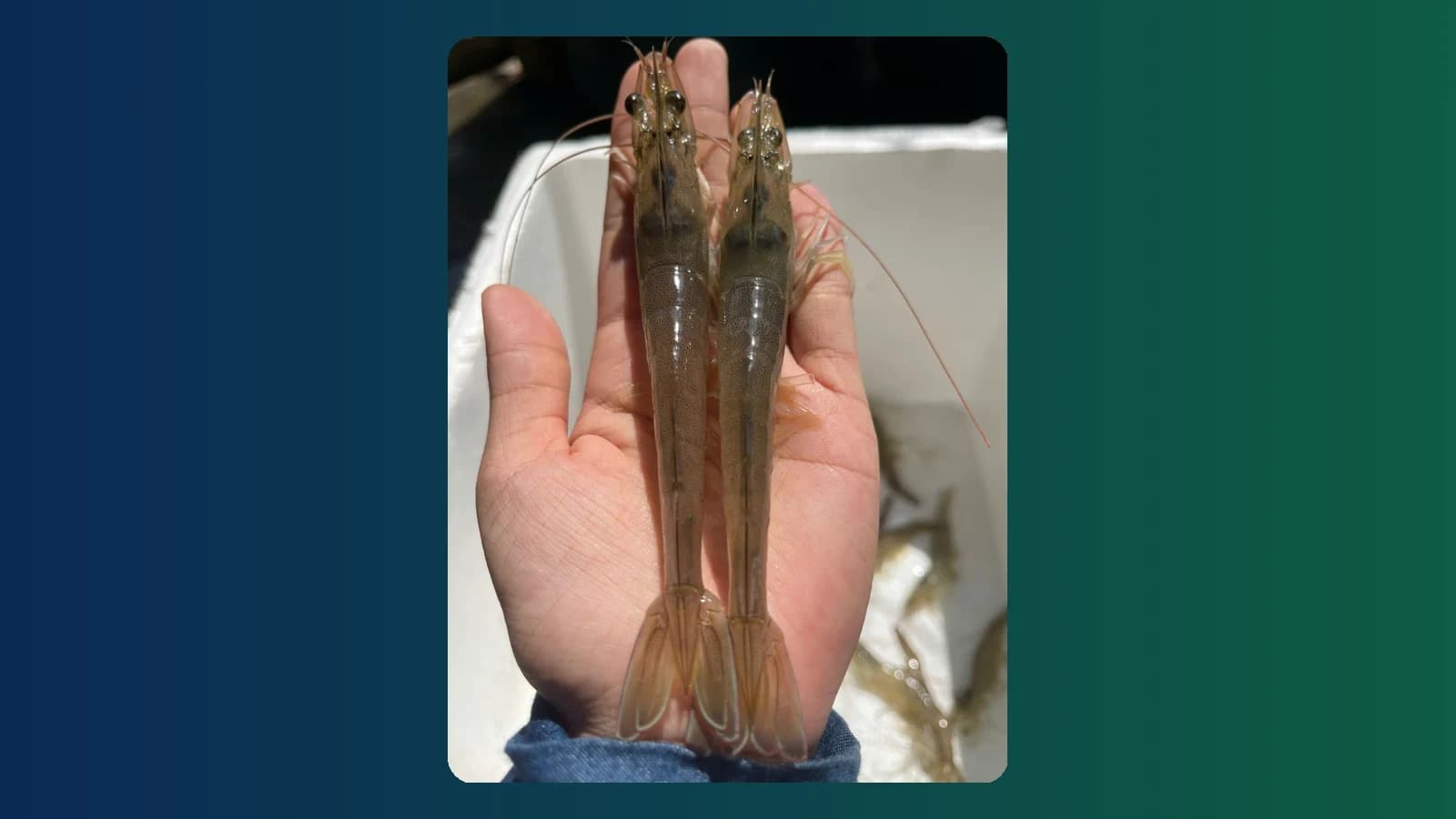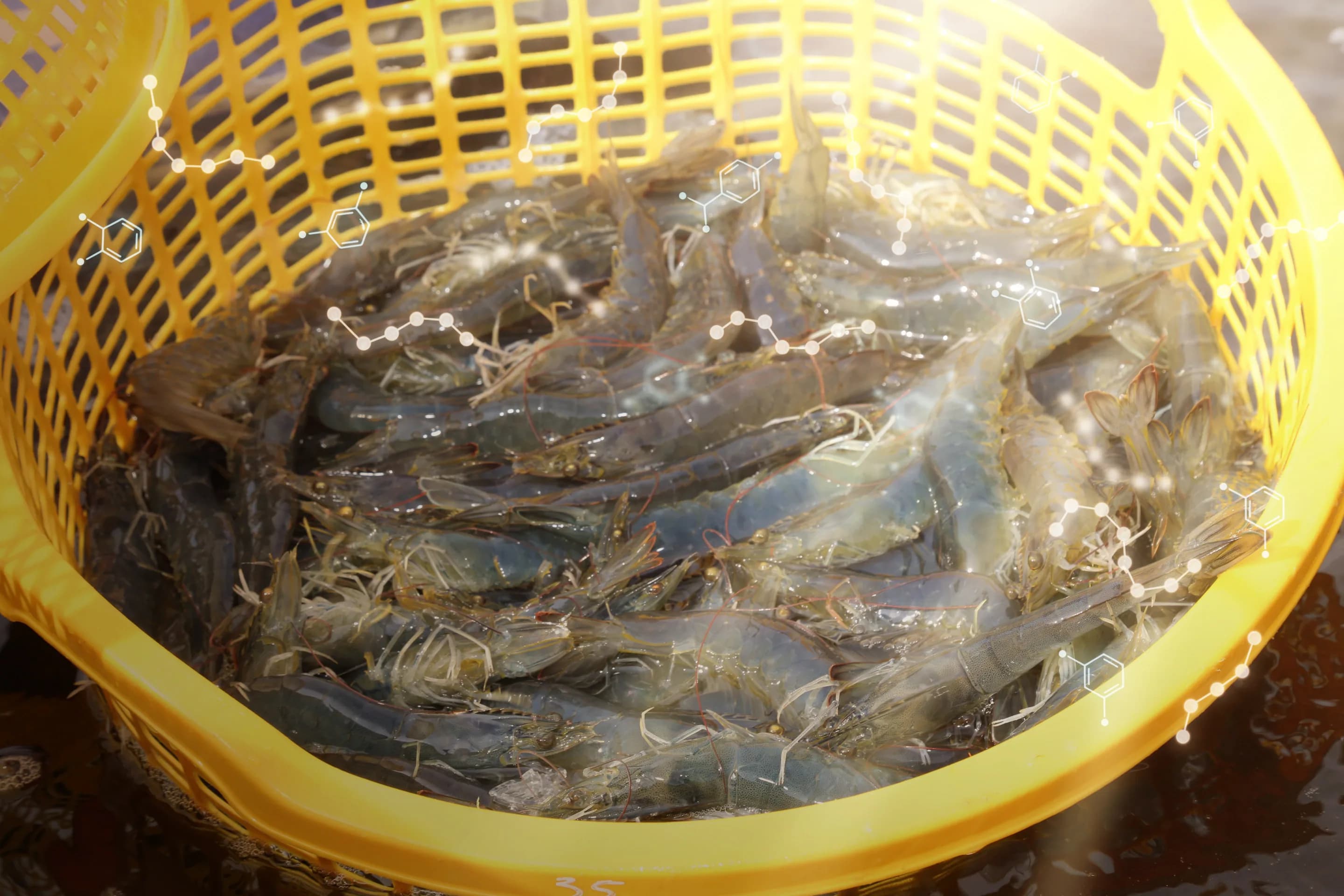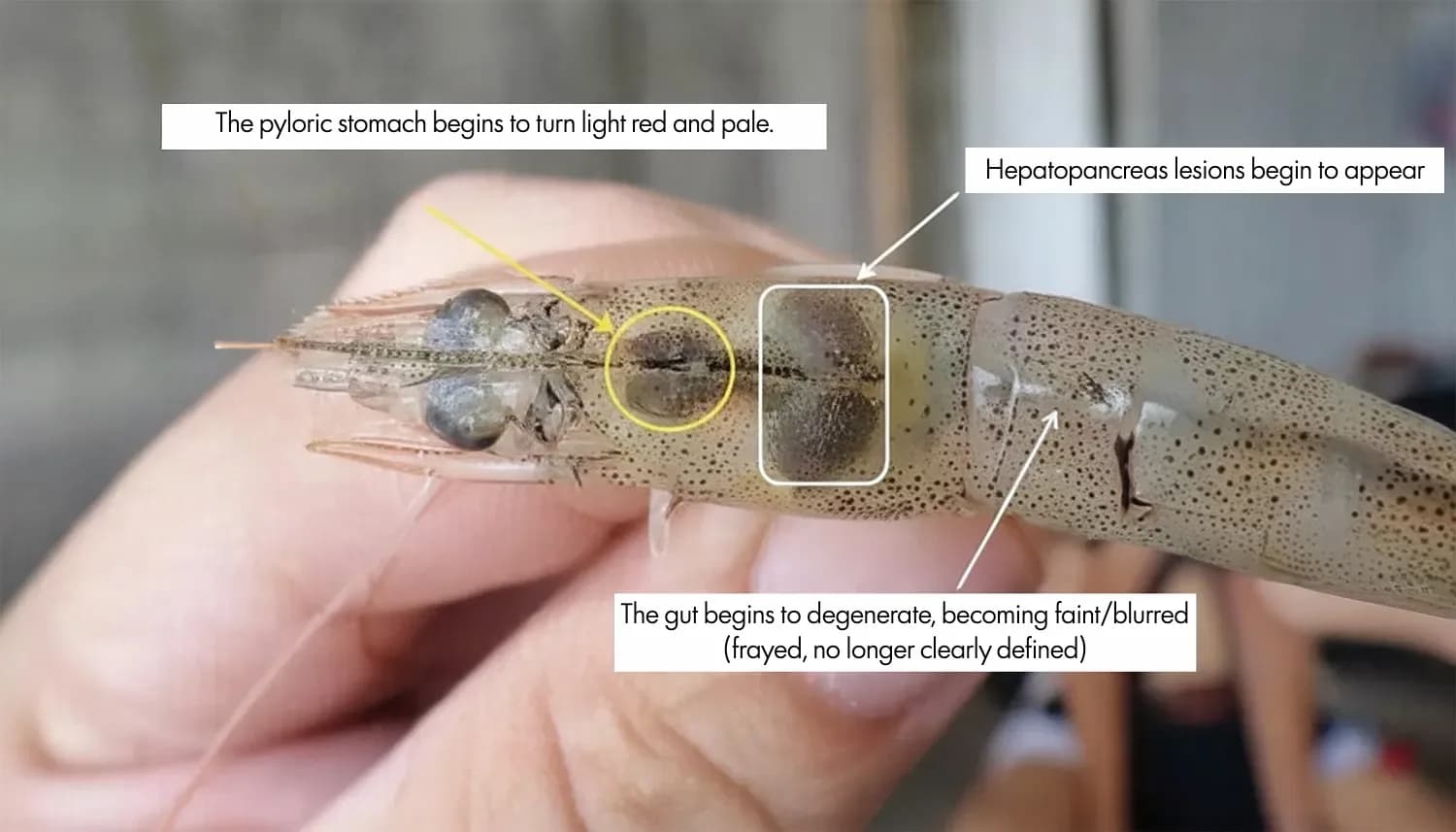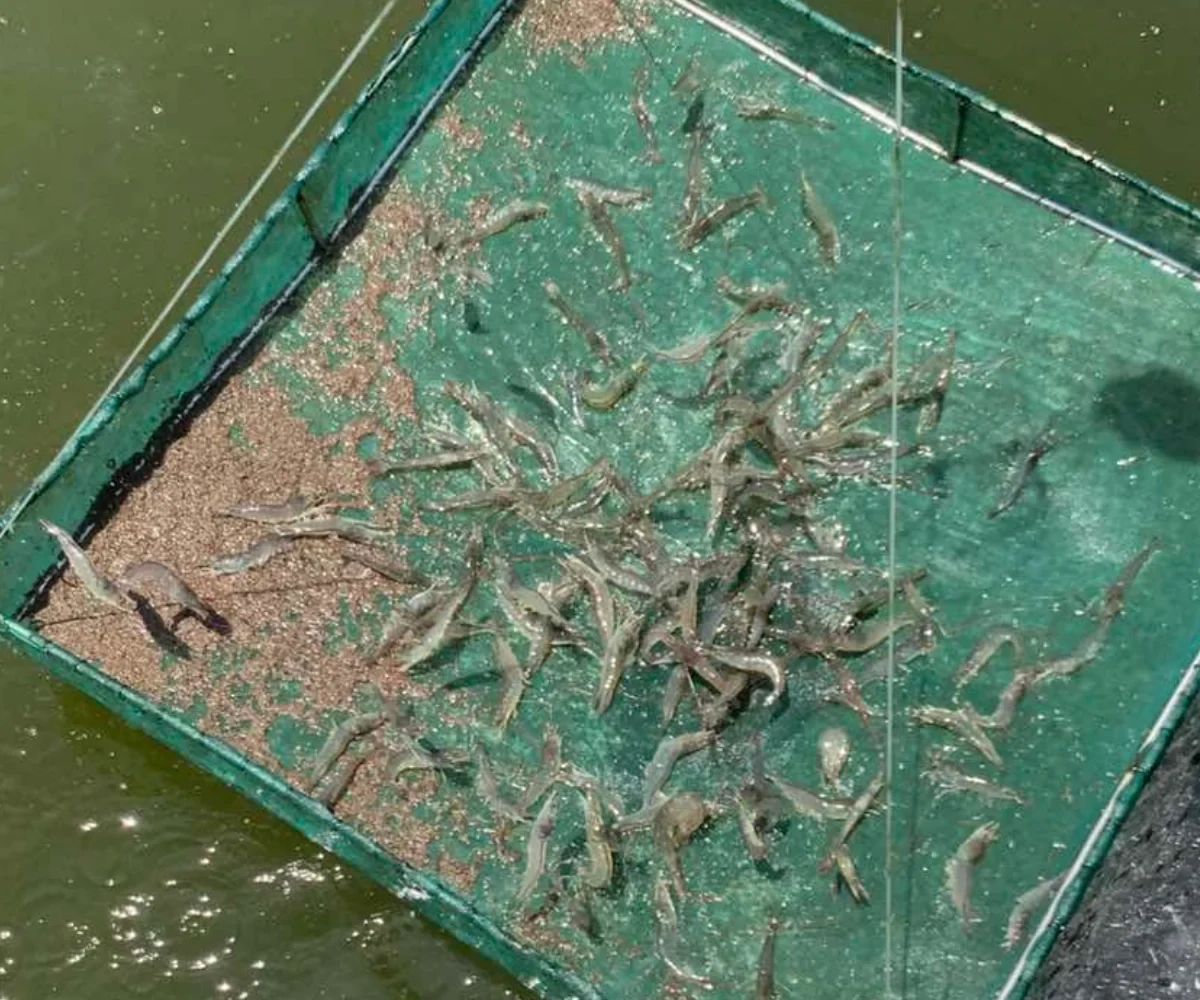
In short: white feces (white fecal strings floating on the pond, white guts, slow growth and steady losses) is a syndrome, not a disease with a single cause. Research from 2025–2026 adds three pieces: in outbreaks investigated in China, the white strings were mostly EHP spores; in Indonesia and China, white-feces guts show some Vibrio species surging; and warm water shifts the gut microbiota towards white feces. A 2021 experiment showed shrimp produced white feces only when both EHP and Vibrio were present. This article summarises that research and what farmers can do to prevent it.
Why white-feces studies often seem to disagree
From 2013, Thai scientists found EHP (a microsporidian parasite of the hepatopancreas, recently renamed Ecytonucleospora hepatopenaei but still abbreviated EHP) in white-feces ponds. But EHP was just as common in ponds without white feces and in ponds that had recovered, and shrimp infected with EHP in the laboratory did not produce white feces. In 2022 the same group compared shrimp from one white-feces pond: those with white guts carried more EHP, had worse hepatopancreas damage and more Vibrio and Propionigenium bacteria in the gut than those with normal guts.
That is why researchers call white feces a syndrome: several factors act together, and the dominant one can differ between farming areas.

Piece one: the white strings are EHP spores
In October 2026, a Chinese research team published an investigation of white-feces outbreaks in 24 ponds across 4 provinces between 2013 and 2024, using light microscopy, histopathology, in situ hybridisation, electron microscopy and molecular tests:
- EHP was found in every white-feces pond examined.
- Both the white strings taken from the gut and those floating on the pond were mostly mature EHP spores and empty spore shells; bacteria were not a main component.
- The hepatopancreas was very heavily infected with EHP, while the midgut and hindgut stayed structurally intact.
- The authors’ explanation: shrimp blood cells clear away dead hepatopancreas cells, but the tough-walled EHP spores stay in the tubules and then pour into the midgut as fecal strings. The white colour most likely comes from dense spores scattering light.

Piece two: Vibrio take over the gut
On the other side, many studies find that the gut bacteria of white-feces shrimp differ sharply from those of healthy shrimp:
- Indonesia (2025): gut and water samples from 8 farms in East Java. White-feces guts had far more V. coralliilyticus and fewer Paracoccus. The authors suggest V. coralliilyticus may be a causative agent on these farms.
- China (2024, 2026): a Ningbo University team sampled white-feces and healthy shrimp from greenhouse ponds (67 × 33 m, 1.2 m deep). Three species, V. fluvialis, V. coralliilyticus and V. tubiashii, were clearly enriched in white-feces guts, and immersing healthy shrimp in a mix of the three produced white-feces signs and deaths. White-feces guts also held less pyruvic acid and glutamine than healthy guts; the lower these were, the more of the three Vibrio there were. This is the basis for the approaches in part 2.
When the two pieces meet
In 2021, the University of Arizona Aquaculture Pathology Laboratory (USA) reproduced white feces in the laboratory for the first time. They used 6–7 g whiteleg shrimp already infected with EHP (by 60 days of cohabitation with EHP carriers) and a V. parahaemolyticus strain isolated from the gut of a white-feces shrimp; the strain did not carry the EMS toxin genes. Each group had one 90-litre tank with 7–10 shrimp at 30‰ salinity and 26 °C; bacteria were added to the water at 106 CFU/mL on days 0, 1, 4 and 18.

- In both trials, white guts appeared from day 8, followed by white strings hanging from the anus and floating on the water, only in the tank with both EHP and Vibrio. No shrimp with EHP alone or Vibrio alone showed white feces.
- The EHP + Vibrio tank had the lowest survival: 57.1% and 25%.
- Shrimp in that tank carried more EHP than those with EHP alone; their hepatopancreas showed both EHP lesions and bacterial necrosis.
In 2023 an Indian team also produced white feces by infecting whiteleg shrimp with EHP together with V. harveyi and V. alginolyticus. These are small trials with one tank per group, but they point the same way: EHP and Vibrio act together.
Piece three: warm water
A study in Communications Biology (2025) pooled 1,369 whiteleg shrimp gut microbiota samples from 9 countries, including 90 collected in Vietnam:
- Water temperature was the strongest driver of gut bacterial composition.
- When shrimp were held for one week at 20, 24, 28, 32 and 36 °C (60 per level), the predicted white-feces risk at 28, 32 and 36 °C was significantly higher than at 20 and 24 °C. At 36 °C shrimp ate less and more than half died within 4 days.
- From pond experience, the authors note that white feces can appear 1–3 days after a sharp temperature change; earlier studies found the risk rises clearly when pond water reaches 33–34 °C.
Inside a white-feces shrimp
A Guangdong Ocean University (China) group published three studies in 2025–2026 comparing white-feces and healthy shrimp from the same farms:
- Digestion: many digestive enzymes fall, including lipase (fat digestion); the gut is damaged and digestion is poor. Shrimp in this study had white feces with EHP, linked to Vibrio.
- Immunity: crustin, one of the shrimp’s own antibacterial proteins, falls sharply. The authors propose crustin, lipase and the GBA enzyme as monitoring markers.
- Antioxidants: antioxidant capacity falls in the hepatopancreas and gut; the muscle layer in the gut folds almost disappears.
- Ponds: a survey of 4 ponds in Zhanjiang (June 2026, shrimp about 16 g) found higher MDA (a marker of oxidative damage) and lower antioxidant enzymes in white-feces guts, and bacterial communities in the gut and sediment that differed from healthy ponds. The authors acknowledge it was a small survey with no EHP testing or Vibrio counts.

What farmers should know
- See floating white strings, think EHP. Sample the hepatopancreas for EHP PCR. Where EHP is endemic, white feces usually means EHP is already heavy.
- Prevent EHP before stocking: stock post-larvae that test PCR-negative for EHP; clean, dry and lime the pond before stocking. EHP is a parasite, not a bacterium, so antibiotics do not kill it.
- Keep the gut microbiota stable: good-quality feed, no overfeeding, pond bottom management. White feces goes with unbalanced gut bacteria, lower digestive enzymes and weaker antioxidant defences.
- Watch water temperature: the risk is higher from 28 °C upwards, especially on hot days and after sudden temperature swings. Those are the times to check feeding trays and shrimp guts more closely.
- Use antibiotics only once a bacterial infection is confirmed, as directed by a veterinarian, with a product approved for shrimp and the full withdrawal period.
- Prevention from the gut: two new trials feeding beneficial bacteria and metabolites to help shrimp resist white feces are summarised in part 2.
Quick questions
Is white feces caused by EHP?
In 24 white-feces ponds investigated in China (2013–2024), every pond had EHP and the white strings were mostly EHP spores. But EHP is also common in ponds without white feces, and in a 2021 trial shrimp produced white feces only when they had EHP and were also exposed to a particular Vibrio strain. White feces is best read as a sign of heavy EHP plus an unbalanced gut bacterial community.
Why is white feces more common in hot weather?
Water temperature is the strongest driver of the shrimp gut microbiota. In a 2025 experiment, the predicted white-feces risk at 28, 32 and 36 °C was significantly higher than at 20 and 24 °C. The authors also note that white feces can appear 1–3 days after a sharp temperature change.
Do antibiotics solve white feces?
EHP is a parasite, not a bacterium, so antibiotics do not kill it. For the bacterial part, antibiotics should be used only once a bacterial infection is confirmed, as directed by a veterinarian, choosing a product approved for shrimp and observing the withdrawal period before harvest.
How do I know if my pond has EHP?
PCR testing of hepatopancreas samples, and PCR testing of post-larvae before stocking. On EHP-endemic farms, floating white strings are the moment to sample straight away.
Sources
- Wang Y., Zhang J., Zhou J.Y. et al. Pathological evidence links white feces syndrome in farmed Penaeus vannamei to severe hepatopancreatic Ecytonucleospora hepatopenaei infection in China. J Invertebr Pathol 2026;220:108770 DOI 10.1016/j.jip.2026.108770.
- Tangprasittipap A. et al. The microsporidian Enterocytozoon hepatopenaei is not the cause of white feces syndrome in whiteleg shrimp Penaeus (Litopenaeus) vannamei. BMC Vet Res 2013;9:139 DOI 10.1186/1746-6148-9-139. Open access, CC BY.
- Munkongwongsiri N. et al. Propionigenium and Vibrio species identified as possible component causes of shrimp white feces syndrome (WFS) associated with the microsporidian Enterocytozoon hepatopenaei. J Invertebr Pathol 2022;192:107784 DOI 10.1016/j.jip.2022.107784.
- Amin M. et al. Gut microbiota and functional metabolic predictions in white feces disease-infected Pacific white shrimp, Penaeus vannamei, from Indonesian farms. Fish Shellfish Immunol 2025;158:110171 DOI 10.1016/j.fsi.2025.110171.
- Sha H., Lu J., Chen J., Xiong J. Rationally designed probiotics prevent shrimp white feces syndrome via the probiotics–gut microbiome–immunity axis. npj Biofilms Microbiomes 2024;10:40 DOI 10.1038/s41522-024-00509-5. Open access, CC BY.
- Sha H., Chen J., He J. et al. Precisely designed keystone metabolites boost shrimp disease resistance by recruiting symbionts via the lipoxin A4-AP-1 pathway. Microbiome 2026;14:168 DOI 10.1186/s40168-026-02418-5. Open access, CC BY-NC-ND.
- Aranguren Caro L.F., Mai H.N., Cruz-Florez R., Marcos F.L.A., Alenton R.R.R., Dhar A.K. Experimental reproduction of White Feces Syndrome in whiteleg shrimp, Penaeus vannamei. PLoS ONE 2021;16(12):e0261289 DOI 10.1371/journal.pone.0261289. Open access, CC BY.
- Subash P. et al. White feces syndrome in Penaeus vannamei is potentially an Enterocytozoon hepatopenaei (EHP) associated pathobiome origin of Vibrio spp. J Invertebr Pathol 2023;198:107932 DOI 10.1016/j.jip.2023.107932.
- Zeng S., Huang Z. et al. Warming-driven migration of enterotypes mediates host health and disease statuses in ectotherm Litopenaeus vannamei. Commun Biol 2025;8:126 DOI 10.1038/s42003-025-07558-2. Open access, CC BY-NC-ND.
- Xv K., Pang A., Wang T. et al. Screening of intestinal protein signatures in pacific white-leg shrimp (Litopenaeus vannamei) with white feces syndrome by proteome. Fish Shellfish Immunol 2025;161:110257 DOI 10.1016/j.fsi.2025.110257.
- Wang T., Pang A., Xv K. et al. Analysis of intestinal metabolites in Litopenaeus vannamei infected with white faeces syndrome based on untargeted metabolomics. Comp Biochem Physiol Part D 2025;55:101462 DOI 10.1016/j.cbd.2025.101462.
- Wang Z., Zhang X., Xv K. et al. White Feces Syndrome is closely linked to impaired antioxidant capacity, the aquaculture environment, and microbial dysbiosis in Litopenaeus vannamei reared in small-pond culture system. PLoS ONE 2026;21(10):e0357891 DOI 10.1371/journal.pone.0357891. Open access, CC BY.
This article is a synthesis and interpretation by Than Vuong. Numbers come from the original papers (full text or abstract); charts were redrawn by Than Vuong and the papers’ own figures and tables are not reproduced. The "What farmers should know" and "In practice" sections are editorial opinion.