Pangasius nursery protocol with Than Vuong products: from fry to harvest at 30 fish/kg
From pond preparation and stocking fry through the 25-day water-treatment schedule, thinning and routine care to harvesting fingerlings at 30 fish/kg: each step, the products used and their label doses.
Technical articleFishNovember 3, 2026👁 34 views
Click to listen to an AI-narrated summary
Full Article
In short: Pangasius fry are raised in the nursery pond from stocking until fingerlings are harvested at 30 fish/kg, with no transfer to a second pond to grow on. The first 25 days follow the Than Vuong Technical Department nursery protocol: grow natural food, mild disinfection, tail-rot prevention. At the end of week 4 the fish are thinned out, then a routine is kept until harvest: disinfect the water and re-seed probiotics 24–48 hours later; check for parasites and deworm when needed; mix probiotics, vitamins and liver support into the feed. In the 7–10 days before harvest, preparation steps keep the fish healthy and cut losses in transport.
500–1,000 fry/m²
fry stocking density
30 fish/kg
fingerling harvest size
24–48 hours
to re-seed probiotics after each disinfection
The whole protocol in one figure; doses for each product are in the sections below. Thumbnails: step 1 Khả Vân Đại Hãn (CC BY-SA 4.0), step 2 Bùi Thụy Đào Nguyên (CC BY-SA 3.0), step 3 Dmitry Kulakov (CC BY 4.0), step 7 U.S. Fish and Wildlife Service (public domain); steps 4, 5, 6, 8 Than Vuong photos.
1Pond preparation
Disinfect the bottom, lime, filter water, disinfect and grow Moina before stocking.
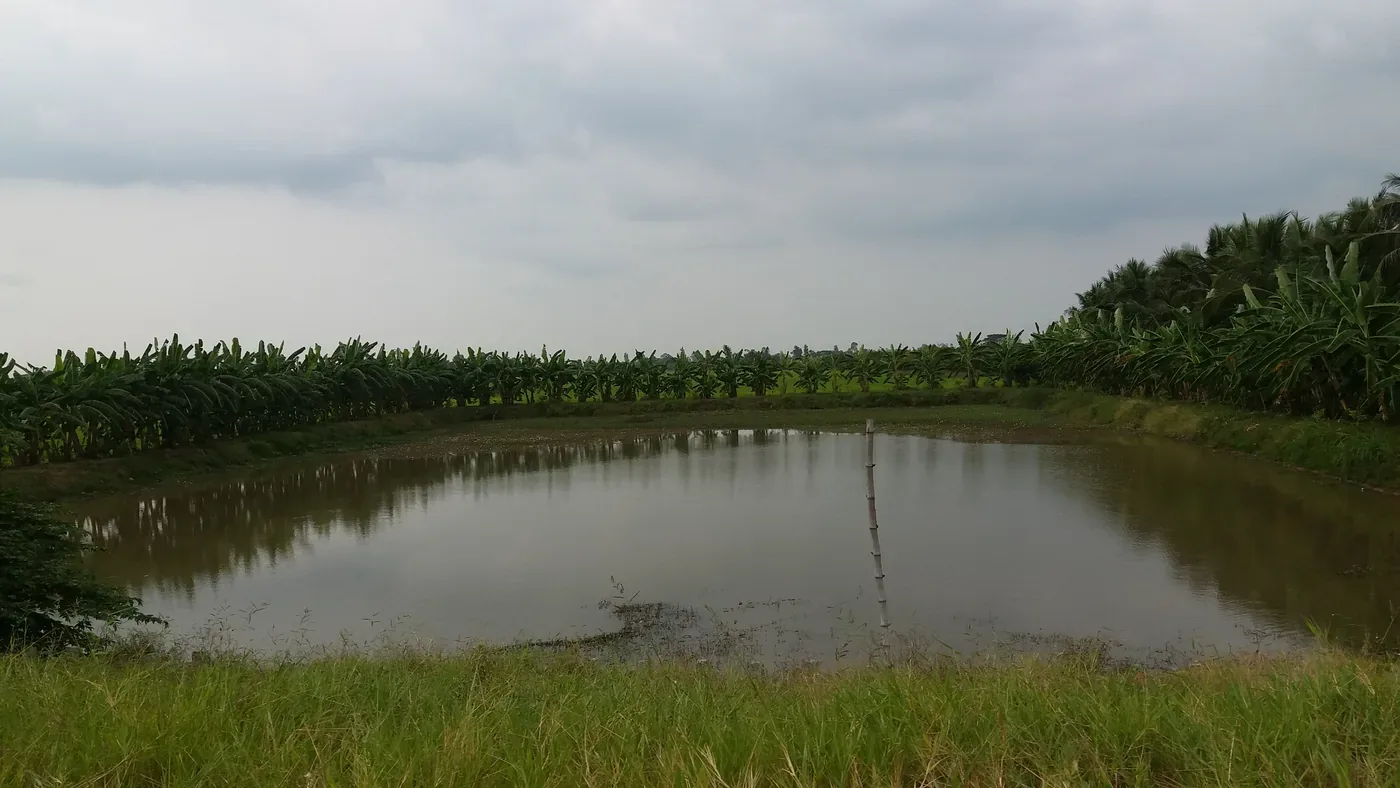
A nursery pond needs a reliable, clean water supply that is easy to fill and drain. The bottom soil should be free of acid sulphate and salt, with firm dykes that hold water. Keep the surroundings open, with few trees shading the water, and make sure there is easy access for bringing in fingerlings, feed and supplies.
Earthen pond in Khanh Hoa commune, Chau Phu district, An Giang, Vietnam (February 2023). Photo: Khả Vân Đại Hãn, CC BY-SA 4.0, Wikimedia Commons.
Before filling
Drain, remove sludge, disinfect the bottom
Drain the pond, remove bottom sludge and clean the dykes. Once the bottom has dried, disinfect it; spread lime the next day.
WORK 801 kg/800 m² of pond bottomThan Vuong nursery protocol dose
Copper sulphate1 kg/1,000 m²common input
Lime5–7 kg/100 m², spread the next day
When filling
Filter the water carefully
Fill through a fine mesh filter to keep out wild fish, frog eggs and predators.
Apply FYTO FLOC together with GROWMIN. Ferment NIAZYME with powder feed in 50–60 litres of water and scoop the mixture into a bucket for each application.
When stocking fry, pond water should be: pH 7–8 · temperature 28–30 °C · dissolved oxygen at least 3 mg/L. Check NH₃ and NO₂ before stocking with the toxic gas calculator (select striped catfish).
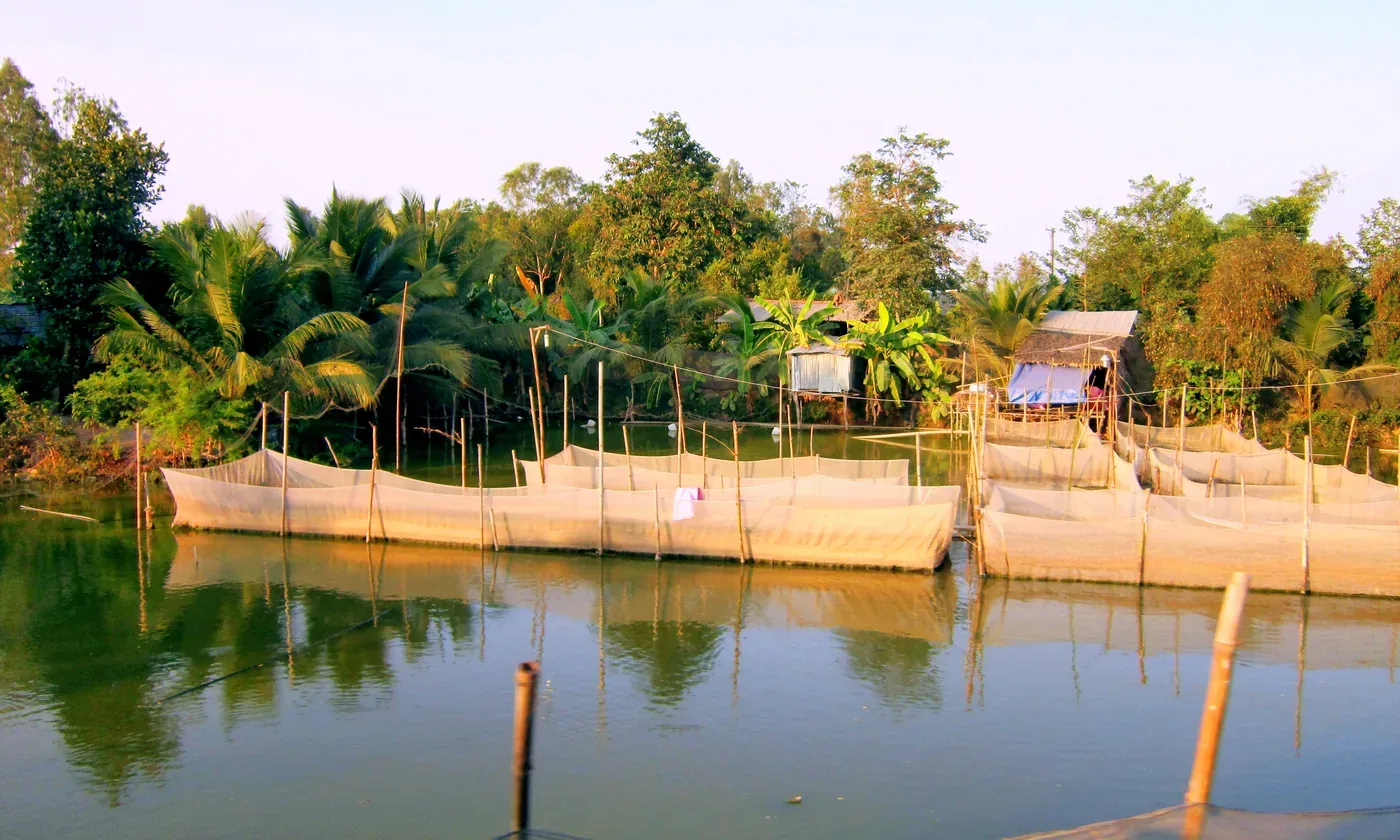
A fish seed farm with net cages set in a pond in Doc Binh Kieu commune, Thap Muoi district, Dong Thap, Vietnam. Photo: Bùi Thụy Đào Nguyên, CC BY-SA 3.0, Wikimedia Commons.
Fry source: a hatchery with clear origin and a quarantine certificate.
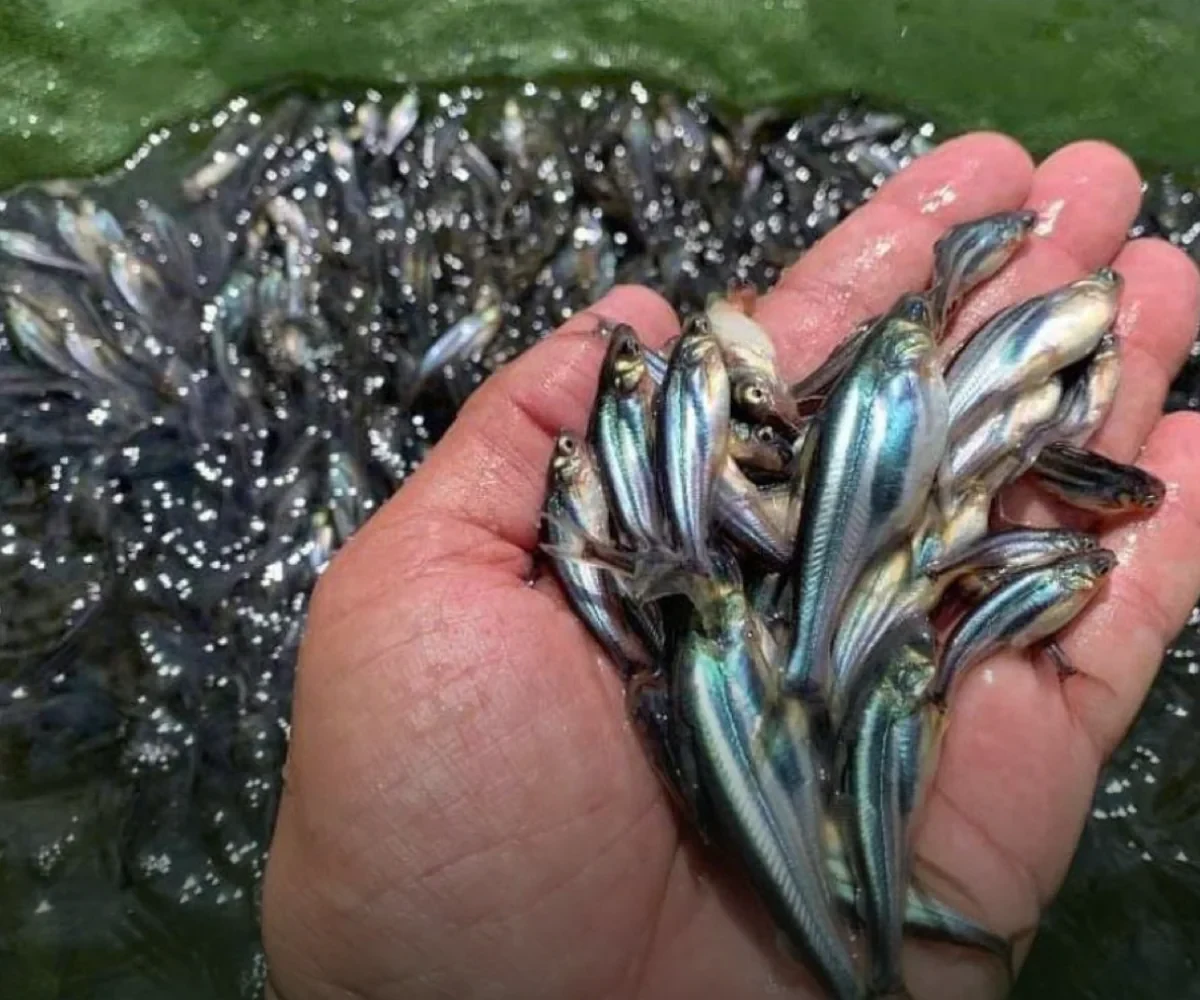
Healthy fry: uniform size, straight body, bright colour, no deformities; they swim fast and react well, with no signs of fungus or haemorrhage.
Density: 500–1,000 fry/m² (500,000–1,000,000 fry per 1,000 m² of pond).
Stocking: stock in cool hours; float the bags in the pond for 10–15 minutes to equalise temperature before opening them.
Right after stocking
Help fish recover from stress
MIXBOOM2 kg/1,000 m³ of waterlabel: after stocking
3The first 25 days: feed and water-treatment schedule
Feed by age, the 25-day water-treatment schedule and predator control.
Feed
First 2 weeks: fry eat Moina in the pond, plus soybean flour and egg yolk mixed with water and spread over the whole pond 5–6 times a day (FAO).
Days 11–15: switch gradually to powder feed with 35–40% protein, 4 meals a day (Ministry of Science and Technology).
From week 4: floating feed with 30–35% protein, 3 meals a day, pellet size matched to mouth size (Ministry of Science and Technology, FAO).
Spread feed slowly and evenly over the pond; feed just enough, leaving no uneaten feed to foul the water.
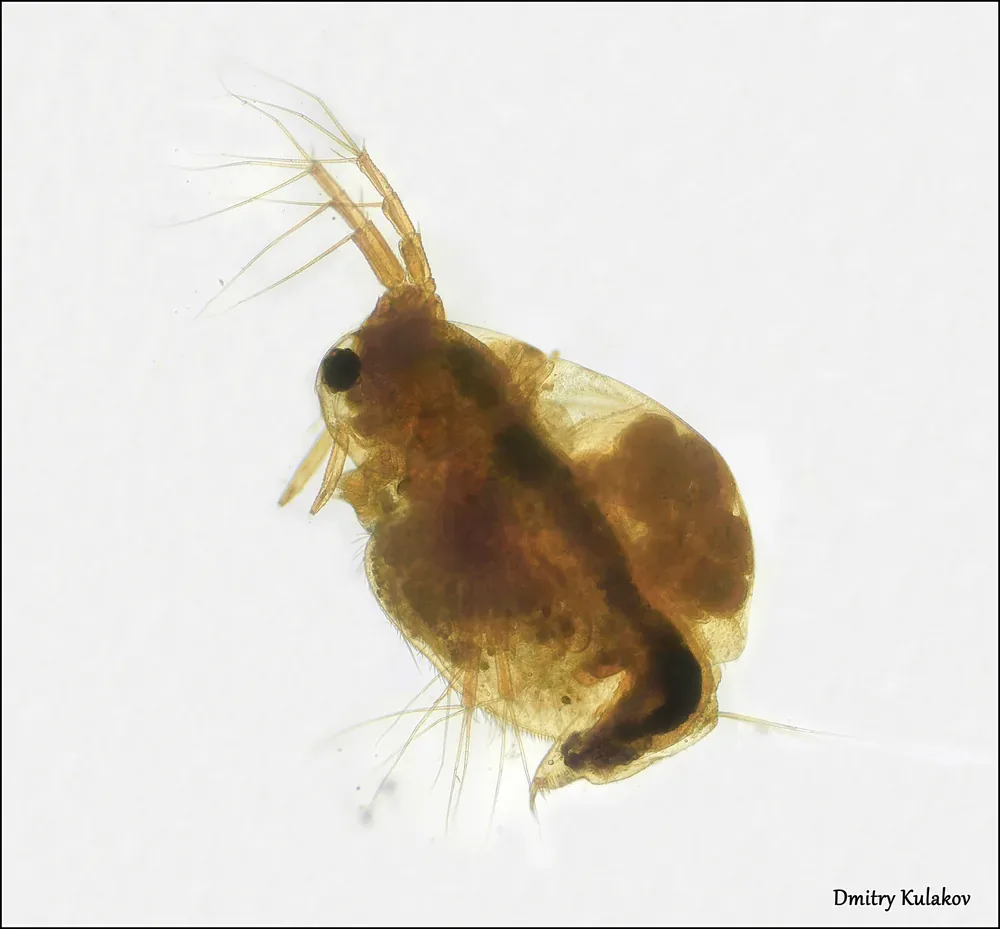
Moina macrocopa under the microscope: a tiny crustacean and the live food of fry in the first 2 weeks. Photo: Dmitry Kulakov, CC BY 4.0, iNaturalist.
Water-treatment schedule for the first 25 days
Schedule by days after stocking. Doses for each product are in the boxes below. Background photo: brgfx / Freepik.
Days 1–10
Keep Moina, stabilise the water
Apply daily for the first 2 days, then every other day. Goal: keep live food in the water, with clear water, good colour and stable pH and oxygen.
MAX 40001 pack (250 g)/6,000–7,500 m³ of waterre-seed probiotics
From day 15
Start mixing into feed
Once fish take mixed feed well, add probiotics and beta-glucan to support digestion and resistance.
PRO F1 kg/tonne of feed, 1 meal a day, every 3–5 days; in cold weather or when digestion is poor: 2 kg/tonne
BETAGLUCAN GRO0.5–1 g/kg feed; when weather or water conditions change: 2–4 g/kg
Predator control
Predators have a large effect on fry survival: tadpoles, backswimmers, dragonfly nymphs, predatory fish and birds. From filling the pond until the end of the first 7 days after stocking, remove frog eggs and tadpoles every day. Filter water carefully, fence the pond with netting, and act as soon as you spot them.
Monitoring fish health
First week: every morning, check how fish swim and feed, and look for red spots on the body.
From week 2: check fish, water colour and feed intake every day so you can adjust in time.
From about day 20: each week, examine the skin and gills of 5–10 fish; if you find protozoa or flukes, treat as in section 5.
4From day 25 to harvest at 30 fish/kg
Thinning, routine care and daily checks until harvest.
At the end of week 4, thin out to 150–200 fish/m² (Ministry of Science and Technology, FAO). From then on, exchange water according to actual water quality and follow a routine until harvest:
Every 10 days
Disinfect the water, rotating products
Run aeration while applying. Apply AQUA DINE after 6 p.m.
POWER GLUTA1 bottle/5,000 m³ of waterevery 10–15 days
AQUA DINE1 bottle/5,000–6,000 m³ of waterevery 10 days
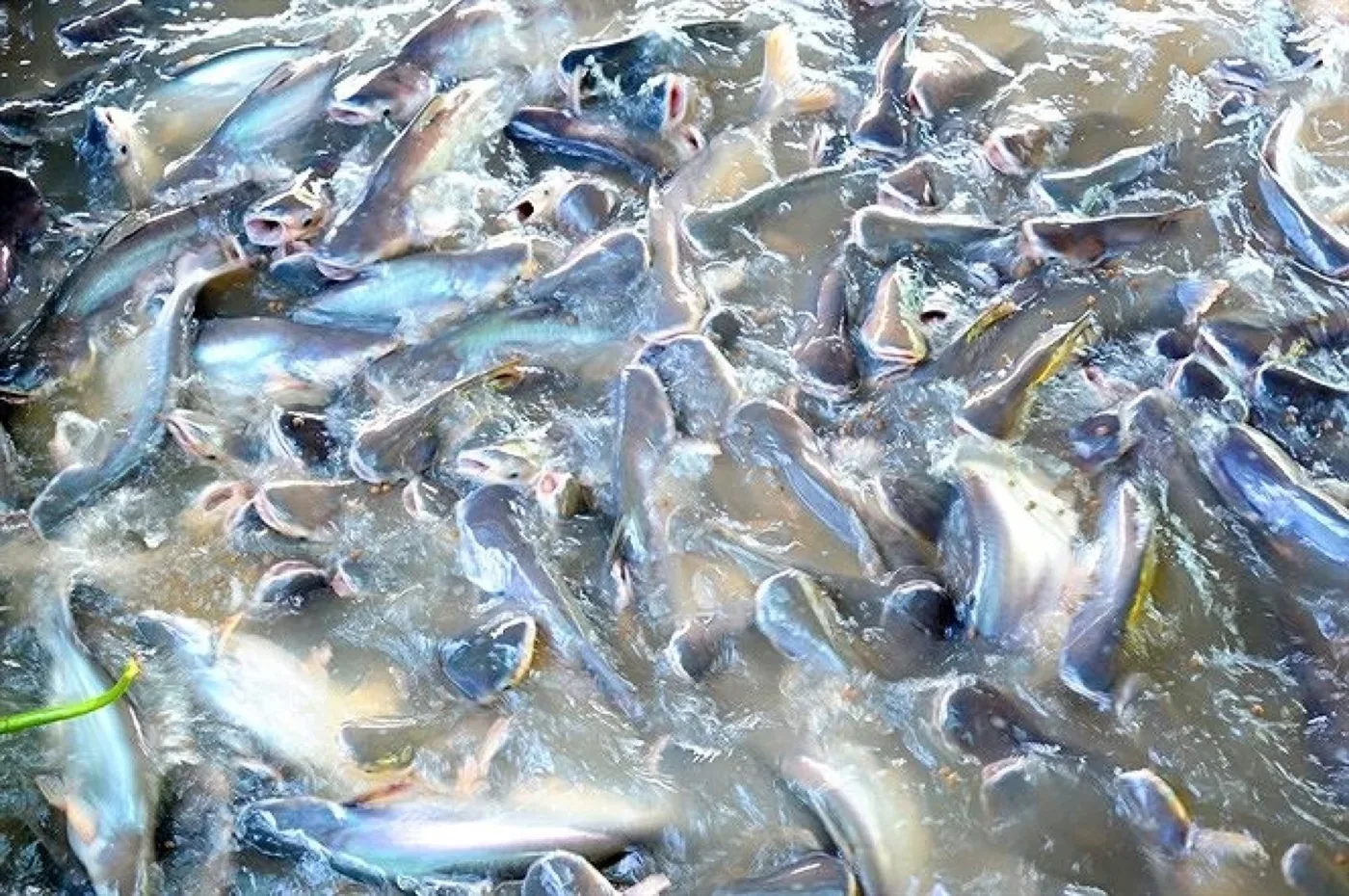
Pangasius rising to floating pellets. Spread feed slowly and evenly across the pond so all fish get their share. Photo: Than Vuong archive.
Daily checks
Every morning, check whether fish crowd at the pond edge, how they swim and whether the bottom is dirty.
Remove weak and dead fish to check their exterior, organs and parasites; record losses every day.
Check 5–10 fish for parasites regularly, especially before and after deworming.
When losses rise
Losses rising for 2–3 days in a row: cut feed to 50–60% and dissect 5–10 fish. If losses have not fallen after 2–3 days: stop feeding, identify the disease and call Than Vuong technical support at +84 867 957 568 before using any drug.
5Preventing common diseases in Pangasius fingerlings
Parasites, water mould, tail rot, haemorrhage, bacillary necrosis: signs and prevention.
Use veterinary drugs only after the disease has been correctly identified, and only as indicated on the label. Doses and treatment steps are in Than Vuong's fish disease protocols.
Some disease signs in photos
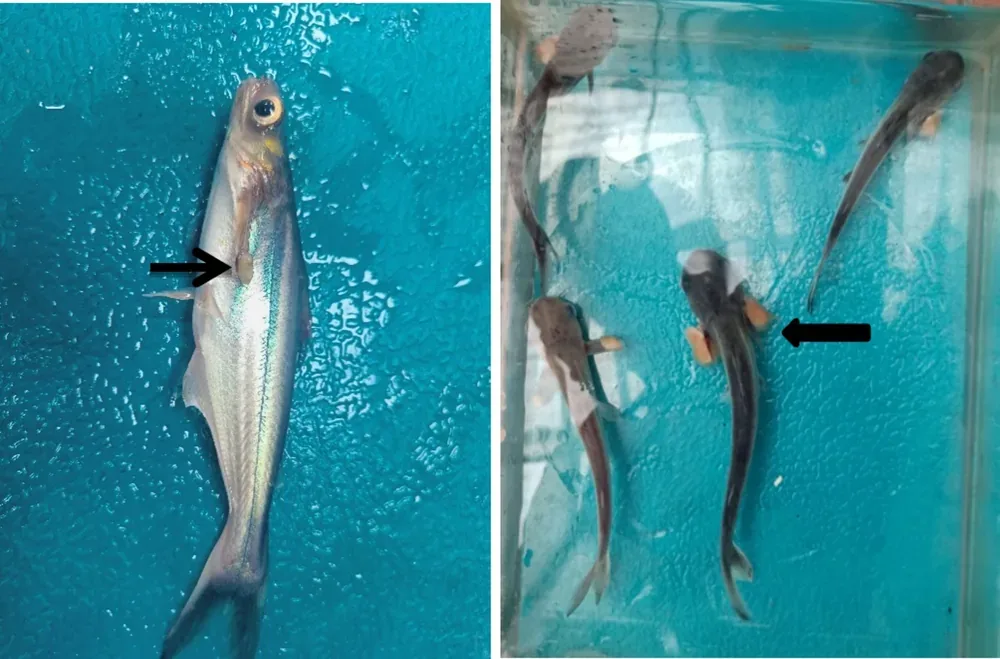
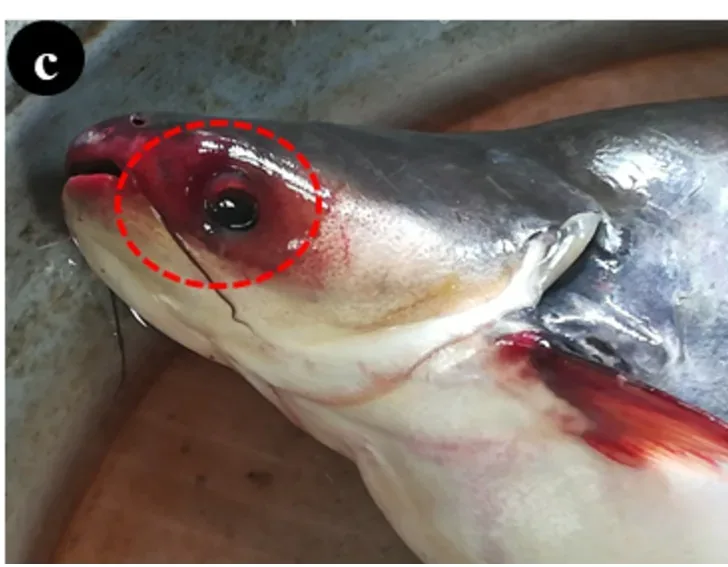
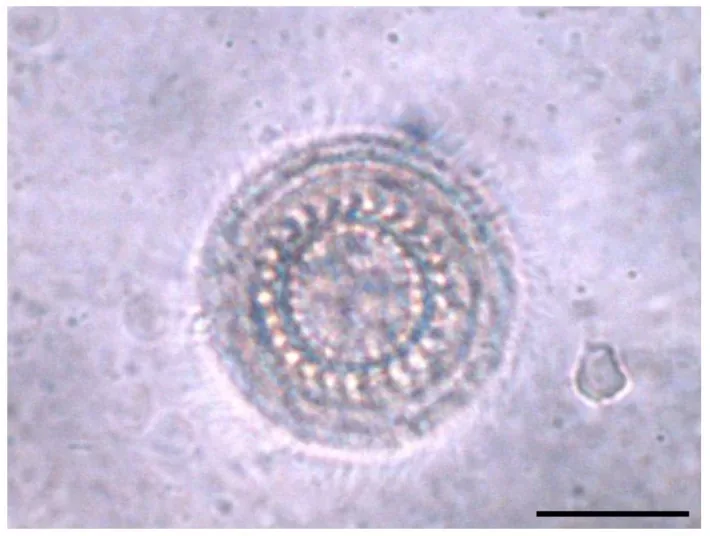
Water mould: a Pangasius fingerling infected with Saprolegnia in a trial; the arrow marks fungal growth on the pectoral fin. Photo: Rathod et al., Scientific Reports 2024, CC BY 4.0.White spots on the internal organs of Pangasius farmed in the Mekong Delta (arrows); the fish showed no clear external signs. The researchers isolated Edwardsiella tarda from these fish. Photo: Ho et al., Applied and Environmental Microbiology 2026, CC BY 4.0.Haemorrhage around the eye and head (red circle) and at the base of the pectoral fin in Pangasius farmed in Bangladesh, suspected Aeromonas infection. Photo: Ferdousi et al., PLOS ONE 2025, CC BY 4.0.Trichodina in fish gill mucus at 400× magnification (a carp sample, shown to illustrate the parasite's shape). Photo: Dărăbuș et al., Microorganisms 2024, CC BY 4.0.
How to prevent each disease
External parasites
Trichodina, gill flukes
Signs: fish flash and startle while feeding, gather in small groups weaving through each other, lose a lot of mucus and feed poorly. Skin and gill checks show protozoa or flukes.
Prevention: filter water and remove wild fish thoroughly during pond preparation, stock at the right density and disinfect routinely. Fingerlings can be bathed in WORK COP Plus 3–5 g/m³ for 10–20 minutes.
Signs: fish pass loose, undigested faeces, feed poorly, grow slowly and vary in size; dissection shows parasites in the gut.
Prevention: check regularly, especially fish in older ponds.
If fish are already sick:AQUA PRAZI as labelled: mix 100 g into 20–30 kg of feed (equal to 100 g for 200–300 kg of fish) for 3–5 days in a row; stop feeding 1 day before deworming. After deworming, mix in BIOMAX 1 g/1.5 kg feed and AQUAMOS 1 kg/1,500–1,800 kg feed for 3–5 days. See the internal parasite protocol.
Water mould
Saprolegnia
Signs: white, cotton-like patches on the skin and fins; common in cold weather and when fish are injured.
Prevention: handle fish gently when seining; disinfect routinely with POWER GLUTA (1 bottle/5,000 m³ of water, every 10–15 days).
If fish are already sick:AQUA DINE 1 bottle/1,000–1,500 m³ of water (label: kills disease-causing fungi and bacteria); call technical support if it does not improve.
Tail rot, white body
Flavobacterium columnare bacteria
Signs: fish gather where water flows, swim sluggishly, produce excess mucus and lose skin colour; tails are eroded.
Prevention: follow the day 15, 17, 19 schedule in section 3; use clean intake water; check pH, NO₂ and H₂S regularly. See the tail-rot prevention article.
If fish are already sick: call Than Vuong technical support for advice based on your pond.
Haemorrhagic disease
Aeromonas and opportunistic bacteria
Signs: red fin bases and vent, haemorrhages on the skin. In Pangasius fingerlings about 25 days old, a red vent is the earliest sign.
Prevention: disinfect and re-seed probiotics routinely; keep the pond bottom clean and do not overfeed.
Signs: fish are sluggish and stop eating; deaths are scattered at first, then rise quickly; dissection shows white pus spots on the liver, kidney and spleen. Outbreaks are common when water drops below 28 °C and in the rainy season.
Prevention: stock at the right density and keep the water clean; at the change of season, increase MAX LIVER and BETAGLUCAN GRO in the feed.
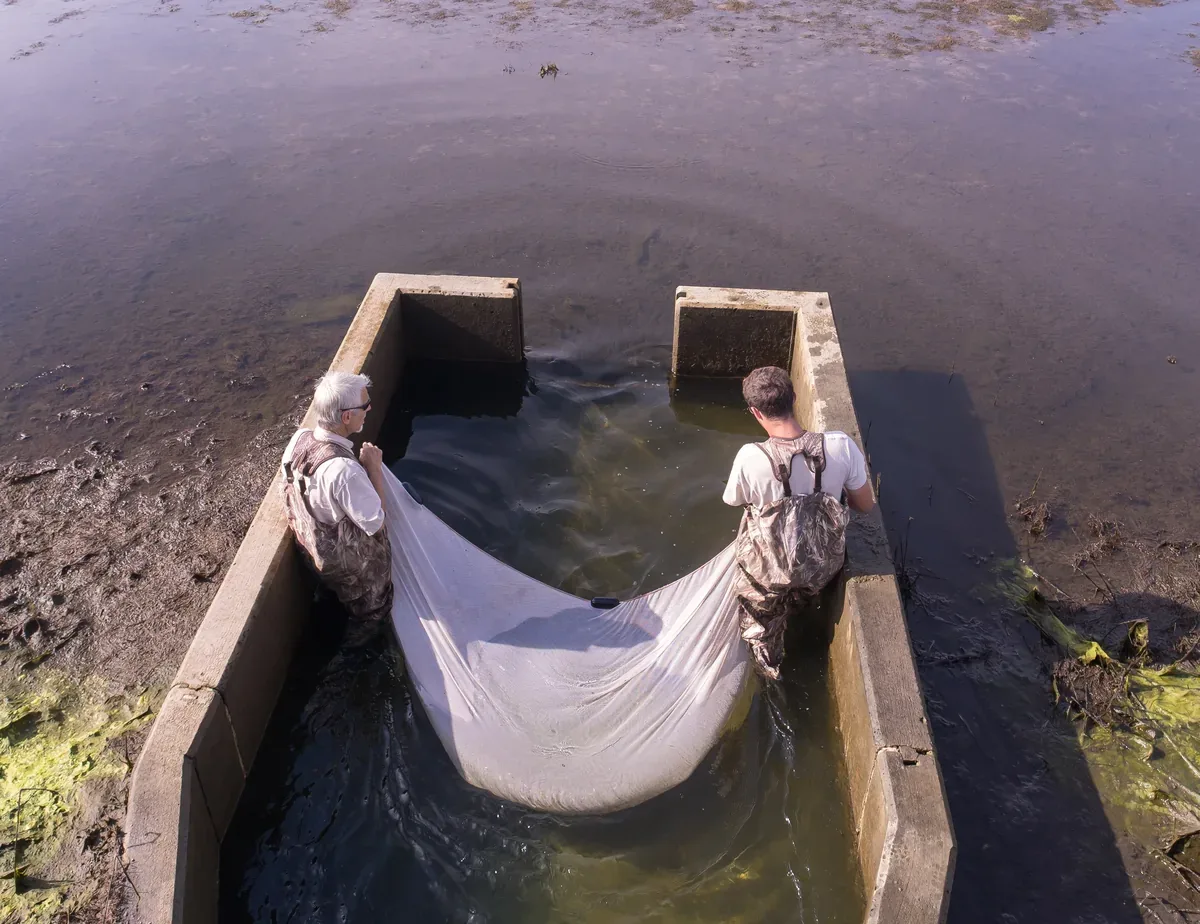
Seining fingerlings in the catch basin of a drained nursery pond (a hatchery in the United States). Work gently and quickly so fish suffer fewer abrasions. Photo: Sam Stukel, U.S. Fish and Wildlife Service, public domain, Wikimedia Commons.
Fingerlings leaving the pond must be free of bacillary necrosis. Harvest size is about 30 fish/kg (about 33 g each).
Quick answers
Why re-seed probiotics after disinfecting?
Disinfectants also kill the beneficial bacteria in the water. After 24–48 hours, once the disinfectant has worn off, re-seed with MAX 4000 or NIAZYME so beneficial bacteria keep breaking down waste and the water stays stable.
Should antibiotics be mixed into feed routinely to prevent disease in fingerlings?
No. Prevent disease through water management, probiotics, routine disinfection and stronger resistance through feed. Use veterinary drugs only after the disease has been identified, as indicated on the label and following the protocol, to avoid drug-resistant pathogens.
Can PRO F be mixed with disinfectants or organic acids?
No. The PRO F label says not to mix it with antibacterial agents or organic acids. Use an opened pack within 30 days.
At what size are fingerlings sold?
This protocol runs to a harvest size of about 30 fish/kg (about 33 g each). Fingerlings must be free of bacillary necrosis before leaving the pond or moving to grow-out ponds.
Doses follow the registered labels of Than Vuong products.
Protocol compiled by the Than Vuong Technical Department for reference. Ponds differ in water source, stocking density and weather; contact our technicians to adjust it to your pond.
Quick Q&A
Frequently asked questions on this topic
What does "Pangasius nursery protocol with Than Vuong products: from fry to harvest at 30 fish/kg" cover?
From pond preparation and stocking fry through the 25-day water-treatment schedule, thinning and routine care to harvesting fingerlings at 30 fish/kg: each step, the products used and their label doses.
Water-treatment schedule for the first 25 days — what are the details?
First 2 weeks: fry eat Moina in the pond, plus soybean flour and egg yolk mixed with water and spread over the whole pond 5–6 times a day (FAO). Days 11–15: switch gradually to powder feed with 35–40% protein, 4 meals a day (Ministry of Science and Technology). From week 4: floating feed with 30–35% protein, 3 meals a day, pellet size matched to mouth size (Ministry of Science and Technology, FAO).
Predator control — what are the details?
Schedule by days after stocking. Doses for each product are in the boxes below. Background photo: brgfx / Freepik. Days 1–10Keep Moina, stabilise the waterApply daily for the first 2 days, then every other day. Goal: keep live food in the water, with clear water, good colour and stable pH and oxygen.FYTO FLOC3–5 kg/1,000 m³GROWMIN1 kg/1,000 m³NIAZYME1 kg fermented with 5 kg powder feedDays 11–15Mild disinfection every other dayApply AQUA DINE…
Which species does this article apply to?
Fish
Related Products
Products linked to this topic
ShrimpThan Vuong Blue
GRO C30
Supplies vitamin C to increase resistance and reduce stress
ShrimpThan Vuong Nutrition
MIX 400
Supply minerals, stabilize alkalinity and pH
ShrimpThan Vuong Nutrition
AQUA PRO4000X
Microbial control of algae and harmful bacteria in water
ShrimpThan Vuong Nutrition
BACWAT New
Comprehensive microbial solution for super-intensive ponds
Ask Than Vuong
Aquaculture technical assistant
Hello there 👋
Describe your pond issue or pick a question below.