01 / THE PROJECT
Vietnamese pangasius under the international research spotlight
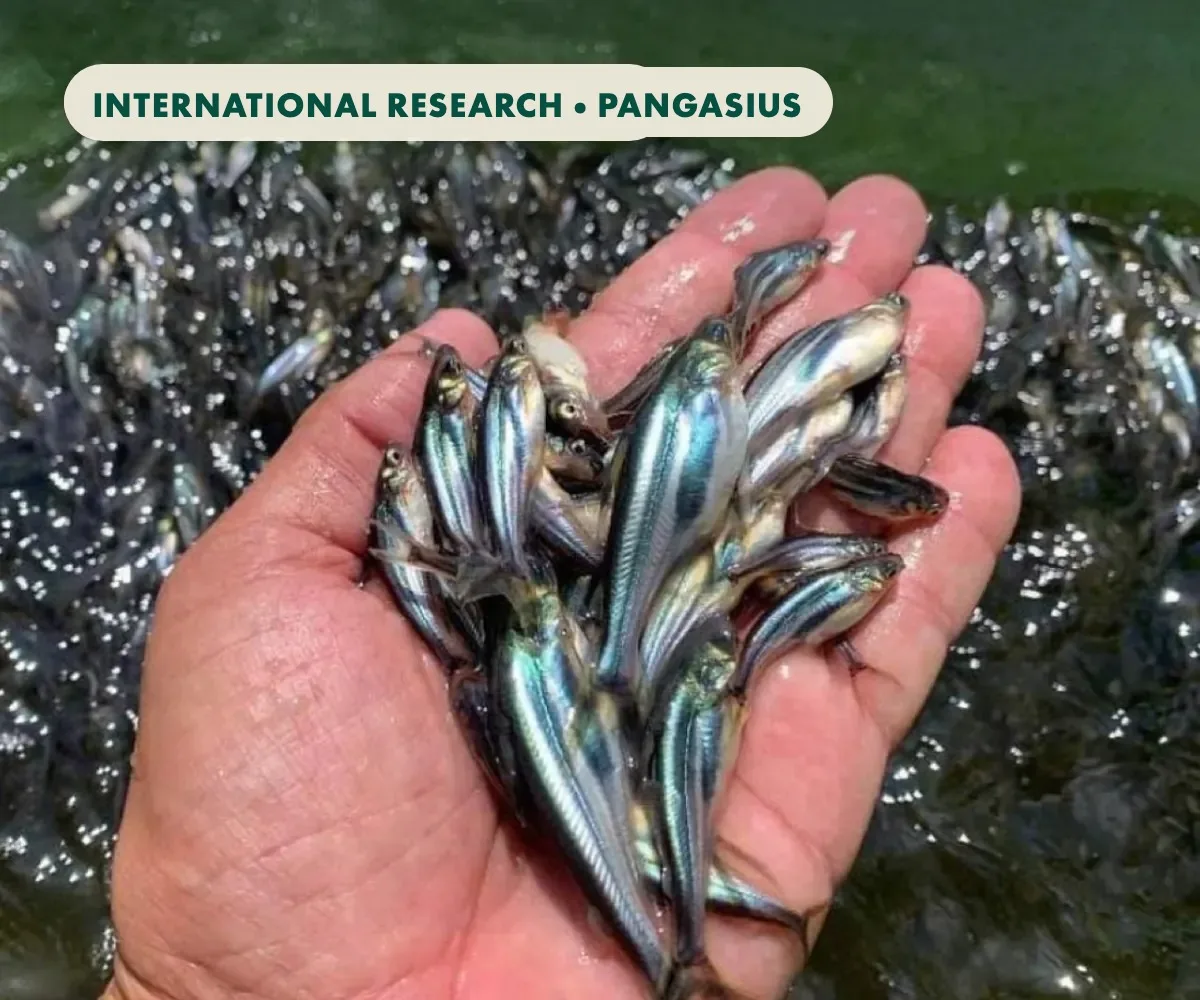
The University of Stirling (Scotland, UK) has just received £2.4 million (about USD 3.2 million) for an international project on antimicrobial resistance in Vietnam's pangasius (striped catfish) sector. The project is led by Prof. Margaret Crumlish of the university's Institute of Aquaculture.
Over four years, the multidisciplinary research team will study how antimicrobial resistance develops in freshwater environments and how it affects production, and will also look at the barriers that keep farmers from using alternatives to antibiotics. The team will build the research roadmap together with farmers, aiming for practical ways to limit antimicrobial resistance in freshwater farming.
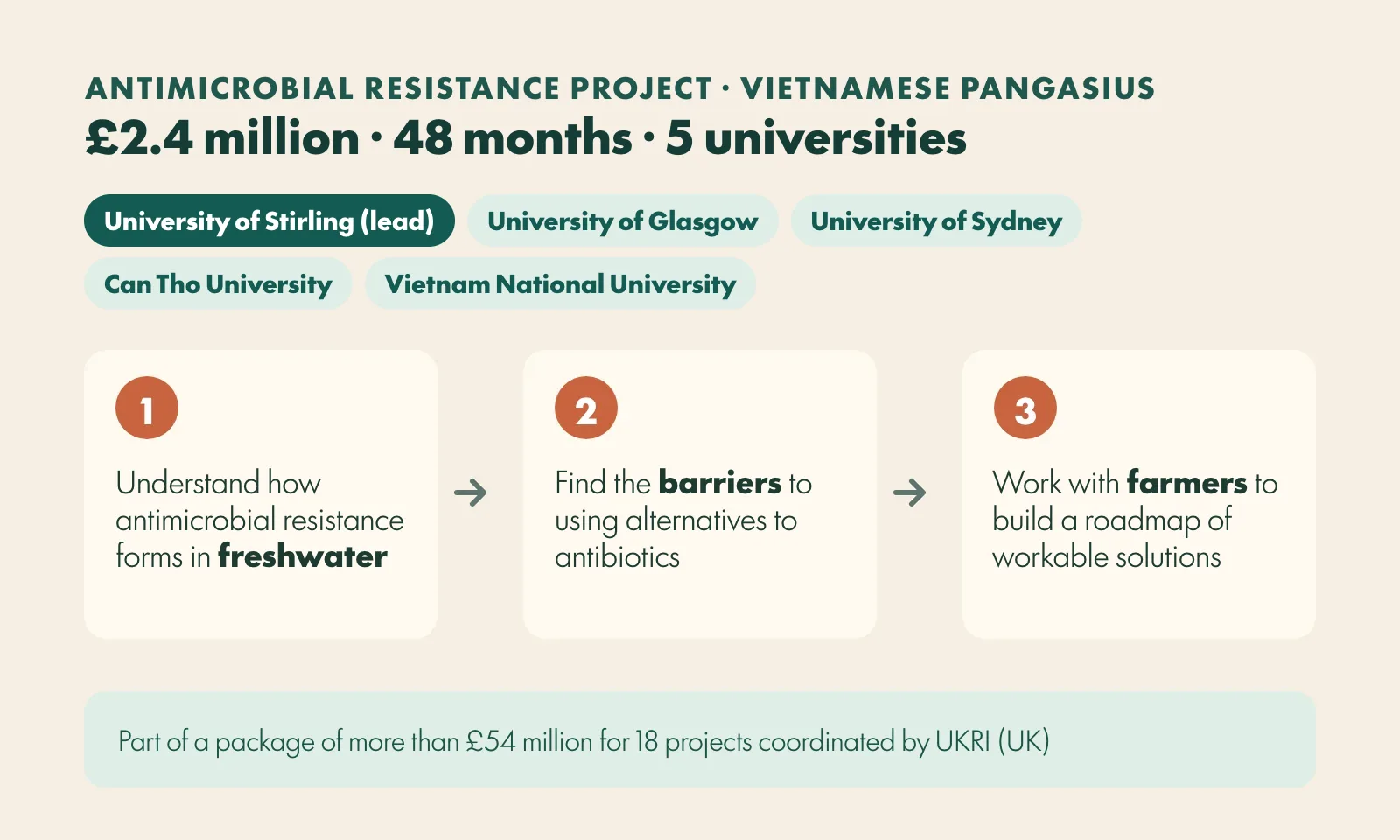
Partners include the University of Glasgow, the University of Sydney (Australia), Can Tho University and Vietnam National University. The grant is part of a package of more than £54 million for 18 projects coordinated by UKRI — UK Research and Innovation — to prepare for future disease outbreaks, combat antimicrobial resistance and develop next-generation vaccines for farmed animals, co-funded by the UK government departments responsible for environment and agriculture, foreign affairs and development, and health.
02 / WHY
When antibiotics no longer work
“Aquatic environments play an important role in the development and transmission of antimicrobial resistance, and aquaculture both depends on and interacts with these ecosystems.”
Prof. Margaret Crumlish, University of Stirling
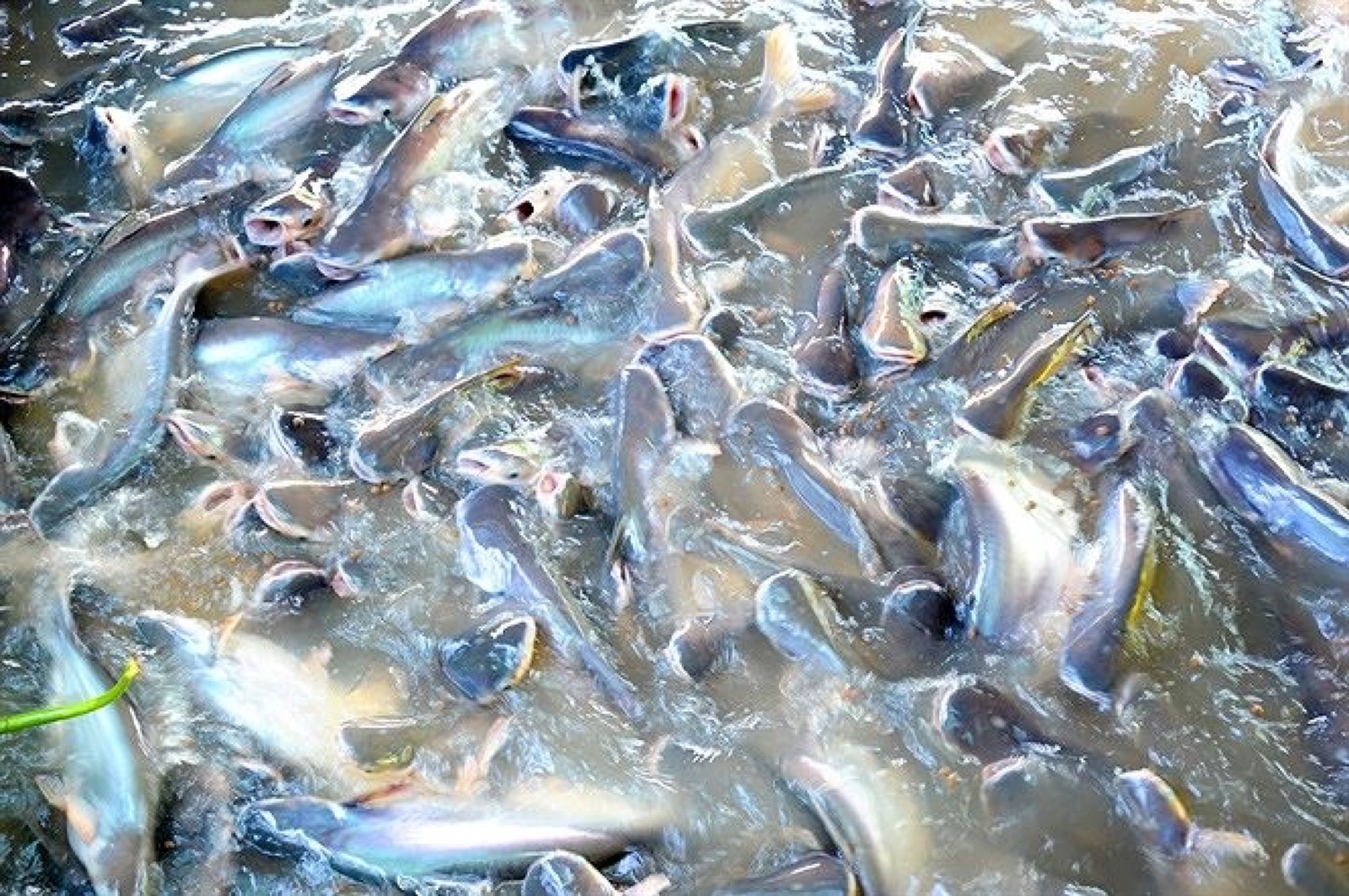
According to Crumlish, Vietnamese pangasius — one of the most important freshwater farming sectors in the world — is an ideal place to understand how antimicrobial resistance develops, how it affects production, and how disease can be managed more sustainably.
“When antibiotics stop working effectively in aquaculture, particularly in freshwater systems in South East Asia, farmers often have few alternatives, but they trust antibiotic products, even if they are not effective.”
Prof. Margaret Crumlish
The project builds on Stirling's earlier fish vaccine research, including a recent trial at the university's National Aquaculture Technology and Innovation Centre. Data from these studies will be used to work with stakeholders on feasible solutions and to improve responsible antibiotic use in freshwater farming.
03 / THAN VUONG PERSPECTIVE
Applying it to pangasius ponds
The project has only just started, and results are still a few years away. But the message is already clear: keeping disease low in the fish is the most sustainable way to use fewer antibiotics. In pangasius ponds, farmers can start right away:
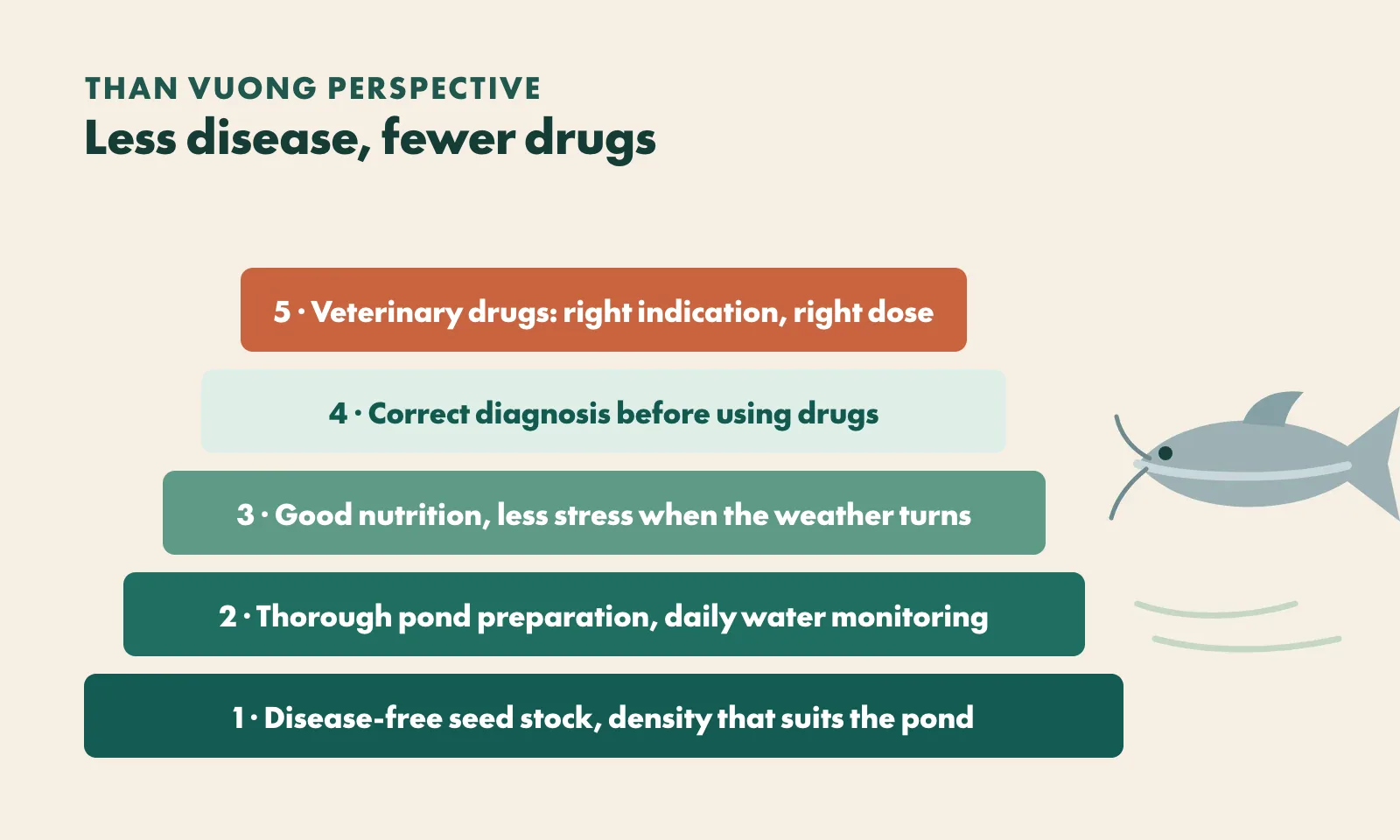
- Seed stock and density: choose disease-free seed stock of known origin; stock at a density that the pond and its paddlewheel aerators and aeration system can support.
- Pond and water: prepare the pond and treat the water thoroughly before stocking; monitor the water every day, especially when the seasons change and when rain and sunshine are erratic.
- Fish health: good feed, fed in the right amount; add gut probiotics and reduce stress when moving fish to another pond, exchanging water or when the weather turns. See our products for fish.
- Diagnose before using drugs: if the fish show unusual signs, call a technician to take samples for testing. When veterinary drugs are needed, follow the veterinary officer's instructions — right indication, right dose, full withdrawal period before harvest — to limit drug resistance and residues.