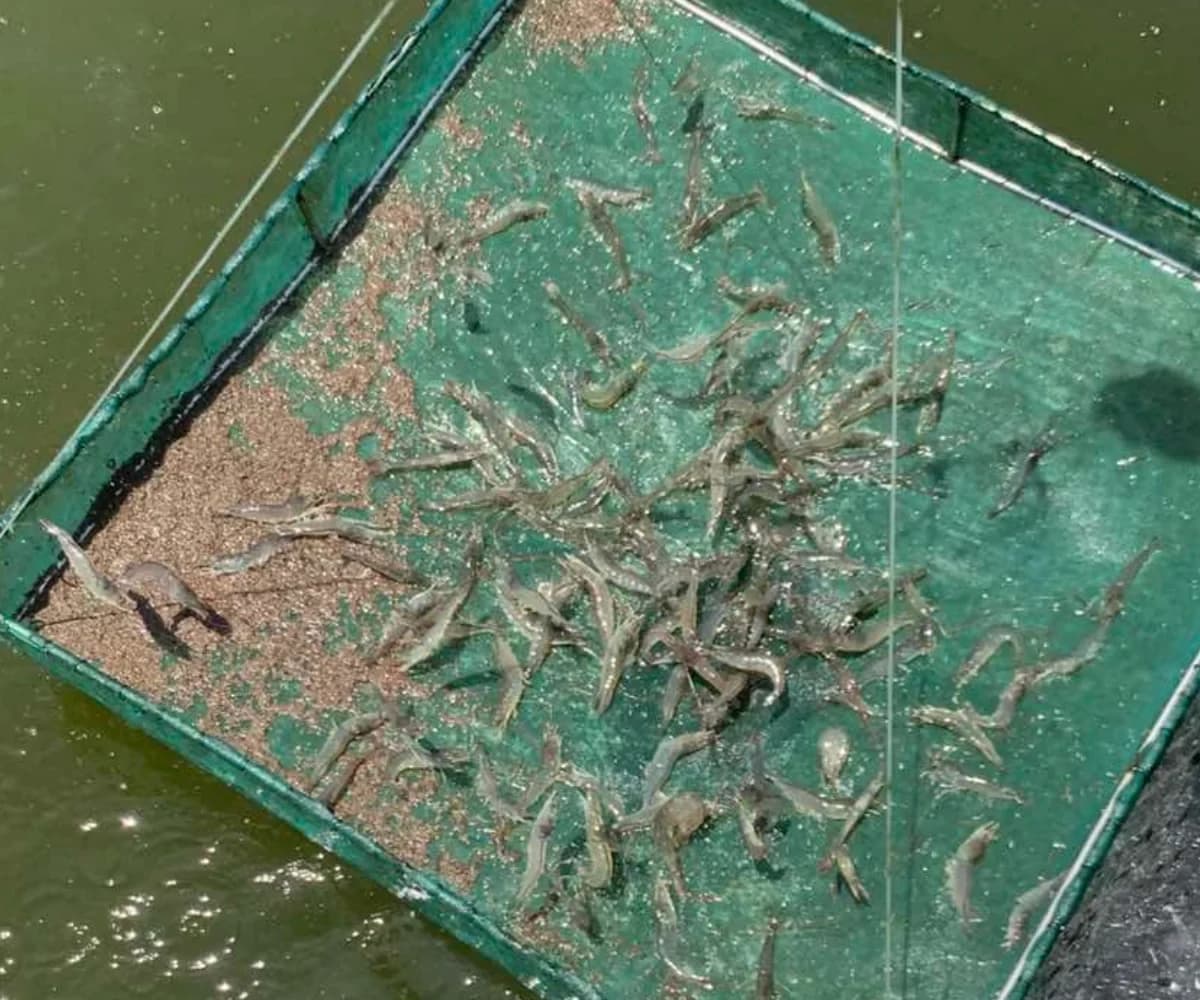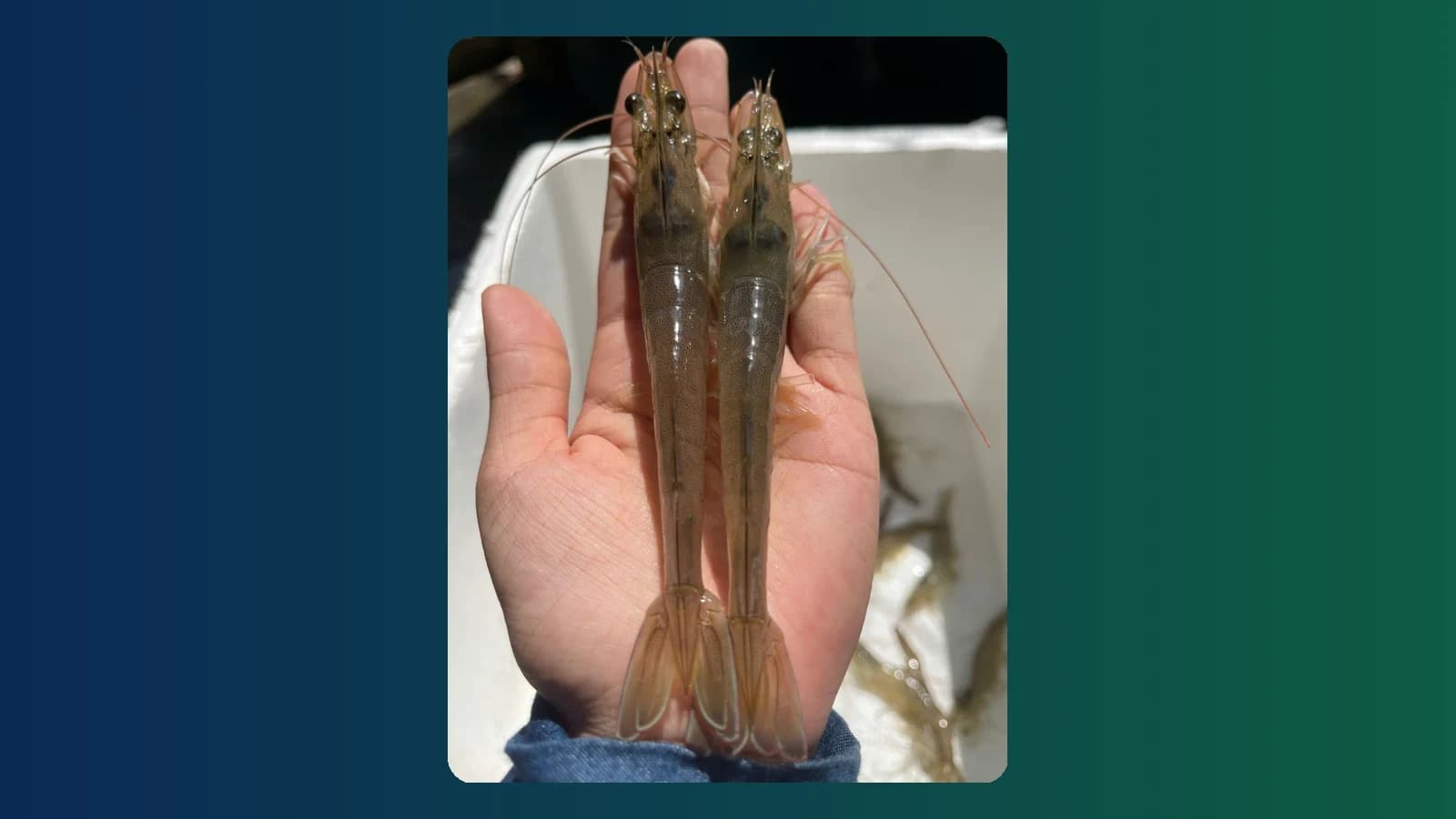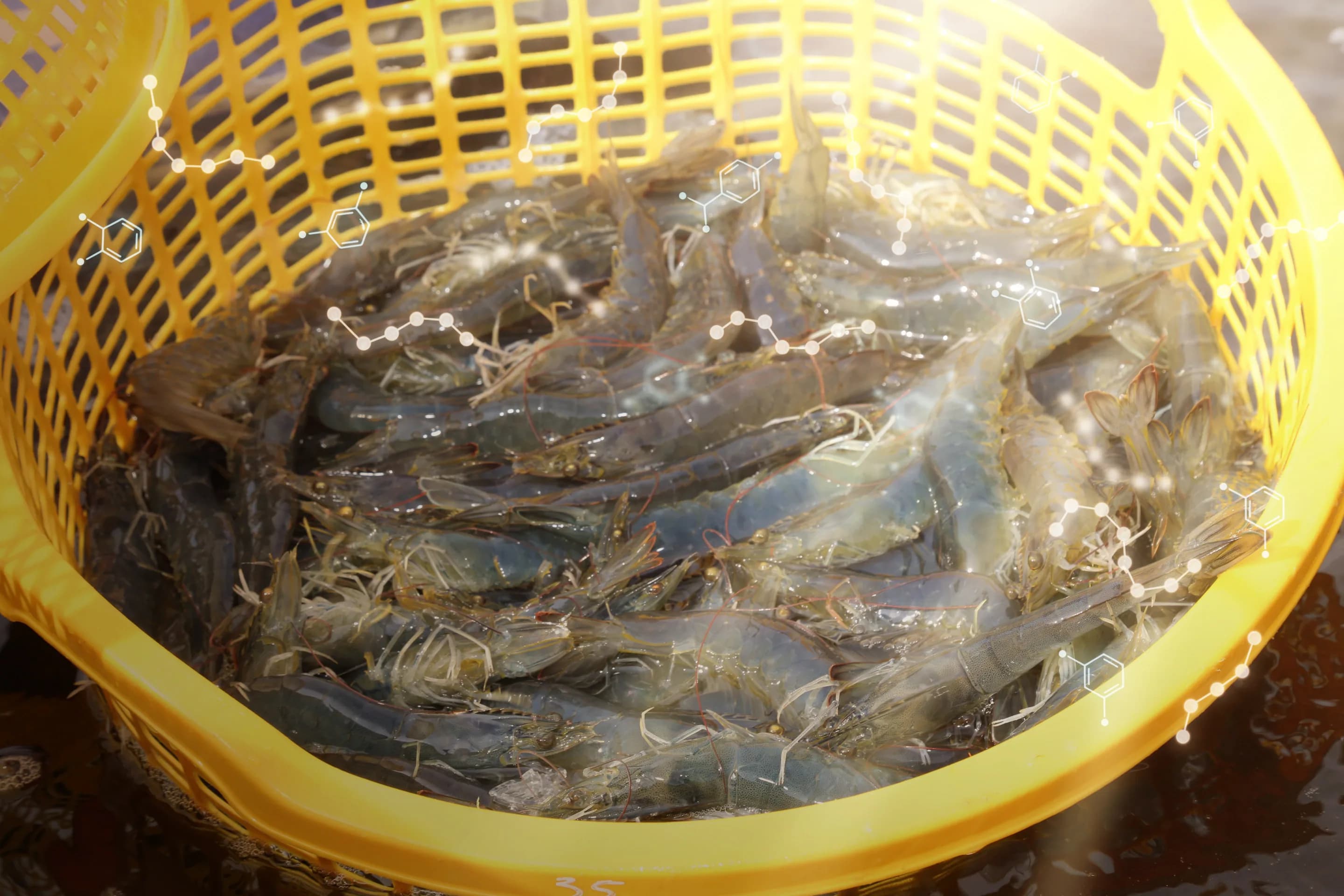
Measurements of EHP spores in pond water from Thailand and Vietnam contain a striking finding. On the Vietnamese farms tested, intake water was fairly clean of EHP, yet spores in the culture water rose sharply. The parasite multiplies inside the pond.
A silent enemy of shrimp farming
- EHP was first recorded in Thailand in 2004.
- Losses were estimated at about USD 560 million in India (2018–2019) and about USD 230 million in Thailand (2018).
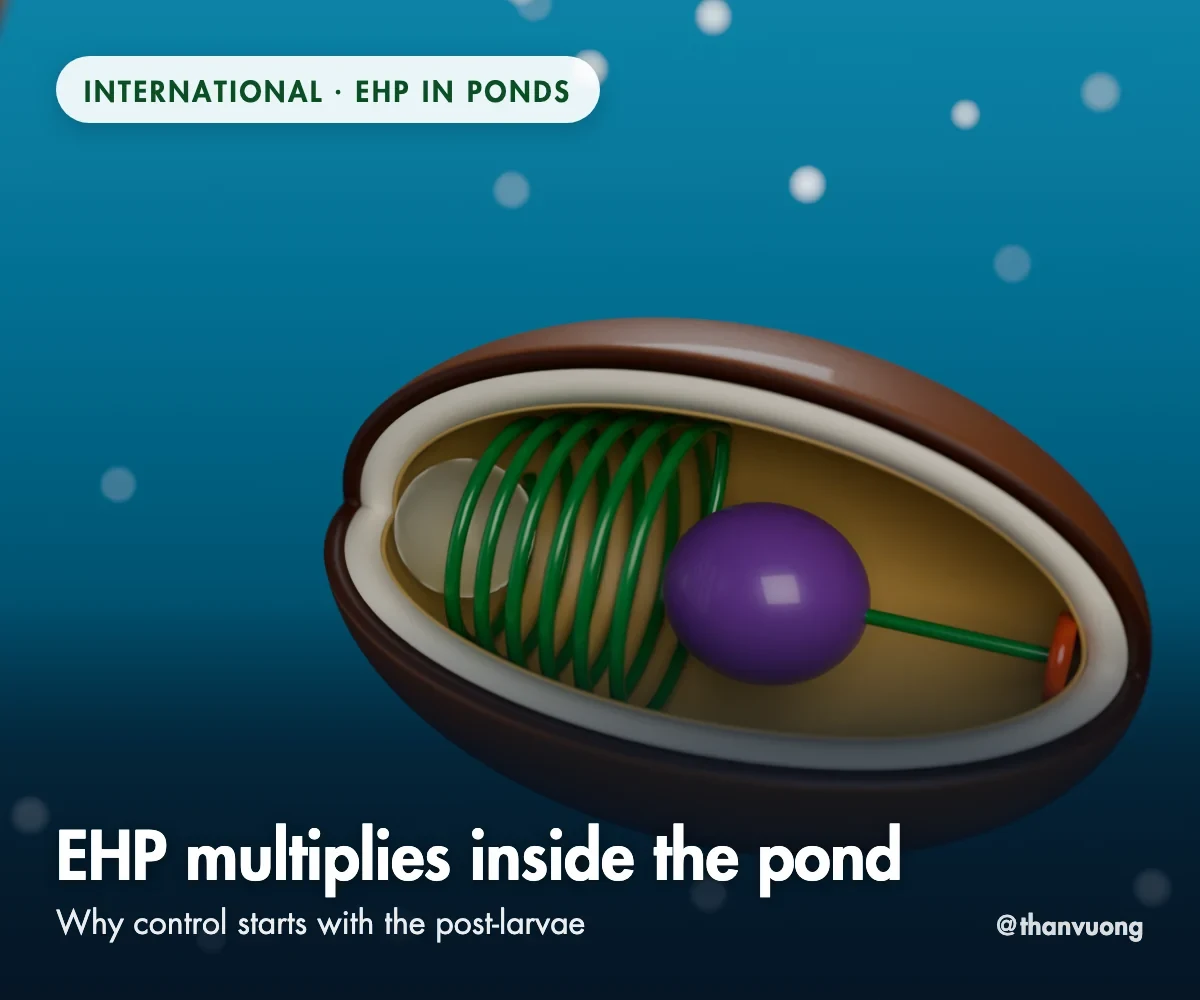
- The spores are oval and only about 1.1–1.7 × 0.7–1.0 micrometres, very small and long-lasting in ponds.
- In ponds with active outbreaks, measured parasite loads were sometimes only about 10 to 1,000 DNA copies per mL of water. Very low concentrations are enough to cause disease, so detection has to be sensitive.

The coiled polar filament is the spore’s weapon: under the right conditions in the shrimp gut it fires out and injects the parasite into hepatopancreas cells. The thick, tough outer wall lets spores survive for a long time in water and pond sediment.
Counting spores in water for early warning
A Belgian microbial technology company has developed a way to count mature EHP spores directly in pond water samples. The method analyses single cells with machine learning; the model was trained on more than 600 million data points from water, gut and hepatopancreas samples.
Unlike DNA tests, it counts mature spores, the infective form, rather than leftover DNA traces. Farmers can therefore see disease pressure in the pond before shrimp show symptoms.
How Vietnam differs from Thailand
The data below come from farms in the developer’s early-testing programme, not a nationally representative survey. The article reports only the direction of the differences, not the measurements.

| Comparison | Thailand | Vietnam |
|---|---|---|
| Intake water | EHP higher than in the pond | EHP much lower |
| Pond water | Lower than intake water | Rises sharply despite clean intake |
| Hatcheries | Lower than Vietnam | Spore density tends to be higher than Thailand |
| Seasonality | Stable but persistent all year | Volatile in the dry season |
This matters in practice for Vietnamese farmers. The parasite mainly multiplies inside the pond rather than arriving with the water. The article points to a close link between hatchery biosecurity, post-larvae quality and the risk of EHP outbreaks in grow-out.
What farmers should do
- Buy post-larvae from hatcheries that control EHP, and test again before stocking.
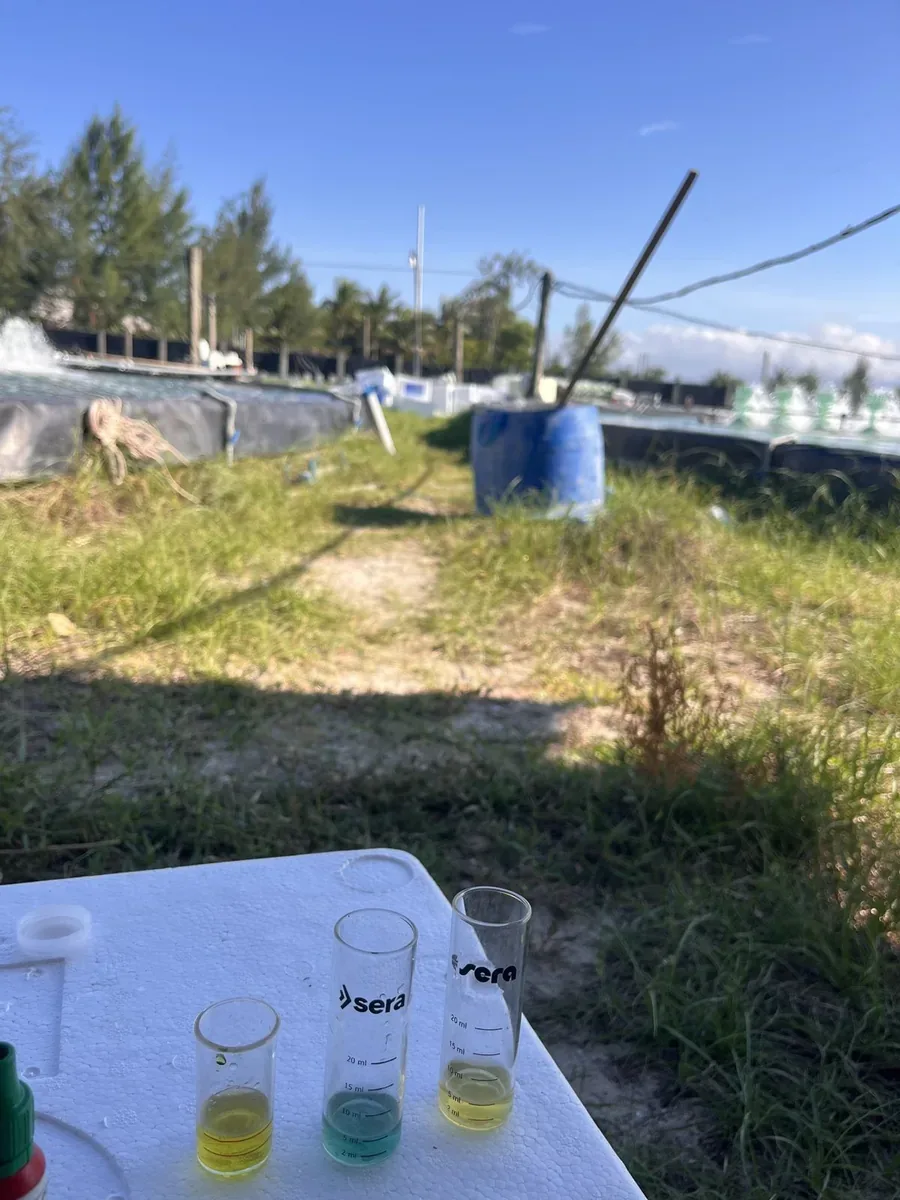
- Monitor both intake water and pond water; do not wait for symptoms.
- Be especially careful in the dry season.
- At the first warning signs, tighten biosecurity, adjust feeding and treat the pond in a targeted way.
Sources
- EHP risk profiling at scale: Fast and accurate insights. Aqua Culture Asia Pacific, published online 2 March 2026 (print issue November/December, pp. 37–39). Written by the KYTOS team (Belgium) within a project funded by the Flanders FICAP programme.
- Tourtip S., Wongtripop S., Stentiford G.D. et al. Enterocytozoon hepatopenaei sp. nov. (Microsporida: Enterocytozoonidae), a parasite of the black tiger shrimp Penaeus monodon (Decapoda: Penaeidae): fine structure and phylogenetic relationships. J Invertebr Pathol 2009;102(1):21–29. DOI 10.1016/j.jip.2009.06.004 (spore structure).
This article is a synthesis and interpretation by Than Vuong, not a translation. Numbers come from the original articles; product promotion in the originals has been left out. Charts were redrawn by Than Vuong from the numbers and the 3D models were built by Than Vuong; the originals’ own figures and tables are not reproduced.