
Marine fish seed
Marine fish nursery: even, clean stock ready for the cage
Six species farmed widely in Vietnam, from small fry to fingerlings ready for the cage. Figures from Vietnamese regulations and international manuals, calculators for your own tanks, and Than Vuong's technical team alongside you.

- under 30%
- maximum length difference within a graded grouper lot
- 2.5–7.5 cm
- fish size at which VNN has killed up to 100%
- 5‰/day
- maximum salinity change per day during adaptation (Quang Ninh 2026)
- at least 24 hours
- fasting before moving grouper and seabass
Quick answer
A marine fish nursery raises small fish bought from a hatchery up to a size ready for cages or grow-out ponds. Losses come mainly from larger fish eating smaller ones, weaning too early, parasites and viruses arriving with the seed, and transport stress. The work is to take in clean lots and quarantine them, grade regularly (grouper and seabass: length within a lot differs by less than about 30%), feed many small meals of the right pellet size, keep water clean and change salinity slowly. Size, feed and density differ by species, so see the page for your fish.
Pick the fish you nurse
One page per species: density, feed, grading, water and transfer size.
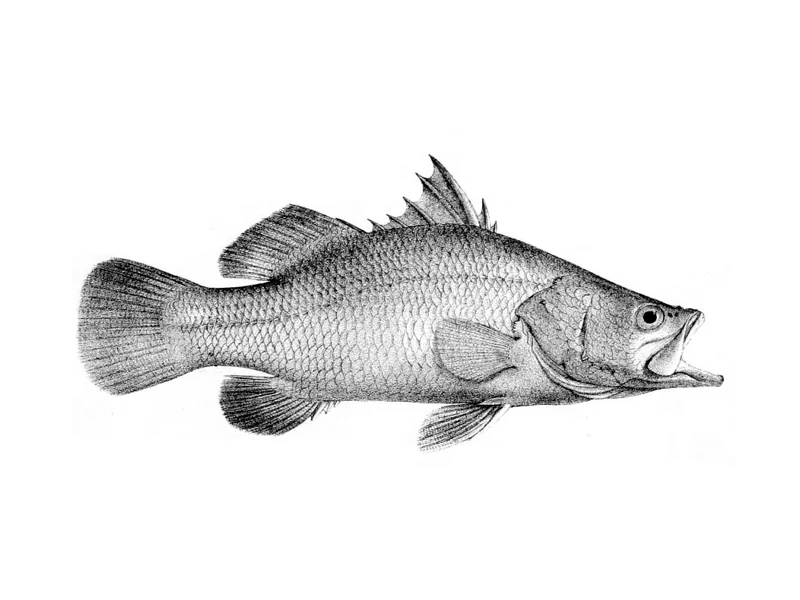
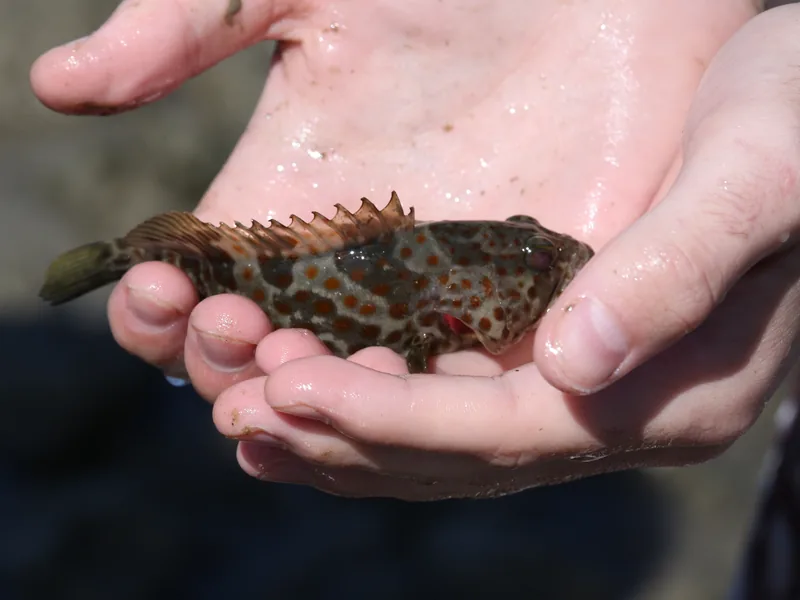
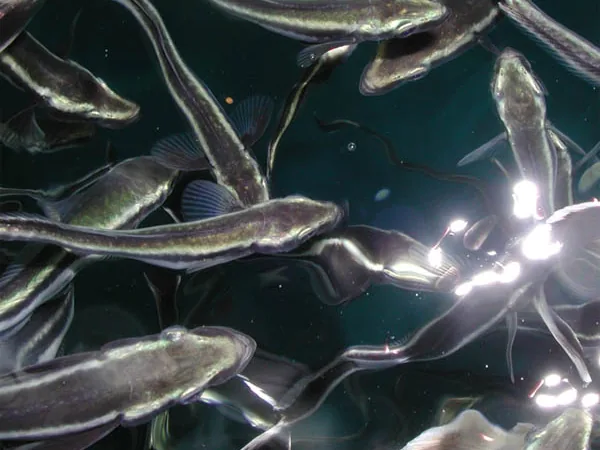
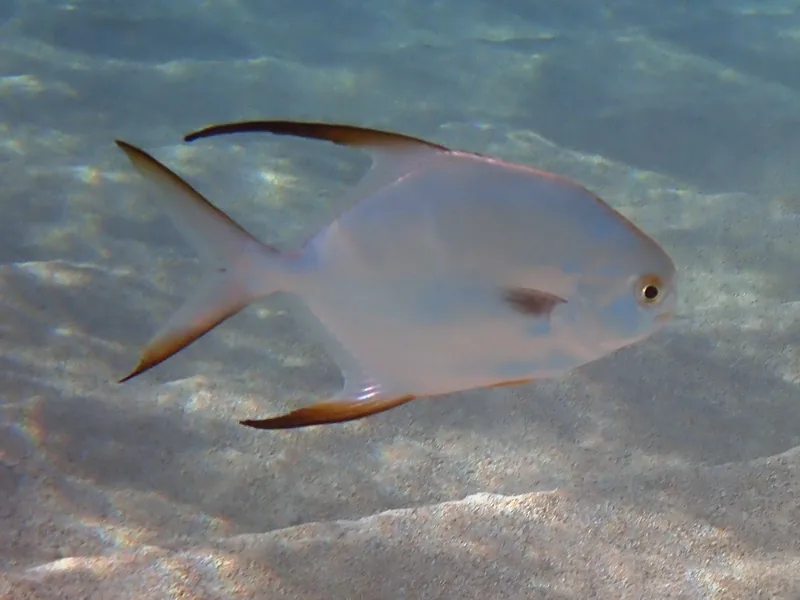
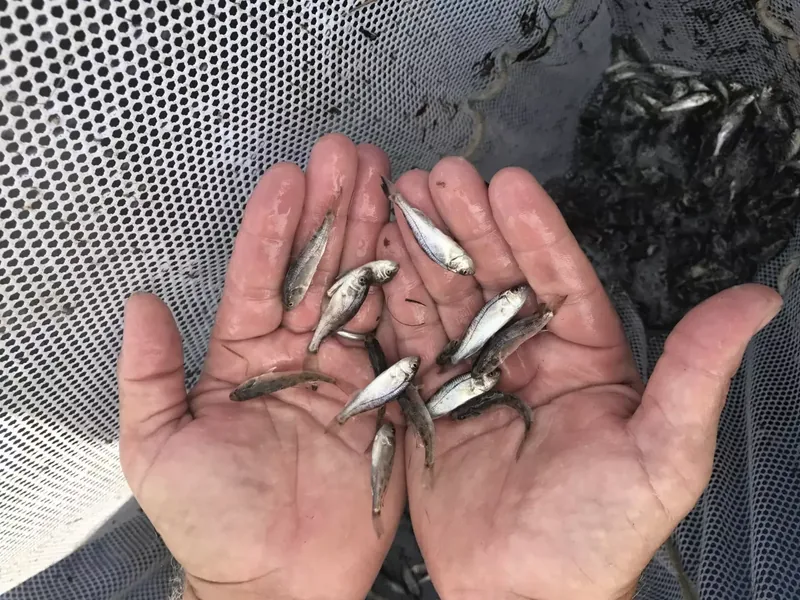
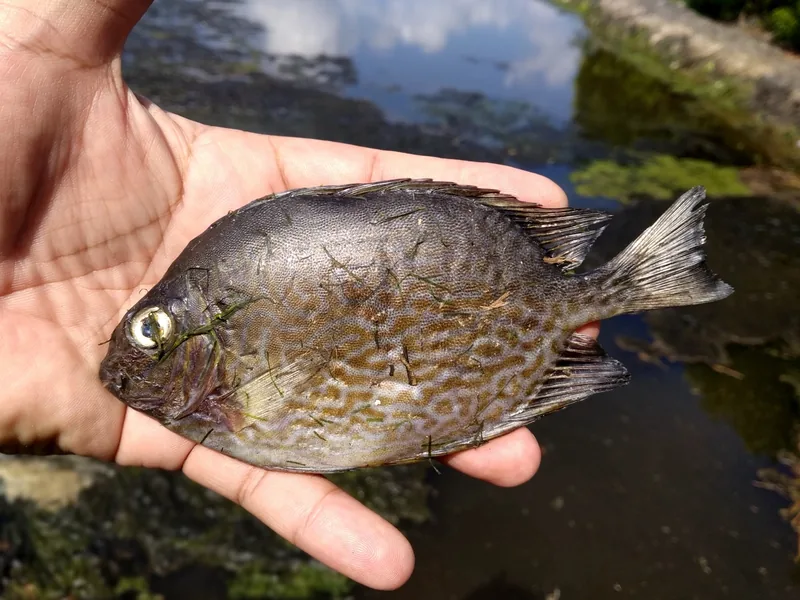
Photos show juveniles of each species, credited on the species pages. Seabass is shown as a scientific drawing.
7 steps of a marine fish nursery
- 1Prepare tanks and hapasDisinfect, treat incoming water and keep enough empty tanks for moving fish after grading.
- 2Receive and quarantine seedCheck the lot, balance temperature and salinity, and hold it apart before it joins other fish.
- 3Feed and weanEnough meals, right pellet size. Wean at the right size: seabass under about 16 mm die in numbers if weaned early.
- 4GradeSeparate large from small fish regularly, quickly and gently in aerated water.
- 5Keep water rightMeasure daily, siphon, exchange water and keep a log to see trends.
- 6Prevent diseaseViruses have no specific cure. Block them at the seed, water, trash fish and tools.
- 7Move to the cageRight size, parasite check, fasting, correct packing density and papers.
- →Work it out for your tanksDensity, feed, grading, salinity mixing and a tank log.
Seed sizes in the national regulation
From QCVN 02-36:2021/BNNPTNT. Seabass, rabbitfish and hybrid grouper are not covered.
| Species | Small fingerling, cm | Small fingerling, g | Fingerling | Reference age (days) |
|---|---|---|---|---|
| Brown-spotted grouper | 1.5 to under 7 | 1 to under 6 g | from 7 cm, from 6 g | 30 / 70 |
| Cobia | 4 to under 10 | 2 to under 8 g | from 10 cm, from 8 g | 20 / 60 |
| Pompano, long-finned (T. blochii) | 2 to under 5 | 0.8 to under 6 g | from 5 cm, from 6 g | 25 / 35 |
| Pompano, short-finned (T. ovatus) | 2 to under 5 | 0.8 to under 7 g | from 5 cm, from 7 g | 25 / 35 |
| Red drum | 3 to under 5 | 1 to under 4 g | from 5 cm, from 4 g | 35 / 45 |
Age: the first figure runs from first feeding to the small fingerling stage, the second from the end of that stage to the fingerling stage, both reference minimums. Deformity: at most 2% for small fingerlings and 1% for fingerlings.
Marine fish technical articles
Frequently asked questions
What separates a small fingerling (cá hương) from a fingerling (cá giống)?
It depends on the species. Under QCVN 02-36:2021, brown-spotted grouper count as fingerlings from 7 cm and 6 g, cobia from 10 cm and 8 g, pompano and red drum from 5 cm. The regulation does not cover seabass or rabbitfish yet.
What stocking density is right?
There is no single figure. For 2–3 cm grouper alone, sources range from 33 to 2,000 fish/m³, possibly because water flow, seed source and system differ. Start from the figure closest to your system on the species page, then adjust for oxygen, appetite and losses.
How often should I grade?
Sources give from 3 days to about 20 days, by species and size. Grading cuts cannibalism, but every handling stresses and scratches fish, so it is a balance. No clear interval was found for red drum or rabbitfish.
Does a freshwater bath clear parasites?
No. A bath does not reach fluke eggs on nets and tank walls, or the cysts of white spot and Amyloodinium on the bottom. In a trial on orange-spotted grouper, 30 minutes removed only 51% of gill flukes. Clean nets, move fish to clean tanks and time the work to the parasite's life cycle.
Is a lot with a quarantine certificate safe?
It lowers risk but is no guarantee. Sampling assumes 10% prevalence, and in Quang Ninh in April 2025 a lot that had passed quarantine still fell sick. Keep quarantining new arrivals.
Does Than Vuong have a dosing protocol for marine fish seed?
Not yet a day-by-day protocol like pangasius. This section only gives label doses for fish seed and marine fish. For nursery tanks, call our technical team to work it out for your volume and stock.