
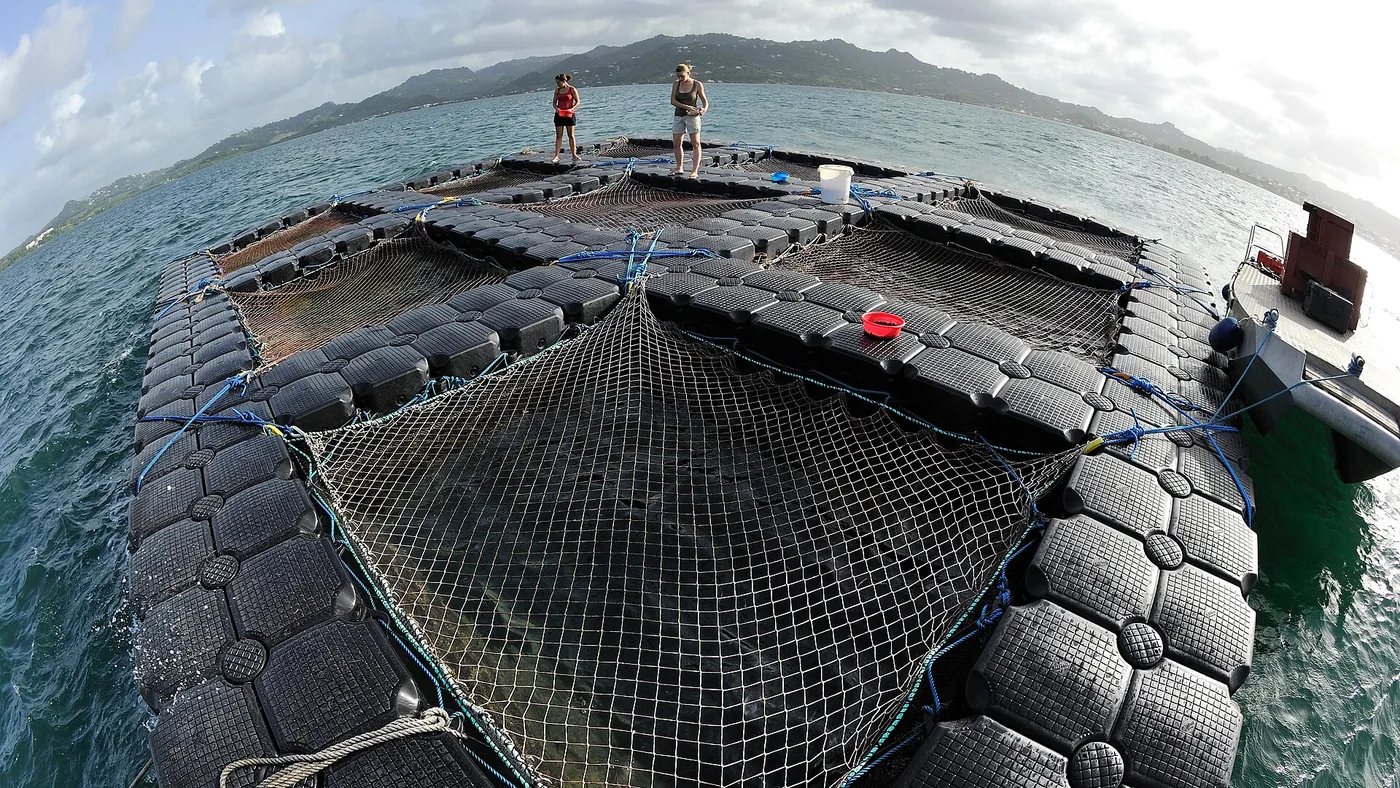
From seed to grow-out
No single weight works for every species. Seed lasts until stocking for grow-out, and that size varies by species, region and system.
| Species | QCVN minimum | Recorded grow-out stocking sizes | Harvest size |
|---|---|---|---|
| Grouper | 7 cm, 6 g | 8–10 cm, 12 cm (national extension). 12–20 cm, 50–80 g (Nam Du, 2013). 52 g on average (Kien Giang, 2020). 100–150 g for brown-spotted grouper (Quang Ninh) | 0.8–1.2 kg |
| Cobia | 10 cm, 8 g | 15–18 cm (national extension). From 18 cm (Quang Ninh). 15–25 cm, 21 cm on average (Nam Du, 2013). Taiwan: 100–600 g in offshore cages | 4.5–8.5 kg |
| Pompano | 5 cm, 6–7 g | 6–8 cm (national extension, Quang Ninh). 3–4 cm, 1–1.5 g in 1,000–3,000 m³ round cages (national extension). 30 g into ponds (SEAFDEC) | 0.5–0.7 kg |
| Asian seabass | Not in this QCVN, has its own TCVN | 8–10 cm for cages, 5–6 cm for ponds (national extension). From 12 cm (Quang Ninh). 20–50 g (SEAFDEC) | 0.8–1.2 kg |
| Red drum | 5 cm, 4 g | From 10 cm, 15 g (national extension). From 10 cm (Quang Ninh) | 1.4–1.5 kg |
| Rabbitfish | Not in this QCVN, has its own TCVN | From 4 cm for ponds, from 5 cm for cages (Quang Nam norms). 30–50 g for ponds (SEAFDEC) | 250–300 g |
QCVN 02-36:2021 only sets a minimum size for fingerlings, with no upper limit. None of the documents read uses one weight for all species. The line is even less clear for cobia: the national extension centre describes nursing to 1.5 kg in cages, and Taiwan counts nursery rearing from 10–30 g to 1,000 g.
Stocking size in Quang Ninh's guide
These are grow-out stocking sizes, often larger than the QCVN fingerling size, so many farms add another nursery step.
| Species | Seed size | Cage density |
|---|---|---|
| Brown-spotted grouper | 100–150 g | 20–30 fish/m³ |
| Hybrid grouper | From 12 cm | 25 fish/m³ |
| Seabass | From 12 cm | 25 fish/m³ |
| Cobia | From 18 cm | 3 fish/m³ |
| Pompano | 6–8 cm | 25–35 fish/m³ |
| Red drum | From 10 cm | 25 fish/m³ |
Packing
Density depends on time, temperature and fish size. Try a small lot first on a new route.
| Species, size | Density | Conditions | Result |
|---|---|---|---|
| Grouper 2.5 cm | 100–150 fish/L | Double bag, 20–22 °C, at least 8 hours | SEAFDEC 2001, at most 120 g of fish per litre |
| Grouper 5 cm | 30–50 fish/L | As above | — |
| Grouper 7 cm | 10–15 fish/L | As above | — |
| Seabass 1 cm | 500 fish/L; up to 1,600 fish/L | Double bag, water 1 : air 2; the high figure for 8 hours at 28 °C | SEAFDEC AEM 18 |
| Cobia 48 mm | 2.5 fish/L | 48 hours, 25 °C, ¾ oxygen, ¼ water | 100% survival; 12.5% at 5 fish/L |
| Long-finned pompano 24 mm | 18.75 fish/L | 48 hours, 25 °C, as above | 100% survival |
| Rabbitfish 2.3 cm | 300 fish per bag with 4 L of water | 15 hours, 22–23 °C | 99.44% survival |
| Pearl grouper 7–8 cm, truck tank | 1,500–2,000 fish/m³ | 20–23 °C | RIA3 |
Before dispatch
Transport stress: label doses
| Product | Label covers | Dose |
|---|---|---|
| VIMIX | Bathing, transport stress | 5 g/100 L of holding water |
| GRO C30 | Soaking during transport | 1 g/10–20 L of water |
| YUCCA C | During catching and harvest | 100 g/10–15 L of water |
Doses are copied from product labels. Than Vuong has no day-by-day protocol for marine fish seed yet, so call our team to work it out for your tanks and stock.
When selling seed
The Law on Fisheries requires nurseries to keep records for traceability. Seed in transit must carry a label and quality and quarantine papers. Several rules changed in 2026, so check with your provincial department.