
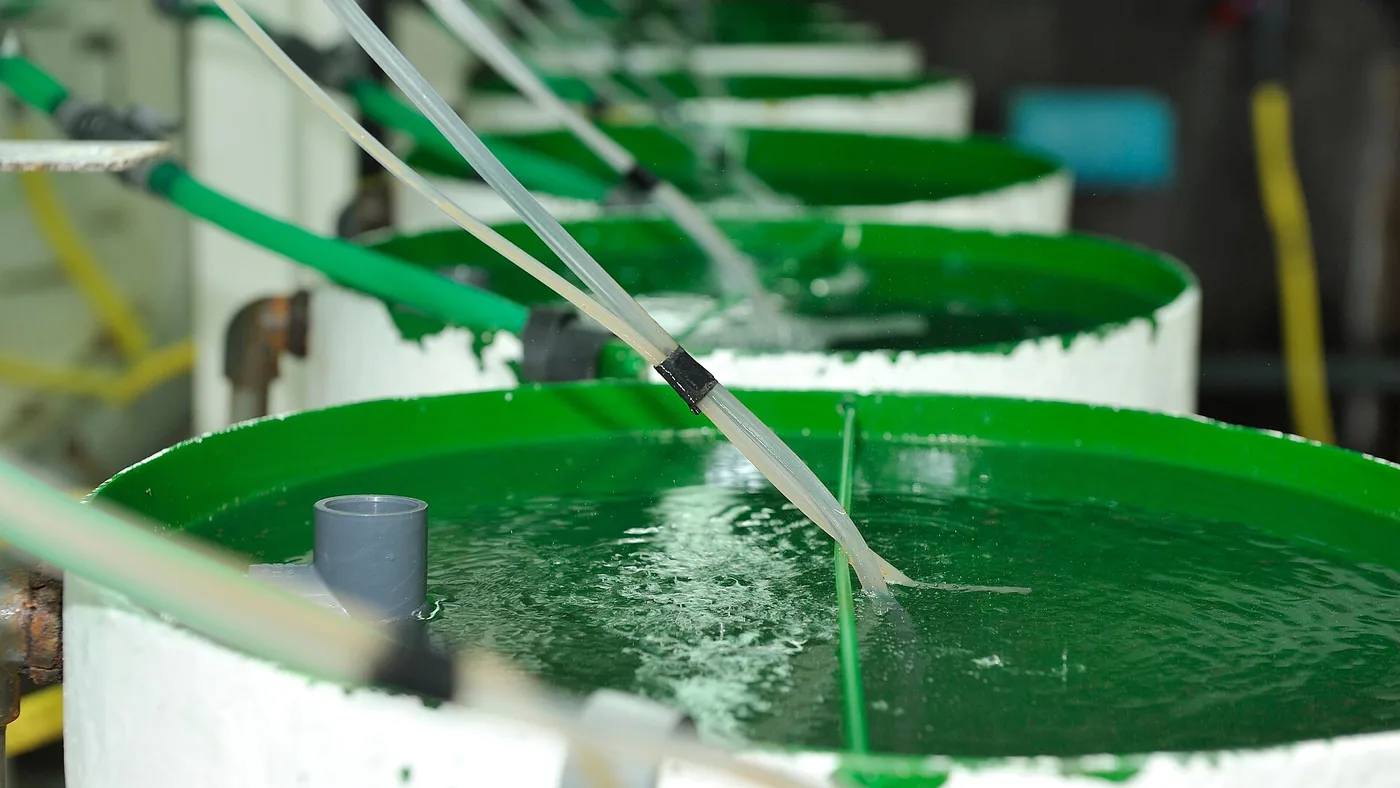
Three ways to nurse
| Tank | Hapa or net in a pond | Sea cage | |
|---|---|---|---|
| Suits | Small fish, close water control | Existing ponds, natural food | Sturdier fish, clean water sites |
| Water exchange | Grouper at least 300%/day at high density; cobia 50–70%/day | 50% about every 15 days in the pearl grouper model | Natural current |
| Cleaning | Siphon every morning | Clean nets, usually at grading | Change or clean nets regularly |
| Main risk | Power, oxygen, fast spread of disease | Salinity swings after rain | Parasites, infection from nearby stock |
Net mesh by fish size
Finer mesh clogs faster, so it needs more cleaning.
| For | Mesh | Source |
|---|---|---|
| Grouper under 2.5 cm, 1 × 2 × 1.5 m hapa | 1–2 mm | SEAFDEC 2001 |
| Grouper in Aceh ponds, first then next net | 1 mm then 4 mm | ACIAR 150 |
| Grouper 2–10 cm, floating cage | 8 mm | SEAFDEC 2001 |
| Pearl grouper from 7 cm, 3 × 3 × 2 m hapa | 5–10 mm | RIA3 |
| Long-finned pompano, pond hapa | 4 mm, then 8 mm after 30 days | CMFRI 2014 |
| Rabbitfish | 5 mm | SEAFDEC AEM 70 |
Before stocking
Disinfect tanks and tools
Hypochlorite at 100–250 mg/L available chlorine for 3 hours, rinse, dry completely (ACIAR).
Incoming water
Sand filtration is the base. UV, ozone and cartridge filters improve biosecurity. No micron standard for nursery intake was found in the sources read.
Spare tanks
Keep enough clean tanks to move fish straight after grading. Each unit should have its own tools.
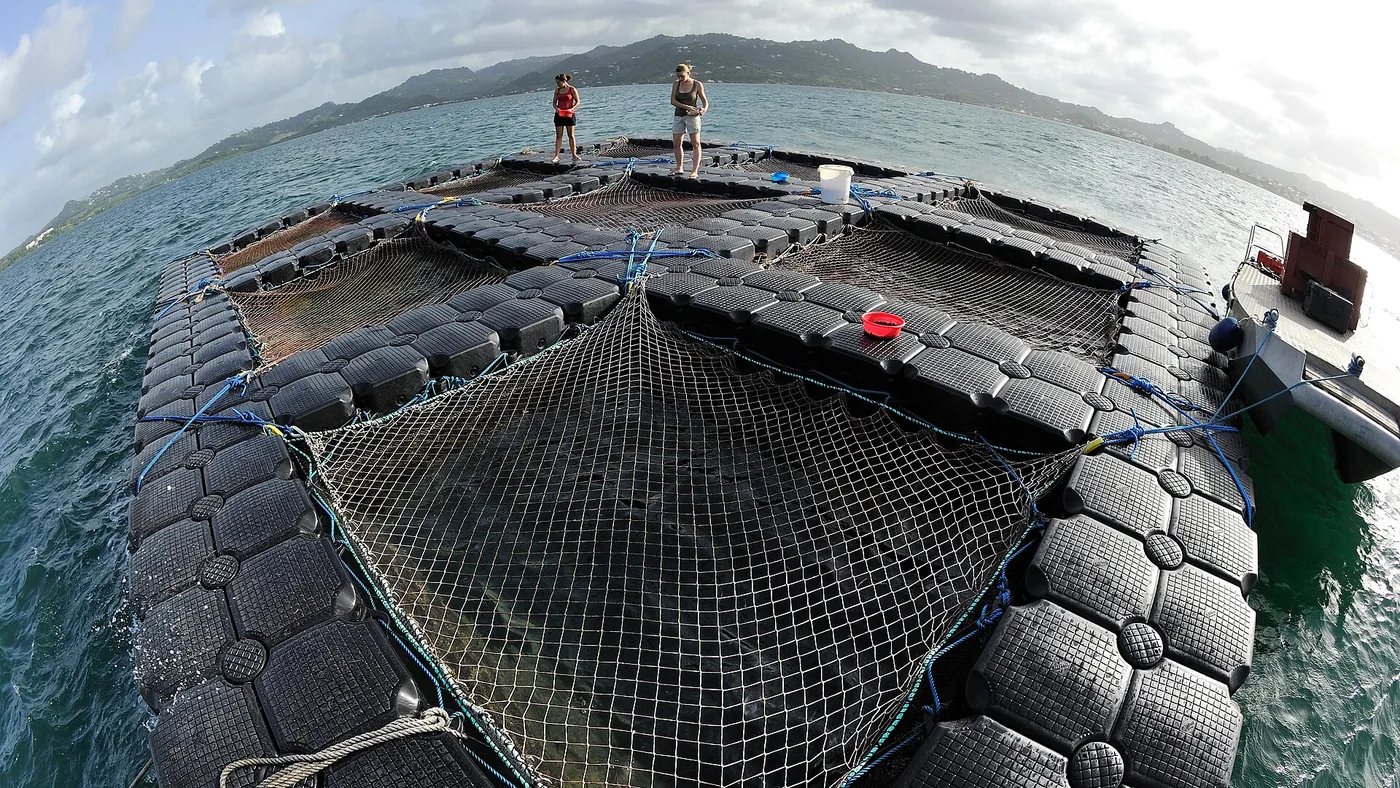
Hapas in ponds and cages
- Nets take under one third of the pond area and stand at least 1 m apart (ACIAR).
- A lamp over the hapa at night draws natural food for small grouper (SEAFDEC).
- Do not put small fish where water is poor or current is strong (SEAFDEC).
Tank and pond water products: label doses
Work from the true water volume of your tank or pond. Sea cages have flowing water, so m³ doses do not apply. See disinfectants on the Products page and ask our team before using them with small fish in tanks.
| Product | Label covers | Dose |
|---|---|---|
| AQUA PRO4000X | Dense tanks, fish seed nursery ponds | 1 pack/500–1,000 m³ every 5–7 days |
| RODO BACTO | Fish seed in tanks, routine | 1 kg/100–200 m³ at water change or every 3–5 days |
| RODO BACTO | Fish seed in tanks, foul or slimy tanks | 1 kg/100–150 m³ at water change or every 2–3 days |
| RODO BACTO | Marine fish in ponds, routine | 1–2 kg/1,000 m³ every 7–10 days |
| YUCCA C | Stressed fish, high NH3 | 1 kg/2,000 m³ |
Doses are copied from product labels. Than Vuong has no day-by-day protocol for marine fish seed yet, so call our team to work it out for your tanks and stock.