
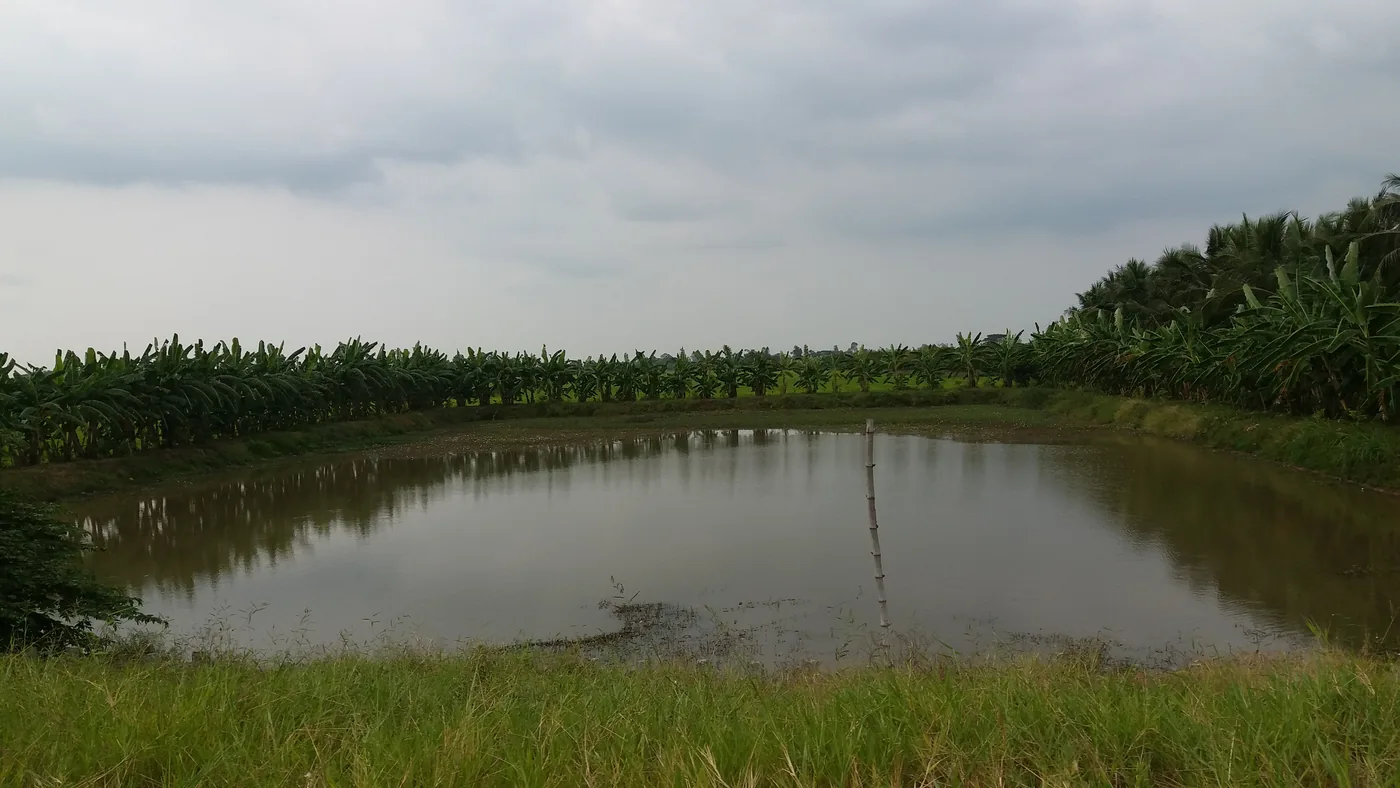
Choosing the pond
A nursery pond needs a reliable, clean water supply that is easy to fill and drain. The bottom soil should be free of acid sulphate and salt, with firm dykes that hold water. Keep the surroundings open, with few trees shading the water, and make sure there is easy access for fingerlings, feed and supplies.
Steps before stocking
Three things matter at the start: control bacteria and algae, keep pH and oxygen stable, and have enough Moina as live food when the fry go in.
- Before filling
Drain and remove sludge
Drain the pond, remove bottom sludge, clean the dykes and let the bottom dry.
- Before filling · days 1–2
Disinfect the dried pond bottom
- WORK 801 kg/800 m² of pond bottom
- Copper sulphate1 kg/1,000 m²
- Next day
Lime the pond bottom
- Lime5–7 kg/100 m²
- When filling
Filter the water carefully
Fill through a fine mesh filter to keep out wild fish, frog eggs and predators.
- After filling · day 19 a.m.
- After filling · day 2
Minerals and Moina
Apply FYTO FLOC together with GROWMIN. Ferment NIAZYME with powder feed in 50–60 L of water and scoop the mixture into a bucket for each application.
Dashed boxes: common farm inputs, not Than Vuong products.
Water at stocking
- pH
- 7–8
- Temperature
- 28–30 °C
- Dissolved oxygen
- at least 3 mg/L
Check NH3 and NO2 before stocking with the toxic gas calculator (select striped catfish) →
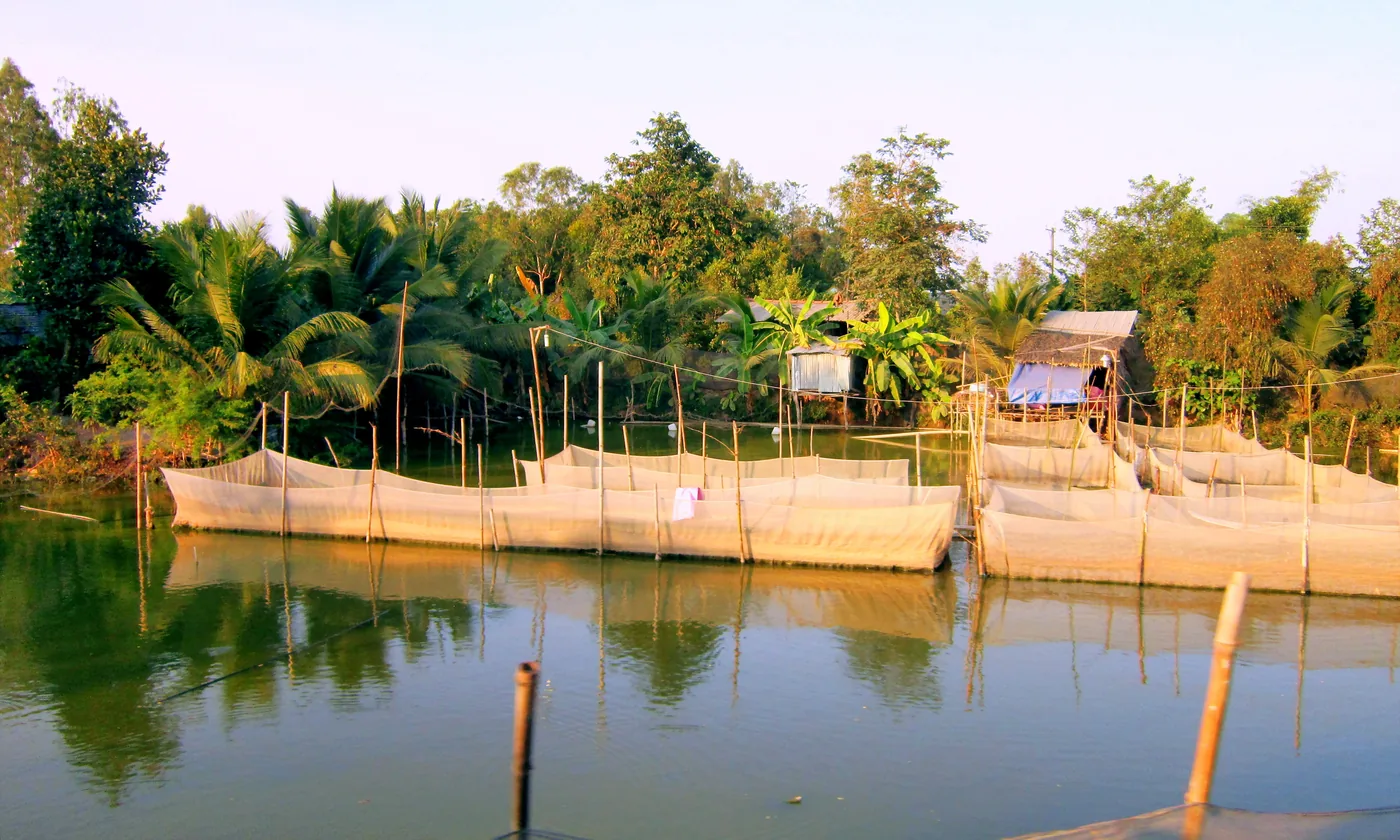
Selecting fry
- Fry source: a hatchery with clear origin and a quarantine certificate.
- Healthy fry: uniform size, straight body, bright colour, no deformities; they swim fast and react well, with no signs of fungus or haemorrhage.
- Density: 500–1,000 fry/m² (500,000–1,000,000 fry per 1,000 m² of pond).
- Stocking: stock in cool hours; float the bags in the pond for 10–15 minutes to equalise temperature before opening them.
Right after stocking
- Day 0
Help fish recover from stress
Pre-stocking checklist
Make this schedule for your pond
Enter stocking date, area and depth to get each day's tasks and the kilograms to apply. Open the tools