
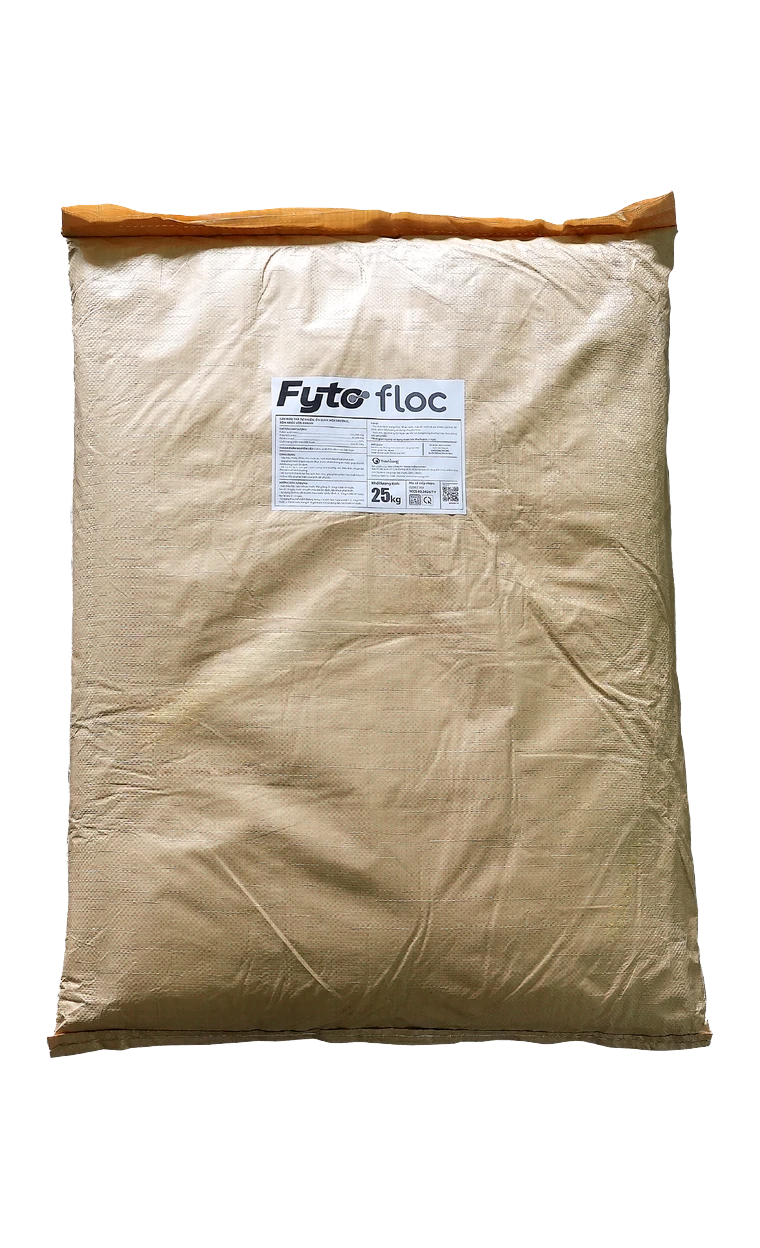

Fulvic acid and potassium on an inactivated-yeast base — feeds diatoms and beneficial microbes so the pond turns tea-colored through nutrition, not chemicals. For shrimp and fish grow-out ponds, fish fry and shrimp nurseries, and hatcheries.
- 150,000
- mg/kg fulvic acid (min)
- 30,000
- mg/kg K₂O from KCl (min)
- 3 – 5
- kg / 1,000 m³ for initial coloring
- 3 – 4
- days to color in the demo pond
- Form
- Powder
- Circulation cert.
- 02062369
- TCCS
- 02:2026/TV
- Pack size
- 25 kg bag
From one application to a whole food chain
Which ponds is it for?
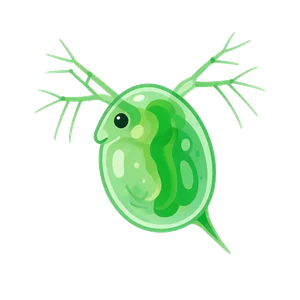
Fish fry nursery
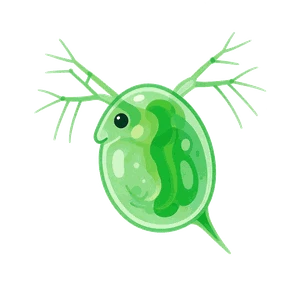
Grows water fleas and rotifers as live feed for fry and fingerlings — filmed by a customer in Vũng Tàu after 3 days.
Watch the customer video ↓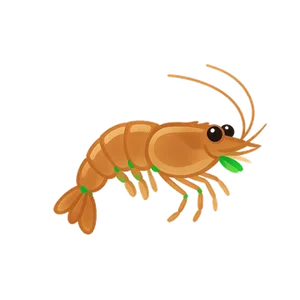
Shrimp nursery
Natural live feed for young shrimp in the first days: less pellet feed, healthier seed, better survival.
Hatchery
Holds the water color and helps keep pH stable in hatchery ponds and tanks.

Grow-out ponds
Tea coloring before stocking, color maintenance all crop long, supports biological floc.
Small tanks and nursery ponds: 3 – 5 kg/1,000 m³ equals 3 – 5 g per m³ of water. Stocking density and source water differ by farm — ask our technical team to fine-tune the dose.
Three days in, the pond is full of water fleas
“I’ve only been using it as instructed for three days, and look at this pond — it’s packed. The fleas are still small, still young, but they’re everywhere. Now I control my own feed source. Honestly, it’s a great product!”
— Fish fry nursery farmer in Vũng Tàu, Ho Chi Minh City (video in Vietnamese)
Filmed at night by torchlight over a lined pond. The dense specks in the water are water fleas (Moina) — live feed for fry and fingerlings.
- Beneficial algae bloom → water fleas and rotifers multiply
- Live feed for fry, fingerlings and young shrimp in the first weeks
- Less pellet feed early on
Not just talk — see for yourself
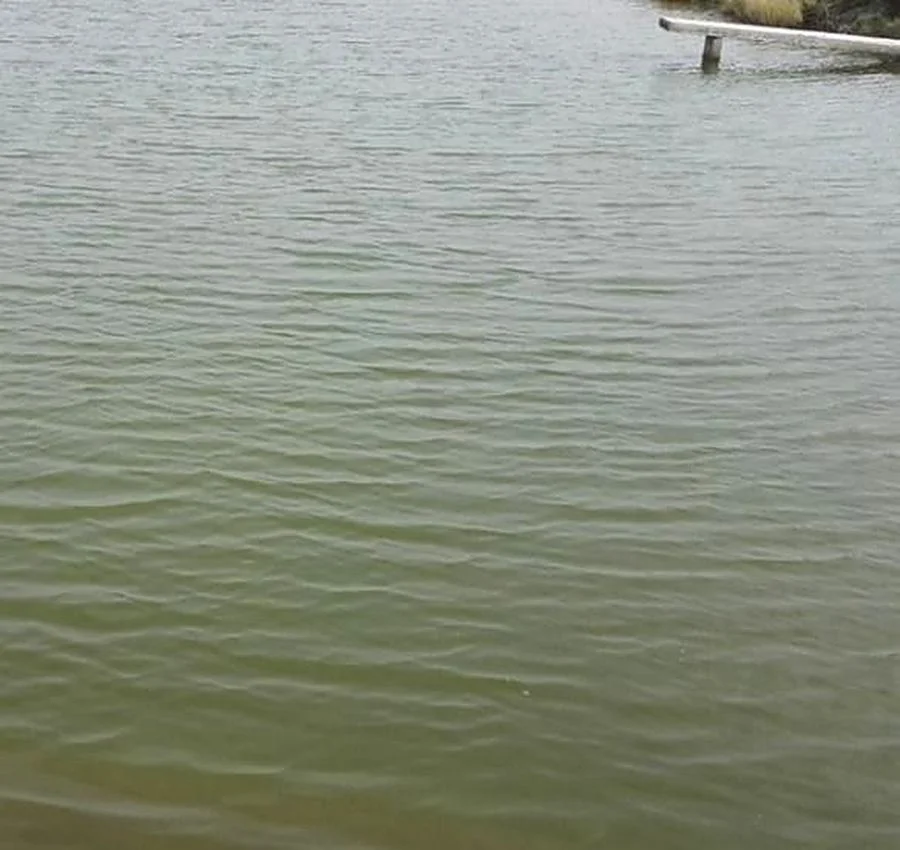
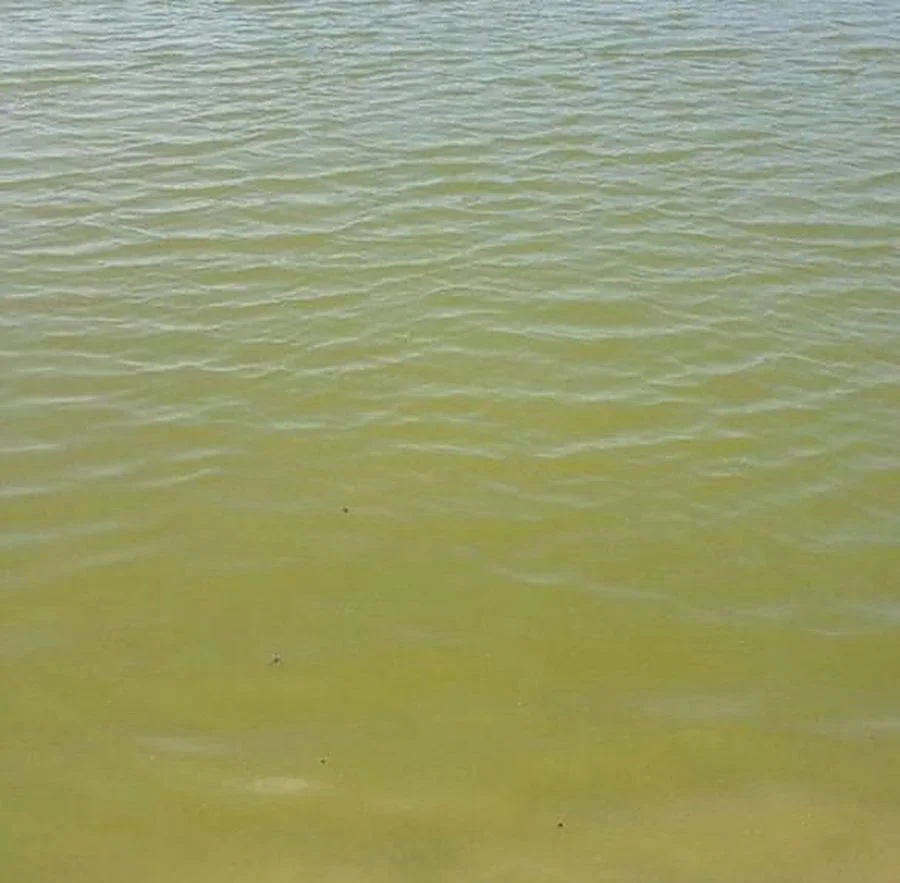 Before — pale waterAfter 3 – 4 days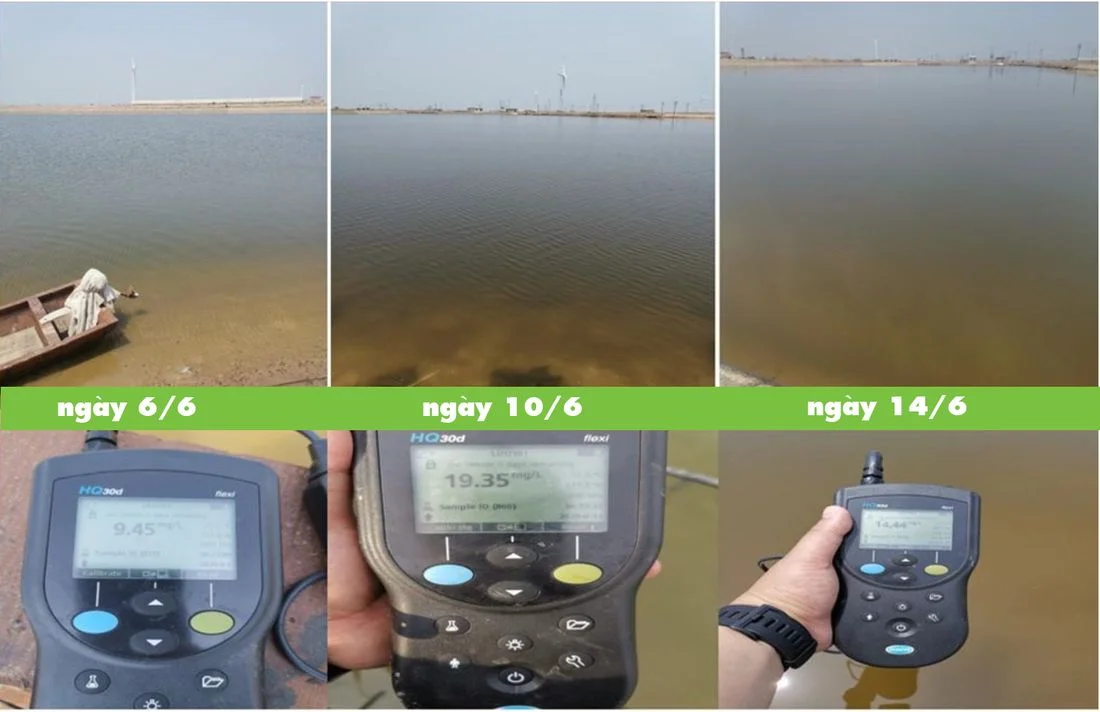
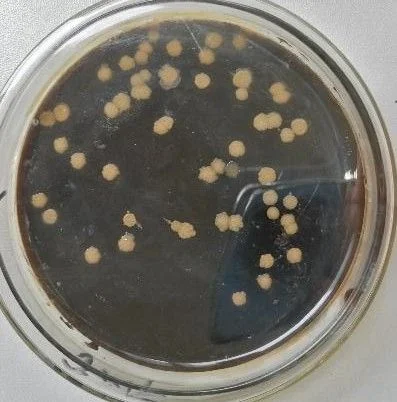 FYTO FLOC baseDense microbial colonies — a usable microbial nutrient source
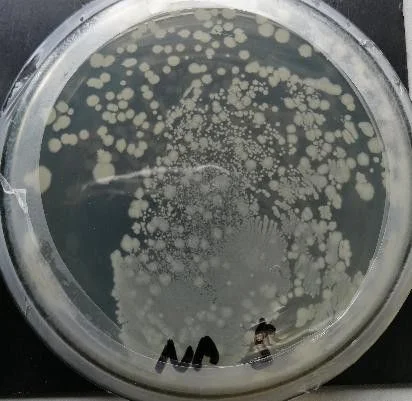 Standard nutrient agarLab positive control
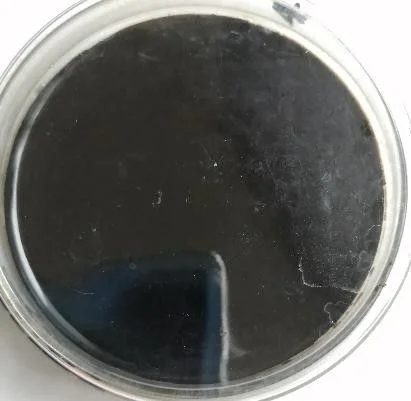 Mineral fulvicAlmost no microbial growth
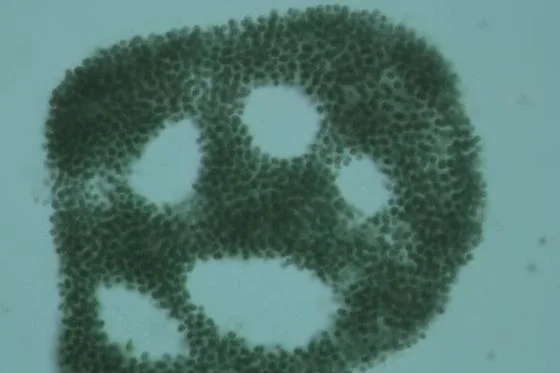 Before · blue-green algae (Microcystis)
Produces toxins and slime; mass die-offs at night drag oxygen down — a familiar cause of shrimp gasping at the surface.
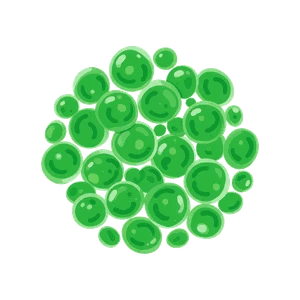
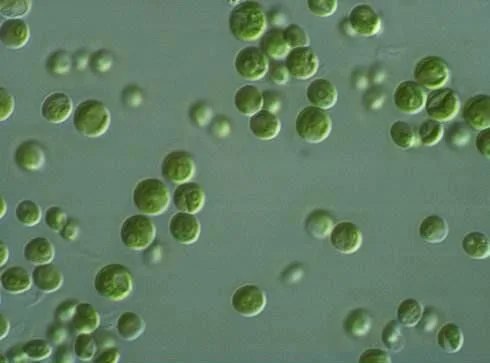 After · green algae (Chlorella)
Safe for shrimp and fish, a stable banana-leaf-green color — and good feed for water fleas.
TCCS 02:2026/TV · Cert. 02062369Label information, production process, detailed composition
| Parameter | Source | Content |
|---|---|---|
| Fulvic acid (min) | Yeast fermentation | 150,000 mg |
| K₂O (min) | KCl | 30,000 mg |
| Moisture (max) | — | 10% |
What is FYTO FLOC?
A nutrient concentrate obtained by fermenting Saccharomyces cerevisiae yeast on molasses, then filtering out the spent yeast and drying it into a powder.
- 01Not a probiotic — It is feed for microbes and algae — no live bacteria in the bag. No dead cultures, no cold storage.
- 02Not raw molasses — Molasses is only the input. Fermentation has already “cooked” the sugar into protein, vitamins and minerals.
- 03Ready to use — Nutrients are already dissolved — microbes and algae use them right away, no waiting for decomposition.
Production process
 01 · MolassesMain raw material, rich in fermentable sugar
 02 · InoculationSaccharomyces cerevisiae yeast
 03 · FermentationYeast “cooks” the sugar into protein, vitamins
 04 · FilteringKeeps the nutrient-rich liquid
 05 · DryingFinished as a powder
What’s in every kg
C/N ratio — the lower, the more protein-rich and the easier for microbes
| Product | C/N | Role in the pond |
|---|---|---|
| FYTO FLOC | 6.72 | Sugar plus protein, minerals and vitamins — a starter meal for the microbial community |
| Molasses | 21.89 | Sugar only — bulk supply; can be used alongside FYTO FLOC, each with its own role |
| Humic minerals | 34.31 | Extracted from coal, barely usable by microbes — mainly tints the water |
One application — three jobs in the pondExtended benefits and natural food
01 · Coloring — feeding beneficial algae
- Ready-dissolved N, P, K for algae
- Green algae bloom — a banana-leaf color
- Helps keep harmful blue-green algae down
- Stable color, fewer sudden crashes
02 · Feeding natural live food
- Water fleas, Moina and rotifers multiply
- Free live feed for post-larvae and fry
- Healthier seed, higher survival
- Saves feed in the first weeks
03 · Helps reduce toxic gases — builds biofloc
- Feeds a strong “pond-cleaning” microbial community
- Microbes use NH₃, NO₂, H₂S
- Waste turns into feed for shrimp and fish
- Fewer water changes, less chemical use
Natural food in the pond


Required for biofloc: paddlewheels or aerators must run evenly — without enough oxygen, floc sinks to the bottom. FYTO FLOC is a water-care product, not a disease treatment.
FAQQuestions farmers ask most
- How is it different from molasses? Molasses is much cheaper.
- Molasses is like uncooked rice — microbes have to “cook” it first. FYTO FLOC is ready-cooked rice, complete with protein, minerals and vitamins. If you already use molasses, keep it: molasses supplies bulk, FYTO FLOC kick-starts and enriches.
- Is it a probiotic?
- No. It is feed for microbes — there are no live bacteria in the bag, so no dead cultures, no cold storage, and it keeps well.
- Is it a disease treatment?
- No. It is a water-care, pond-care product. Good water means less stress and less disease for shrimp and fish — prevention over cure.
- After disinfecting the pond, how long before I can apply it?
- Wait a full 3 days after disinfecting — keep the paddlewheels running to clear residue, then apply FYTO FLOC or your probiotic.
Three uses, one dosage framework
Based on water volume: area (m²) × depth (m) = m³. Small tanks and hatcheries: 3 – 5 kg/1,000 m³ = 3 – 5 g per m³.| Use | Dose | How often |
|---|---|---|
| Initial tea coloring (before stocking) | 3 – 5 kg / 1,000 m³ | Repeat after 3 – 5 days until the color holds |
| Maintaining the color | 3 kg / 1,000 m³ | 4 – 5 times a month, all crop long |
| Probiotic brewing (instead of molasses) | 1 – 2 kg + 1 probiotic pack | In 100 L of water, aerate 4 – 6 hours, then apply |
Four steps to apply it right
 01 · Weigh the doseBased on pond volume, weighed out on the bank.
 02 · Dissolve completelyStir into a bucket of pond water until fully dissolved.
 03 · Spread evenlyApply from upwind, then run the paddlewheels.
 04 · Sunny morningAlgae use the sunlight right away while oxygen rises.
✕Never use with disinfectants or antimicrobials (chlorine, iodine, potassium permanganate, BKC…). After disinfecting, wait a full 3 days.
Lookup for 6 pond sizes and a 3-month schedule
| Water volume | Reference pond | Initial · per application | Maintenance · per application | Maintenance · per month |
|---|---|---|---|---|
| 500 m³ | 500 m² · 1.0 m deep | 1.5 – 2.5 kg | 1.5 kg | 6 – 7.5 kg |
| 1,000 m³ | 1,000 m² · 1.0 m deep | 3 – 5 kg | 3 kg | 12 – 15 kg |
| 2,000 m³ | 2,000 m² · 1.0 m deep | 6 – 10 kg | 6 kg | 24 – 30 kg |
| 3,600 m³ | 3,000 m² · 1.2 m deep | 11 – 18 kg | 11 kg | 43 – 54 kg |
| 6,000 m³ | 5,000 m² · 1.2 m deep | 18 – 30 kg | 18 kg | 72 – 90 kg |
| 12,000 m³ | 1 ha · 1.2 m deep | 36 – 60 kg | 36 kg | 144 – 180 kg |
Suggested schedule — 3,000 m² pond, 1.2 m deep (≈ 3,600 m³)
Use it together with
Water won’t color, or the bloom keeps crashing?
Send the Thần Vương technical team your pond area, depth and a photo of the water — you’ll get a coloring dose for your exact pond volume, free of charge.