

Bacillus subtilis and Pediococcus acidilactici added to the pond environment help break down accumulated organic matter and sludge, contributing to reducing the formation and build-up of toxic NH₃ and NO₂ in the water and pond-bottom mud.
- 2
- beneficial strains
- 0.5 × 10¹⁰
- CFU/kg per strain (min)
- 1 pack
- / 3,000 – 4,000 m³ during culture
- 3 – 5
- days between applications
- Form
- Powder
- Packaging
- 250 g foil pouch, zip seal
- TCCS
- 04:2020/TV
- Product code
- 02020697
How MAX 4000 treats pond water and bottom
Toxic gas in the pond forms at the bottom
- 1
Sludge builds up
Uneaten feed, droppings and sludge settle on the bottom in thicker layers.
- 2
Toxic NH₃, NO₂
Organic matter breaking down on the bottom releases toxic gases into the water and mud.
- 3
Intensive, high density
The higher the density, the more feed and waste.
- 4
Water and mud get worse
A less favourable environment for shrimp growth.
4 registered benefits
- 01
Supplementing beneficial microorganisms into the pond environment to participate in decomposing accumulated organic matter and sediment, contributing to reducing the formation and accumulation of toxic gases such as NH₃ and NO₂ in the water and pond bottom mud.
- 02
Support the metabolism of nitrogen-containing compounds, contributing to water quality stabilization under intensive and high-density farming conditions.
- 03
Stabilize the environmental microbial ecosystem, limit toxic gas generation from excess feed and organic waste.
- 04
Contribute to improving water quality and pond bottom sediment, creating a favorable environment for farmed animals to grow and develop.
Two strains working where toxic gases form
Toxic gases in ponds come mostly from uneaten feed, droppings and sludge on the bottom. MAX 4000 adds beneficial microbes to the pond environment to help break down organic matter, contributing to less NH₃ and NO₂.
- 01
Adds beneficial microbes
Each application brings Bacillus subtilis and Pediococcus acidilactici into the pond water, each at least 0.5 × 10¹⁰ CFU/kg.
- 02
Breaks down bottom sludge
The microbes help break down accumulated organic matter and sludge — the source of toxic NH₃ and NO₂ in the water and bottom mud.
- 03
Converts nitrogen compounds
Supports the conversion of nitrogen-containing compounds, helping keep water quality stable in intensive, high-density culture.
- 04
Stabilises the pond's microbes
Limits toxic gas from excess feed and organic waste; better water and bottom mud for shrimp to grow.
As registered
- Bacillus subtilis
- min 0.5 × 10¹⁰ CFU/kg
- Pediococcus acidilactici
- min 0.5 × 10¹⁰ CFU/kg
- Moisture
- max 10%
- Carrier (CaCO₃)
- to 1 kg
- Form
- Powder
- Company standard
- TCCS 04:2020/TV
- Registration code
- 02020697
CFU: colony-forming units.
250 g foil pouch, zip seal
One pack treats 2,000 – 4,000 m³ of water per application, depending on the stage. If not finished, seal and zip the bag right after use.
- 01Before stocking: 1 pack/2,000 – 3,000 m³
- 02Nursery: 1 pack/2,000 – 3,000 m³
- 03During culture: 1 pack/3,000 – 4,000 m³
Label dosage, 3 stages
Applied to the water. 1 pack = 250 g. Based on pond volume (m³ = area × depth).- Before stocking1 pack / 2,000 – 3,000 m³2 – 3 days before stocking
- Nursery stage1 pack / 2,000 – 3,000 m³Daily
- During culture1 pack / 3,000 – 4,000 m³Every 3 – 5 days
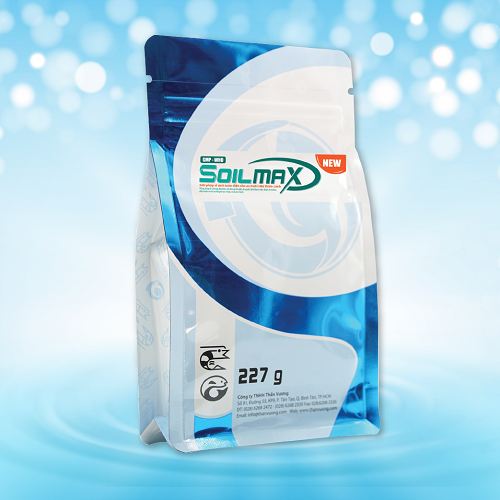
Adjust the dose to the pond's condition. Can be alternated with SOILMAX or BACWAT.
How to use
- 1Brew before applyingAerate the pack with microbial biomass nutrient, sugar or molasses in about 20 L of water for 2 – 4 hours.
- 2Or apply directlyDilute the product in 30 L of water and spread into the pond.
- 3Best time: 10 – 11 am
- 4To control green, blue-green or red algae: 9 – 10 pmRun all paddlewheels while applying.
!Seal and zip the bag right after use if not finished.
Composition · StorageComposition and storage
Composition
Bacillus subtilis, Pediococcus acidilactici.
Each strain at least 0.5 × 10¹⁰ CFU/kg; moisture max 10%; CaCO₃ carrier to 1 kg (per label). CFU: colony-forming units.
Storage
- Where to keep
- Dry, cool place away from direct sunlight, not above 30 °C. Keep out of reach of children.
- Opened pack
- Seal and zip the bag right after use if not finished.
FAQFrequently asked questions
- What is MAX 4000 (250 g foil pouch) used for?
- Biological environmental treatment: microbes that break down organic sludge, helping reduce toxic NH₃ and NO₂ in the water and pond-bottom mud. 250 g foil pouch.
- How to use MAX 4000 (250 g foil pouch)?
- Before stocking: 1 pack/2,000 – 3,000 m³, 2 – 3 days before stocking. Nursery stage: 1 pack/2,000 – 3,000 m³, daily. During culture: 1 pack/3,000 – 4,000 m³, every 3 – 5 days. How to use: aerate the pack with microbial biomass nutrient, sugar or molasses in about 20 L of water for 2 – 4 hours before use; or dilute in 30 L of water and spread directly into the pond. Best at 10 – 11 am; to control green, blue-green or red algae apply at 9 – 10 pm with all paddlewheels running. Can be alternated with SOILMAX or BACWAT. Adjust the dose to the pond's condition. Seal and zip the bag after use.
- What packaging does MAX 4000 (250 g foil pouch) come in?
- MAX 4000 (250 g foil pouch) comes in 250 g.
- Main benefits of MAX 4000 (250 g foil pouch)?
- Supplementing beneficial microorganisms into the pond environment to participate in decomposing accumulated organic matter and sediment, contributing to reducing the formation and accumulation of toxic gases such as NH₃ and NO₂ in the water and pond bottom mud. Support the metabolism of nitrogen-containing compounds, contributing to water quality stabilization under intensive and high-density farming conditions. Stabilize the environmental microbial ecosystem, limit toxic gas generation from excess feed and organic waste. Contribute to improving water quality and pond bottom sediment, creating a favorable environment for farmed animals to grow and develop.
Product Reviews
No reviews yet. Be the first!
Which products to alternate with?
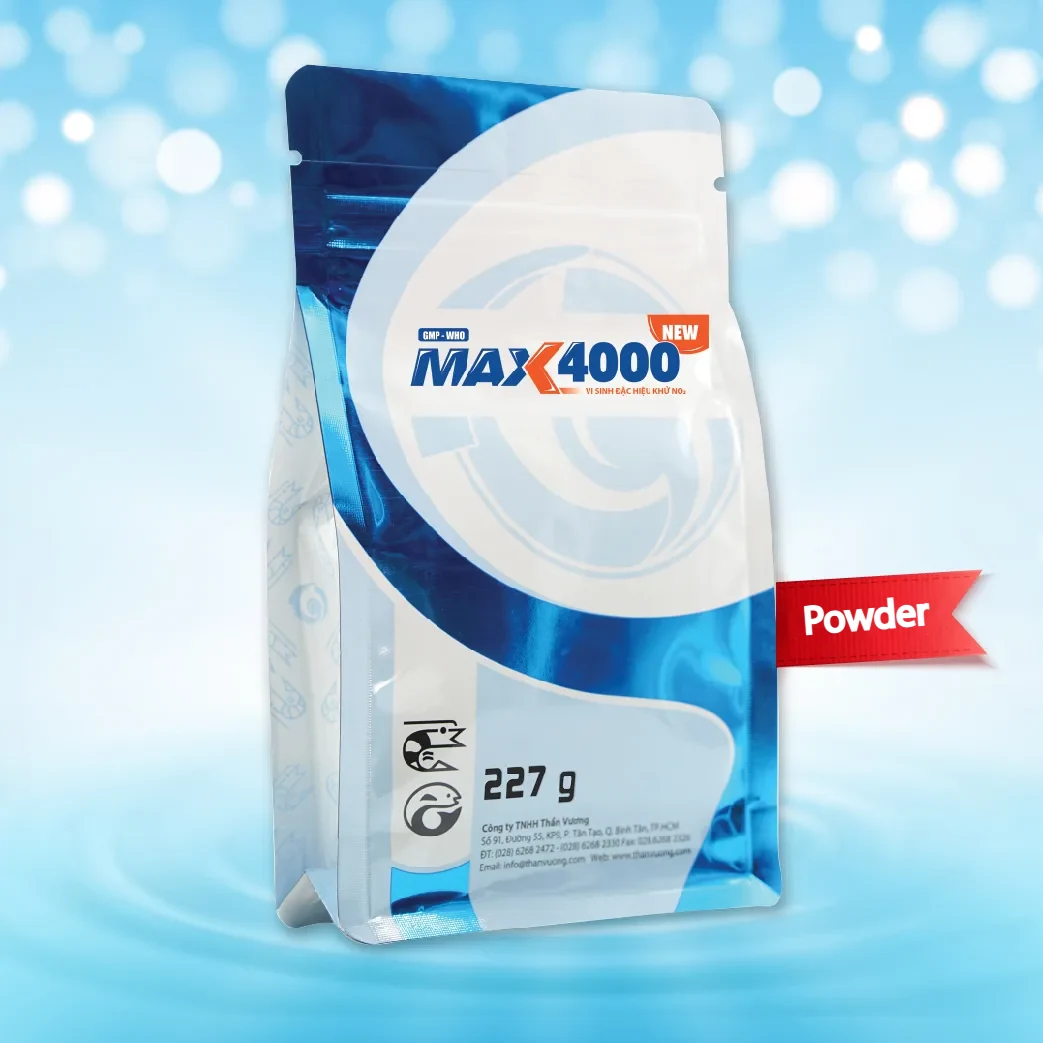
Per the label, MAX 4000 can be alternated with SOILMAX or BACWAT. MAX 4000 also comes in a 227 g pack.
Toxic gases, dirty bottom, rising NO₂?
Message us or call for free technical advice from Than Vuong — reply within 24h.