01 / SURVEY
More than 110 farms, four countries, over 5,000 gut samples
The shrimp industry has spent decades improving feed formulas, seed stock and farming techniques. But a large-scale survey presented at the Global Shrimp Forum 2026 in Utrecht, the Netherlands, raises a different question: are the shrimp actually making full use of all that investment?
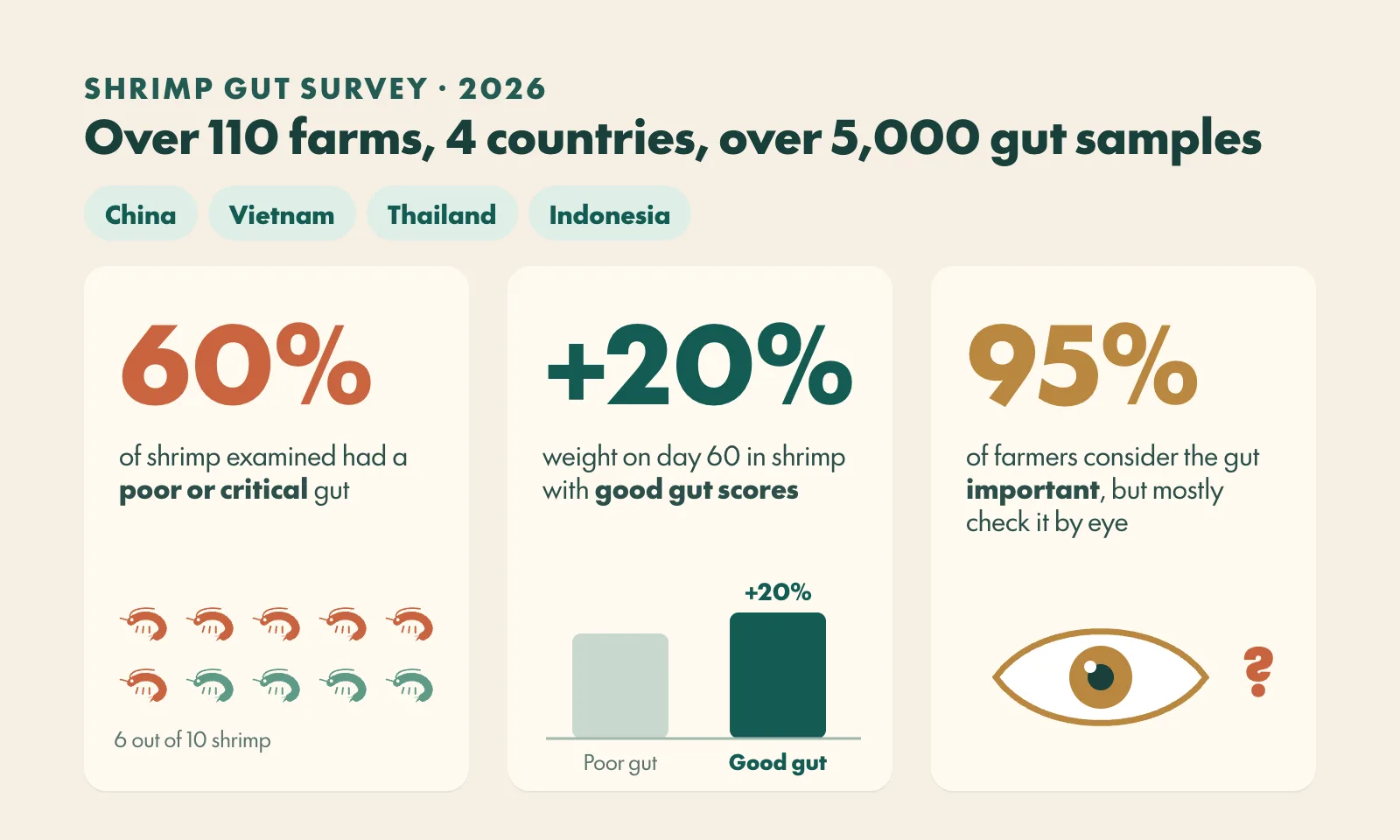
The survey was carried out jointly by a group of companies and consultancies in the industry, at more than 110 commercial shrimp farms in China, Vietnam, Thailand and Indonesia. The team both interviewed farmers and examined shrimp guts under the microscope — more than 5,000 samples and about 170,000 data points.
02 / RESULTS
Six in ten shrimp have poor gut health
The results show that 60% of the shrimp assessed had "poor" or "critical" gut health. More surprisingly, this was found in every country, on farms of every size and in every type of farming — including modern farms that had invested in good feed, probiotics and water management.
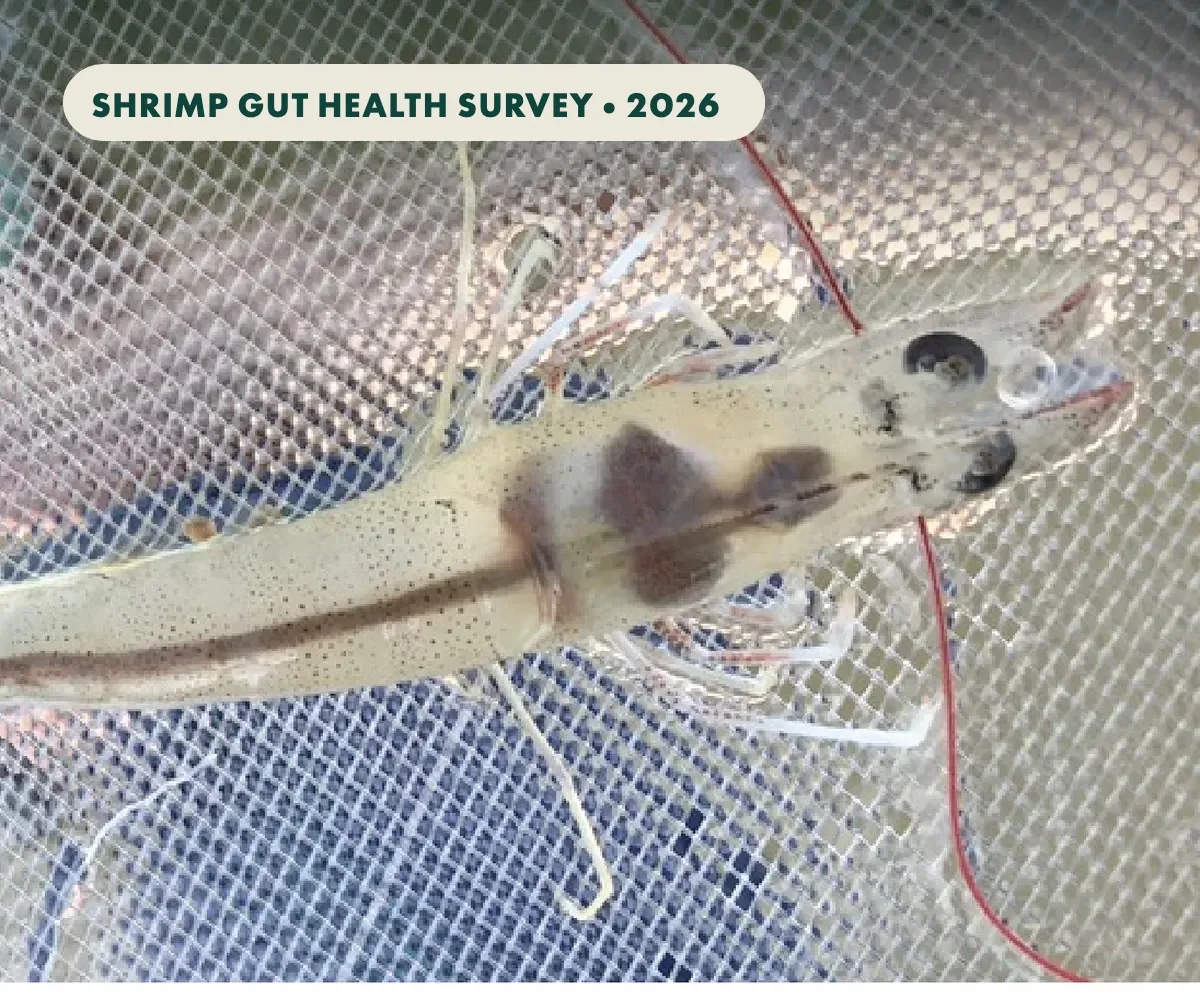
90% of the shrimp samples showed at least one external sign that the gut was not in good condition. Under the microscope, the picture was more complex: the survey team scored both the integrity of the hepatopancreas tubules and the amount of stored lipid.
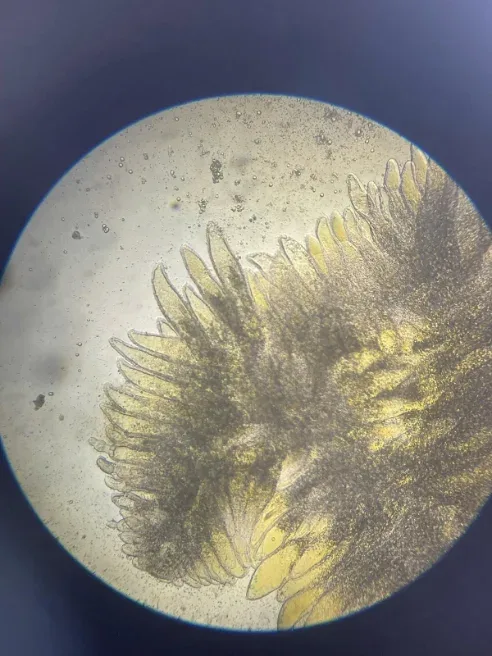
Share of the shrimp examined with poor or critical gut health.
Weight on day 60 of culture for shrimp with gut scores above the median, compared with shrimp with lower scores.
The figure with the greatest economic weight concerns growth: shrimp with gut health scores above the median were about 20% heavier on day 60 than shrimp with lower scores.
The survey team made clear that this is an observational study and has not proven cause and effect. Even so, the results suggest that gut condition should be monitored as a production indicator, not only thought about once the shrimp are already sick. On the farmers' side, about half said they had had gut problems during the crop, mostly in mid-crop.
03 / CAUSES
Not just about feed
The survey also showed that gut problems cannot be solved through nutrition alone. Asked about the causes, the survey presenter pointed to the biological pressure of intensive farming, including the shrimp's constant exposure to the microbes in the pond water.
“Gut health sits at the intersection of nutrition, water quality, microbiology, stress, and immunity.”
Survey presenter at Global Shrimp Forum 2026
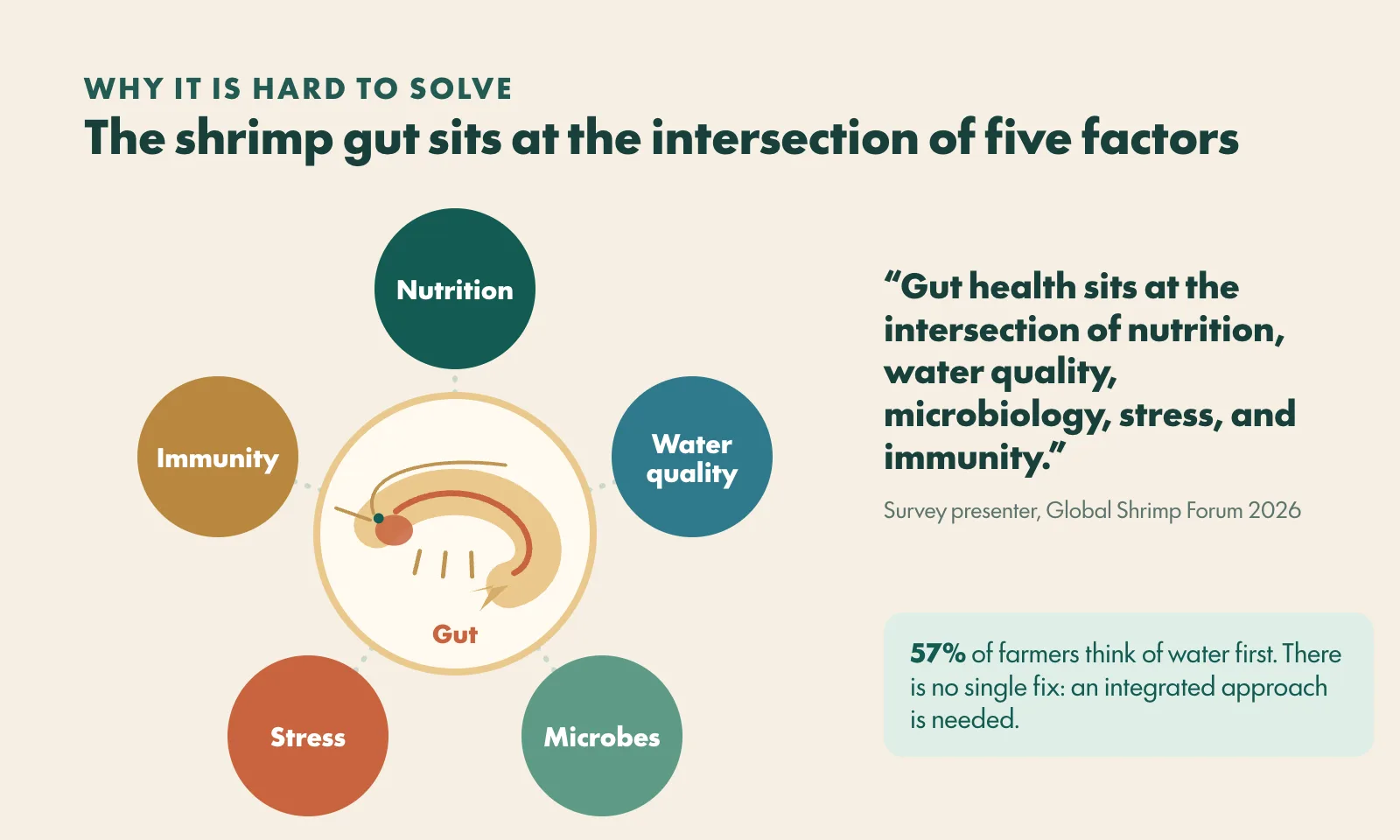
57% of farmers believe water quality may be the root of gut disorders. Gut damage also does not follow a single pattern: each indicator under the microscope deteriorated to a different degree. That is why an integrated approach is needed, rather than relying on any single measure.
A research and development specialist on the survey team described the gut as a "window" into the shrimp's health and into how the shrimp responds to farming conditions throughout the crop: good nutrition from an early stage is the foundation, and every nutrition, health and management measure after that builds on that foundation.
04 / MEASUREMENT
From "seeing a problem" to "measuring the problem"
The biggest obstacle is probably not awareness. 95% of the farmers surveyed consider gut health important or very important, and 93% measure water quality every day with instruments. But the gut is still mostly checked by eye.
Microscopy gives more detail, but the survey found that the same sample was scored differently by each person. The research team is using this dataset to develop an assessment tool supported by artificial intelligence: a pocket microscope attached to a phone, with software that analyzes the images automatically — to make monitoring shrimp guts on the farm more consistent and easier, and to help farmers move from chasing problems to actively keeping their shrimp healthy.
The team plans to extend the survey to India and Ecuador; the full report is expected to be published in 2027.
05 / THAN VUONG PERSPECTIVE
Applying this to ponds in Vietnam
The survey included Vietnamese farms, and the results match what technicians often see in the pond: shrimp keep eating but grow slowly, with loose guts and broken feces — often starting quietly in mid-crop. Farmers can begin with concrete steps:
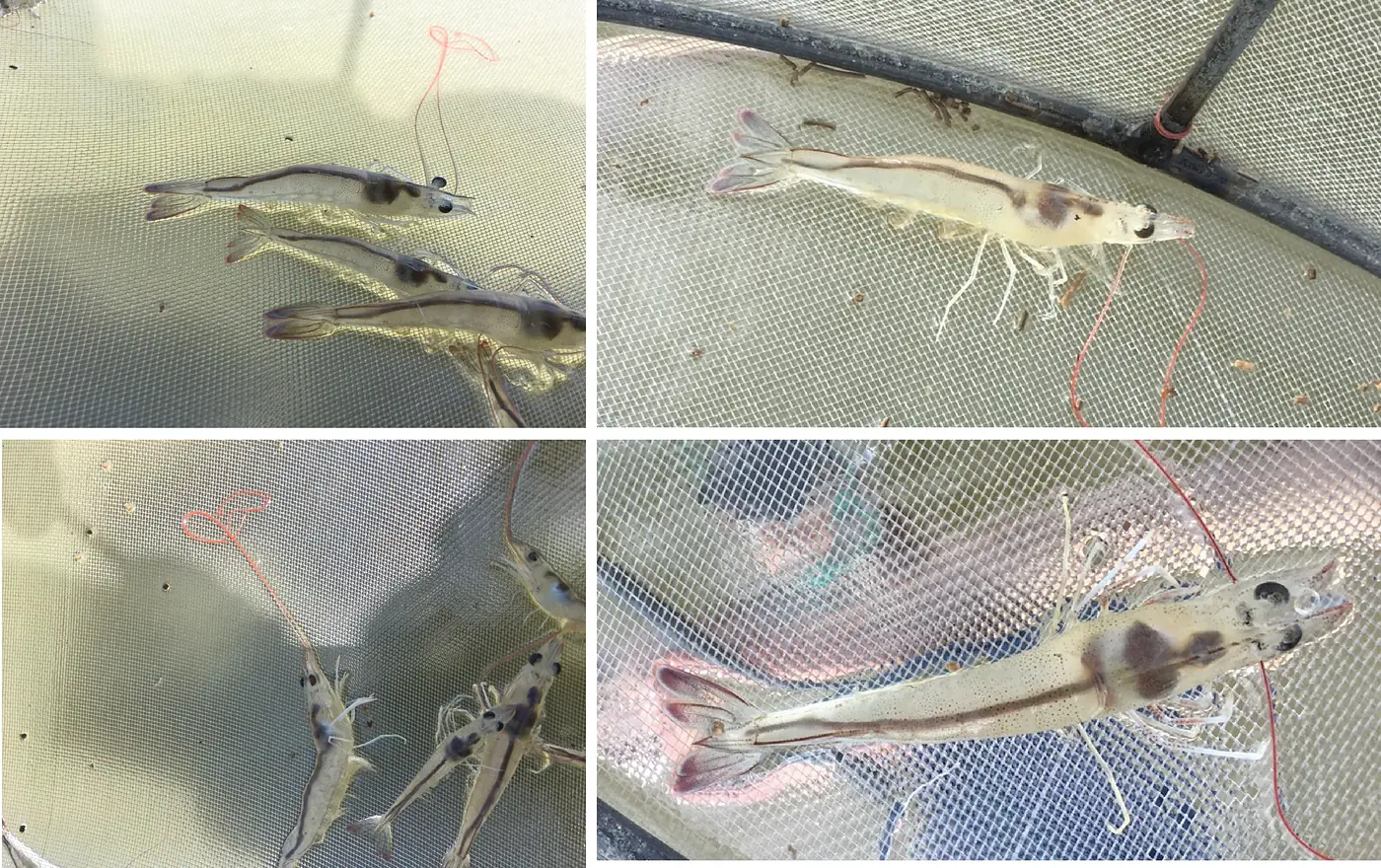
- Check the gut regularly, don't wait for the shrimp to get sick: every week, take shrimp from several feeding trays and check whether the gut is full or empty, the color of the hepatopancreas, and floating feces; if you have a microscope, examine the hepatopancreas and keep records to compare from week to week.
- Stabilize the water first: water is what many farmers think of first. Keep the water color and alkalinity stable, and check toxic gases with the NH3, NO2 toxic gas calculator.
- Support the gut by stage: gut probiotics such as PRO GUT, beta-glucan-rich yeast cell walls such as AQUAMOS, used at the dose on the label and following the stage-by-stage disease prevention schedule.
- Feed the right amount: leftover feed is both wasteful and fouls the water, harming the gut. Work out the daily feed amount with the shrimp feed calculator.