In short: because the EMS toxin (PirAB) is released by the bacteria right in the shrimp stomach, researchers have tried to catch it in the gut before it reaches the hepatopancreas. There are four approaches: binding it with clay, neutralising it with antibodies in feed, blocking the spot where it attaches to cells, and making the bacteria produce less toxin. The best results so far are all from laboratory tanks: montmorillonite clay at 2.5–5 g/kg feed gave 83–94% survival versus 40% after an AHPND challenge; antibodies in feed gave 60–97% survival versus 0–25% without a specific antibody. For TPD there are only small-flask anti-virulence trials. Everything was used before or at the time of infection, and there is no standard pond dose.
Why the EMS toxin can be caught in the gut
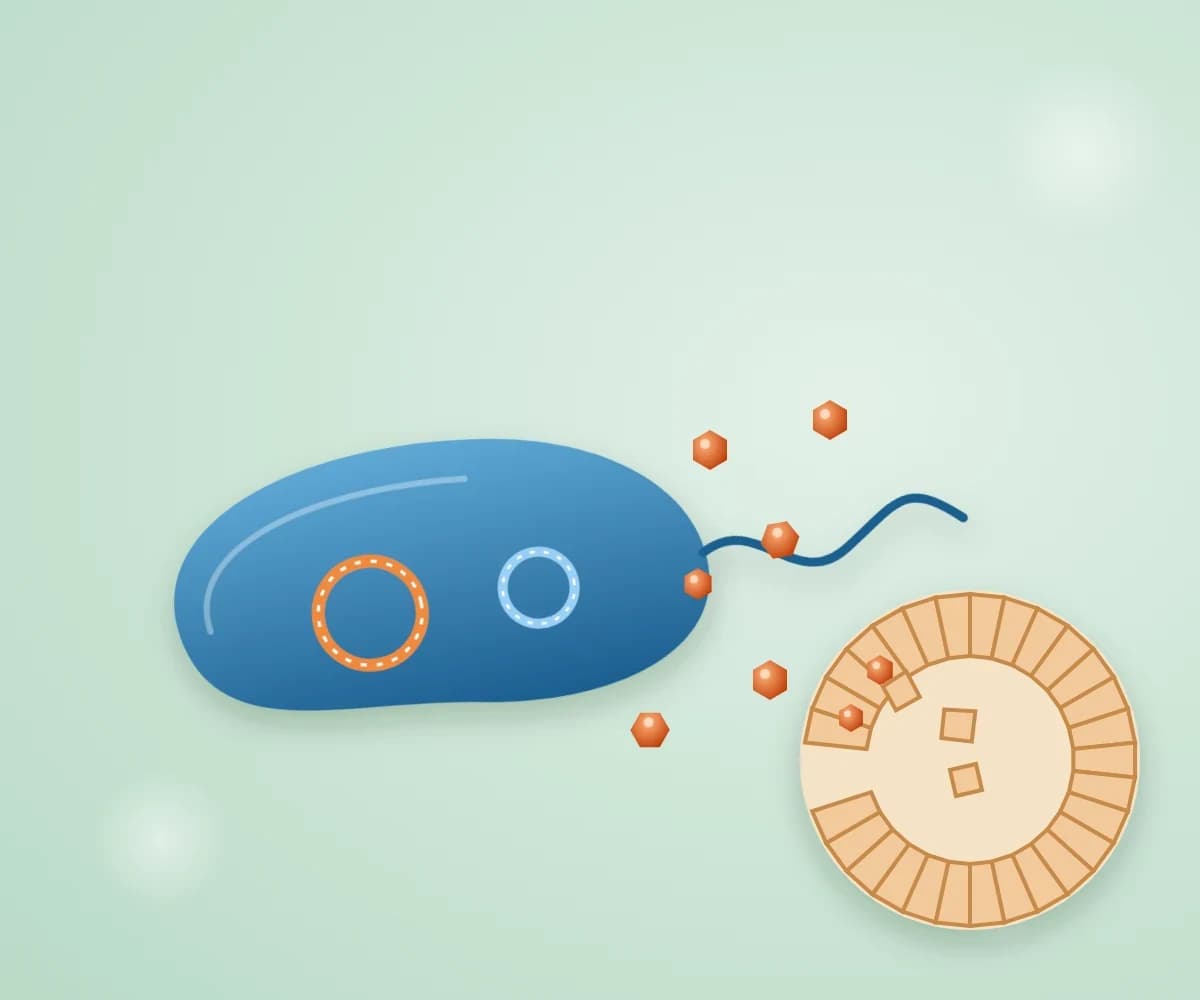
In part 1 we saw that EMS bacteria settle in the shrimp stomach and secrete PirA and PirB, and the toxin reaches the hepatopancreas before the bacteria. So there is a stretch, from stomach to hepatopancreas, where the toxin is inside the digestive tract. Something mixed into feed and already present there could, in theory, hold or inactivate it.
For TPD this is less clear. Culture fluid with the TPD bacteria removed did not kill post-larvae, and the VHVP toxins were found inside outer membrane vesicles released by the bacteria. Than Vuong found no published study testing binders or antibodies in feed against TPD.

1. Montmorillonite clay in feed
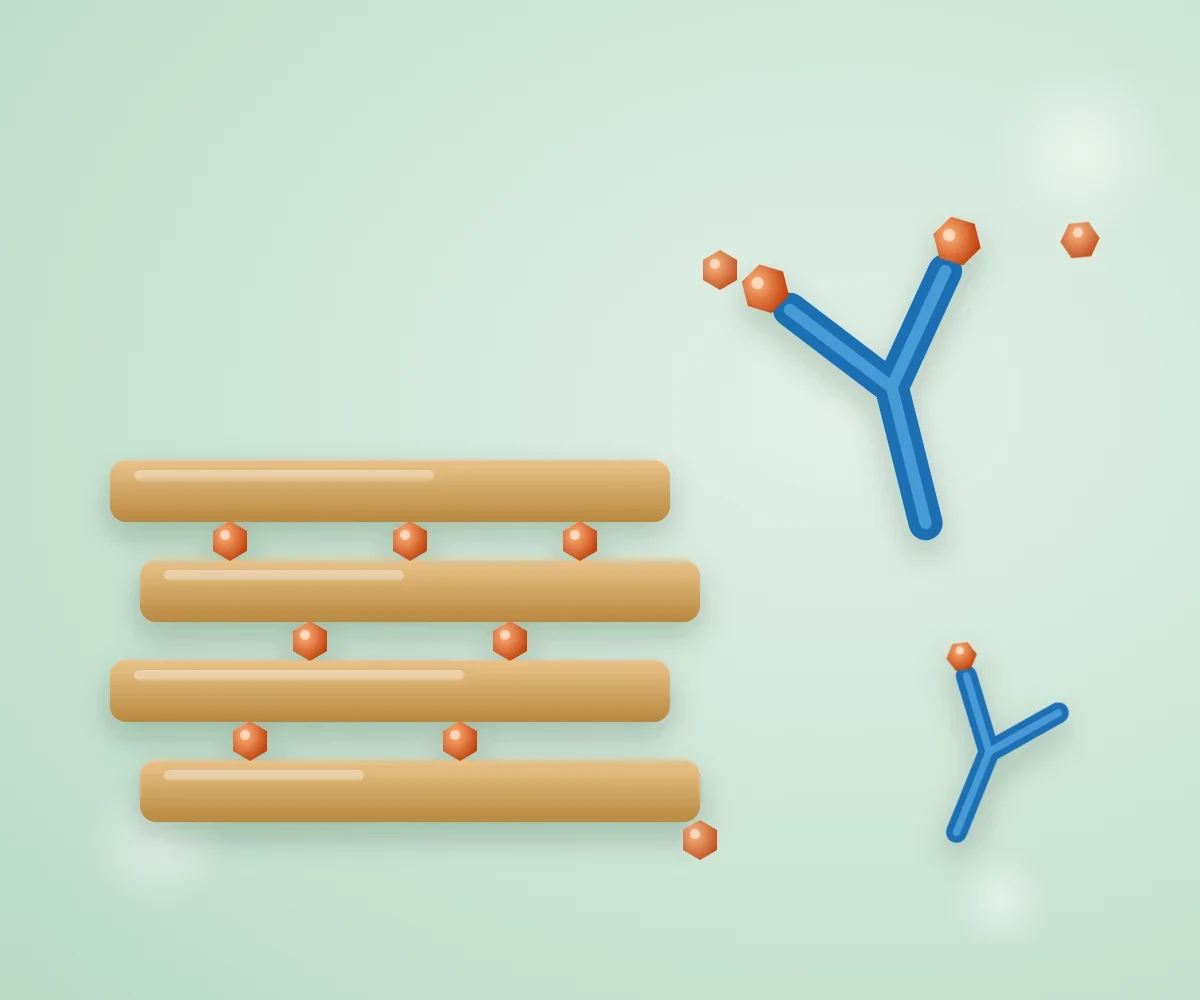
Montmorillonite is a layered clay already used as a mycotoxin binder in livestock feed. In 2023, Ng and colleagues published the first trial using dietary clay to reduce AHPND in whiteleg shrimp:
- Disease-free whiteleg PL30, 3 tanks of 15 litres × 20 shrimp per group.
- Clay at 0.25% and 0.5% of feed (2.5 and 5 g/kg), fed for 2 weeks.
- Challenge by 15 minutes’ immersion in an AHPND culture at 108 CFU/mL, then back into the tanks (16 shrimp per tank), followed for 7 days.

- Survival: 83.3% (2.5 g/kg) and 93.8% (5 g/kg) versus 39.6% for challenged shrimp without clay; unchallenged shrimp 95.8%. Both clay levels differed significantly from the challenged control and not from the unchallenged group.
- No slower growth and no change in feed efficiency.
- Less hepatopancreas damage; fewer Vibrio and total bacteria in the hepatopancreas; a more diverse stomach microbiota than in infected shrimp without clay.
2. Antibodies in feed: neutralising the right toxin
Shrimp cannot make antibodies the way fish or chickens do. The approach is to make antibodies elsewhere and deliver them to the shrimp gut in feed (passive immunisation), where they bind PirA or PirB to inactivate the toxin.

- Egg-yolk antibody (IgY), Japan 2019: hens were immunised with recombinant PirA or PirB; whole-egg powder made up 20% of the diet, fed to whiteleg shrimp for 3 days before challenge. Survival: anti-PirA 86%, anti-PirB 14%, IgY from non-immunised hens 0%. In a later run with egg powder cut to 10% of the diet (hens given more antigen): anti-PirA 87%, control 12%. The abstract does not give shrimp numbers per tank.
- IgY against the whole PirAB complex, China 2026: also fed for 3 days before challenge; egg powder at 20% of the diet gave 70% survival, 10% gave 50%, plain IgY 13%.
- Recombinant hagfish antibody (VLRB), Korea 2021: whiteleg post-larvae of 0.1 g, 100 per group in one 250-litre tank, 10 µg antibody per gram of feed, fed for 3 days before challenge. Anti-PirB gave 26.7% (trial 1) and 60% (trial 2) survival, anti-PirA only 3%, controls 0–6%.
- Engineered VLRB antibodies against PirA, Thailand 2024: fed for 7 days; at 100 mg/100 g feed (1 g/kg) deaths were 2.96–5.19%; at 10 mg/100 g (0.1 g/kg) 5.93–6.67%; without antibody 74.81%. At 1 mg/100 g results varied between antibody clones.
- Nanobodies, Canada 2024: over 300 small llama antibodies were screened in Artemia; some against PirA or PirB clearly protected whiteleg shrimp. The abstract gives no dose.
3. Blocking where the toxin attaches
To damage a cell, the toxin must first attach to a "lock" on its surface. In the test tube, PirB binds amino sugars; some simple sugars (galactosamine, glucosamine), some glycoproteins and glycans carrying fucose or N-acetylglucosamine reduce PirB binding. The APN1 protein on shrimp blood cells is another "lock" (Thailand, 2021). Computer modelling has found a few oilseed protein peptides that may wedge into the PirA–PirB complex, and a 2022 review suggested testing fucoidan from brown seaweed as a "decoy lock". All of this is still at test-tube and computer-model level.
4. Making the bacteria produce less toxin
Vibrio bacteria "count heads" with chemical signals (quorum sensing): at high enough density they switch on disease genes together. A 2026 review by Taiwanese groups reports that the quorum-sensing regulators LuxO and AphB control when pirA/pirB are switched on during bacterial growth. An early experiment found that the AI-2 signal made bacteria produce PirAB sooner and in larger amounts, while an antagonist (a furanone) delayed it.
In 2026, a Ghent University (Belgium) team tested the quorum-sensing inhibitor Qstatin at 100 µM: germ-free Artemia larvae survived better when challenged with each of 13 pathogenic Harveyi-clade Vibrio strains (V. campbellii, V. harveyi, V. parahaemolyticus), while Vibrio numbers in the water did not fall, meaning the bacteria were still there but less harmful. This was in Artemia, not shrimp.
For TPD
Two studies have tested whiteleg post-larvae on a very small scale:
- Organic acids with citrus and olive extracts (Romania, 2025): in the test tube, below killing strength (0.05–0.1%), the mix lowered expression of the virulence genes vhvp-1, vhvp-2, vhvp-3 and reduced bacterial attachment to cultured shrimp gut and hepatopancreas cells. In post-larvae (25 per replicate, 500 mL flasks, immersion at 104 CFU/mL, mix added to the water at challenge), deaths at 45 h fell from 91% to about 12% (0.1%), 6% (0.2%) and 2% (1%).
- Gallic acid (China, 2026): at 200 µg/mL post-larval deaths fell from 100% to 18.3%, with the hepatopancreas and midgut structure preserved. Gallic acid damaged bacterial membranes and reduced swimming and biofilm formation. Its binding to VHVP-1 and VHVP-2 is only a computer-model prediction.

How far has the evidence got?

The WOAH diagnostic manual (2023) still lists, for AHPND, no vaccine, no chemotherapy or blocking agent and no immunostimulant known to be effective. The results above are well-founded directions, but still some distance from the pond.
In practice: what farmers should take from this
- Prevention, not cure. In every trial here, the material was fed before challenge (3 days to 2 weeks) or added to the water at challenge. No data show it rescues shrimp that are already sick.
- No standard pond dose. Per kg of feed, the trial doses were: clay 2.5–5 g; purified recombinant antibody 0.1–1 g; IgY egg powder 100–200 g (10–20% of the diet), a very large amount that is hard to fit into commercial feed.
- Ask hard questions about "toxin binder" products. Many binders on the market were designed and tested for mycotoxins in feed. Ask the supplier whether it was tested against PirAB, at what dose, on what size of shrimp, in tanks or ponds, and whether the product is registered.
- One clay working well does not mean every clay works, as the clay study’s own author warns.
- Prevention remains the foundation: post-larvae PCR-negative for pirA/pirB and vhvp-2, biosecurity in hatcheries and ponds, no overfeeding, and stable water and algae during the first 30–35 days.
Quick questions
Can clay bind the EMS toxin?
A 2023 trial fed whiteleg PL30 with 0.25% (2.5 g/kg) or 0.5% (5 g/kg) of one montmorillonite clay for 2 weeks. After an AHPND challenge, survival was 83.3% and 93.8%, versus 39.6% without clay. It was one specific clay in 15-litre tanks; no pond trial has been published.
Does it work once shrimp are sick?
There is no evidence. In every trial summarised here, the test material was fed before challenge (3 days to 2 weeks) or added to the water at the time of challenge.
What are antibodies in feed?
Antibodies made elsewhere (for example in the yolk of hens immunised with the PirA toxin) are mixed into feed to catch the toxin inside the shrimp gut. In lab tanks, egg powder with anti-PirA antibodies gave 86–87% survival versus 0–12% in controls.
Is there a way to lower TPD toxicity?
Only in the lab so far. A mix of organic acids with citrus and olive extracts, added to the water at the time of challenge, cut post-larval deaths from 91% to about 12% (0.1%) and 6% (0.2%) in 500 mL flasks with 25 post-larvae per replicate. No hatchery trial yet.
Does a product labelled "toxin binder" protect against EMS?
You cannot tell from the label. Ask the supplier whether it was tested against the PirAB toxin, at what dose, on what size of shrimp, in tanks or ponds, and whether the product is registered.
Sources
- Ng W.K., Mong M.L., Abdul-Hamid A.A. Dietary montmorillonite clay improved Penaeus vannamei survival from acute hepatopancreatic necrosis disease and modulated stomach microbiota. Anim Feed Sci Technol 2023;297:115581 (trial design from the author’s Global Seafood Alliance article, 2023) DOI 10.1016/j.anifeedsci.2023.115581.
- Nakamura R. et al. Anti-PirA-like toxin immunoglobulin (IgY) in feeds passively immunizes shrimp against acute hepatopancreatic necrosis disease. J Fish Dis 2019;42:1125–1132 DOI 10.1111/jfd.13024.
- Jiang G. et al. Oral administration of egg yolk immunoglobulin (IgY) in Penaeus vannamei to combat against VpAHPND infections. J Invertebr Pathol 2026;214:108488 DOI 10.1016/j.jip.2025.108488.
- Lazarte J.M.S. et al. Passive immunization with recombinant antibody VLRB-PirAvp/PirBvp-enriched feeds against Vibrio parahaemolyticus infection in Litopenaeus vannamei shrimp. Vaccines 2021;9(1):55 DOI 10.3390/vaccines9010055. Open access, CC BY.
- Sirimanapong W. et al. Passive immunoprophylaxis with Ccombodies against Vibrio parahaemolyticus in Pacific white shrimp (Penaeus vannamei). Fish Shellfish Immunol 2024;154:109973 DOI 10.1016/j.fsi.2024.109973.
- Cheung S. et al. PirA- or PirB-binding nanobodies can protect whiteleg shrimp from the acute hepatopancreatic necrosis disease toxin. Dis Aquat Org 2024;160:7–12 DOI 10.3354/dao03817. Open access, CC BY.
- Soto-Rodriguez S.A. et al. New insights into the mechanism of action of PirAB from Vibrio parahaemolyticus. Toxins 2022;14(4):243 DOI 10.3390/toxins14040243. Open access, CC BY.
- Luangtrakul W. et al. Cytotoxicity of Vibrio parahaemolyticus AHPND toxin on shrimp hemocytes… involves binding of toxin to aminopeptidase N1 receptor. PLoS Pathog 2021;17:e1009463 DOI 10.1371/journal.ppat.1009463. Open access, CC BY.
- Wang H.C. et al. The crosstalk between acute hepatopancreatic necrosis disease (AHPND) and the Vibrio quorum sensing (QS) system: a review. PLoS Pathog 2026;22:e1013980 DOI 10.1371/journal.ppat.1013980. Open access, CC BY.
- Zou P., Yang Q., Defoirdt T. The quorum sensing inhibitor Qstatin has broad-spectrum antivirulence activity towards shrimp-pathogenic vibrios. Microorganisms 2026;14:1065 DOI 10.3390/microorganisms14051065. Open access, CC BY.
- Stef L. et al. The role of natural antimicrobials in reducing the virulence of Vibrio parahaemolyticus TPD in shrimp gut and hepatopancreas primary cells and in a post-larvae challenge trial. Int J Mol Sci 2025;26:6557 DOI 10.3390/ijms26146557. Open access, CC BY.
- Ye M.H. et al. Protective effects of gallic acid against Vibrio parahaemolyticus-induced translucent post-larvae disease in Litopenaeus vannamei. J Invertebr Pathol 2026;214:108499 DOI 10.1016/j.jip.2025.108499.
- Lai H.C. et al. Pathogenesis of acute hepatopancreatic necrosis disease (AHPND) in shrimp. Fish Shellfish Immunol 2015;47:1006–1014 DOI 10.1016/j.fsi.2015.11.008.
- Liu S. et al. Vibrio parahaemolyticus becomes lethal to post-larvae shrimp via acquiring novel virulence factors. Microbiol Spectr 2023;11:e00492-23 DOI 10.1128/spectrum.00492-23. Open access, CC BY.
- Wang L. et al. Proteomic analysis of outer membrane vesicles derived from Vibrio parahaemolyticus causing translucent post-larvae disease. J Invertebr Pathol 2026;217:108620 DOI 10.1016/j.jip.2026.108620.
- WOAH (World Organisation for Animal Health). Manual of Diagnostic Tests for Aquatic Animals, chapter 2.2.1 Acute hepatopancreatic necrosis disease, 2023. woah.org.
This article is a synthesis and interpretation by Than Vuong. Numbers come from the original papers (full text or abstract); charts were redrawn by Than Vuong and the papers’ own figures and tables are not reproduced. The "What farmers should know" and "In practice" sections are editorial opinion.