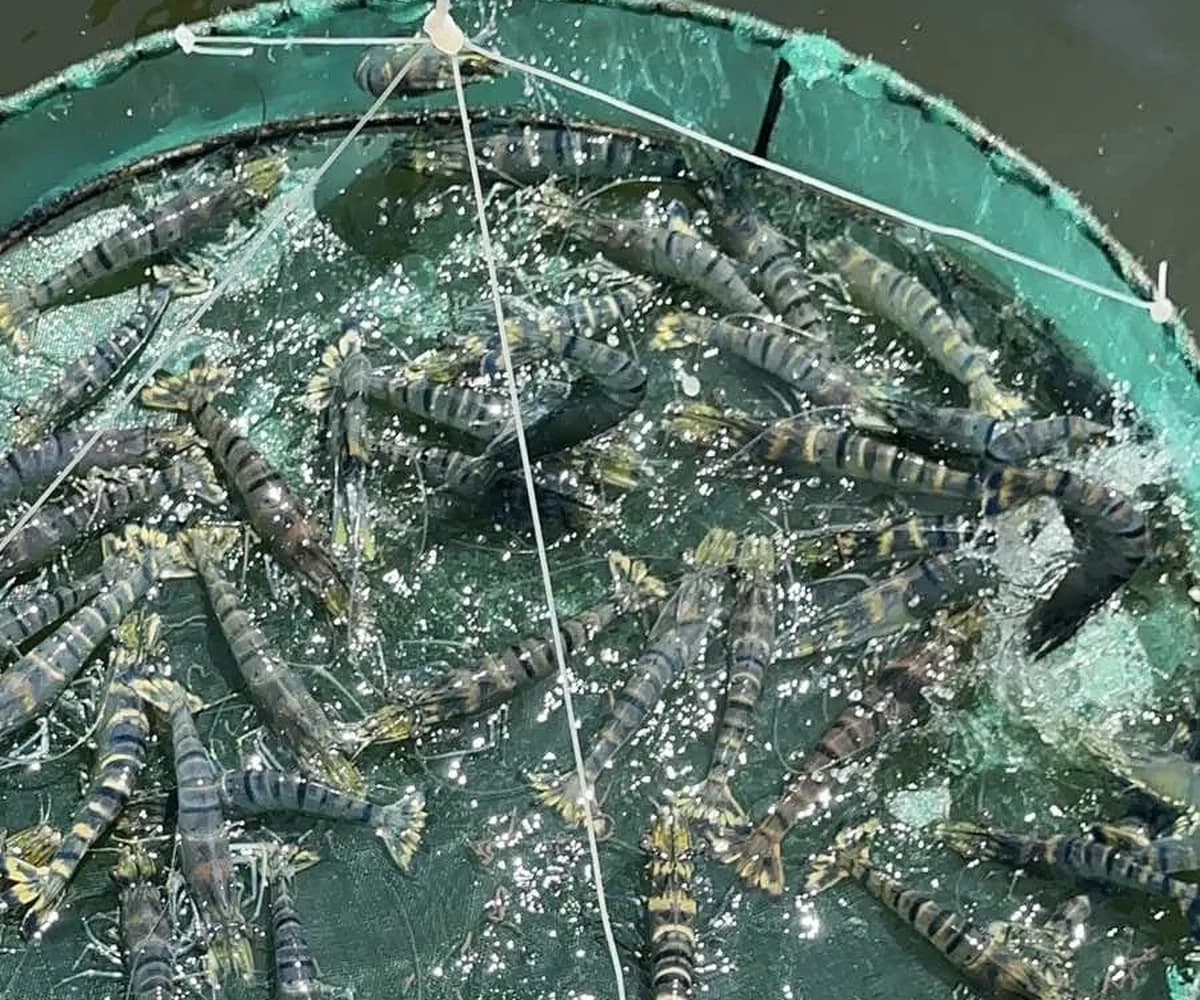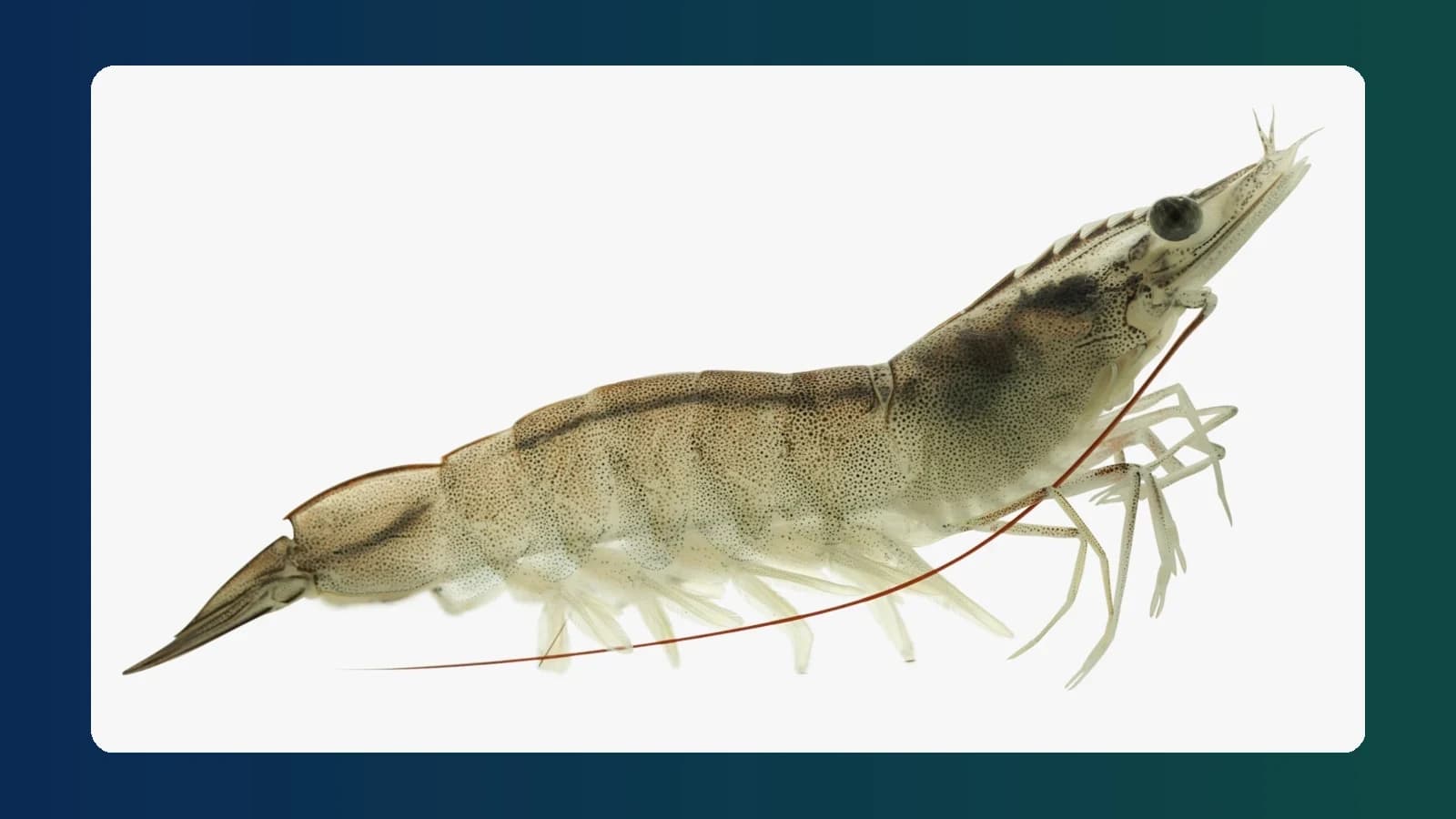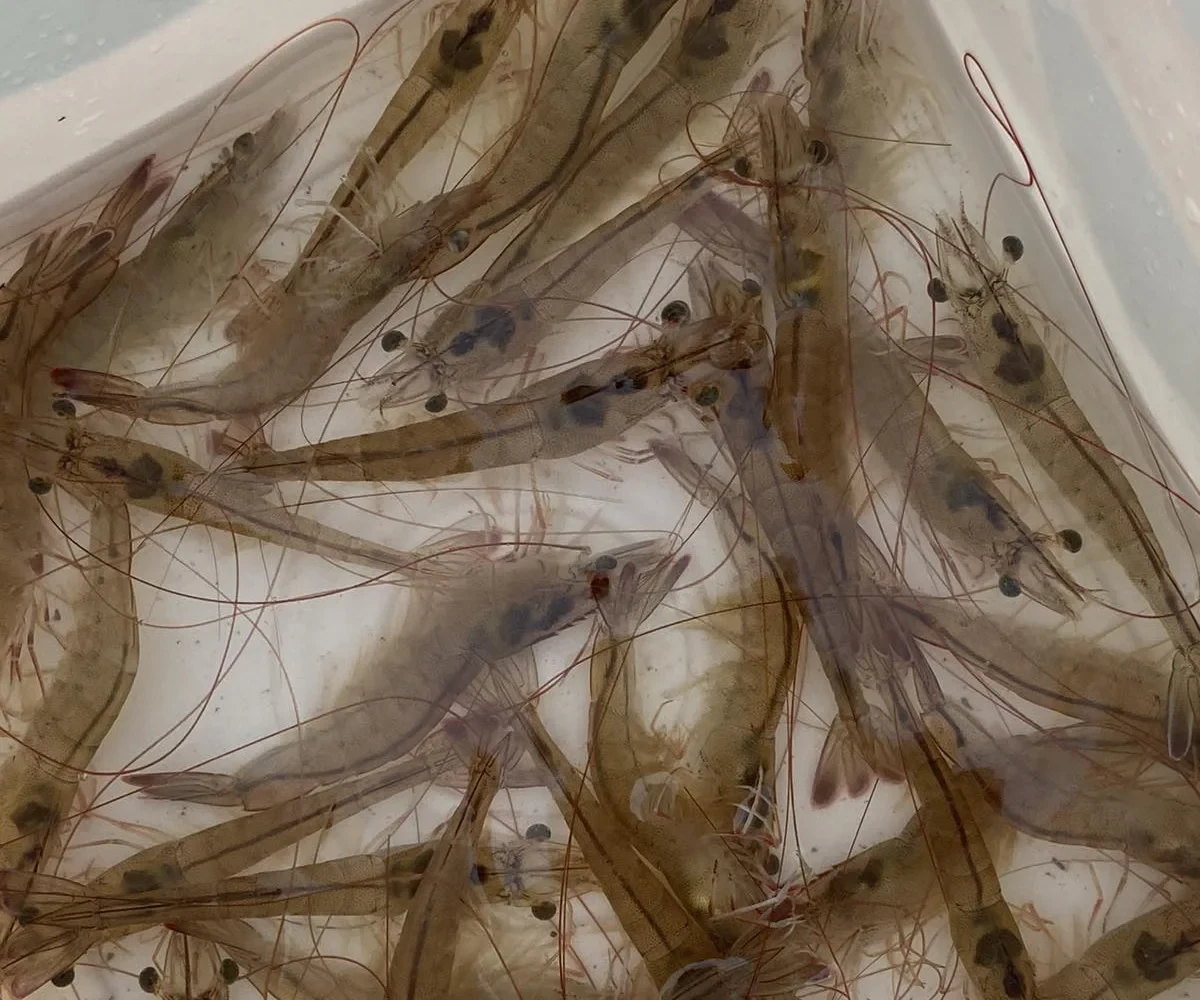
In short: a Jeju National University (Korea) team fed whiteleg shrimp tributyrin, a glycerin-bound form of butyric acid, for 8 weeks, then challenged them with a Vibrio parahaemolyticus strain causing acute hepatopancreatic necrosis disease (AHPND), isolated from diseased shrimp in Vietnam. The shrimp grew faster, used feed better and showed higher immune markers. But in the challenge, survival did not differ significantly. This article presents both sides.
- Butyric acid and Vibrio in whiteleg shrimp (2025) (coming soon)
- Four butyrate forms for black tiger shrimp (2026)
- Tributyrin and an AHPND challenge (2026) (this article)
The trial
- Shrimp: 0.50 g whiteleg shrimp, 240 L tanks, 25 shrimp per tank, 4 tanks per group, 8 weeks; water 30 °C, salinity 32‰.
- Feed: about 37% protein, with 20% fishmeal and 34% soybean meal. Three levels of a 60% tributyrin product: 0.05%, 0.10% and 0.20% of feed (0.03%, 0.06% and 0.12% pure tributyrin), versus an unsupplemented group.
- Challenge: V. parahaemolyticus strain 13-028/A3, isolated from AHPND-affected shrimp in Vietnam and confirmed to carry pirA and pirB. Each group had 3 tanks of 120 L × 13 shrimp; each tank received 40 ml of culture at 10 million cells/ml (about 3,300 cells/ml of tank water by Than Vuong’s calculation), monitored for 170 hours.
Growth and feed efficiency

| Group | Final weight | Weight gain | FCR |
|---|---|---|---|
| Control | 11.15 g | 2,133% | 1.38 |
| 0.05% | 12.08 g | 2,325% | 1.27 |
| 0.10% | 12.18 g | 2,337% | 1.31 |
| 0.20% | 11.66 g | 2,236% | 1.30 |
- Weight gain at 0.10% was significantly higher than the control; FCR at 0.05% and 0.20% was significantly lower. Rearing survival was 91–96%, with no difference.
- Regression gave an optimum of about 0.113% product, but with a wide confidence interval (0–0.19%) and a model explaining only about 47% of the variation, so treat it as a guide.
- Protein digestibility was 84.1% in the control and 86.1–88.4% in the tributyrin groups; trypsin and lipase activity rose.
Immunity
Non-specific immune markers rose clearly: lysozyme from 2.70 to 4.53–4.70 at 0.10–0.20%; SOD from 51.1 to 68.8–69.5 at all three levels; phenoloxidase, GPx and antiprotease activity at 0.10–0.20%. The immune genes crustin and TLR3 rose at all three levels.
In the AHPND challenge

Deaths began at 15 hours and the last shrimp died at 63 hours. Mean survival time was longer with tributyrin (111–115 h vs 93 h), but the intervals overlapped and the survival analysis gave p = 0.397, i.e. no significant difference. Hazard ratios versus the control ranged from 0.93 to 1.50, none significant.
What farmers should know
- Butyrate is not a rescue once a pond has AHPND. In this trial, 8 weeks of tributyrin did not significantly improve survival against a highly virulent strain.
- The clear benefits were growth, feed efficiency and immune markers, so it is a regular, preventive tool, not an emergency fix.
- AHPND prevention still relies on tested disease-free seed, biosecurity, bottom and water management, and not overfeeding.
Quick questions
Did tributyrin help whiteleg shrimp survive an AHPND Vibrio challenge?
In Tharaka, Yoon and Lee’s trial (2026), survival did not differ significantly between groups (p = 0.397). Mean survival time was longer with tributyrin (111–115 h vs 93 h), but the confidence intervals overlapped.
What tributyrin level was best for growth?
By regression, about 0.11% of feed (60% tributyrin product). The confidence interval was wide (0–0.19%), so treat it as a guide only.
What did tributyrin improve?
Weight gain at 0.10% was significantly higher; FCR at 0.05% and 0.20% was lower; lysozyme, SOD, phenoloxidase, GPx and antiprotease activity rose; protein digestibility was 84.1% in the control and 86.1–88.4% with tributyrin.
Where did the challenge strain come from?
Vibrio parahaemolyticus strain 13-028/A3, isolated from AHPND-affected shrimp in Vietnam and confirmed to carry the pirA and pirB toxin genes.
Source
- Tharaka K., Yoon B., Lee K.-J. Effect of dietary tributyrin on growth, feed utilization, innate immunity and disease resistance against Vibrio parahaemolyticus in Pacific white shrimp (Penaeus vannamei). Fisheries and Aquatic Sciences, 2026;29(6):390–403. DOI 10.47853/FAS.2026.e34. Open access, CC BY-NC 4.0 licence.
- This article is a summary and interpretation by Than Vuong. Charts were redrawn by Than Vuong from the reported numbers; the paper’s own figures and tables are not reproduced. The "What farmers should know" section is editorial opinion.