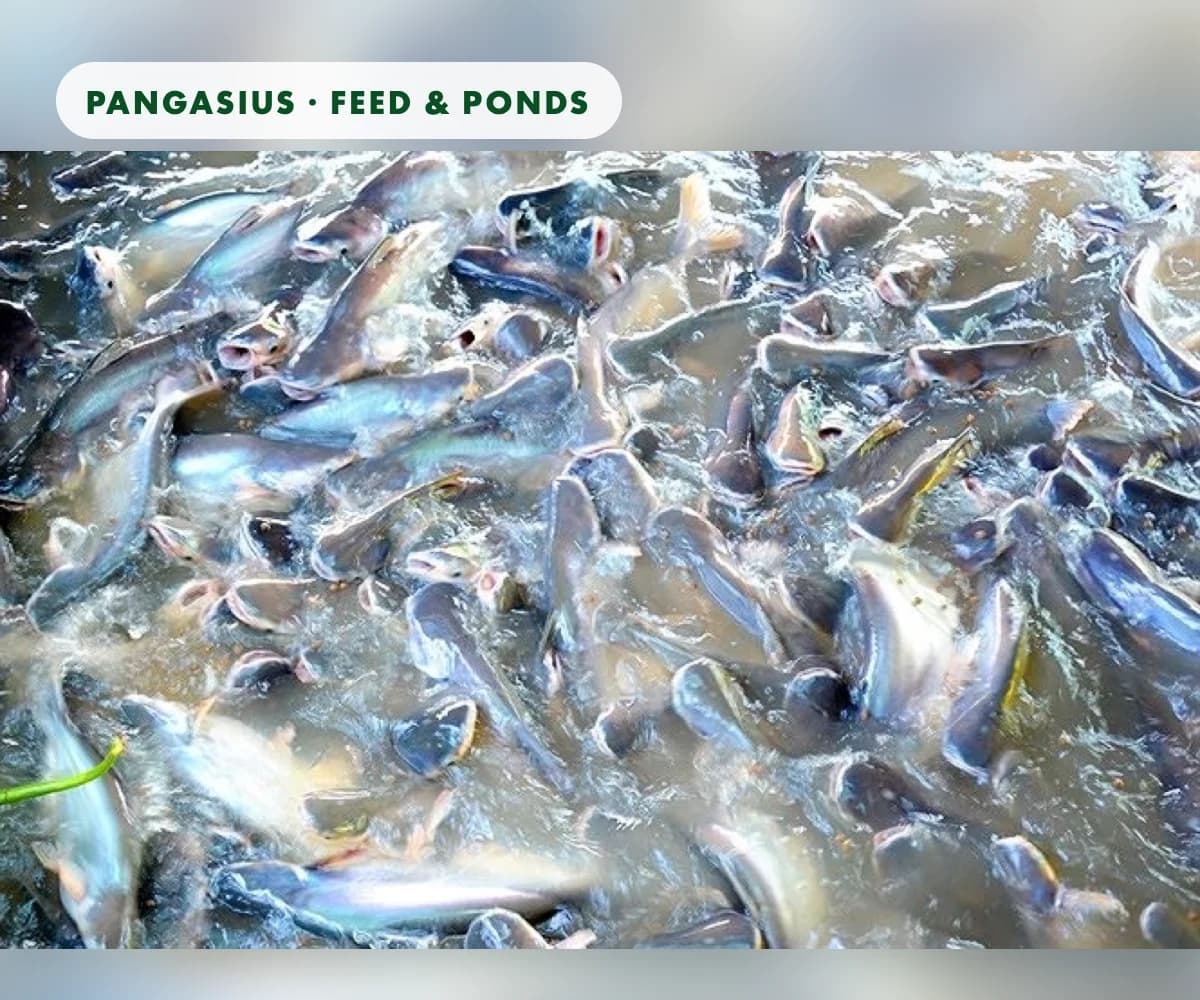

01 / PHAGES ON FARMS
What phages are and how they have been used in aquaculture
Bacteriophages (phages for short) are viruses that infect only bacteria: a phage attaches to a bacterium, multiplies inside it and then bursts it open. Each phage usually targets only a few strains. As antimicrobial resistance spreads, veterinary medicine is returning to phages as an extra tool, used alone or alongside antibiotics.
The article reports on an IABS workshop on veterinary phage use held in November 2024, attended by regulators, scientists and companies. The aquaculture example comes from Atlantic salmon farms. Yersinia ruckeri infects fish during the freshwater stage and then lies dormant in a share of carrier fish. Disease breaks out after stressful handling such as sorting, vaccination, transport or delousing. Applying specific phages at exactly those moments lowers the number of bacteria in the water and prevents outbreaks. The article also notes that phages protected whiteleg shrimp against Vibrio parahaemolyticus and Nile tilapia against Streptococcus agalactiae in trials.
“The current regulatory environment is not conducive to the development of phage products and is considered to act as a barrier in many cases.”
Antoine et al., Biologicals 2025
02 / FOUR ROUTES
Which routes can a phage product take to market?

- Veterinary medicine: in the EU, Regulation (EU) 2019/6 classes phages as “novel therapies”, which must be approved centrally by the European Medicines Agency (EMA) and made to GMP. The EMA has issued a phage-specific guideline that allows phages to be changed within a pre-agreed “design space” — but setting this up takes considerable effort, and both companies and regulators have little experience with it.
- Feed additive: assessed by the European Food Safety Authority (EFSA); no GMP and no assessment fee. In return, the product may only be given to healthy animals, the formula is fixed for the animal’s life or a whole production stage, and phages cannot be changed after approval. So far EFSA has assessed one phage feed additive (against Salmonella in poultry): its safety was confirmed, but two opinions on efficacy were inconclusive, the latest in 2023.
- Magistral preparation: governed by national law. Belgium has had a dedicated framework for human patients since 2018 and has treated more than 200 people. In veterinary medicine this route is still debated; it suits individual animals or small groups, not commercial farms.
- Reducing pathogens in the farm environment: using phages to lower bacterial levels in water or housing — as in the salmon example above — fits none of the three categories.
In the United States, the regulator depends on the intended use: phages acting directly on bacteria fall under the Food and Drug Administration (FDA); products working through the immune system fall under the Center for Veterinary Biologics (CVB); phages for food safety fall under the Department of Agriculture (USDA). Where it is unclear, a joint FDA–CVB committee advises applicants where to file.
03 / KNOTS
Three reasons phages struggle to be approved for farms

1. GMP cost against the price per dose. Farms need large amounts of phage over long periods for very large populations. The aquaculture market is price-sensitive: the cost per dose is measured in cents rather than euros or dollars. Add GMP manufacturing and extensive laboratory and field testing, and developing a phage veterinary medicine becomes a high-risk investment with a low chance of recovering its cost in a reasonable time.
“Producing VMPs under GMP would likely never be commercially viable, particularly in aquaculture.”
Concern voiced by several workshop participants, as reported by Antoine et al.
2. Phages must change, licences do not. Because phages are so specific, products usually combine several. Bacteria then become resistant, and the target pathogen varies over time and between farms, so the phages in a cocktail need updating. The conventional model approves fixed active ingredients; every change means a tightly controlled variation or a new application.
3. Every country has different rules. National frameworks are not harmonised, so the same product may be a feed additive in one country and a medicine in another. In the EU, classing phages as “novel therapies” in the revised veterinary medicines law sends every application to the EMA, leaving member states less room for flexibility.
The workshop recommended building phages into national and global antimicrobial resistance strategies; allowing risk-based flexibility on GMP that prioritises the quality of the final product; and harmonising rules so that companies can choose the most suitable route. Regulators pointed applicants to EMA scientific advice, support for small and medium-sized enterprises, and “limited market” classification where appropriate.
04 / THAN VUONG’S VIEW
What should farmers know?
- The source covers the EU and the US, not Vietnam.
- Phages are not a “new antibiotic” you can buy and use: each phage kills only certain strains, it must match the strain causing disease in your pond, and bacteria can become resistant to it.
- If a product is advertised as containing phages: check its registration number, target species and the bacteria named on the label before buying.
- Prevention still comes first: disease-free seed, biosecurity, and good water and pond-bottom management. When fish or shrimp fall sick, take samples to identify the bacteria; use only approved medicines, at the label dose and with the withdrawal period. See our solutions for fish diseases.
Read next: phages to protect shrimp and fish — trial evidence and why they have not reached farms; and our technical article on phages to control Vibrio parahaemolyticus in shrimp.
QUICK ANSWERS
Frequently asked questions about phages
What is a bacteriophage (phage)?
A virus that infects only bacteria. A phage attaches to a bacterium, multiplies inside it and then bursts it open. Each phage usually targets only certain strains, so products often combine several phages.
Why have many countries not approved phages for aquaculture?
No current legal category was designed for phages. In the EU, the veterinary medicine route requires GMP manufacturing and centralised approval by the EMA, which is very costly against the price of a dose on a fish or shrimp farm. Phages also need to change as bacteria become resistant, while licences fix each active ingredient.
Is registering a phage as a feed additive easier?
In the EU the feed additive route needs no GMP and charges no assessment fee, but the product may only be given to healthy animals, the formula is fixed and phages cannot be changed after approval. EFSA has so far assessed one phage feed additive, for poultry.
Can farmers in Vietnam use phage products?
The source article covers the EU and the US, not Vietnam. Before buying a product advertised as containing phages, farmers should check its registration number, the target species and the bacteria named on the label.