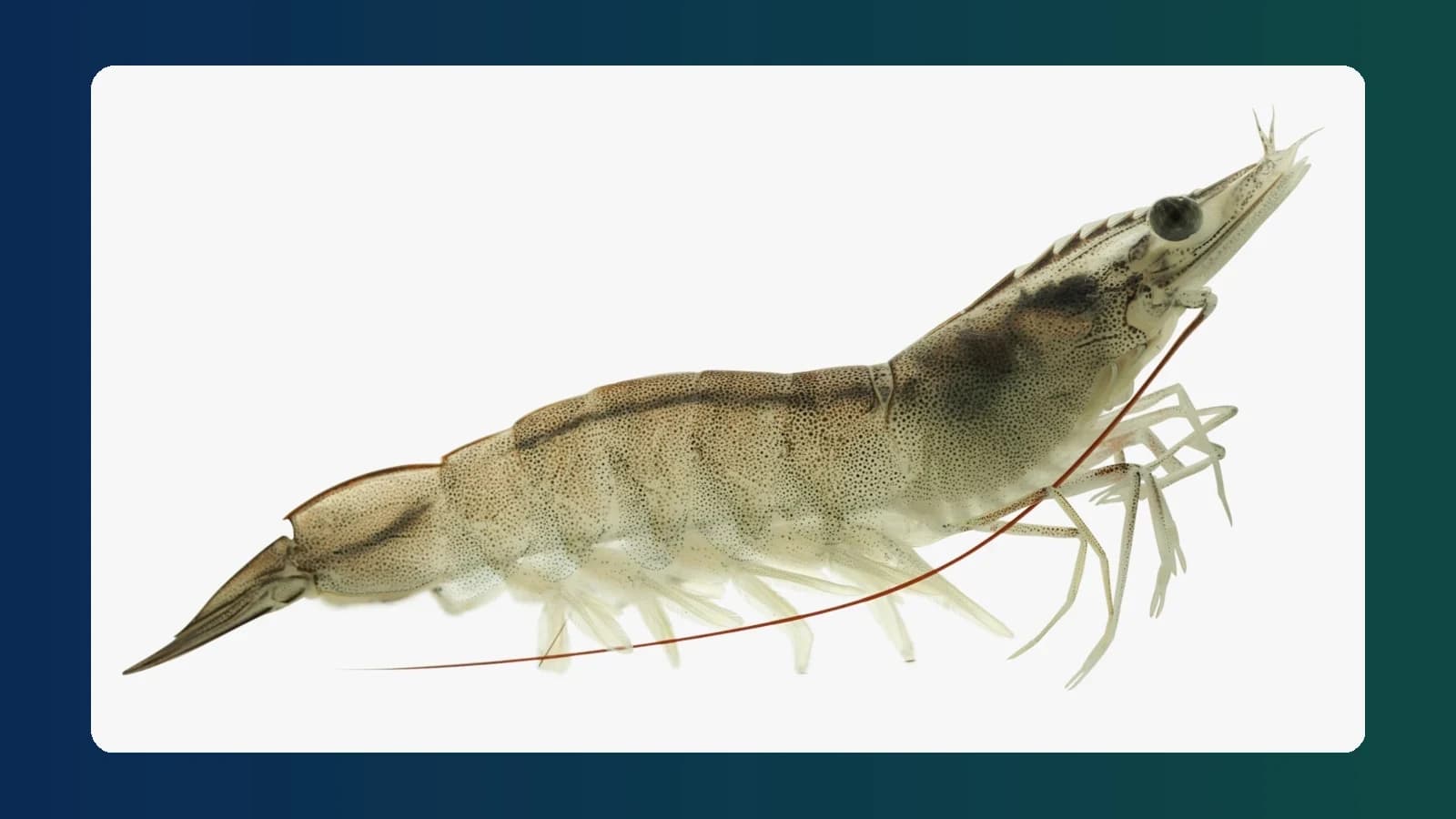
In short: a 2026 review in Microorganisms pulls together what is known about fermented feed for aquaculture. It sets out the benefits and also states the limits plainly: the data are mostly from fish, crustaceans such as shrimp and crabs are scarce, and almost nobody has studied the risks of failed fermentation.
What fermented feed is and why it matters
Fermented feed is made by letting microbes ferment ingredients or a whole feed formula. The authors give three main benefits: feed is more palatable, so animals eat more; large proteins and starch are cut into small molecules such as peptides, making them easier to digest and absorb; and anti-nutritional factors are partly broken down. That is why fermentation is seen as a way to replace part of the fishmeal when fishmeal is scarce and expensive.
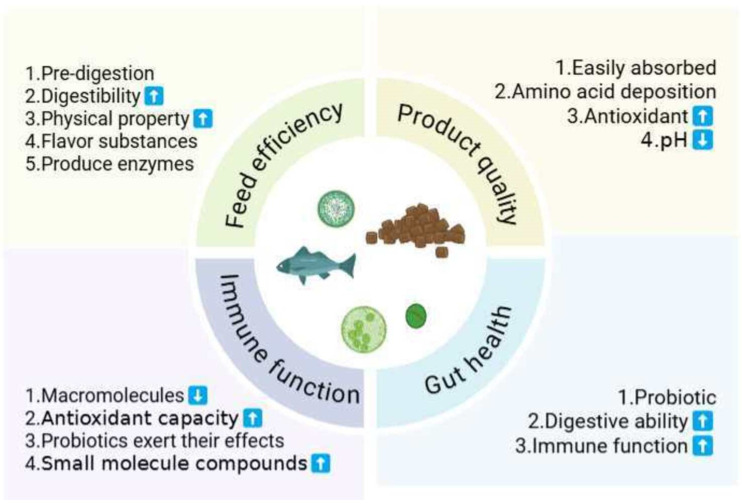
In the figure, the benefits fall into four groups: feed efficiency (pre-digestion, better digestibility and physical properties, flavour substances and enzymes), product quality, immune function (large molecules down, small molecules up, higher antioxidant capacity) and gut health.
Categories of fermented feed
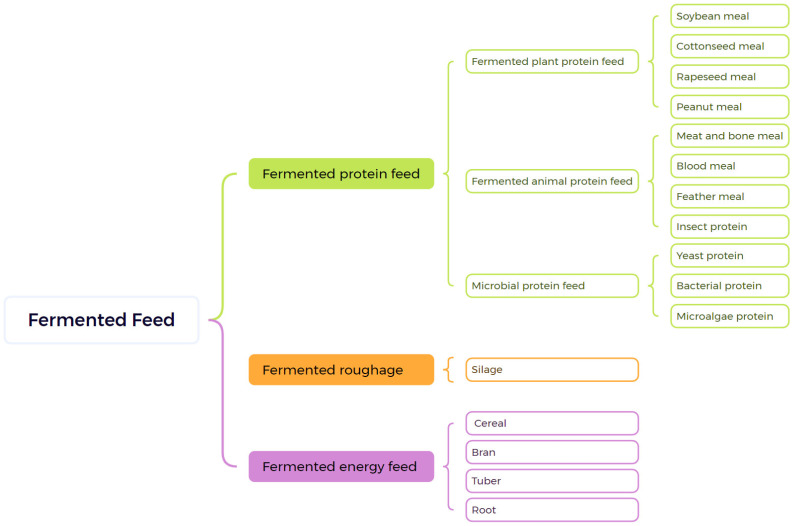
The review divides fermented feed into three groups: protein feeds (plant protein such as soybean, cottonseed, rapeseed and peanut meal; animal protein such as meat and bone meal, blood meal, feather meal and insect protein; microbial protein such as yeast, bacterial and microalgae protein), roughage (silage) and energy feeds (cereal, bran, tubers, roots).
Four factors that decide quality
According to the review, in order of importance:
| Factor | Main point |
|---|---|
| Microbial strain | Called the “soul” of fermentation. Lactic acid bacteria make acid, lower pH and preserve the feed. Yeasts add flavour and probiotic properties. Bacillus secretes many enzymes (protease, amylase, cellulase) and breaks nutrients down strongly. Moulds break down fibre. Modern fermented feeds often use multi-strain consortia. |
| Temperature | The studies reviewed fermented between 25 and 40 °C. |
| Duration | About 2–10 days in the reviewed studies; over-fermentation wastes nutrients. |
| Moisture | One of the four key parameters, but many studies do not report it. |
Shrimp may respond differently from fish
The authors explain that fish have strong gastric acid secretion and long intestines, so they tolerate organic acids and pre-digested protein well. Crustaceans such as shrimp have a simpler gastric structure and a short gut, so they rely more on external enzymes to pre-break-down feed. They therefore suggest that Bacillus-fermented feed, rich in proteases and amylases, is likely to improve shrimp FCR more clearly. This is the review's hypothesis, not a conclusion.
What is still missing
- Species bias: over 60% of the data come from fish (tilapia the most), while shrimp, crab and molluscs are very scarce.
- Weak study design: many studies use fewer than 30 animals per group; many do not report moisture or viable counts during fermentation; some have only a blank control, with no comparison to unfermented raw material or other strains.
- Inconsistent results: with fermented soybean meal, FCR in pomfret improved from 2.35 to 2.19, but in barramundi only from 1.47 to 1.46.
- Short trials: most last only 4–12 weeks and do not cover a whole production cycle.
- Risks barely studied: failed fermentation, contamination, mycotoxin build-up and nutrient loss from over-fermentation have almost no data. The authors also note the difficulty of industrial-scale production.
What farmers should know
- "Fermented" is not one single product. Different strains, times and moisture give different products with different effects.
- For shrimp the evidence is still thin. Do not expect the results reported in fish.
- Fermenting feed on-farm needs a clean, controlled process. If fermentation fails, the risks (contamination, toxins) can outweigh the benefits.
- If you only want to add live yeast and probiotics to feed, they can be mixed or coated directly onto finished feed.
Source
- Sun H., Nie L., Huang M., Zou W., Hu Y., Luo X., You W., Ke C. Fermentation Technology in Aquafeeds: A Review. Microorganisms, 2026;14(2):416. DOI 10.3390/microorganisms14020416. Open access, CC BY 4.0 licence.
- This article is a summary and interpretation by Than Vuong. Figures 1 and 2 are reproduced without alteration from the original article archived on PMC, under the CC BY 4.0 licence. The "What farmers should know" section is editorial opinion.