In short: a 2026 Animal Nutrition study fermented whole diets with two lactic acid bacteria strains isolated from Chinese mitten crabs (Eriocheir sinensis) themselves, then fed them for 12 weeks. Crabs on the L. plantarum-fermented diet grew faster and used feed more efficiently. Worth noting: a diet that was only "fermented" without added strains gave no difference from the control.
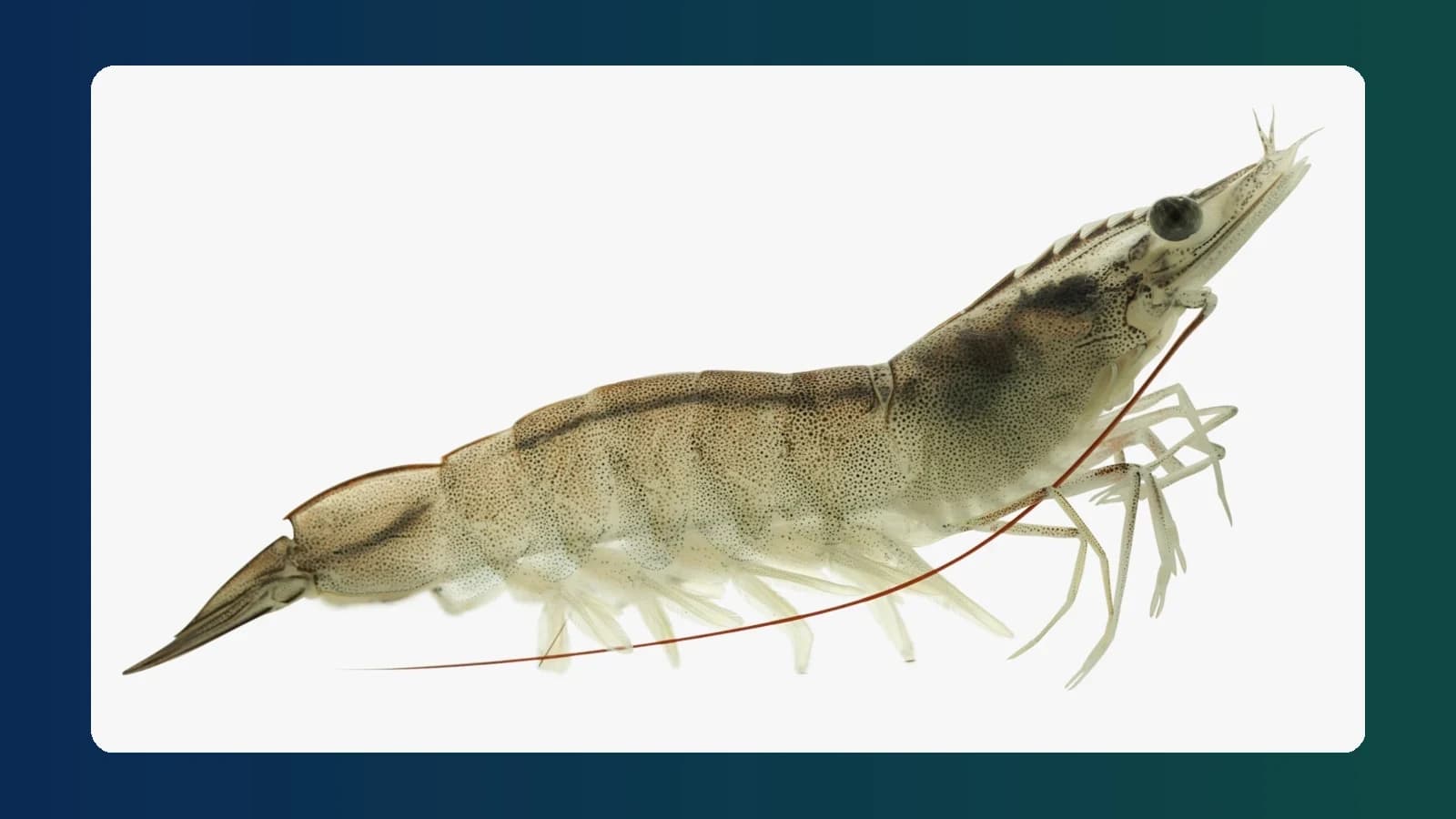
A note on species: this is a crab study, not whiteleg shrimp. It is included in the series because crabs are crustaceans too and the trial design is instructive.
Five diet groups
| Group | Diet |
|---|---|
| Control | Non-fermented |
| Fermented, no inoculum | Fermented with sterilised broth and water but no bacteria added |
| L. plantarum | Fermented with Lactiplantibacillus plantarum MW 2406C, 1×10⁶ CFU/g |
| L. brevis | Fermented with Lactobacillus brevis Myh YC-01, 1×10⁶ CFU/g |
| Mixture | Both strains 1:1, 1×10⁶ CFU/g in total |
Both strains were isolated from crabs and tested for acid tolerance, oxygen tolerance and activity against three pathogens before use. Each group had 6 replicates of 10 crabs.

Results
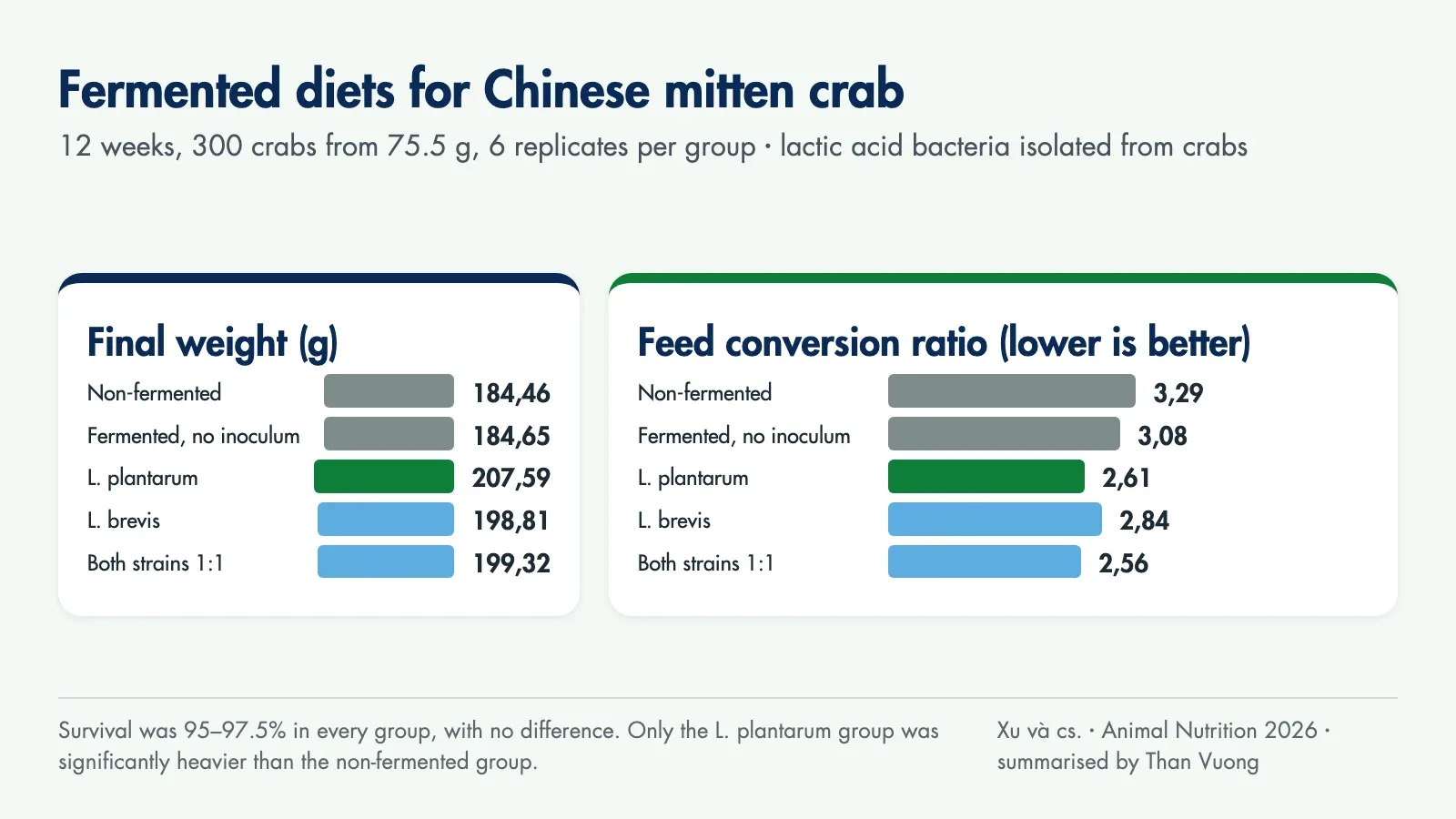
- Growth: the L. plantarum group was significantly heavier than the control and the no-inoculum group (P = 0.046); weight gain 179.0% vs 145.1%. The L. brevis and mixture groups were higher but not significantly different from the control.
- Feed use: FCR of the L. plantarum and mixture groups was lower than the control (2.61 and 2.56 vs 3.29; P = 0.032). Feed intake and survival (95–97.5%) did not differ between groups.
- Hepatopancreas: the hepatosomatic index was lower in the L. plantarum and mixture groups.
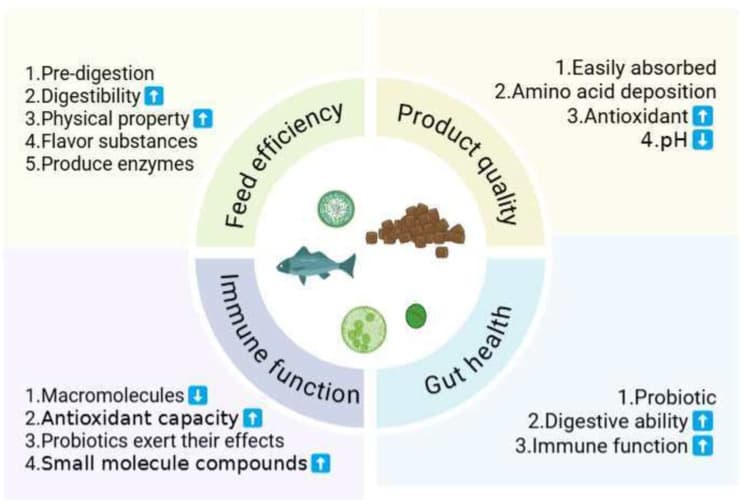
- Other: higher digestive and antioxidant enzyme activity, stronger expression of several immune and gut-barrier genes, and a gut microbiota shifted towards more beneficial groups.
The team also induced gut inflammation in crabs with LPS to study mechanisms. The fermented diets reduced the expression of inflammation genes and helped restore gut-barrier genes. This is a mechanism experiment under induced inflammation, not normal farming conditions.
What farmers should know
- These results are for Chinese mitten crabs, over 12 weeks, with two specific lactic strains. They do not transfer directly to whiteleg shrimp or to other strains.
- Fermenting "for the sake of it" produced no benefit. Which strain, what dose and what process are what matter.
- The two-strain mixture was no better than one strain. More strains are not necessarily better.
Source
- Xu J., Wu Y., Wu J., Wang A., Zhang X., Xing X., Fu L., Du X., Miao S. Diets fermented by crab-derived lactic acid bacteria enhance growth, modulate the gut microbiota, and improve hepato-intestinal health in Eriocheir sinensis. Animal Nutrition, 2026. DOI 10.1016/j.aninu.2026.01.021. Open access, CC BY-NC-ND 4.0 licence.
- This article is a summary and interpretation by Than Vuong. Charts were redrawn by Than Vuong from the reported numbers; the original paper’s own figures and tables are not reproduced. The "What farmers should know" section is editorial opinion.