01 / BANGKOK
Growth amid overlapping pressures
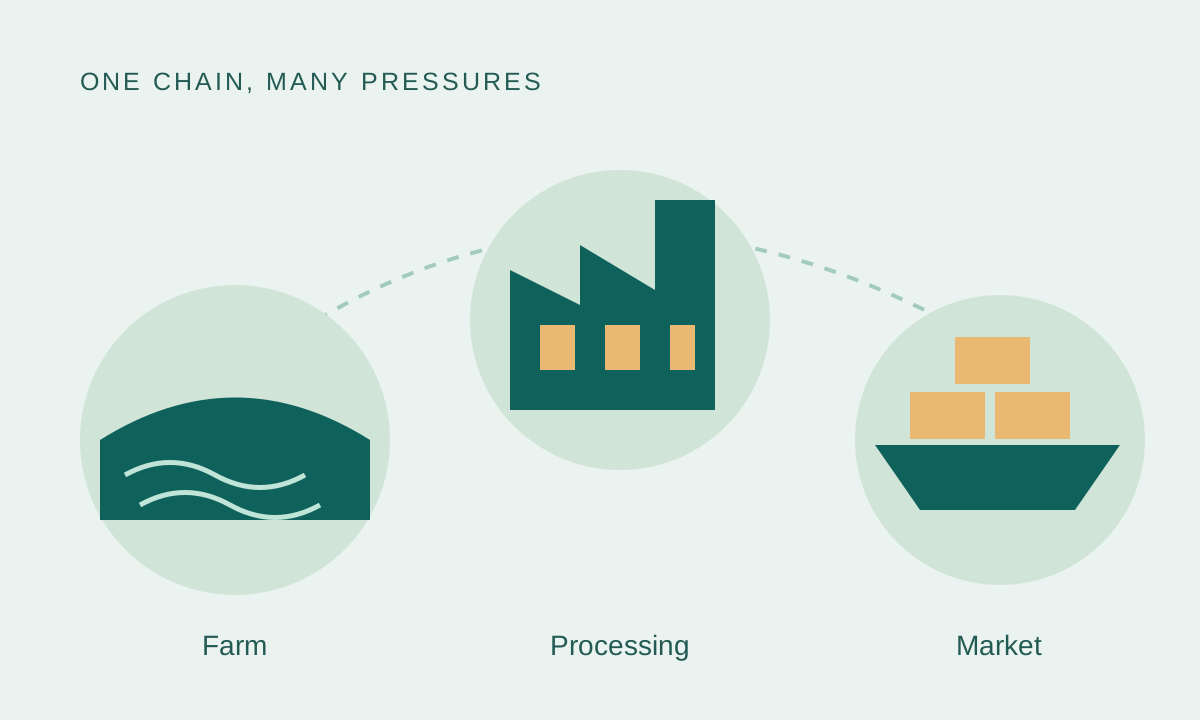
Five months after Seafood Expo Global in Barcelona, stories of trade disruption, rising costs and changing consumer demand were still present at the Responsible Seafood Summit 2026 in Bangkok. But the pressures are now seen as more closely linked: tariffs, climate, labour conditions and the search for new markets are shaping the business environment together.
The opening day of the event, co-organised by the Global Seafood Alliance (GSA) and The Center for Responsible Seafood, brought together business leaders, producers, researchers and other stakeholders. The question running through it was how companies plan for growth when volatility has become part of everyday operations.
In his opening remarks, GSA CEO Mike Kocsis stressed the value of collaboration between people from different regions and sectors. No single person or organisation can build the future of the seafood industry alone. Ingorn Panyakit, Inspector General of Thailand's Ministry of Agriculture and Cooperatives, also highlighted the host country's role in global production, trade and food security.
02 / MARKETS & SUPPLY CHAIN
Diversifying outlets, rethinking the consumer
Tam Nguyen, CEO of Vinh Hoan, described a difficult export year because of tariffs and prolonged trade pressure in the United States, the company's largest export market. According to the article, these measures affect Vietnam's seafood export sector, worth more than US$10 billion.
That pressure reinforces the need to diversify markets. Japan, once seen as a difficult destination for Vietnamese freshwater fish, is becoming a source of growth: pangasius exports to Japan have grown at double-digit rates in recent years and are used in higher-end products, including sushi.
Vinh Hoan invests across hatcheries, feed, farming and processing, while looking to capture more value from each fish. Its "zero-waste fish" approach includes using by-products to make high-value products such as collagen. For Tam Nguyen, sustainability is also a way of managing business risk.
From a good product to the right product
Daisuke Yasuda, President and CEO of Umios, looked at the shift from the consumer's side. The Japanese company, formerly Maruha Nichiro, renamed itself Umios in March as part of a broader direction in food, health and environmental solutions.
He argued that the belief that a good product will always sell can lead companies to prioritise plant capacity even when the product no longer matches demand. The result is competition on price. Moving to a consumer-centred approach, and communicating the health benefits of seafood better, is the opportunity he highlighted.
When several shocks arrive at once
Ragnar Nystøyl, Chief Analyst at Kontali, noted that volatility is nothing new for seafood markets. What is different now is that war, geopolitical instability, tariffs and climate disruption overlap, raising costs and changing trade flows.
Seafood trade flows between the United States and Europe and Asia have been hit hard. Some alternative supply regions, including parts of South America, have gained ground, and China has also taken a bigger role in some trade flows.
Climate adds pressure on fishmeal and fish oil supply, with less favourable fishing seasons in key producing regions and lower supply of some North Atlantic species. Even so, Nystøyl noted that the effects of warming water are uneven: milder conditions in parts of Northern Europe support salmon and trout farming, while other sectors struggle.
Asia is many different markets
Åshild Nakken, Director for Thailand and Southeast Asia at the Norwegian Seafood Council, said each market has its own culture, price level and distribution channels. Rising incomes open opportunities for higher-value products. She pointed to China as an example of a growing middle class and suggested Thailand and the Philippines are about a decade behind on the path to similar income levels.
In Thailand, Norwegian salmon is moving from sushi and Japanese restaurants into Thai dishes and many other occasions. Vietnam, besides its processing role, is also developing into a premium seafood market thanks to a young population and fast urbanisation.
03 / CLIMATE & FEED
El Niño can reach from the pond to purchasing power
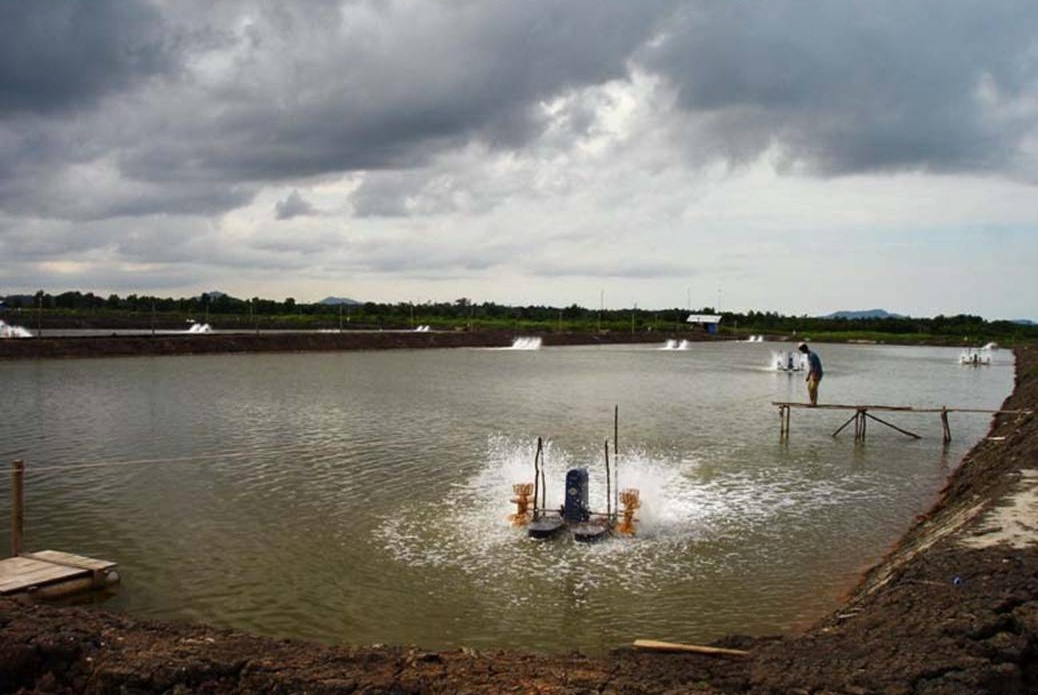
Ben Belton, Senior Fisheries and Aquaculture Officer at FAO, stressed that climate change is already affecting production through floods, droughts, warming water and coastal erosion. He described a shrimp pond about 22 miles south of Bangkok where rising seas had eroded the surrounding land.

In the discussion reported by the article, Belton used El Niño to explain how the effects reach beyond the pond. Higher temperatures and less rainfall can affect rice and wheat harvests; grain prices and aquafeed prices can then rise.
At the same time, when staple foods cost more, lower- and middle-income consumers must spend more of their budget on essentials and may cut back on seafood. Farmers therefore risk being squeezed on both inputs and outputs, leading to lower incomes and possibly lower production.
Climate change acts as an amplifier of other environmental and economic pressures.
Ben Belton · FAO · paraphrased from the source article
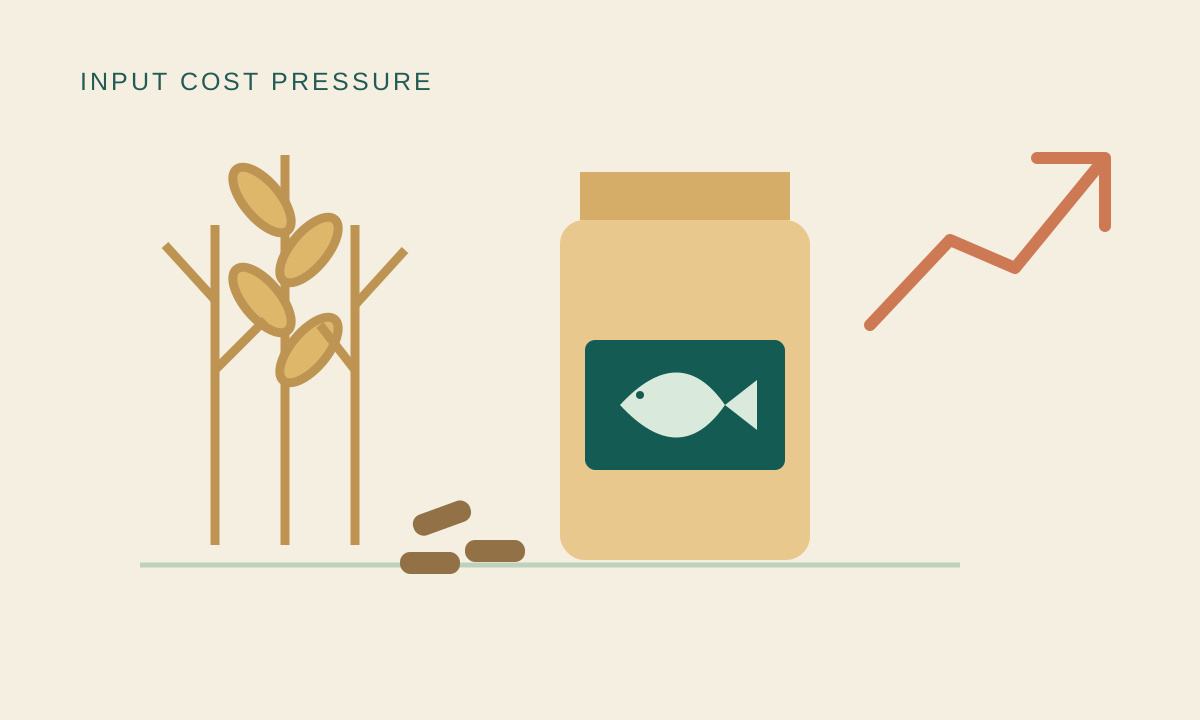
Costs may rise
El Niño → hotter, drier → lower grain harvests → higher prices for raw materials and aquafeed.
Purchasing power may fall
Staple foods cost more → more of the budget goes on essentials → consumers may spend less on seafood.
The diagram explains the risk mechanism Belton described in the article; it is not a price forecast or a certain outcome for every farming area.
04 / ADAPTING ON THE GROUND
Farmers have started to change
Belton said many adaptation measures have already appeared on farms, from tilapia hatcheries to flood-prone farming areas. The examples he gave include:
- Cooling hatcheries: shade nets and water sprinkler systems.
- Adjusting ponds: digging deeper ponds and adding aeration.
- Coping with flood-prone areas: raising pond dikes and changing stocking calendars.
05 / RESPONSIBLE PRODUCTION
Who shares the cost of sustainability?
The last session of the day brought the discussion back to production. Paul Christian Herholz, President of Thai Union's frozen business, asked how sustainability itself can be made to last.
In his view, responsible production can only scale when producers, customers and supply-chain partners all see its value. Consumers are not necessarily willing or able to pay much more, so the cost cannot all fall on one link. Sustainability needs to be built into the business and create enough value to keep investment going.
Share of Thai Union's shrimp purchases coming from responsibly managed farms, according to Adam Brennan at the summit.
Reduction in the production carbon footprint of a pilot farming model in Thailand cited by Brennan.
Adam Brennan, Chief Sustainability and Communications Officer at Thai Union, presented these results in the context of the SeaChange 2030 programme extending its commitments to shrimp. These are company figures cited in the article, with the specific scope stated above.
Brennan linked sustainability to protecting people, the planet and business resilience. Major risks remain in labour conditions, aquafeed and climate adaptation. The industry needs to move faster on protecting workers, strengthening feed standards on deforestation and aquatic animal welfare, and helping suppliers and small-scale farmers prepare for a warmer climate.