01 / CONTEXT
Sustainable today, but will it still hold up tomorrow?
Aquaculture Europe 2026, organized by the European Aquaculture Society (EAS) in Ljubljana (Slovenia), brought together 2,522 researchers, businesses and experts under the theme "Aquaculture in global change". The opening keynote on September 29 by biotechnology expert Jurica Jug-Dujaković posed the question: will the species and farming systems considered sustainable today still perform well as the climate changes?
He recalled the United Nations' 1987 definition of sustainable development — "meeting the needs of the present without compromising the ability to meet the needs of future generations" — but argued that economic, social and energy sustainability must also be taken into account. Climate change affects the physiology and condition of farmed animals directly, and indirectly through the supply of feed ingredients. Adaptation can therefore happen at several stages: genetic improvement, diversifying farmed species and changing farming systems.
02 / PONDS
Close to sustainable, but far from resilient
“Fish farming in ponds and wetlands is very close to sustainability but very far from being resilient to climate change.”
Jurica Jug-Dujaković, Aquaculture Europe 2026
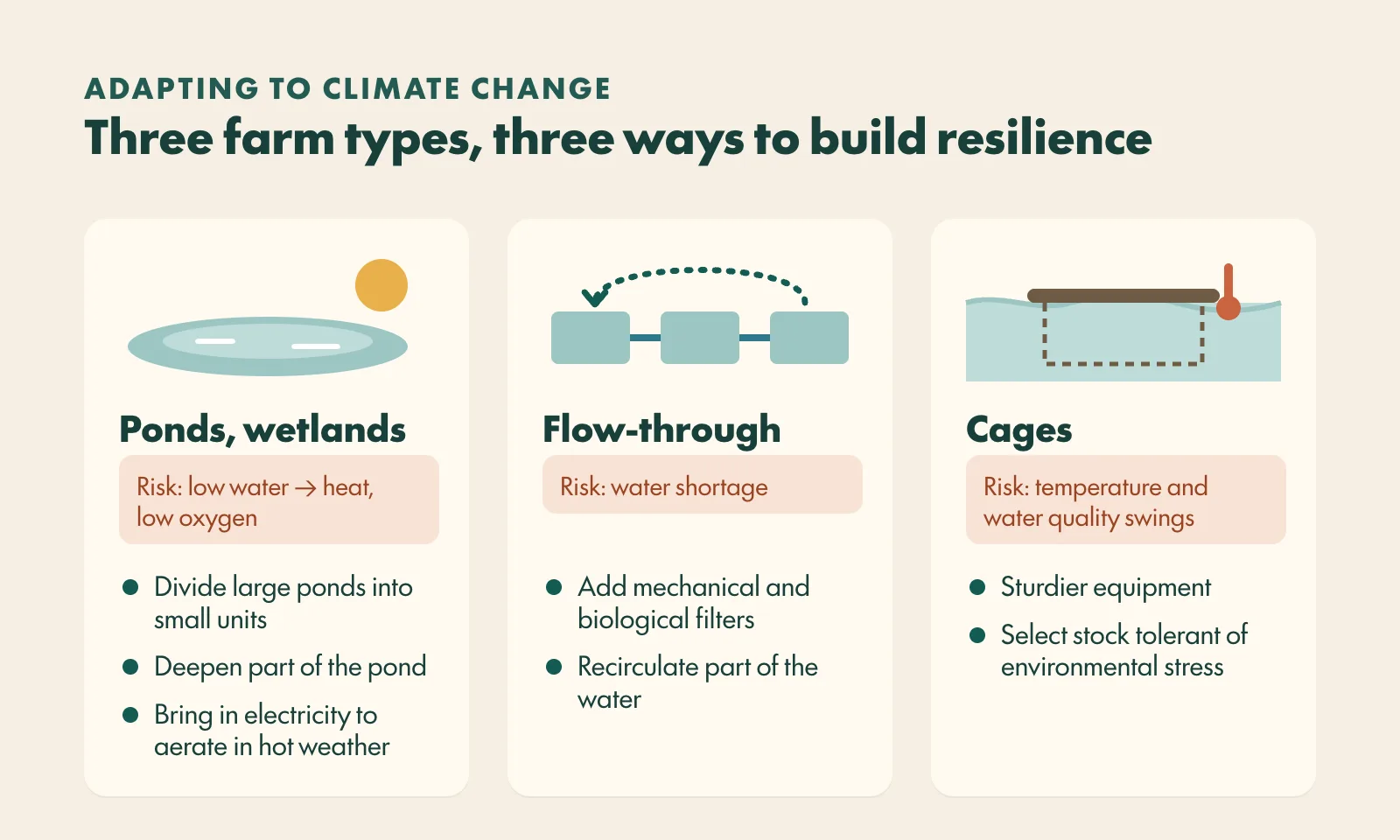
Low water levels make the water warmer and lower in oxygen; shallow ponds also leave fish more exposed to birds. Some farmers have already responded: dividing large ponds into several smaller units, deepening part of the pond and bringing in electricity to run aeration when temperatures rise.
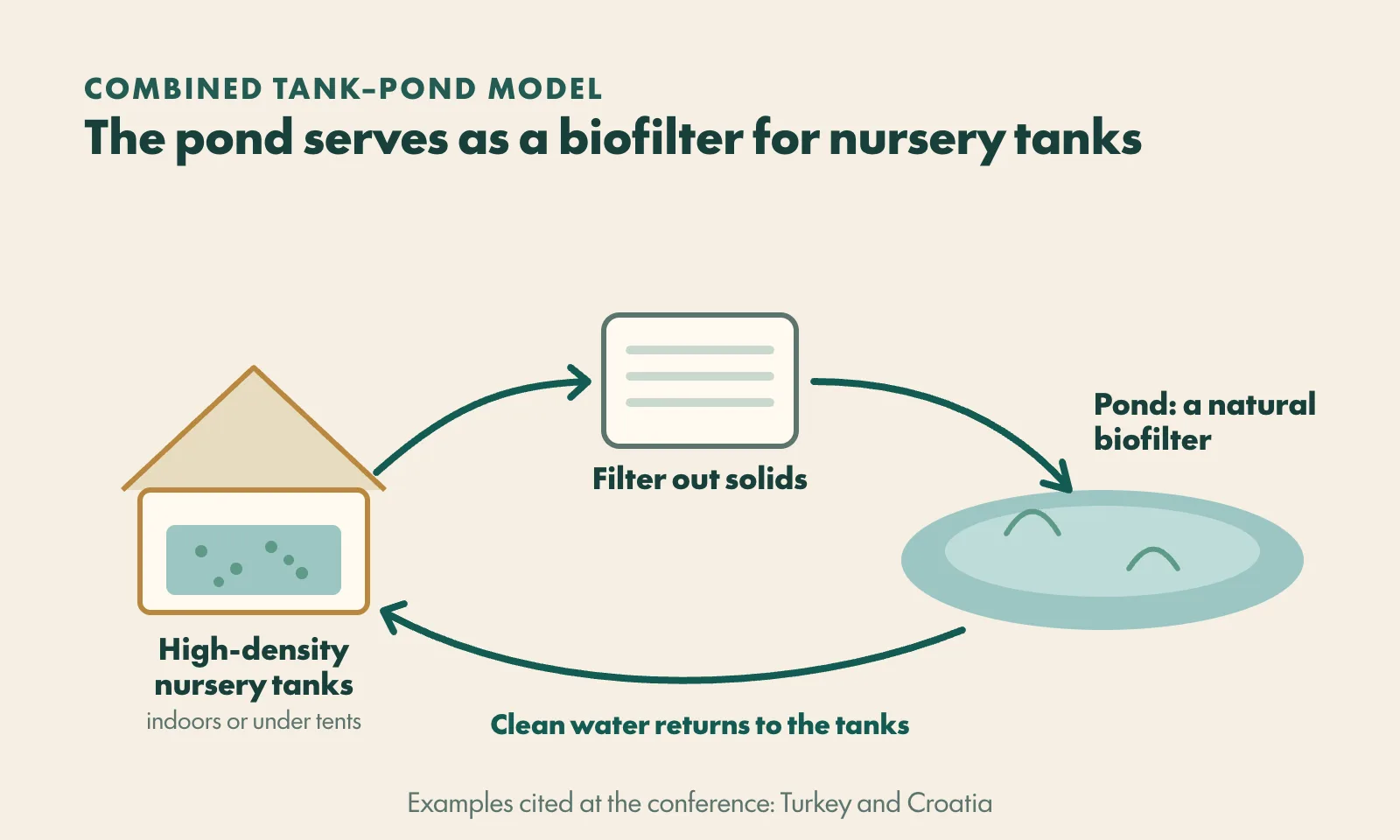
He presented a combined model already in use in Turkey and Croatia: juvenile fish are nursed at high density in tanks placed beside the pond, sometimes under tents or indoors. Wastewater from the tanks, after the solids are filtered out, flows through the pond — the pond acts as a natural biofilter — and then returns to the tanks.
03 / OTHER SYSTEMS
Flow-through farms, cages and seed stock
Flow-through farms need large volumes of water to maintain water quality, so they are vulnerable when water supplies decline. Some farms have added a partial recirculation system — in Hungary, for example, a farm installed mechanical and biological filters to recirculate part of its water.
For cage farming, he said, there is still little research specifically on climate resilience. Sturdier equipment is needed, as are species that can tolerate fluctuations in water quality, especially temperature. Breeding has long prioritized fast growth; from now on, more attention is needed on tolerance to environmental stress.
“We don’t know if it’s going to be one week or two weeks. … We don’t have a strategy for the long-term situation when it happens… We need more research dedicated to the climate change, dedicated to the temperature changes.”
Jurica Jug-Dujaković
To close, he sketched an integrated system: wastewater and nutrients from fish farming used to grow plants; CO2 from the fish tanks piped to greenhouses; processing by-products put to use; and a biomass plant supplying power and heat to the farm and the factory. In his view, many of the technologies already exist; the hard part is combining them effectively and learning from other industries.
“Before we go to a new project, we have to collect what we already have, not only in aquaculture but in other industries too.”
Jurica Jug-Dujaković
04 / THAN VUONG PERSPECTIVE
Applying this to ponds in Vietnam
Shrimp and fish ponds in Vietnam are going through exactly what the conference described: prolonged heat, unseasonal rain, low water levels, and El Niño 2026–2027 (see our series El Niño part 1 and part 2). What farmers can prepare right away:
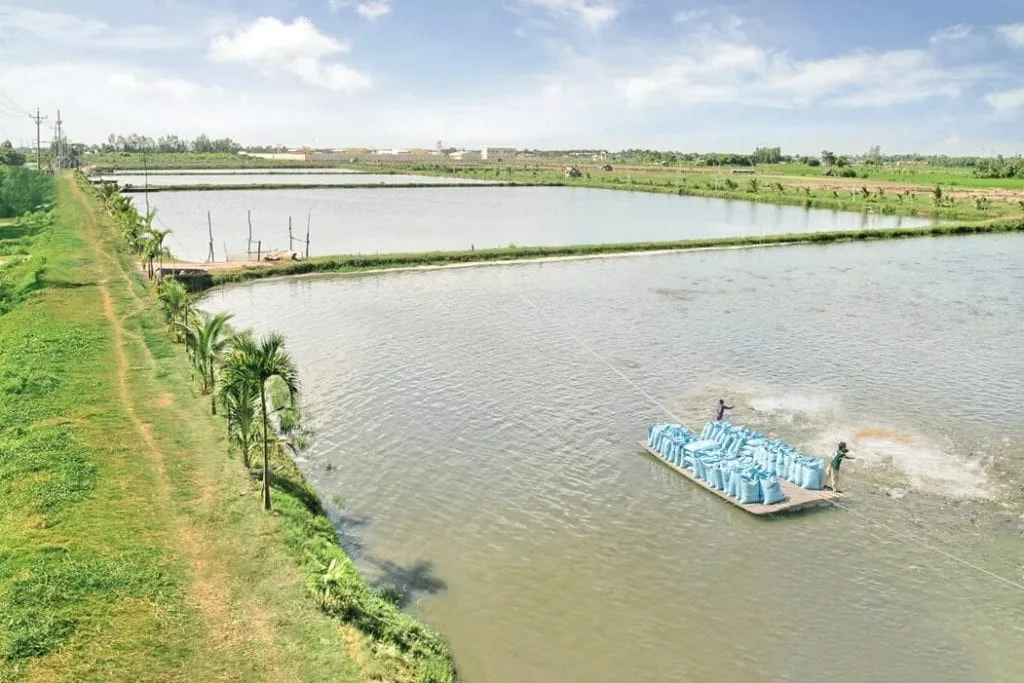
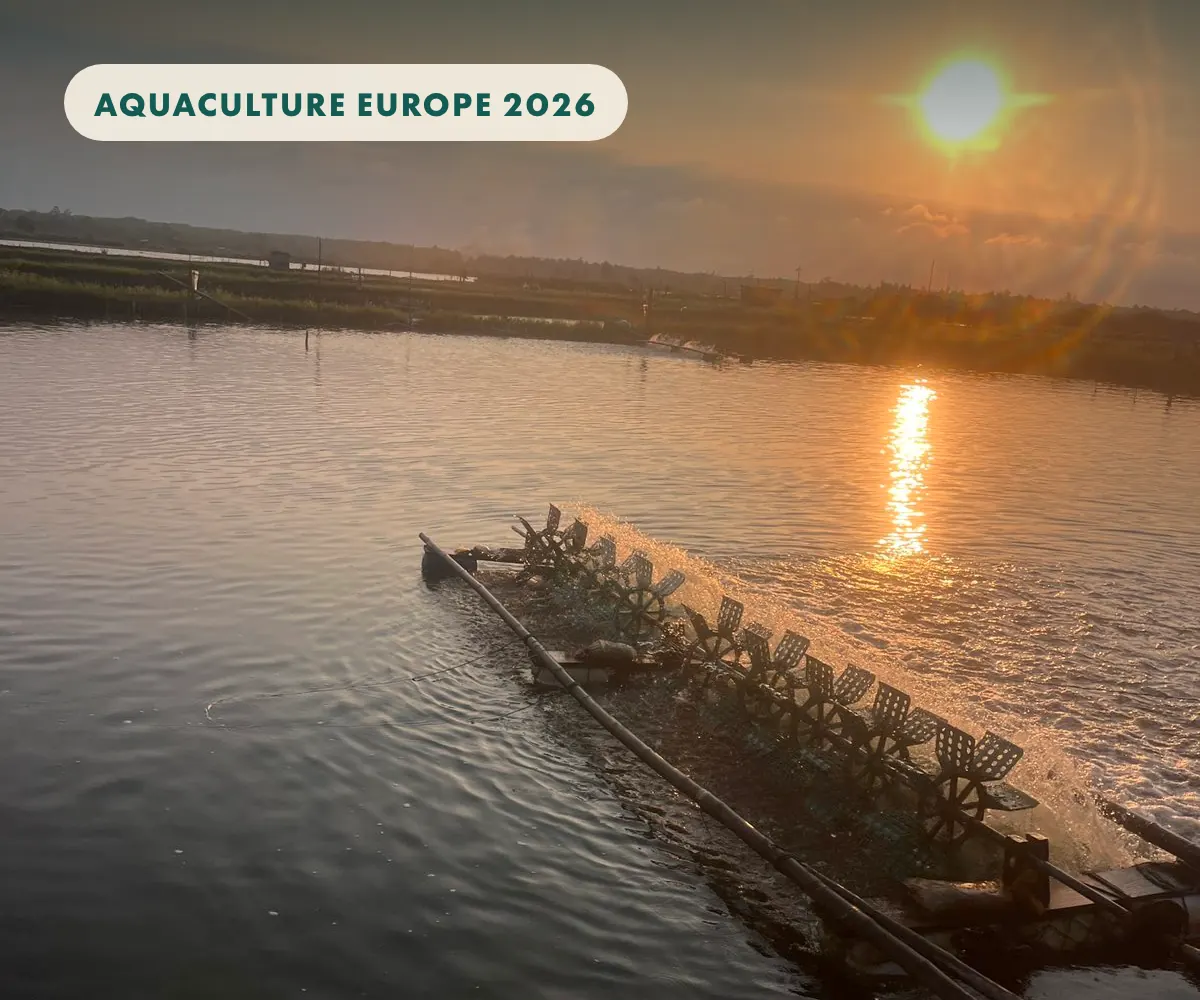
- Prepare oxygen for hot days: enough paddlewheels and aeration; backup power; run the paddlewheels for more hours at night and when the sun is at its strongest.
- Keep water at a safe level: shallow ponds heat up very quickly. Have settling ponds and reservoir ponds to top up water; when renovating, consider deepening the pond or dividing it into smaller units.
- Nurse seed stock under control: nurse in nursery ponds, tanks or greenhouses before stocking into the grow-out pond — the same idea as the combined tank–pond model.
- Check the water every day: temperature, pH, alkalinity, toxic compounds — use the NH3, NO2 toxicity calculator; reduce feeding when the water is too hot to keep the pond bottom cleaner.