01 / WHY ARGININE
An amino acid that runs short in plant-heavy feeds
Arginine is one of the essential amino acids for shrimp — it must come from feed. It is involved in protein synthesis, energy metabolism and antioxidant defence. According to the authors, when feed formulas replace fishmeal with plant ingredients, arginine often becomes a limiting amino acid for crustacean growth.
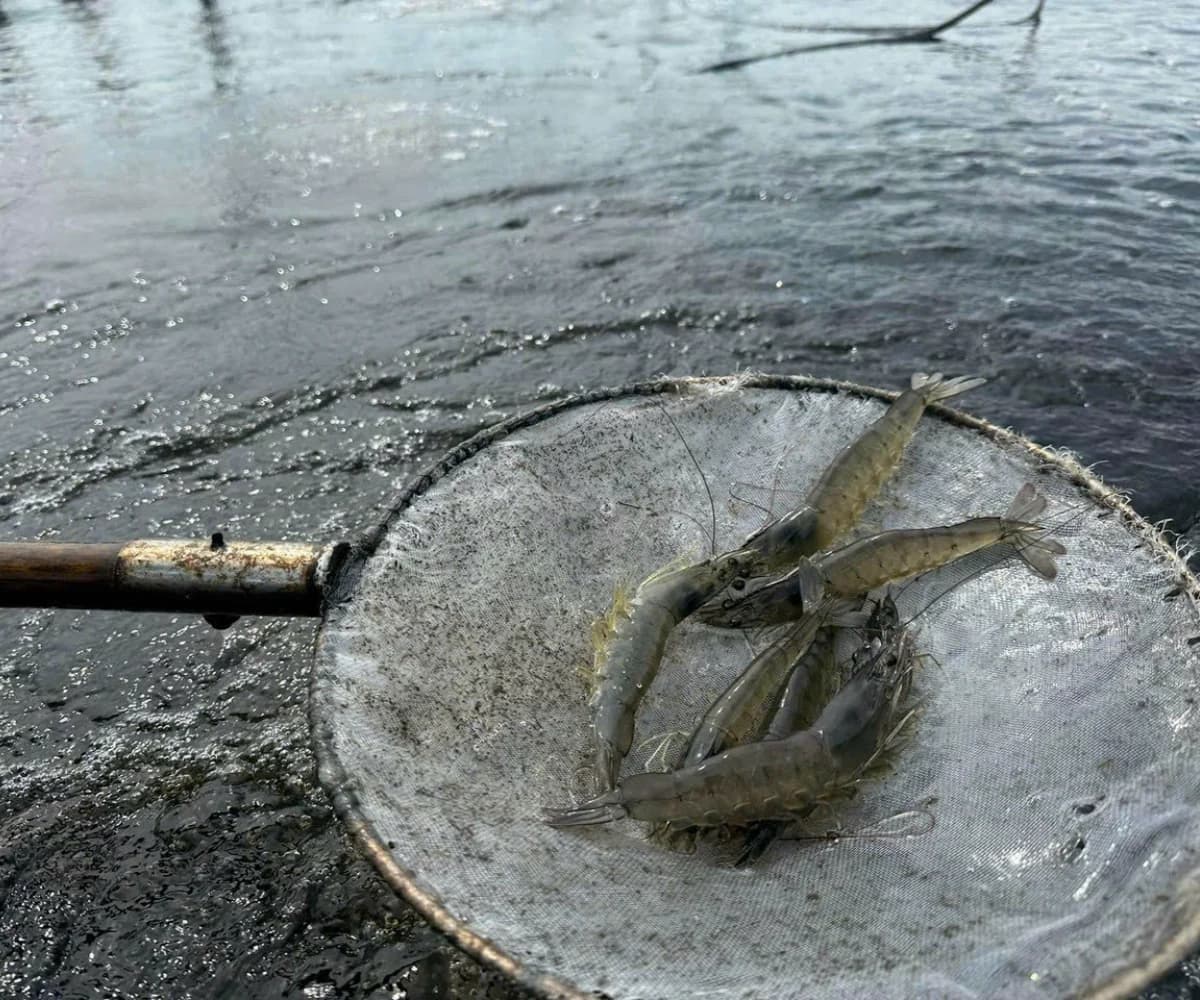
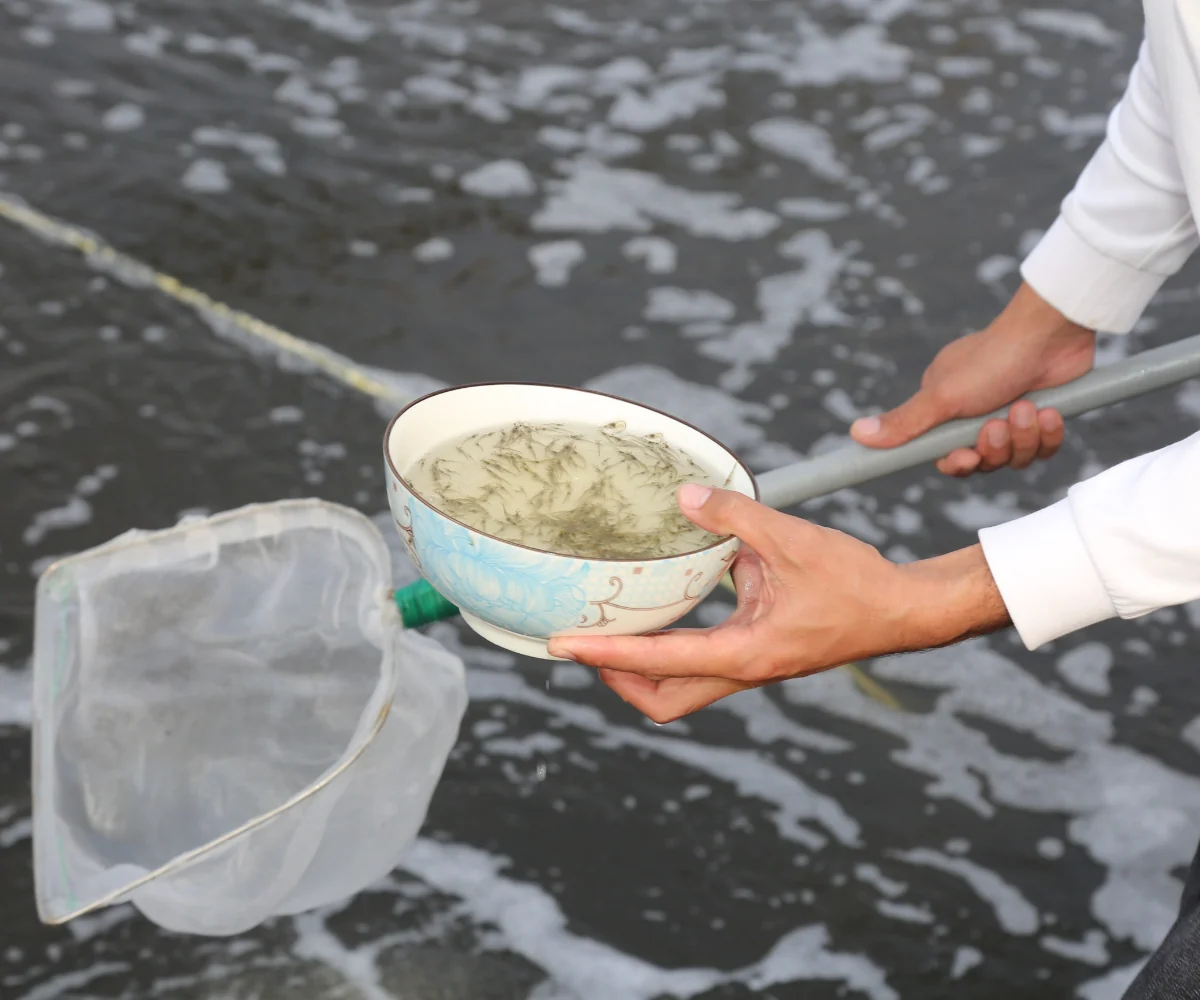
Post-larvae grow very fast and are sensitive to nutrition, yet most earlier arginine data came from larger shrimp. This study measured the requirement specifically for post-larvae.
02 / THE TRIAL
Five arginine levels, 25 days, 1.3 mg post-larvae
- Shrimp: whiteleg shrimp post-larvae, started after five days of acclimation from PL5, averaging 1.3 mg; 500 per 300-litre tank, four tanks per group; 28.5 °C, 28–30‰ salinity.
- Feed: about 46% protein and 9% lipid; 40% fishmeal, 12% corn gluten meal, 6% soy protein concentrate, plus chicken meal, shrimp shell meal and brewer’s yeast.
- Arginine: 0–0.6% added, measured in the feed at 2.12%, 2.32%, 2.54%, 2.70% and 2.85%; all diets had the same protein and lipid.
- Feeding: six meals a day to apparent satiation, with pellet size increased as the shrimp grew.
03 / GROWTH AND SURVIVAL
More arginine (up to 2.85%), bigger post-larvae

The 2.32% group did not differ from 2.12%. From 2.54% upward, post-larvae grew clearly better and more survived:
- 2.54%: 22.8% more weight gain, 46 mg heavier per animal, survival 10 percentage points higher.
- 2.70%: 26.7% more weight gain, 54 mg heavier, survival 13 points higher.
- 2.85%: 39.8% more weight gain, 81 mg heavier, survival 19.1 points higher — the best in the trial.
Weight gain of post-larvae at 2.85% arginine compared with 2.12%, after 25 days.
Higher survival at 2.85% — the level with the highest survival in the trial.
Protein use also improved: protein efficiency ratio was 0.27 higher at 2.85%. Body composition did not change. The weight-gain regression was still rising at the highest level tested, so the authors note that the optimum for growth may lie above 2.85%.
04 / ANTIOXIDANT DEFENCE
A healthier hepatopancreas, within limits
The antioxidant enzymes SOD and GPX peaked at about 2.54–2.70%; regression on SOD gave an optimum of about 2.51%. CAT and total antioxidant capacity kept rising up to 2.85%, while MDA — a marker of oxidative damage — fell by about 1 nmol/mg protein at 2.70–2.85%.
However, the authors observed mild disturbances in hepatopancreas tissue at 2.85% and stress that supplementation should be controlled to keep immune and antioxidant responses in balance. That is why the recommendation is a range, 2.51–2.85%, rather than “the more the better”.
05 / A LEVEL FOR EACH STAGE
Post-larvae, juveniles and broodstock differ

Levels cited in the original article (% of the diet):
- Whiteleg shrimp post-larvae (this study): 2.51–2.85%.
- Whiteleg shrimp of about 0.5 g: 2.32% (Zhou et al., 2012).
- Whiteleg shrimp of about 3 g in fresh water: 2.18% (Li et al., 2022).
- Black tiger shrimp: 2.50% (Chen et al., 1992).
- Whiteleg female broodstock of about 14 g: 4.08–4.53% for ovarian development (Zhang et al., 2024).
06 / THAN VUONG’S VIEW
What should farmers know?
- These results apply to the post-larval nursery stage, with feed of about 46% protein. Hatcheries and nursery ponds should choose post-larval feeds that declare their amino acid profile, or ask the maker for the arginine content.
- The less fishmeal in a feed, the more likely it is short of arginine — worth remembering when comparing nursery feed prices.
- Do not mix pure arginine into feed yourself: amino acids must be balanced within the formula, and the study did not test adding arginine to finished feed.
- These are tank results over 25 days with one batch of post-larvae; outdoor nursery ponds with natural food may respond differently.
Also in this series: vitamin E for whiteleg shrimp; lysine for GIFT tilapia.
QUICK ANSWERS
Frequently asked questions about arginine for shrimp
How much arginine do whiteleg shrimp post-larvae need?
According to Chen and colleagues (Amino Acids 2026), whiteleg shrimp post-larvae need about 2.51–2.85% arginine in the diet (dry basis, in a feed with about 46% protein). The trial only went up to 2.85%, so the best level for weight gain may be higher.
How much faster do post-larvae grow with more arginine?
After 25 days, the 2.85% group had 39.8% higher weight gain and was 81 mg heavier per animal than the 2.12% group, with survival 19.1 percentage points higher. The 2.32% group did not differ from 2.12%.
Do larger shrimp need as much arginine as post-larvae?
Needs change with life stage. Studies cited by the authors: about 2.32% for 0.5 g shrimp, 2.18% for 3 g shrimp in fresh water, and 4.08–4.53% for about 14 g female broodstock for ovarian development. Post-larval levels should not be applied to grow-out shrimp.
Should farmers add arginine to feed themselves?
The study did not test adding arginine to commercial feed. Arginine must be balanced with the other amino acids in a formula; it is better to choose nursery feeds that declare their amino acid profile, or ask the manufacturer, than to mix it in yourself.