
Professional management
Managing a snail crop
Professional farming means deciding from data: how heavy the snails are, how many are left, how much feed they have used.
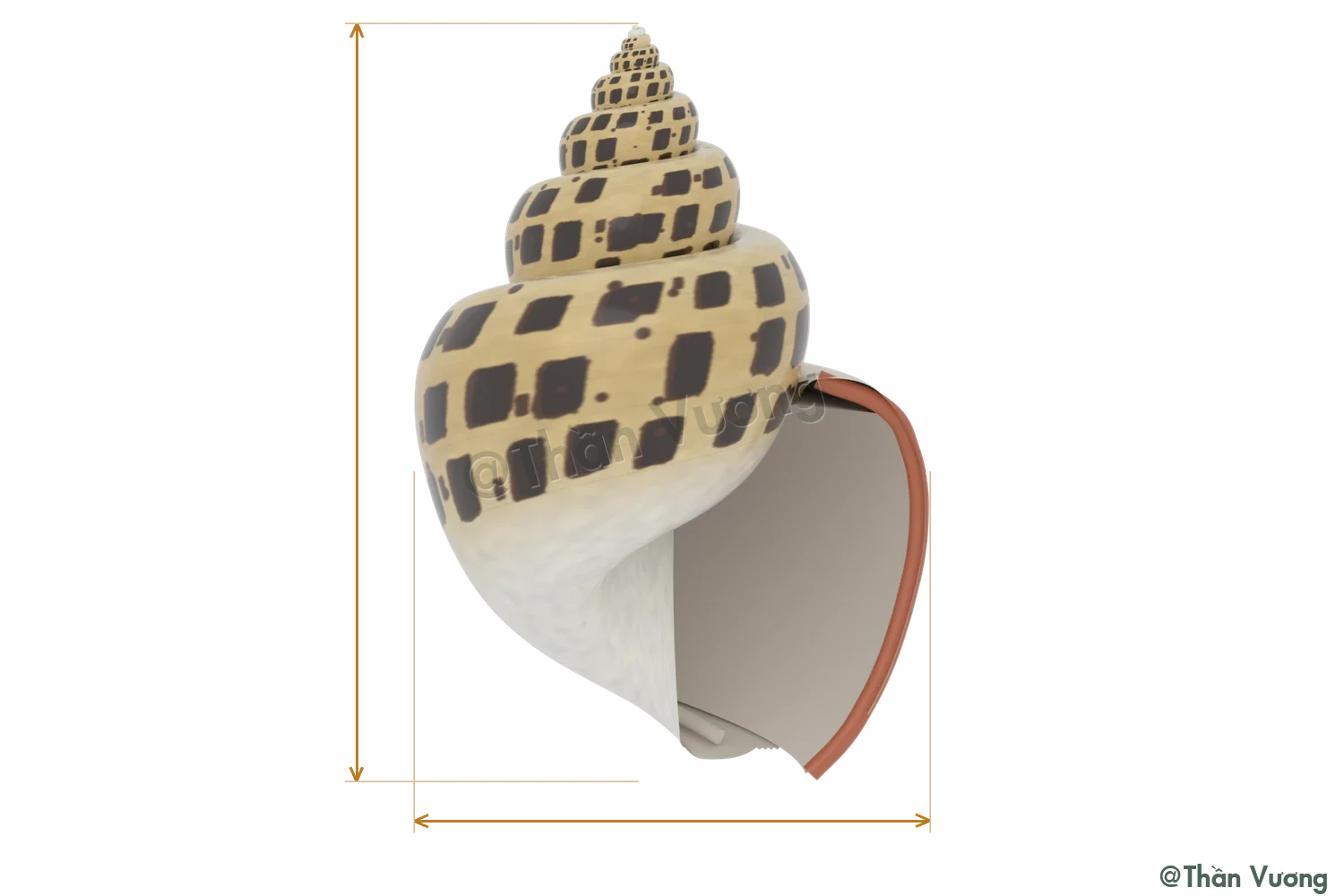
- 1
Shell height. Measured from the tip of the spire to the base of the shell.
- 2
Shell width. Measured at the widest point.
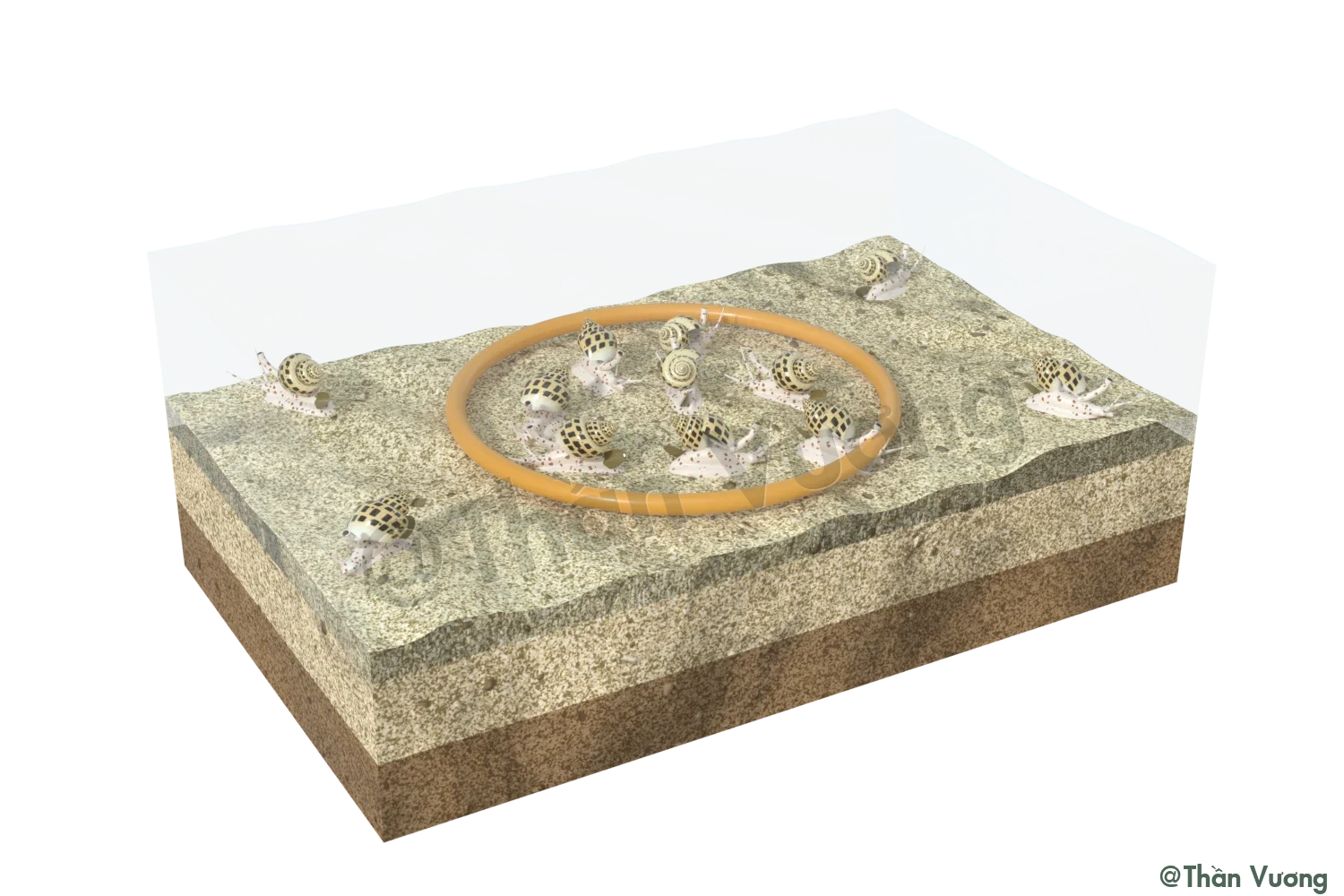
Sampling with a ring
Count and weigh the snails in the ring to estimate the whole pond, adjust the feed and see how fast they are growing.
- 50 cm
- ring diameter
- 3 spots
- in each pond or tank
- 15 days
- between samples
Planning the crop
Set the target
Harvest size (snails/kg), crop length, output and buyer.
Work back to seed numbers
From target output, harvest size and expected survival, work out how much seed to stock.
Check capacity
Compare density with your water exchange, aeration and labour for bed cleaning.
Budget
Seed, feed, power, labour and products, then cost per kg.
Five numbers to track
| Measure | How to work it out | Reference |
|---|---|---|
| Growth | (This weight − last weight) ÷ months | Thai earthen ponds 0.41–0.76 g/month; Vietnamese trials about 1.1–1.6 g/month |
| Survival | Snails left ÷ snails stocked × 100 | Ponds 72.5–84.9%; lined ponds 80%; RAS 70.3–87.3% |
| FCR | Total feed ÷ weight gained | Fresh feed: tanks 1.4–2.0; ponds 2.7; lined ponds 3.2–3.7 |
| Yield | Output ÷ area | Ponds about 1 kg/m²; lined ponds about 1.5 kg/m²; RAS trial 11.77 kg/m² |
| Unit cost | Total cost ÷ output | From your own records |
Reference figures come from trials that differ in system, feed and calculation, so use them only as a rough guide. With pellets, FCR varies widely between studies (0.77–2.31) because they calculate it differently.
Sampling properly
Following the 2024 RAS trial, every 15 days.
Sample three spots
Use a 50 cm ring and place it at three spots in the pond or tank.
Count and weigh
Count the snails in the ring, weigh them, and work out the average weight.
Estimate the whole pond
From ring density and pond area, estimate how many snails remain.
Adjust the feed
Recalculate the ration from the new snail weight.
Pond log template
Fill in daily, with a separate log for each pond.
| Group | What to record |
|---|---|
| Seed batch | Stocking date, supplier, number, size in snails/kg |
| Feed | Type, amount fed, amount left, feeding time |
| Water | Salinity, pH, temperature, oxygen, alkalinity, ammonia, nitrite |
| Sand | Colour, smell, cleaning dates |
| Snails | Dead count, behaviour, sample weights |
| Inputs | Water exchange, products used, dose, batch number, date |
Keeping the farm safe
Separate equipment
One set of tools per pond, cleaned after use.
Dealing with dead snails
Collect and dispose of them properly. Never dump them.
Waste water
Treat water before discharging it.
Harvest
Choose the time
Usually after 5–7 months at 90–150 snails/kg, depending on the system. Sample first to confirm size.
Harvest thoroughly
Drain the pond and pick by hand or rake. Snails bury deep, so harvest carefully.
Clean up
Extension guides hold snails for 1–2 days to clear sand and brighten the shell. This is a cosmetic step; no food-safety procedure has been published.
Review the crop
Work out survival, FCR, yield and unit cost, and note the lessons for next time.
Sources
- Kritsanapuntu et al. 2009. Aquaculture Research. density and water exchange in earthen ponds
- Kritsanapuntu et al. 2006. Aquaculture Research. pilot earthen pond culture
- Chaitanawisuti et al. 2001. Asian Fisheries Science 14. tank culture
- Chaitanawisuti et al. 2001. Aquaculture Research. feeding rates
- Mai et al. 2022. Agriculture, Forestry and Fisheries 11(5). pellets in ponds and RAS
- Hoàng Văn Duật và cs. 2024. Tạp chí Khoa học Trường ĐH Cần Thơ. RAS culture
- Phan Thị Mỹ Hạnh 2022. lined-pond culture
- Như Ý 2022. Kỹ thuật nuôi ốc hương thương phẩm trong ao. Dân tộc và Phát triển
- Đỗ Kim Tâm 2018. Kỹ thuật nuôi ốc hương, nguyên nhân ốc chết và biện pháp phòng
- Ban KHKT 2025. Biện pháp khắc phục ốc hương bị sưng vòi. Thủy sản Việt Nam
Want our technical team to look at your snail pond?
Send us your pond or tank details and water readings. Our technical team will work out a care schedule with you for each stage.