
Prevent first
Active disease prevention
Extension guides say current treatments for the babylon snail have not proved effective, so prevention comes first.
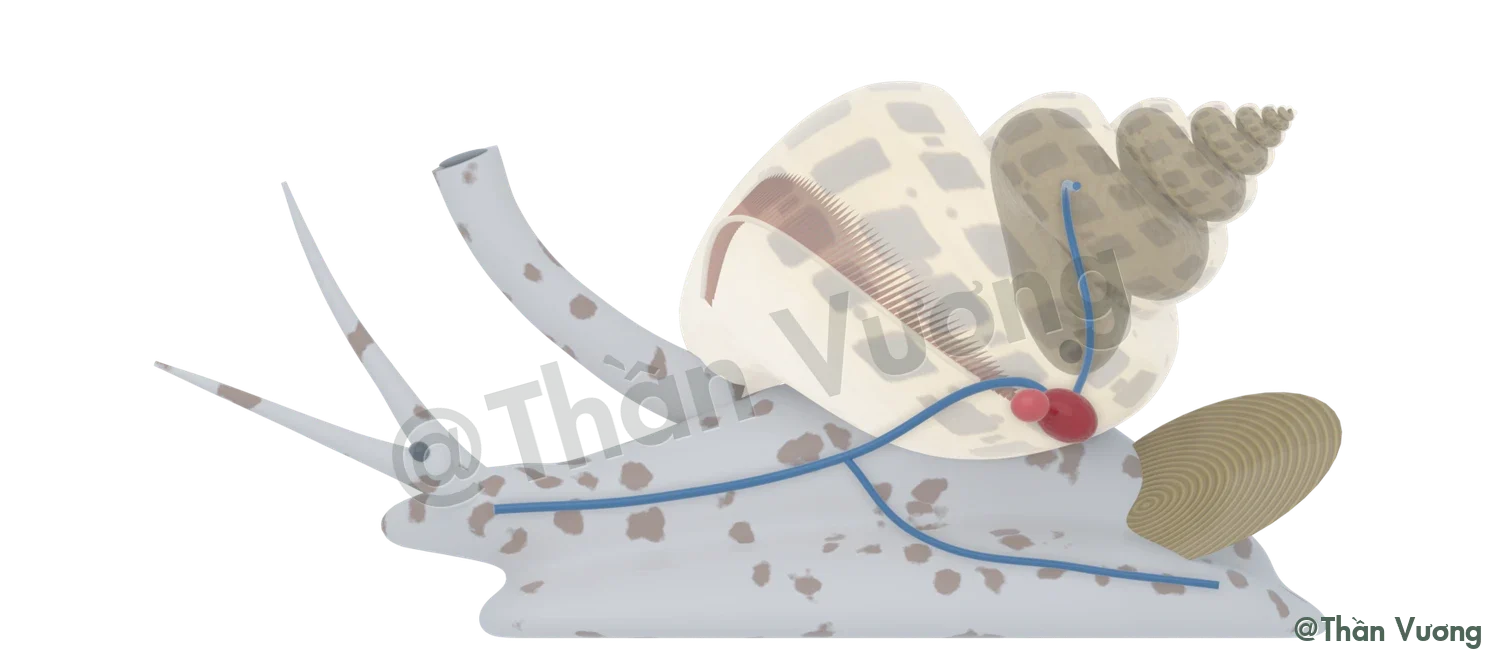
- 1
Heart*. One auricle and one ventricle, pumping blood round the body.
- 2
Haemolymph. An open circulation. There are two types of blood cell, and both engulfed bacteria in laboratory tests.
- 3
Digestive gland. Also a site of the immune response when the snail is infected.
Simplified illustration. Shell, head, foot, gill and proboscis follow work on this species and the genus Babylonia. * Based on Buccinum, a snail of the same order; no dissection has been published for this species.
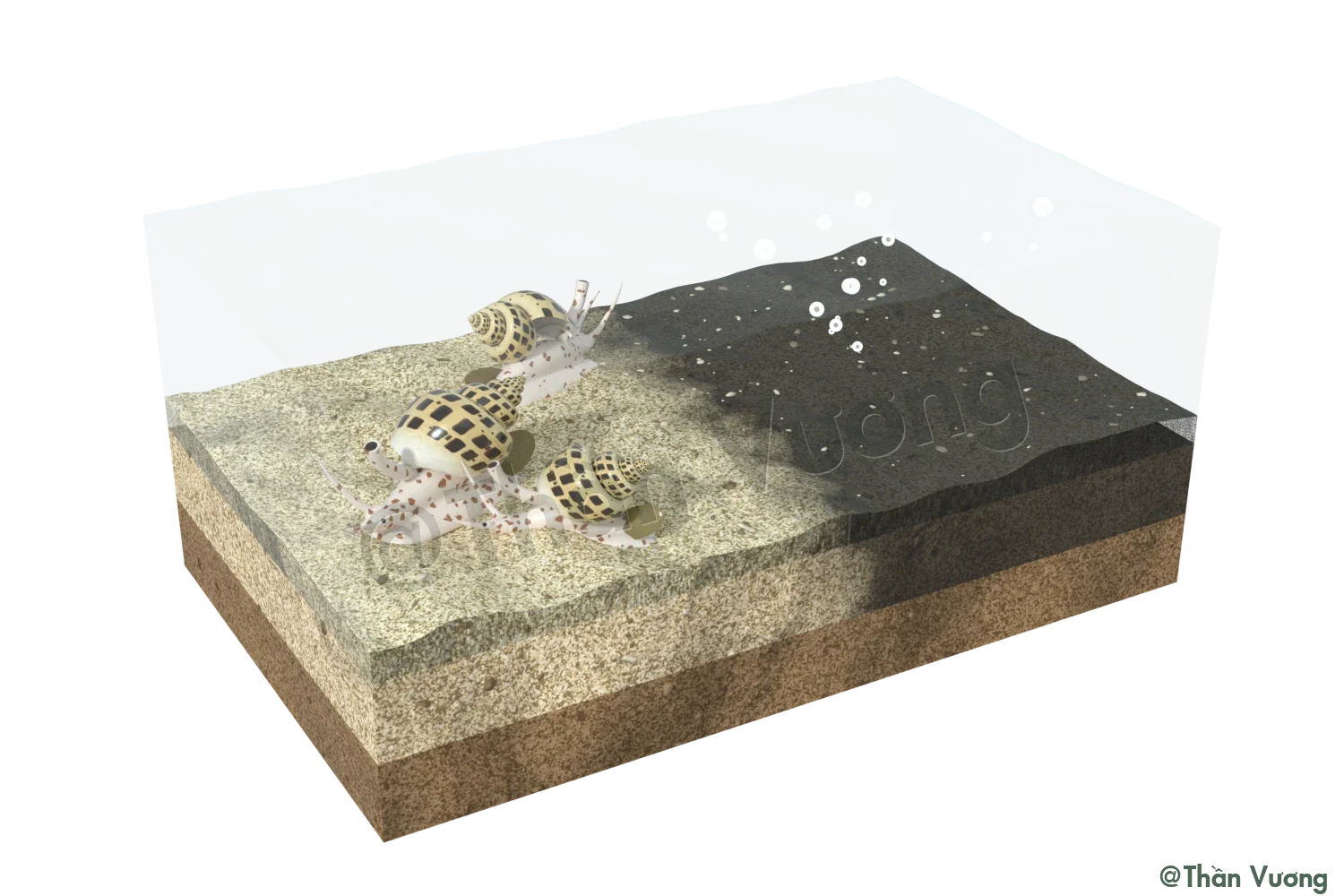
Clean sand and black sand
Black, smelly sand is a sign of an oxygen-starved bed. Keeping the sand clean is the foundation of prevention.
- Pale sand
- keep removing leftovers and cleaning
- Black sand
- move the snails, or exchange 30–50% of the water and clean up
- Losses of 50% or more
- clean everything, rest at least one month
Five things from day one
Clean seed of the right size
Do not stock seed that is too small or unchecked. Buy from a known source.
Moderate density
Do not stock beyond what your farm can handle in water exchange and bed cleaning.
Clean feed in the right amount
Fresh feed, never spoiled. Leftover and dirty feed lies behind many problems.
Clean sand, stable water
Keep the sand from turning black, and avoid sudden swings in salinity and pH.
Watch steadily
Log dead snails and feed intake daily so you notice anything unusual early.
Nutrition and health
Gut
FLASH and PRO SUR support gut health.
Vitamins and minerals
VIMIX goes in the feed; VITAMIN C helps reduce stress when conditions change.
Bottom probiotics
MAX 4000, used regularly, helps keep the bottom and water stable.
When something looks wrong
Snails show few signs at first, so call a technician early.
| Sign | Often seen with | What to do |
|---|---|---|
| Lying on the sand, not burying, sluggish | Worsening water or sand, or infection | Test the water, check the sand, cut feed |
| Swollen proboscis and siphon, blisters on the foot | Polluted conditions, dirty feed; common in the rainy season | Remove sick snails at once, dispose of them properly, call a technician |
| Snails leaving the shell | Black, oxygen-poor sand | Move the snails or clean the bed, call a technician |
| Lying on their backs, heavy mucus, operculum open | Poor water, or pH or toxic gases well off target | Add oxygen and new water, test for toxic gases |
Do not use medicines on your own. Decide with a technician, for your pond and according to the label.
After heavy losses
Where losses reach 50% or more over a long period, clean the whole site and all equipment, prepare the pond again, and wait at least one month before restocking.
Sources
- Đỗ Kim Tâm 2018. Kỹ thuật nuôi ốc hương, nguyên nhân ốc chết và biện pháp phòng
- Ban KHKT 2025. Biện pháp khắc phục ốc hương bị sưng vòi. Thủy sản Việt Nam
- Báo Hà Tĩnh 2024. Kết luận chính thức nguyên nhân ốc hương chết hàng loạt ở Cẩm Xuyên
- Dai et al. 2026. Biology 15. hepatopancreas during infection
- Hoàng Văn Duật và cs. 2024. Tạp chí Khoa học Trường ĐH Cần Thơ. RAS culture
- Ding et al. 2023. Antioxidants 12. nitrite and pH
- Ding et al. 2024. Heliyon. ammonia and pH
Want our technical team to look at your snail pond?
Send us your pond or tank details and water readings. Our technical team will work out a care schedule with you for each stage.