
Anatomy
Babylon snail anatomy and function
Knowing how the snail breathes, feeds and builds its shell shows why water, sand and feed matter so much.
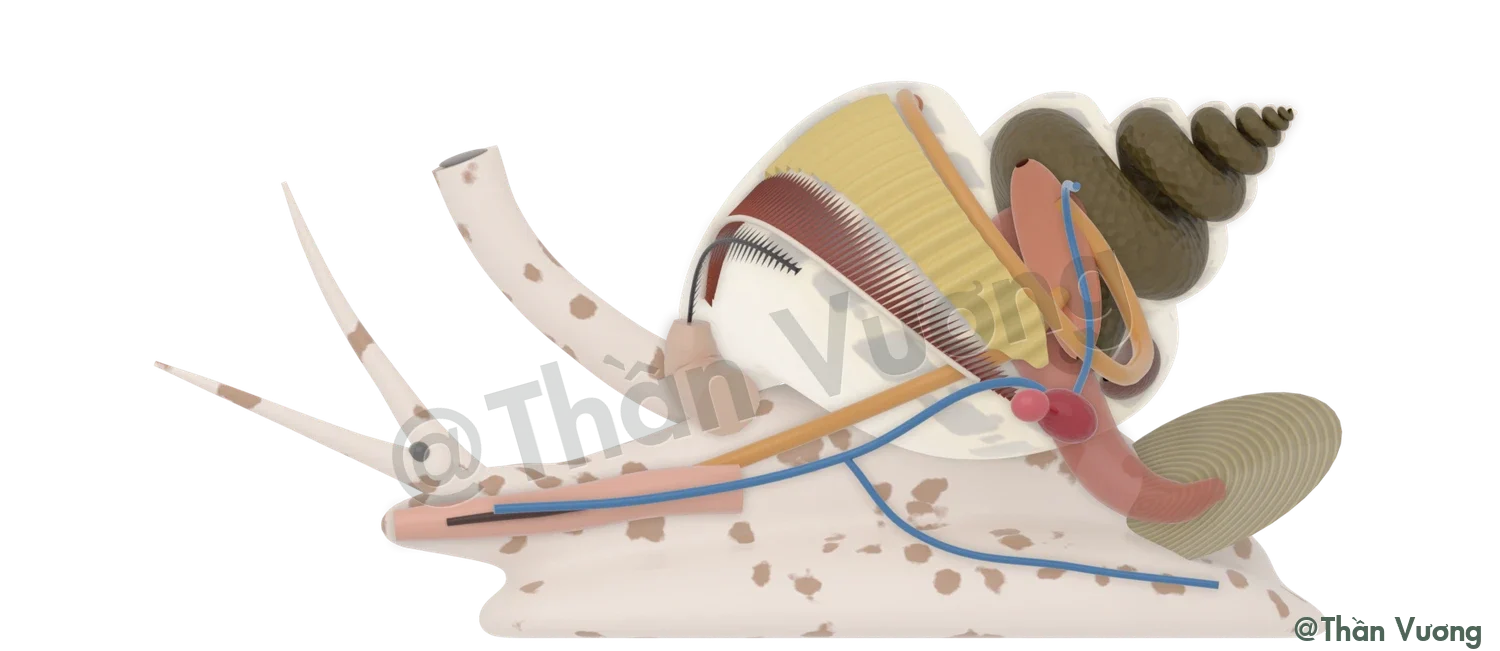
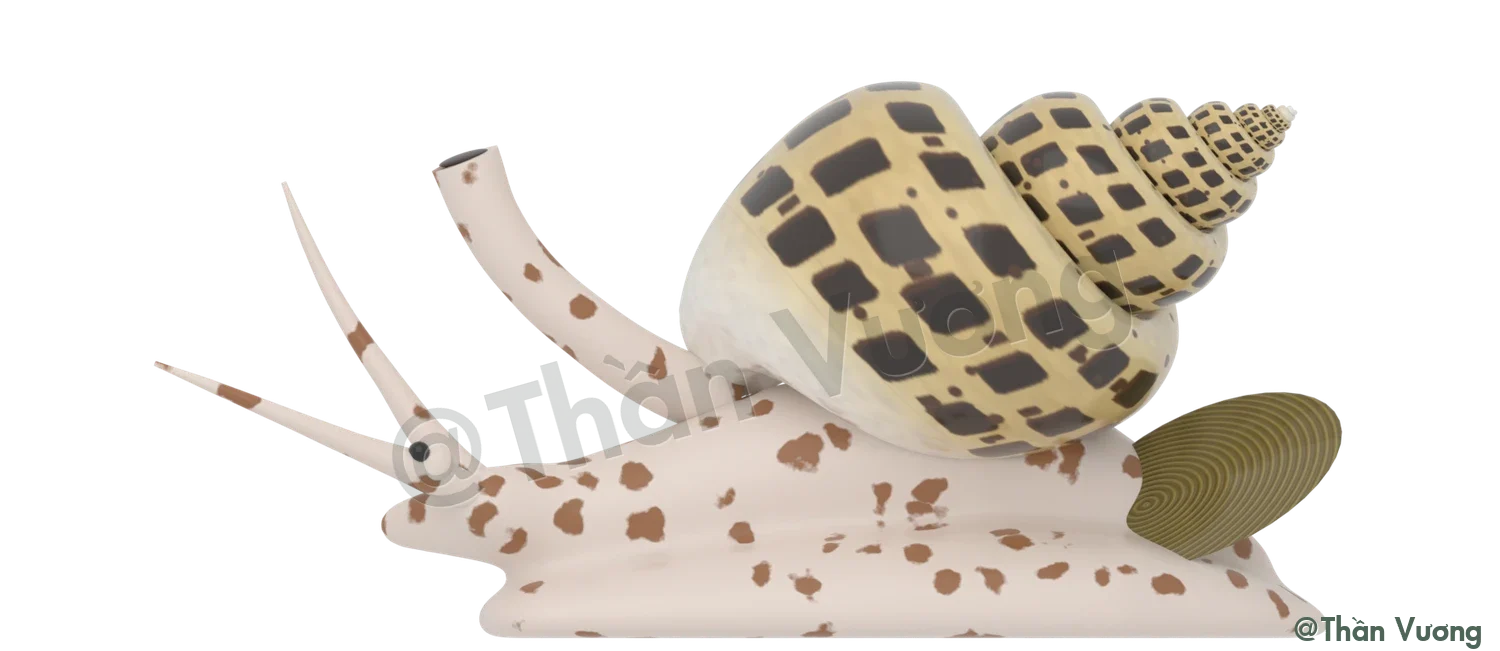
Outside
- 1
Shell. Right-handed, with 7 to over 9 whorls. Within the genus Babylonia, only this species has three widely spaced rows of spots.
- 2
Siphon. Large, fleshy, slightly curved and mottled. It passes through the notch at the base of the shell.
- 3
Tentacles. One long, slender pair.
- 4
Eye. Sits on a swelling at the outer base of the tentacle.
- 5
Head. Flat and extended forward.
- 6
Foot. Long and strong, with brown blotches like those on the shell.
- 7
Operculum. A horny plate with raised growth lines and an off-centre nucleus.
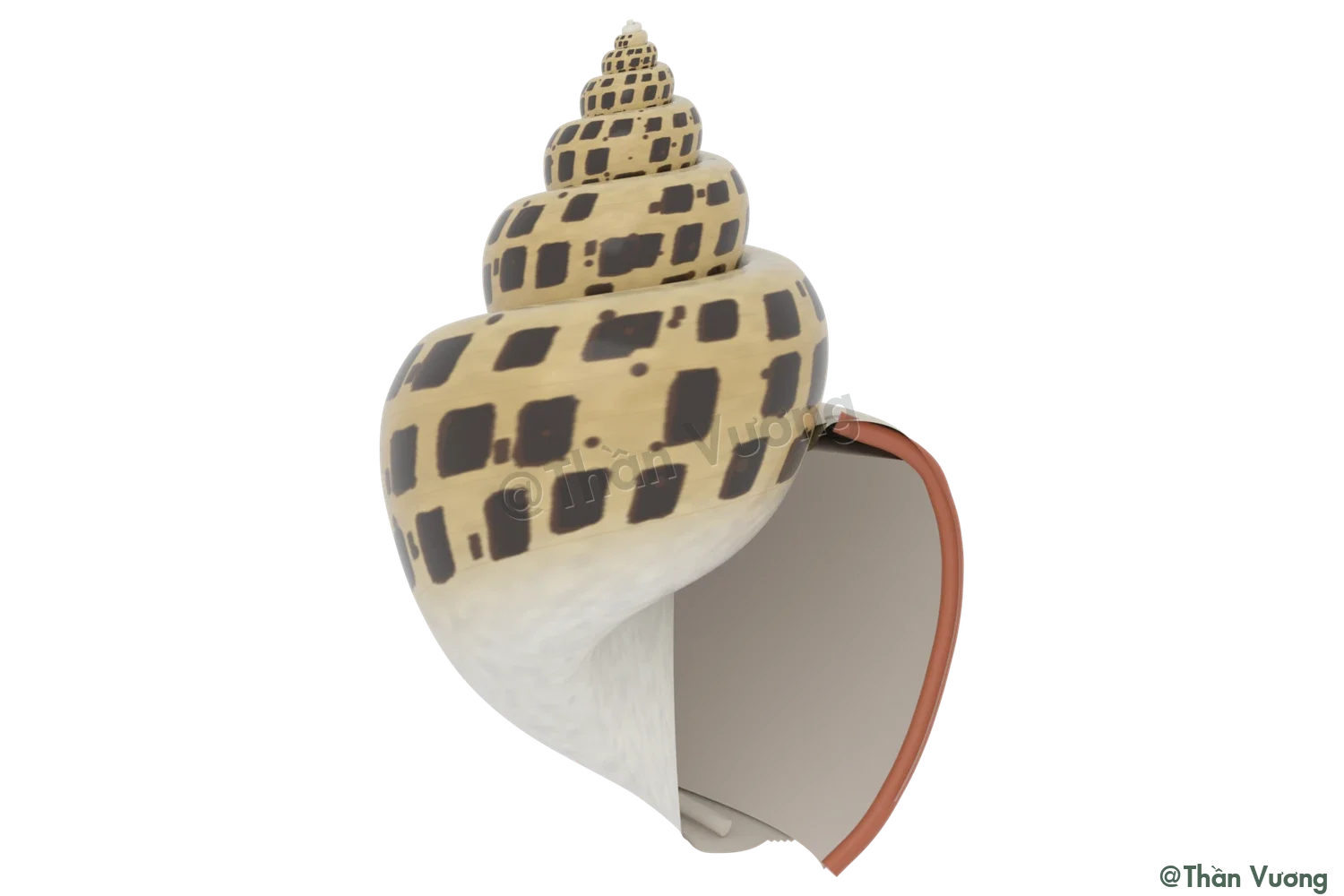
Shell and mantle
- 1
Shell. Right-handed and made mainly of calcium carbonate. It protects the whole body.
- 2
Mantle. The layer lining the shell, which secretes it.
- 3
Mantle edge. The most active part in shell secretion, so the shell grows at its lip.
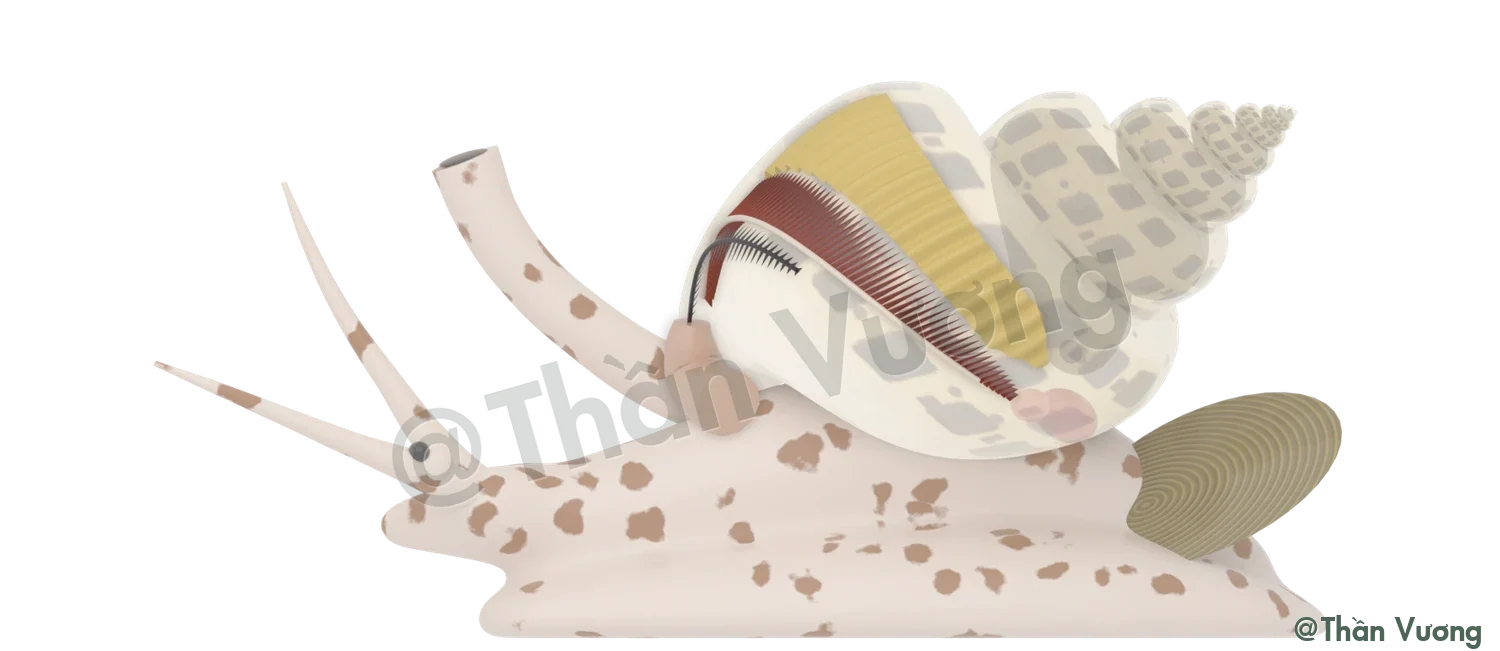
Breathing and smell
- 1
Siphon. Draws water into the mantle cavity through the notch at the base of the shell.
- 2
Osphradium*. Sits at the end of the siphon, so incoming water passes it first. Gene studies in this species point to it as the gateway for food signals.
- 3
Gill. A single gill with closely packed leaflets. In a 7-week ammonia trial on juveniles the gill was clearly damaged, and growth fell from 5 mg/L (given as NH4Cl).
- 4
Hypobranchial gland. Folds in the roof of the mantle cavity that secrete mucus.
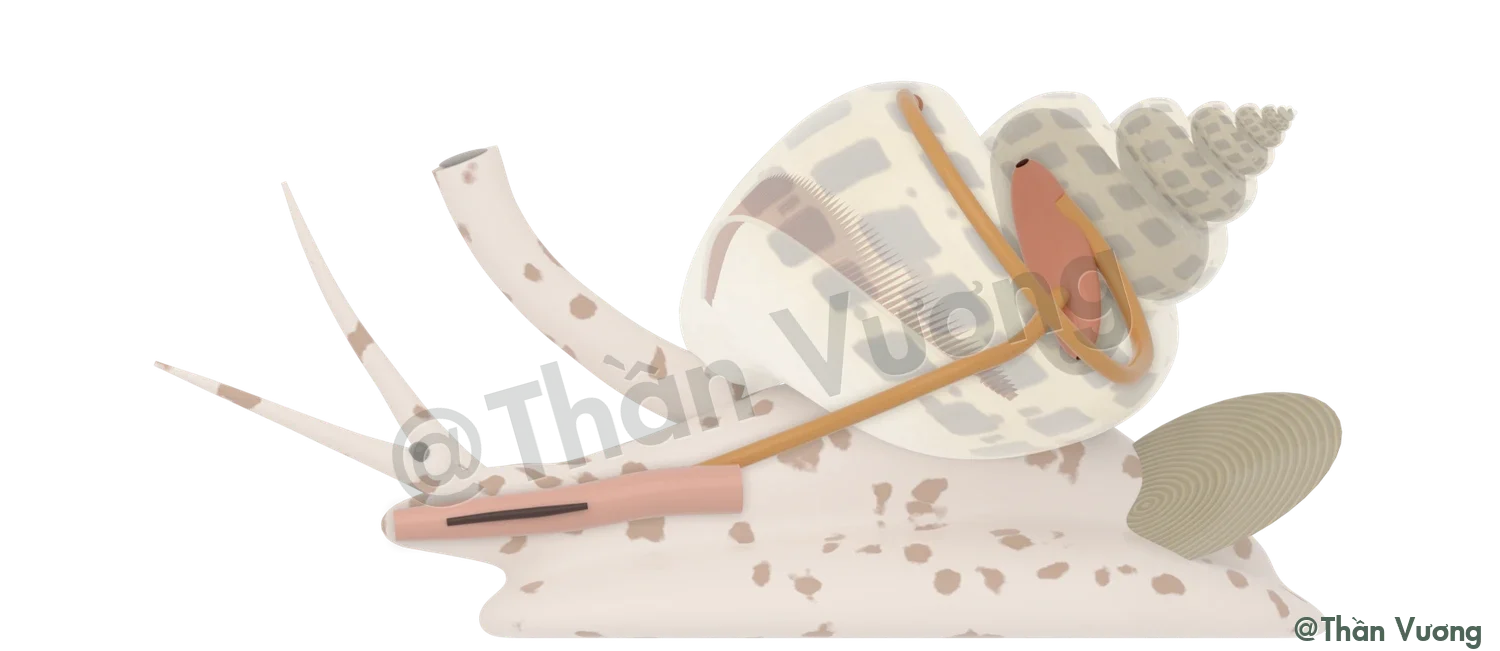
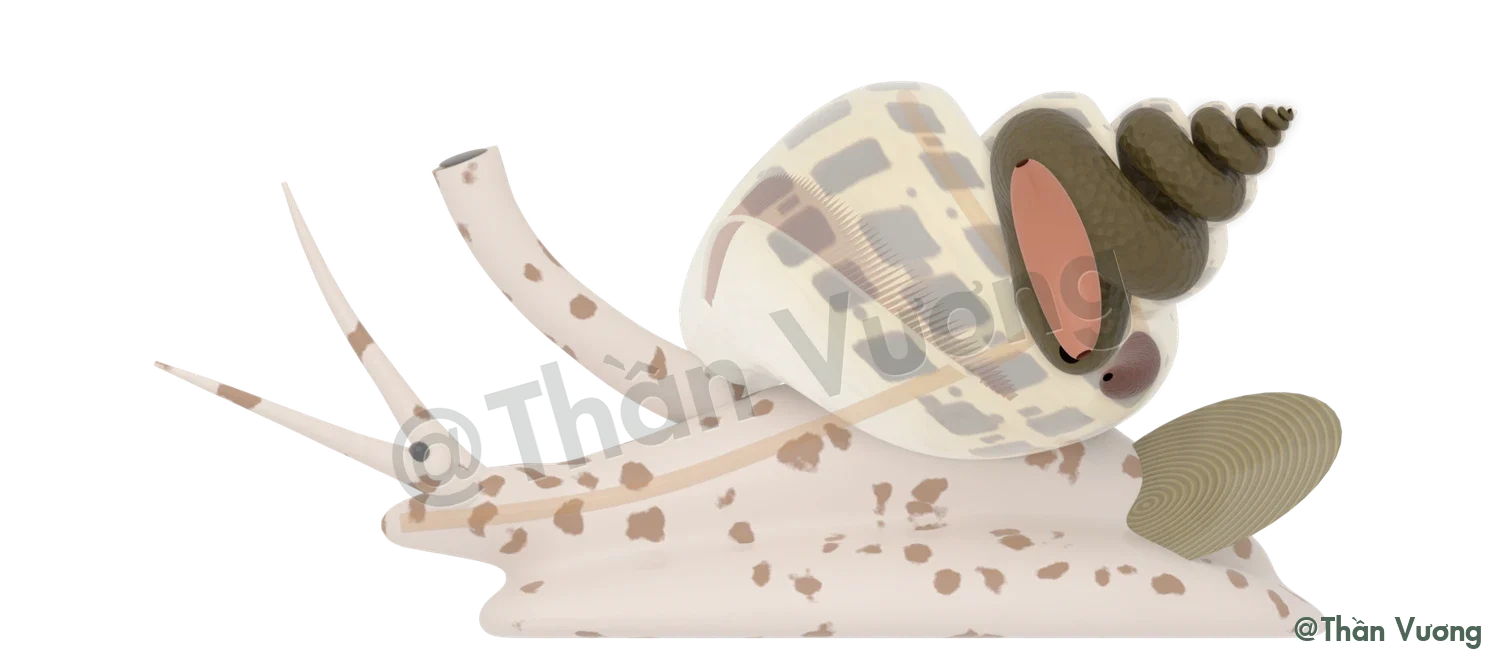
Feeding and digestion
- 1
Proboscis. Long and retractable, with the mouth at its tip.
- 2
Radula. About 40 rows of three teeth, used to rasp food.
- 3
Oesophagus*. Carries food from the proboscis to the stomach.
- 4
Stomach*. A flattened sac against the digestive gland, which drains into it.
- 5
Intestine and rectum*. Runs forward along the right edge of the mantle cavity and ends at the anus.
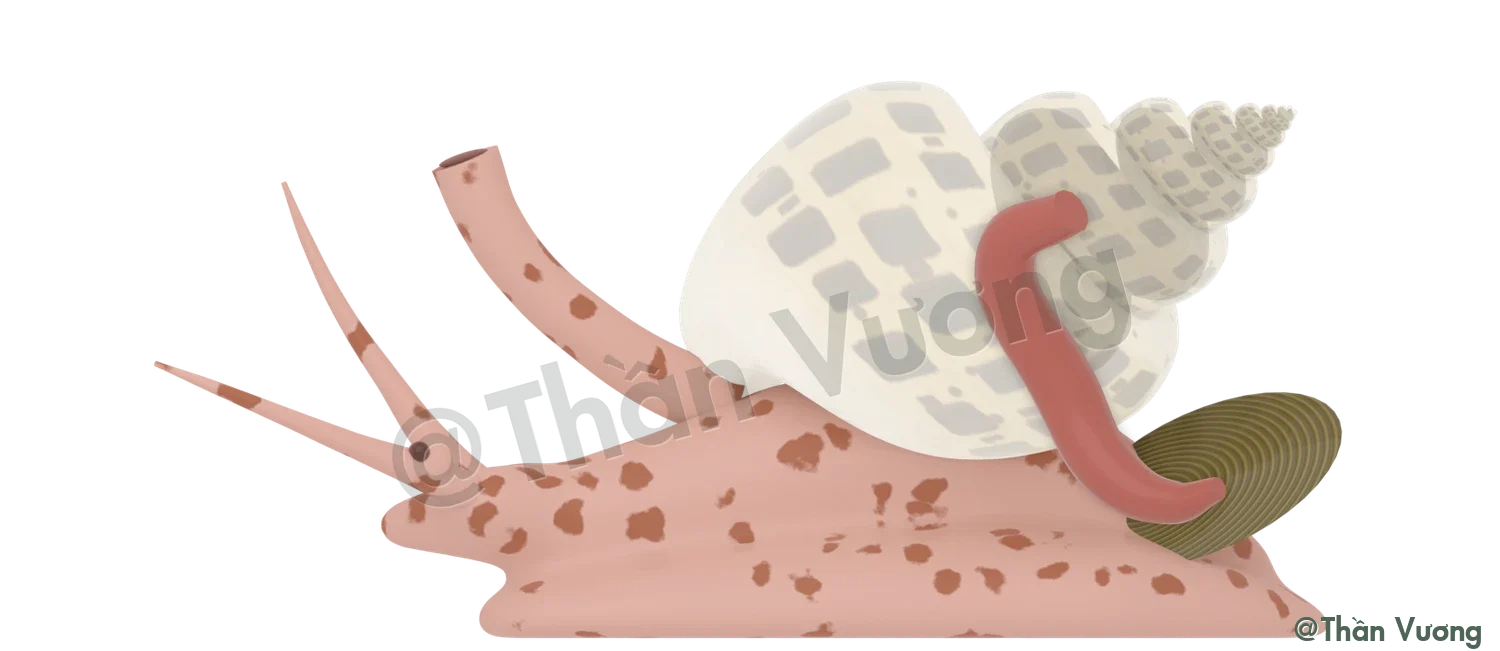
Digestive gland and kidney
- 1
Digestive gland (hepatopancreas)*. The largest organ of the visceral mass, reaching the tip of the spire. It is the main site of food absorption.
- 2
Stomach*. Receives the ducts of the digestive gland.
- 3
Kidney*. Lies just behind the mantle cavity and empties through a slit in its rear wall.
Movement
- 1
Foot. A long muscular mass with a flat sole, used for crawling and burying in sand.
- 2
Columellar muscle*. Runs from the shell column through the foot to the underside of the operculum, and pulls the snail into its shell.
- 3
Operculum. A horny plate on the rear of the foot that closes the aperture when the snail withdraws.
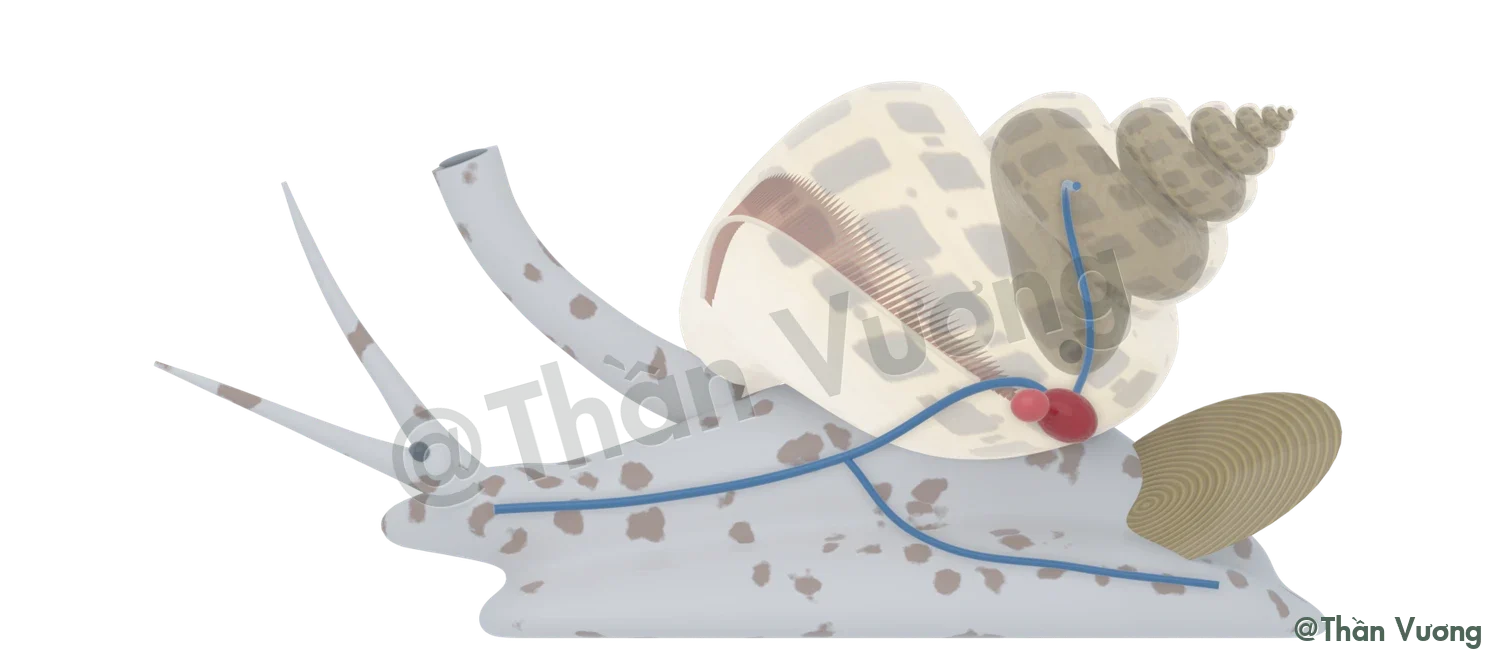
Circulation and immunity
- 1
Heart*. One auricle and one ventricle, pumping blood round the body.
- 2
Haemolymph. An open circulation. There are two types of blood cell, and both engulfed bacteria in laboratory tests.
- 3
Digestive gland. Also a site of the immune response when the snail is infected.
Simplified illustration. Shell, head, foot, gill and proboscis follow work on this species and the genus Babylonia. * Based on Buccinum, a snail of the same order; no dissection has been published for this species.
Shell size
| Measure | Value | Basis |
|---|---|---|
| Largest | Over 93 mm high, 52 mm wide | Largest specimen in the 1981 monograph |
| Width to height | 56–60% in 4 shells 73–93 mm high; 62–68% in 3 shells 53–58 mm high | 7 museum specimens |
| Whorls | 7 to 9¾ | 7 museum specimens |
| Aperture | About half the height in adult shells; 64–65% in shells averaging 36–39 mm | Species description; wild and farmed snails from Hainan. Two sources, which may measure differently |
| Farmed 180 days, largest 10% | 40.44 mm high, 24.85 mm wide, 11.16 g | Mean of 3 sampled snails from about 16,000 (2025) |
| Farmed 180 days, smallest 10% | 25.95 mm high, 16.00 mm wide, 3.30 g | Mean of 3 sampled snails from about 16,000 (2025) |
Sources
- Altena & Gittenberger 1981. The genus Babylonia. Zoologische Verhandelingen 188
- Adams & Reeve 1848. Zoology of the Voyage of H.M.S. Samarang, Mollusca, pl. 8 fig. 5
- Dakin 1912. Buccinum (the whelk). L.M.B.C. Memoirs 20. A related snail of the same order
- Wang et al. 2025. Biology 14. wild and cultured morphology
- Zhao et al. 2025. PLOS One. fast and slow growers at 180 days
- Hong et al. 2026. Comparative Biochemistry and Physiology D. osphradium during feeding
- Zhou et al. 2022. Aquaculture. long-term ammonia exposure in juveniles
- Di et al. 2013. Fish & Shellfish Immunology. haemocyte phagocytosis
- Di et al. 2019. Fish & Shellfish Immunology. two haemocyte types
- Dai et al. 2026. Biology 15. hepatopancreas during infection
Want our technical team to look at your snail pond?
Send us your pond or tank details and water readings. Our technical team will work out a care schedule with you for each stage.