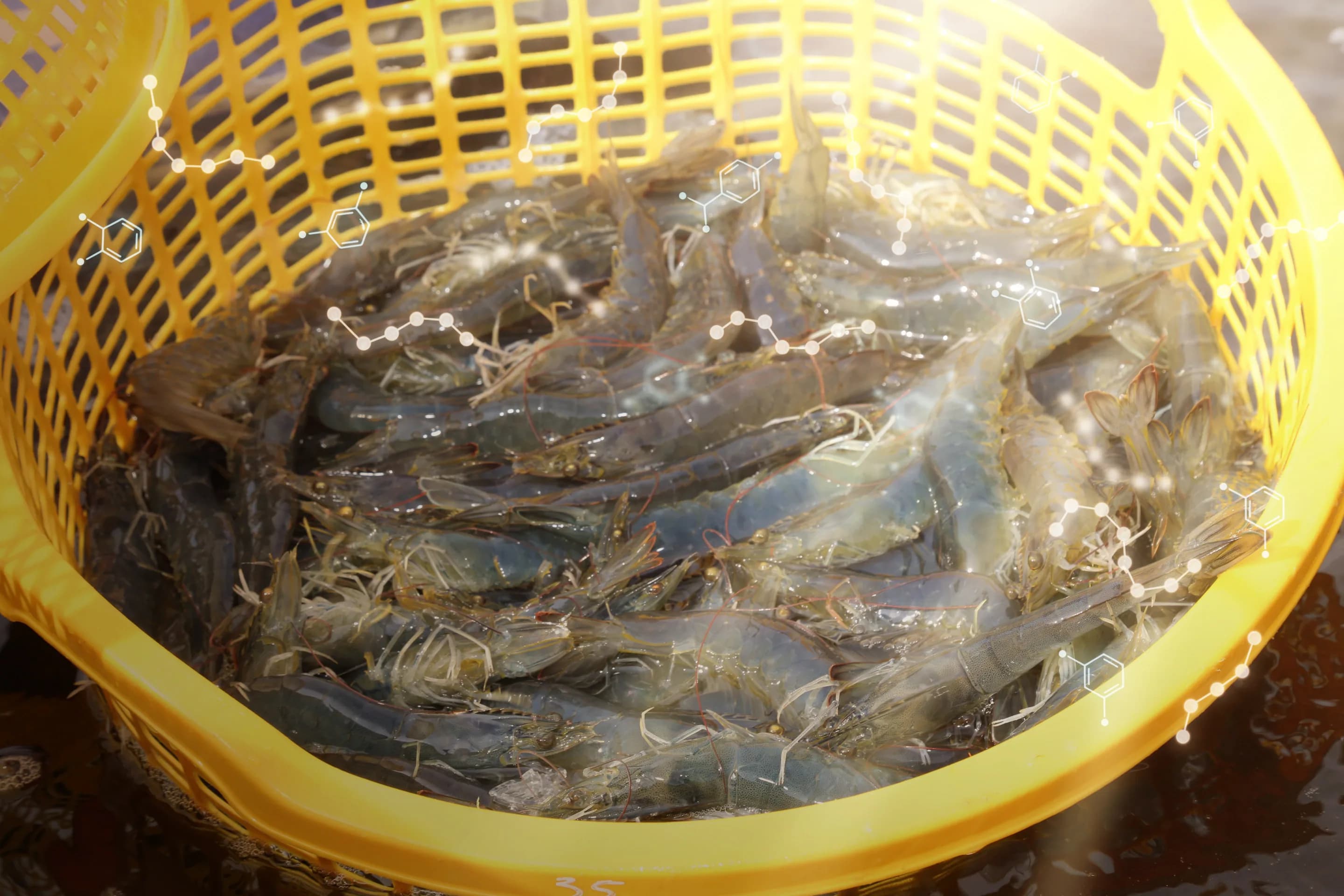
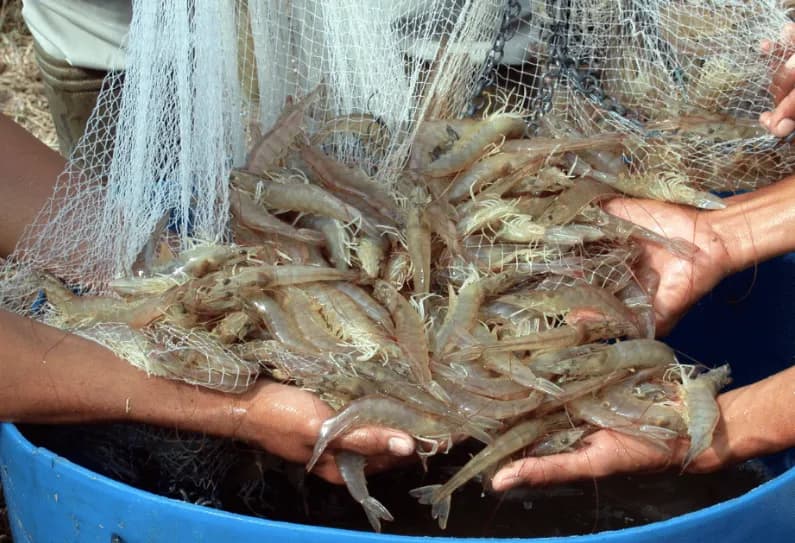
The study was conducted by the Faculty of Fisheries, Can Tho University, to evaluate the effect of salinity changes on the growth and survival rate of black tiger shrimp (Penaeus monodon) when reared using Biofloc technology.
In shrimp farming, salinity is a crucial factor determining productivity during the stocking process, especially in the Mekong Delta region. In recent years, climate change and extreme weather phenomena such as prolonged heavy rains have caused sudden drops in salinity in culture ponds, creating difficulties for shrimp care. Particularly during the stocking phase, changes in salinity can significantly affect the growth and survival rate of black tiger shrimp. Therefore, it is necessary to determine the appropriate salinity range for black tiger shrimp development.

Experiment Implementation
The experiment was conducted with 7 treatments divided into 2 groups:
Group 1: Salinity shock was performed, including 5 treatments, where shrimp from 20‰ salinity were directly stocked at 5‰, 10‰, 15‰, 20‰ (control), and 30‰.
Group 2: The remaining two treatments were divided into 2 subgroups for rapid acclimation from 20‰ salinity down to 5‰ within 3 hours, and slow acclimation from 20‰ salinity down to 5‰ over 3 days.
Each treatment was replicated 3 times and arranged in a completely randomized design in plastic tanks containing 70 liters of water, at a density of 2 individuals/liter. Shrimp were fed 4 times/day with feed No. 1 (containing 40% protein) from C.P. Vietnam Livestock Joint Stock Company, with feeding based on shrimp body weight.
Biofloc was generated by adding molasses to the shrimp rearing tanks daily to achieve a C/N ratio of 10/1.
Results
After 20 days of rearing, environmental factors were found to be within the suitable range for shrimp development. Sudden changes in salinity during the stocking process did not significantly affect shrimp growth, but did impact their survival rate.
According to the study results, the greater the salinity shock, the lower the shrimp survival rate. Specifically, when shrimp were subjected to a salinity shock from 20‰ (suddenly reduced to 5 - 10‰), the survival rate was the lowest, reaching only 60.7 - 67.0%. The highest survival rate was observed in the control treatment at 98.3%, with no significant difference compared to treatments with a 5‰ salinity reduction shock and a salinity increase from 20 - 30‰. Rapid and slow acclimation of shrimp juveniles did not affect shrimp growth and survival rate.
Shrimp growth and weight were not affected by salinity shock; however, length growth was impacted, with greater salinity shock leading to lower shrimp length growth.
Based on the experimental results, farmers should acclimate shrimp before stocking them into ponds, or if stocking directly, the salinity difference should not exceed 5‰ to ensure it does not affect shrimp development. In cases of heavy and prolonged rain, an overflow weir should be designed to drain surface water, thereby preventing sudden changes in salinity.
Source: Vietnam Aquaculture