
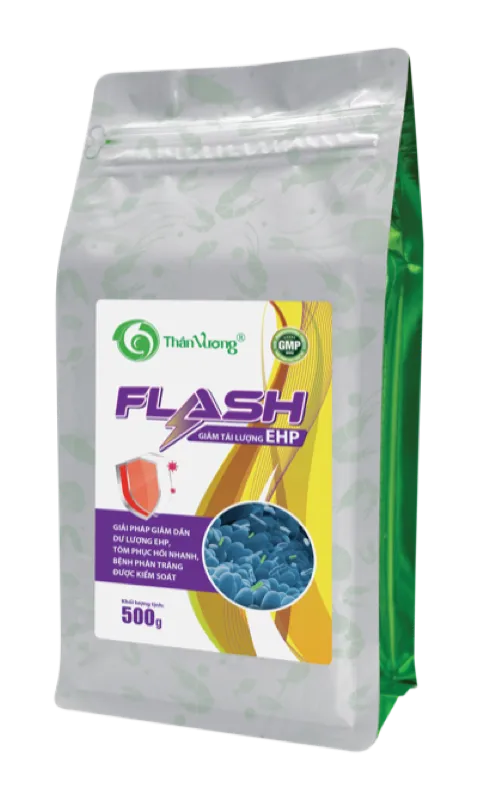

Mixed into shrimp feed. Yeast extract provides beta-glucan, which supports the shrimp's natural resistance; butyric acid keeps the gut lining healthy so shrimp absorb feed well. FLASH also helps control the quorum-sensing signal, so harmful gut bacteria cannot flare up — beneficial bacteria are left alone.
- 20,000 mg
- beta-glucan / kg
- 1,800 mg
- butyric acid / kg
- 3 – 5 g
- / kg feed · prevention
- 5 – 10 g
- / kg feed · boost dose
- Form
- Powder, mixed into feed
- Registration No.
- 01053357
- TCCS
- 29:2024/TV
- Pack size
- 500 g bag
Four jobs FLASH does in the shrimp gut and hepatopancreas
Controls quorum sensing without harming beneficial bacteria
Quorum sensing is the signal bacteria use to tell each other they are numerous enough to release toxins all at once. FLASH cuts that signal, so harmful bacteria cannot attack together, while beneficial bacteria keep living normally.
Strongly inhibits harmful bacteria
Lowers the density of pathogenic bacteria in the gut, especially Gram-negative bacteria — the group behind most acute outbreaks.
Reduces gut dysbiosis
Keeps gut bacteria in balance and reduces the damage from toxins released by harmful bacteria — toxins that destroy the shrimp liver and gut.
Less stress, a clearly healthier hepatopancreas
A healthy gut and good resistance mean less stress for the shrimp and less load on the hepatopancreas, so it recovers better.
Two ingredients: yeast and butyric acid
According to the registered label (TCCS 29:2024/TV), FLASH contains yeast extract and butyric acid on a CaCO₃ carrier. Yeast provides beta-glucan, which supports the shrimp's natural resistance. Butyric acid helps keep the gut lining intact and healthy so shrimp absorb feed well. A healthy, balanced gut takes load off the hepatopancreas.
- Beta-glucan (min)
- 20,000 mg/kg
- Butyric acid (min)
- 1,800 mg/kg
- Moisture (max)
- 10%
- Carrier
- CaCO₃ to 1 kg
Dosage
Grams of product per kg of feed.| Use case | Dose | Note |
|---|---|---|
| Prevention | 3 – 5 g/kg feed, once a day, from the start of the crop | Use throughout the crop |
| Boost dose (white feces or weak gut) | 5 – 10 g/kg feed, 4 times a day, for 5 – 7 days in a row | Feeding frequency can be adjusted to pond conditions, but not below twice a day |
Mix into feed in four steps
- 01 · Weigh the doseWeigh FLASH according to the dose and the feed for that meal.
- 02 · Dissolve in waterDissolve the product in water first — do not sprinkle dry powder on feed.
- 03 · Mix and coatPour evenly over the feed, stir until absorbed, then coat with a suitable binder.
- 04 · Dry for 15 – 20 minutesLet the coating dry before feeding so the product does not dissolve in water.
There is no specific cure for EHP — prevention comes first
FLASH protects and keeps the hepatopancreas healthy, but it cannot kill EHP already present in the pond. To keep shrimp safe for the whole crop, do all four things below together.
- 01
EHP-free seed
Stock only post-larvae that tested PCR-negative for EHP.
- 02
Strict biosecurity
Clean, dry and lime the pond before stocking.
- 03
Manage water quality
Salinity above 25 ppt increases the risk of EHP infection.
- 04
Good feed and immune support
Use high-quality feed with immune-support products — FLASH from the start of the crop belongs here.
CLEVER + FLASH in the white feces protocol
Loose, broken gut: raise CLEVER to 5 – 7 g/kg, 4 meals/day, together with FLASH. Pale, shrunken hepatopancreas: combine CLEVER, FLASH and HERB GUARD for 7 – 10 days. Dose of each product per its label.
Early-stage white feces control protocol
Keep harmful bacteria in check — in the pond water and in the shrimp gut
1 · Reset the pond, double disinfection
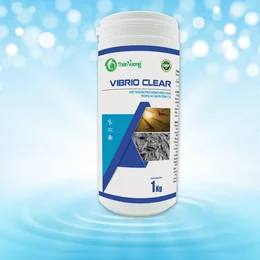
Treats water, quickly reducing harmful bacteria in pond water, limiting spread through the water.

Disinfects and detoxifies the pond environment.

Re-seeds beneficial microbes, stabilises water and pond bottom.
Dose each product according to its label.
2 · White feces not caused by EHP: CLEVER + FLASH

CLEVER
- Restores and stabilises the gut microbiota.
- Limits harmful bacteria in the gut.
- Boosts immunity, helps shrimp resist digestive disorders.

FLASH
- Lowers pathogenic bacteria in the shrimp gut.
- Cuts quorum sensing, stops Gram-negative bacteria flaring up.
- Reduces toxins that damage the liver and gut.
Dose per kg of feed for that meal.
Use when white feces is caused by microbial imbalance, harmful bacteria, toxic algae or environmental stress. Check daily: liver colour, gut, feces texture, feeding speed and feed intake.
See the CLEVER page →TCCS 29:2024/TV · Reg. No. 01053357Product profile
| Composition | Yeast extract, butyric acid |
|---|---|
| Quality specifications | Beta-glucan (min) 20,000 mg/kg · Butyric acid (min) 1,800 mg/kg · Moisture (max) 10% |
| Carrier | CaCO₃ to 1 kg |
| Form | Powder, mixed into feed |
| Pack size | 500 g |
| Registration No. | 01053357 |
| Manufacturer standard | TCCS 29:2024/TV |
| Species | Farmed shrimp |
Frequently asked questions
Does FLASH cure EHP?+
No. There is currently no specific cure for EHP. FLASH protects and keeps the hepatopancreas healthy, so shrimp keep eating and growing. Prevention still comes first: PCR-clean seed, pond sanitation, water management.
How is FLASH different from CLEVER?+
FLASH contains yeast extract (beta-glucan) and butyric acid: it supports resistance and the gut lining and helps control bacterial quorum sensing. CLEVER helps ease the pressure from unwanted bacteria. They do different jobs, so the white feces protocol uses both.
When should I start using it?+
From the start of the crop, 3 – 5 g/kg feed once a day, throughout the crop.
How many meals on the boost dose?+
5 – 10 g/kg feed, 4 times a day, for 5 – 7 days in a row. You can feed less often depending on the pond, but not below twice a day.
Can FLASH be used with antibiotics?+
CLEVER + FLASH helps ponds rely less on antibiotics when shrimp have gut problems. If your pond is already on medication, ask Than Vuong technical staff before combining.
Shrimp with white feces or a weak hepatopancreas?
Send Than Vuong technical staff photos of the hepatopancreas, feces and the culture day — get a stage-appropriate protocol the same day.