Working hours: Mon - Fri | 08:00 - 17:00HOTLINE: 0867 95 7568
Technical Article

Minimizing Risks Lies in a Systems Management Approach

In modern shrimp farming, there's a rather "painful" reality that many farmers still haven't accepted: Risk mitigation doesn't lie in a single specific medicine bottle, but in the capacity for system management. When disease outbreaks occur, we often frantically search for a new chemical or antibiotic. But according to the philosophy "Good management is a priority", success doesn't come from troubleshooting incidents, but from establishing 5 robust protective barriers.

ProtocolShrimpFebruary 23, 2026👁 399 views
Click to listen to an AI-narrated summary
AI Summary

Generate an English summary for Minimizing Risks Lies in a Systems Management Approach

AI-generated summary based on the full article content below.

Editorial Framing

Why this article matters

    Full Article
    Minimizing Risks Lies in a Systems Management Approach

    In the modern shrimp farming industry, there is a rather "painful" reality that many farmers have yet to accept: Risk mitigation does not lie in a single bottle of specific medicine, but in the capability of system management. When disease outbreaks occur, we often frantically search for a new chemical or antibiotic. But according to the philosophy "Good management is a priority", success does not come from troubleshooting, but from establishing 5 solid protective barriers.
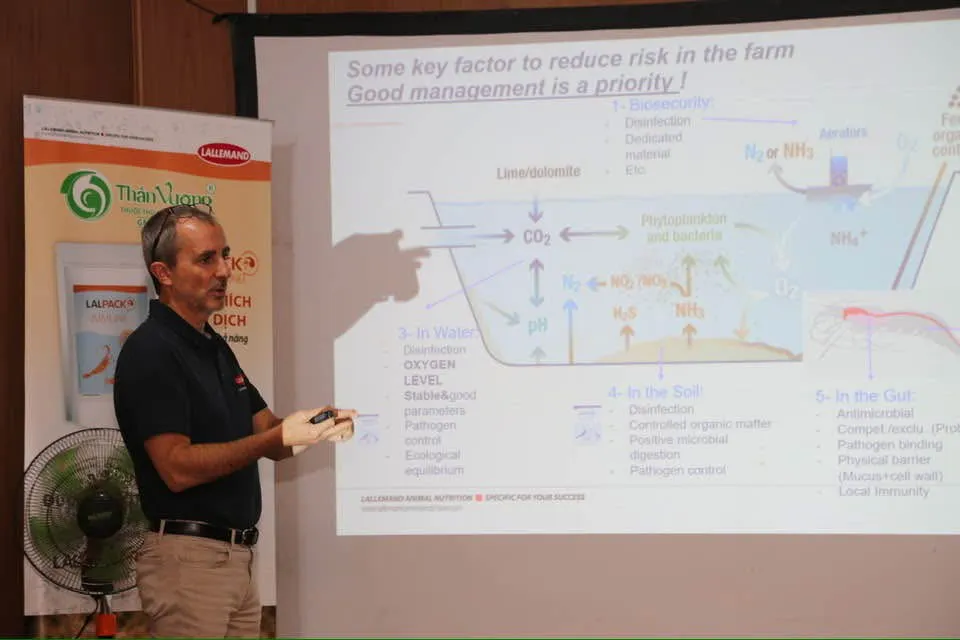
    IMG_3313

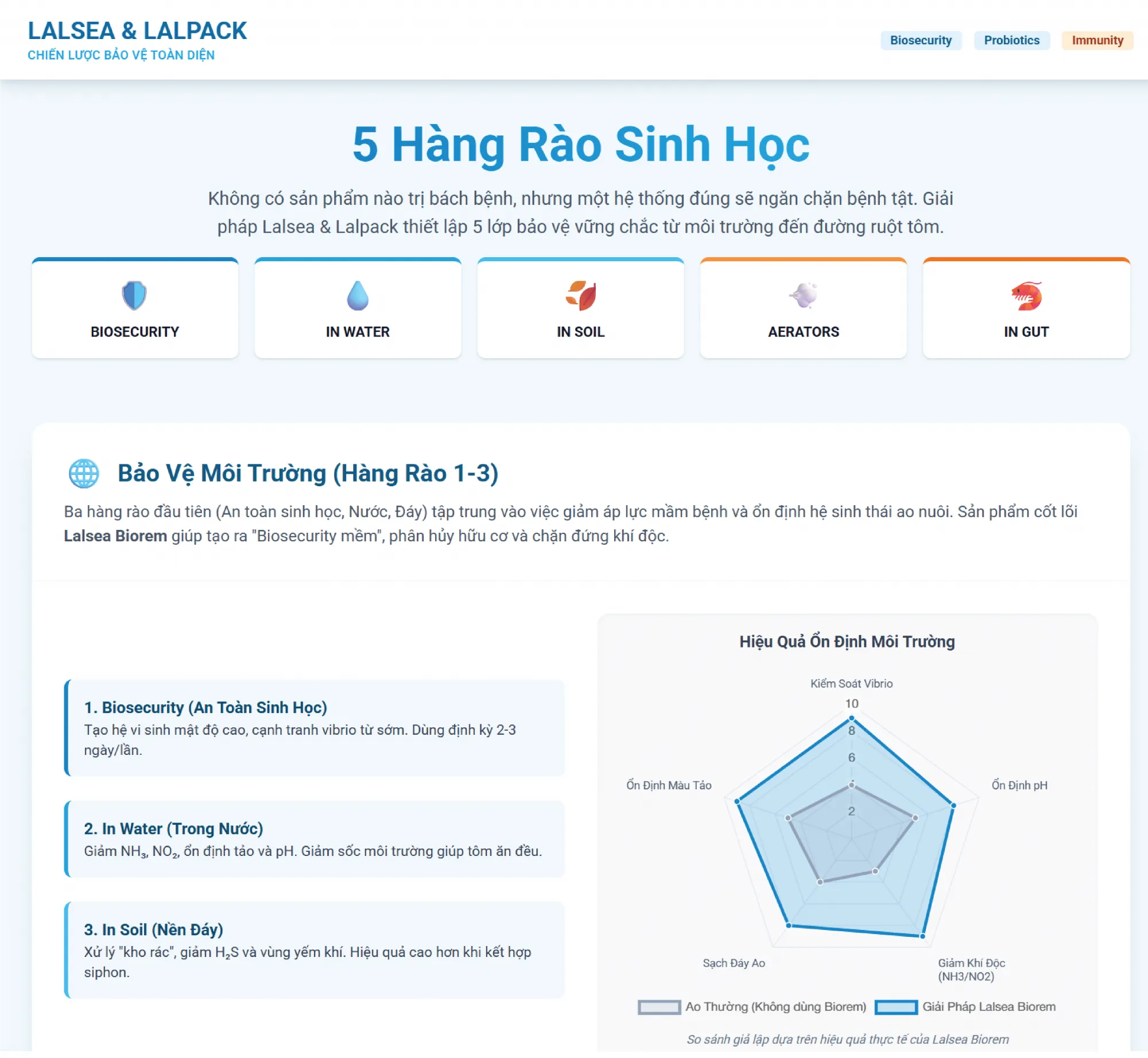
    1. Biosecurity: Discipline Is More Important Than Cure

    The first and most important barrier is Biosecurity. The ultimate goal is to cut off the entry route of pathogens right from the farm gate.

    • Disinfection: It's not just about spraying chemicals into the pond, but thoroughly controlling incoming water, equipment, and vehicles.
    • Dedicated material: A common mistake is sharing nets and scoops between ponds. "Carrying disease around" is the fastest way to destroy a crop.
    • Control of intermediate hosts: Bird nets, crab barriers, disinfection pits... must be operated with daily discipline, not just done for show when a neighbor has an outbreak.

    2. Water Management: Stability Is Key

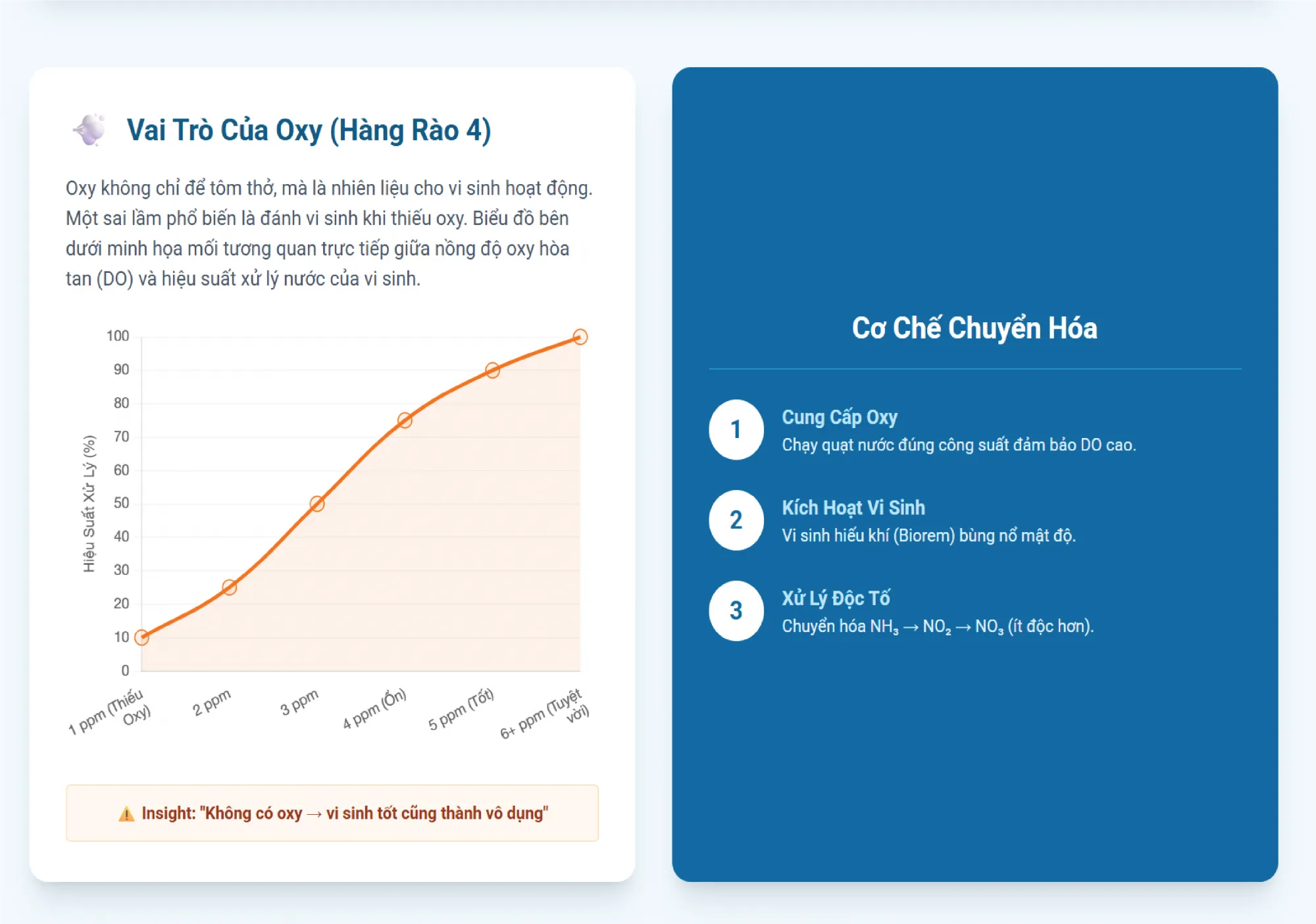
    The second barrier focuses on the living environment. A key concept emphasized is Oxygen Level.

    Oxygen is not just for shrimp to breathe; it is the "conductor" coordinating:

    • Rate of organic decomposition and toxin levels.

    • Feeding capacity and shrimp's metabolic ability.

    • Ecological balance between algae and bacteria.

    Water considered "good" by experts is not crystal clear water, but water with stable parameters. When pH, alkalinity, and algae parameters maintain a balanced state, opportunistic bacteria (like Vibrio) will have no opportunity to thrive.

    3. Pond Bottom Management: Managing the Huge "Waste Storage"

    The pond bottom is the ideal refuge for toxic gases and pathogens. If a shrimp pond is considered a house, then the pond bottom is the waste storage area.

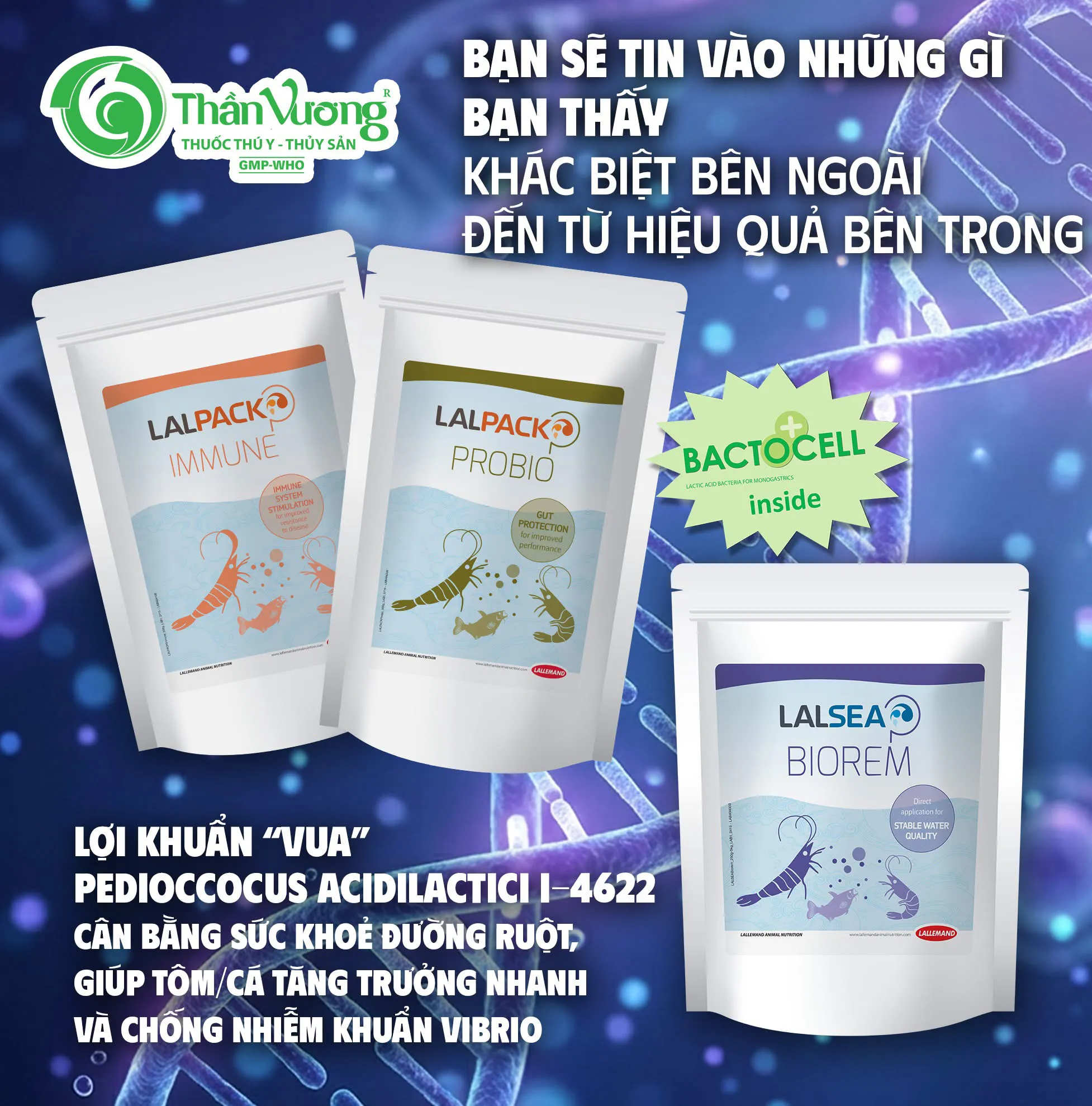
    • Organic control: Sludge, shrimp feces, and uneaten feed need to be collected and siphoned out or treated with beneficial microbial/enzymes.

    • Buffering system (Lime/Dolomite): The use of lime and dolomite is not only to increase alkalinity but also to manage the relationship between CO₂ and pH. A dirty pond bottom will cause strong pH fluctuations, leading to a chain shock for shrimp.

    4. Aeration System: The "Heart and Lungs" of the Pond

    Don't misunderstand that aerators are only for oxygen production. In the risk management scheme, aerators play a versatile role:

    • Releasing toxic gases: Expelling CO₂ from the water, limiting H₂S formation in anaerobic zones.

    • Chemical transformation: Supporting the transformation process from NH₃ (highly toxic) to NH₄⁺ (less toxic) depending on pH.

    • Creating water flow: Collecting waste in the center of the pond for easy removal.

    Improperly configured aerators means risks increase exponentially.

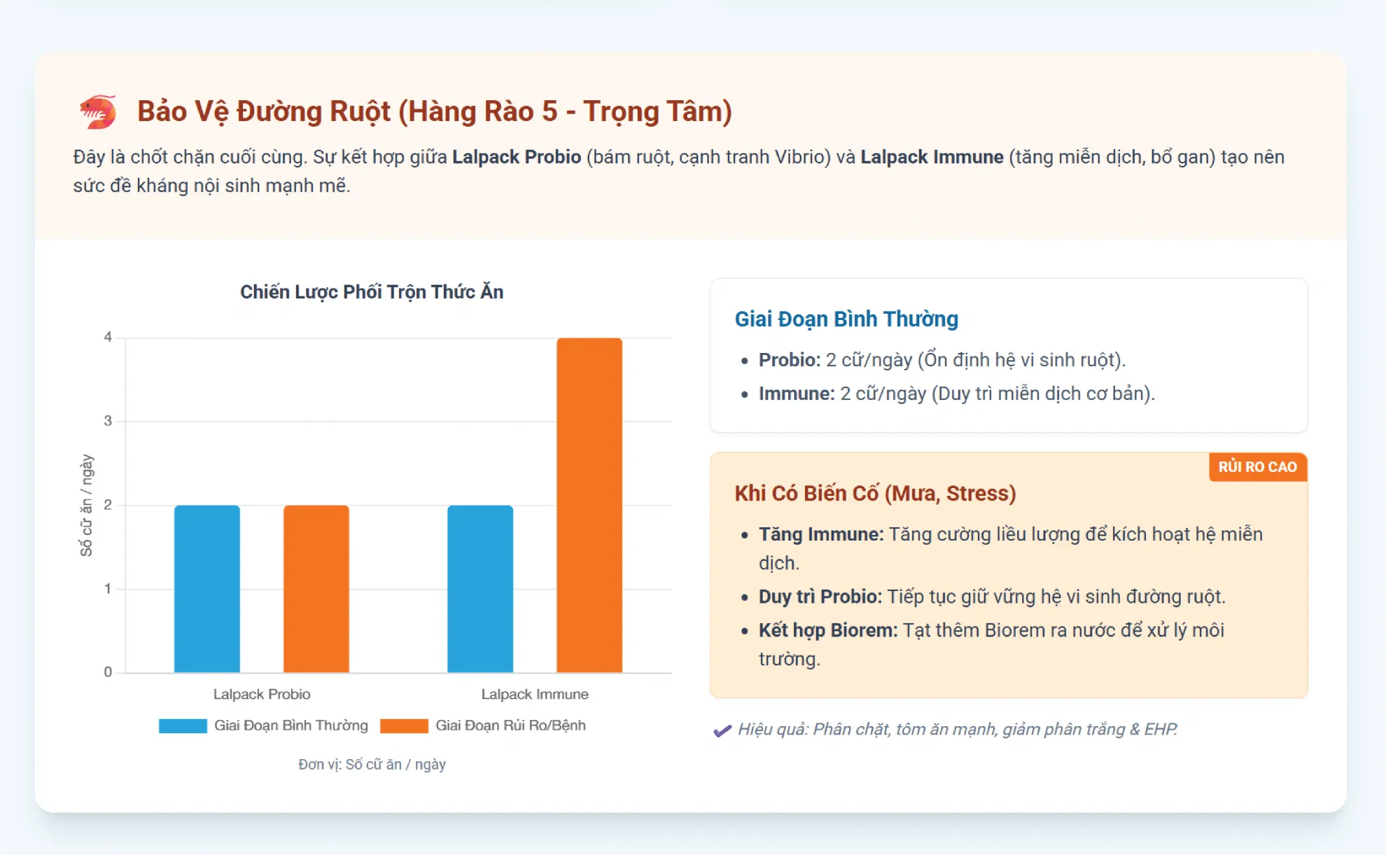
    5. Gut Health: The Last Biological Barrier

    When pathogens have overcome the 4 barriers above to reach the shrimp's body, the gut is the final "fortress". A healthy digestive system requires:

    • Competitive exclusion: Beneficial microbes occupy the intestinal lining, preventing harmful bacteria from colonizing.

    • Pathogen binding: Using active ingredients like Mannans or yeast cell walls to "trap" bad bacteria and expel them with feces.

    • Enhancing local immunity: A thick layer of mucus and intestinal epithelium helps shrimp resist toxin invasion.

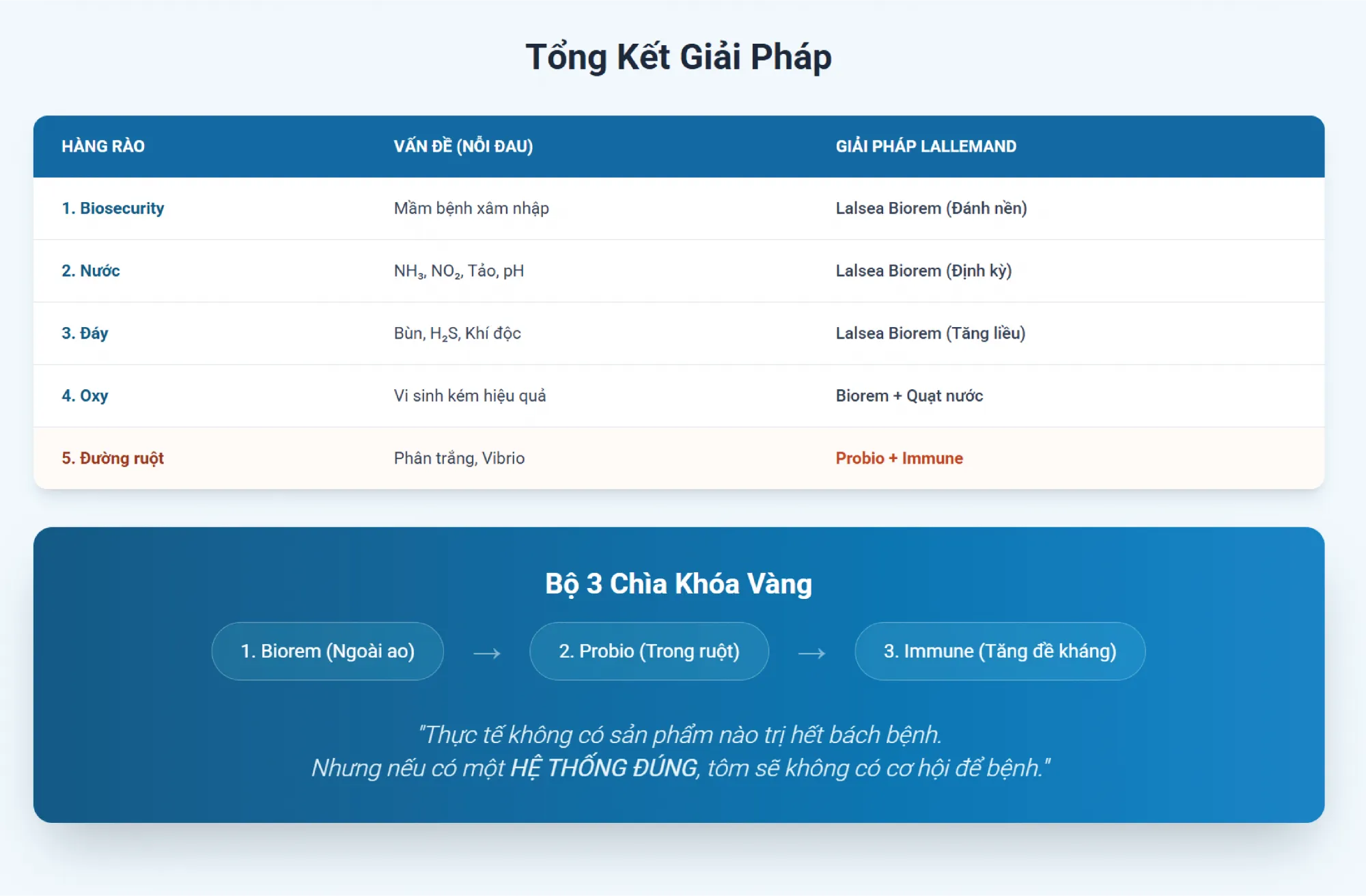
    Conclusion: Shrimp farming is not a race for medicine, but a race for meticulous management. When these 5 barriers are established synchronously, risks will naturally stay away from your pond.
    5_Hang_Rao_Sinh_HYc-01_1
    5_Hang_Rao_Sinh_HYc-02_1
    5_Hang_Rao_Sinh_HYc-03
    5_Hang_Rao_Sinh_HYc-04


    IMG_3314


    Quick Q&A

    Frequently asked questions on this topic

    What does "Minimizing Risks Lies in a Systems Management Approach" cover?

    In modern shrimp farming, there's a rather "painful" reality that many farmers still haven't accepted: Risk mitigation doesn't lie in a single specific medicine bottle, but in the capacity for system management. When disease outbreaks occur, we often frantically search for a new chemical or antibiotic. But according to the philosophy "Good management is a priority", success doesn't come from troubleshooting incidents, but from establishing 5 robust protective barriers.

    Which species does this article apply to?

    Shrimp — Gut Health, Immunity & Microbiome, Stress, Water & Environment

    Related Products

    Products linked to this topic

    Product reference for PRO GUT
    shrimpThần Vương Blue

    PRO GUT

    Premium digestive probiotics specifically for shrimp farming in lined ponds

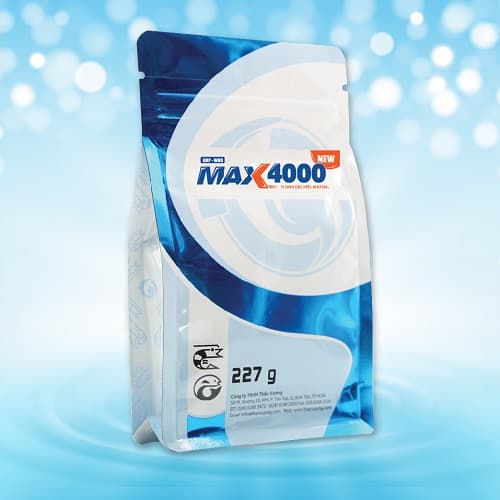
    Product reference for MAX 4000
    tom / ca / ocThần Vương Blue

    MAX 4000

    Probiotic for treating toxic gases NH3, H2S, NO2

    Product reference for LALSEA BIOREM
    allNguyên liệu

    LALSEA BIOREM

    Ammonia removal, biological organic treatment, effective at high salinity

    Product reference for LALPACK IMMUNE
    tom / ca / ocHealth & Biosecurity

    LALPACK IMMUNE

    Immune stimulation for better disease resistance — a synergistic blend of inactivate […]

    More Reading

    Related technical articles

    VAI TRÒ CỦA BỔ SUNG NƯỚC ĐIỆN GIẢI CHO TÔM
    Protocol•Shrimp•November 22, 2018

    THE ROLE OF ELECTROLYTE SUPPLEMENTATION FOR SHRIMP

    A recent report published in the journal Aquaculture International has provided further insight into the role of electrolyte supplem[...]

    Toàn cảnh thị trường tôm thế giới 2025 — Dữ liệu từ Shrimp Insights (Tháng 2/2026)
    Technical article•Shrimp•April 9, 2026

    Global Shrimp Market 2025 Overview — Shrimp Insights Bulletin February 2026

    Full-year 2025 global shrimp trade summary: Ecuador leads exports at 1.39M MT (+15%), EU imports surge 21%, US tariff shifts reshape[...]

    SỰ THAY ĐỔI CỦA HỆ VI SINH ĐƯỜNG RUỘT DO SỰ NÓNG LÊN TOÀN CẦU. ĐIỀU HÒA SỨC KHỎE VẬT CHỦ VÀ TÌNH TRẠNG BỆNH Ở ĐỘNG VẬT BIẾN NHIỆT
    Research Insight•Shrimp•February 28, 2026

    CHANGES IN GUT MICROBIOTA DUE TO GLOBAL WARMING. REGULATING HOST HEALTH AND DISEASE STATUS IN POIKILOTHERMIC ANIMALS

    Global warming alters the gut microbiota of Pacific whiteleg shrimp by restructuring enterotypes, increasing the risk of diseases su[...]

    Ask Than Vuong

    Aquaculture technical assistant

    Hello there 👋

    Describe your pond issue or pick a question below.