Record-low catch quotas, prolonged fishing suspensions and historically high fishmeal prices are changing the cost structure of the aquafeed industry in Ecuador, Chile and many other countries.
Four figures that sum up the situation
| Indicator | 2026 season |
|---|---|
| Catch quota (TAC), North–Central zone | 1,914,049 tonnes (−36.2%) |
| Fishmeal output, Q1 2026 | −28% |
| Fish oil output, Q1 2026 | −12% |
| Fishmeal spot price in Peru (May 2026) | ~USD 2,500/tonne |
Peru accounts for about 20% of global fishmeal and fish oil output, so any significant restriction on its anchovy fishery creates an international supply shock.
1. The 2026 fishing season: context and key figures
On April 1, 2026, Peru’s Ministry of Production (PRODUCE) authorized the start of the first anchovy season in the North–Central coastal zone, with a maximum total allowable catch (TAC) of 1,914,049 tonnes. This is 36.2% lower than the 3 million tonnes of the corresponding 2025 season and the lowest quota in a decade, except for 2023, when the entire season was cancelled because of unfavourable environmental conditions.
The quota follows the stock assessment recommendation of the Peruvian Marine Research Institute (IMARPE), reflecting a decline in available biomass and the need to protect juvenile fish.
On May 12, 2026, PRODUCE issued Resolution No. 00052-2026-PRODUCE/DGSFS-PA, suspending fishing for 15 days in the area between latitudes 6° and 14° South, within the first 30 nautical miles from the coast. The decision followed IMARPE’s finding that the proportion of juvenile fish in active fishing gear exceeded 50%.
By May 27, the catch had reached only about 451,000 tonnes, equivalent to 23.6% of the TAC. The suspension was extended by another 15 days to June 10, 2026, bringing the total continuous stoppage to 30 days. IMARPE believes that warm water masses brought by the coastal El Niño are reducing upwelling, pushing anchovy deeper and raising the risk of juveniles being caught by mistake.
- 2024: about 2.5 million tonnes.
- 2025: 3 million tonnes.
- 2026: 1.914 million tonnes, down 36.2% year on year.
- Catch to May 27, 2026: about 451,000 tonnes, or 23.6% of the TAC (total allowable catch); the remaining quota is about 1,463,049 tonnes, equivalent to 76.4%.
The Central Reserve Bank of Peru forecasts that the fishing sector could contract by 6.6% in 2026, with the clearest impact likely to show up in the second season, from November to February.
2. Coastal El Niño: oceanographic causes and biological consequences
Peruvian anchovy is one of the commercial fishery resources most sensitive to ocean conditions. Its productivity is closely tied to the strength and extent of upwelling in the Humboldt Current, the mechanism that brings cold, nutrient-rich water to the surface along the coast of Peru.
El Niño, and especially its coastal variant, brings unusually warm surface water close to shore, weakening upwelling and reducing the biological productivity on which the anchovy population depends. ENFEN Official Statement No. 06-2026 forecasts that the coastal El Niño alert status could last until December 2026, possibly reaching moderate strength during May–July.
The consequences include: schools moving to depths of more than 100 m or to other latitudes; higher surface temperatures in traditional fishing grounds; lower survival of juvenile fish; and unusual swells that disrupt logistics and have closed ports several times.
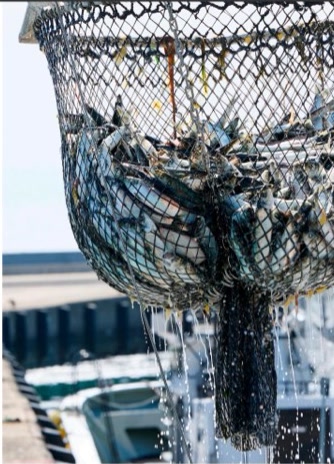
3. Global fishmeal and fish oil output in Q1 2026
In a normal year, Peru contributes about 20% of global fishmeal and fish oil output, so any significant restriction on the Peruvian anchovy fishery can create an international supply shock.
Data compiled by IFFO from its members show that:
- Fishmeal output in March 2026 fell 38% year on year.
- Cumulative fishmeal output in Q1 2026 was 28% lower than in Q1 2025.
- Cumulative fish oil output in Q1 2026 fell 12%.
Fish oil held up better thanks to relatively stable output in Denmark, Norway and Spain. Even so, both fishmeal and fish oil remain short of global aquafeed demand. The spot price of fishmeal in Peru reached about USD 2,500/tonne in May 2026, a historic high and about 25% above the 2023–2024 El Niño period.
“Higher fishmeal and fish oil prices will raise the production costs of carnivorous species such as salmon and shrimp.”
Audun Lem — Deputy Director, Fisheries and Aquaculture, FAO (paraphrased)
4. Impact on Ecuador’s shrimp feed industry
Ecuador is the world’s leading producer and exporter of farmed whiteleg shrimp. Its industrial feed sector depends heavily on Peruvian fishmeal and fish oil, because they are highly digestible sources of protein and lipids.
In 2025, Ecuador accounted for about 4.47% of the FOB value of Peru’s fishmeal exports, roughly USD 83.6 million, ranking fourth after China, Germany and Japan. Concentrating marine ingredient purchases on Peru creates four risks:
- Direct cost increases: feed can account for 50–60% of variable costs in shrimp farming, so fishmeal at USD 2,500/tonne puts pressure on margins across the whole chain.
- Reformulation pressure: ingredient shortages force feed mills to replace part of the fishmeal with other proteins, which may affect FCR, specific growth rate and farming performance, depending on the replacement level and ingredient quality.
- Procurement risk: companies with limited financial capacity or credit find it hard to secure enough certified raw material, while China takes 78.93% of Peru’s fishmeal exports.
- Export competitiveness: sustained high feed prices erode the margins and competitiveness of Ecuadorian shrimp in China, the United States and the European Union.
5. Impact on Chile’s salmon industry
Chile ranks second in the world in salmon farming. Feed accounts for 40–50% of total production costs, while fish oil is hard to replace because premium export products must maintain their levels of the omega-3 fatty acids EPA and DHA.
Chilean producers have cut fishmeal to below 5% in some formulations by using micronutrients and blends of terrestrial animal proteins. However, dependence on fish oil is more persistent, because no alternative marine omega-3 source yet exists at sufficient scale and a competitive price. The decline in fishmeal and fish oil output in Q1 2026 continues to put pressure on purchasing plans and sustainability certification commitments.
Coming next: Part 2
Part 2 will be published on August 23, 2026. It focuses on alternatives to fishmeal, the role of animal by-products, Antarctic krill, insect protein, microalgae and strategies for building a multi-protein matrix for aquafeed.
Source: Aquaculture Magazine Editorial Team. Peru’s Anchovy Fishery Crisis: A Systemic Alert for the Global Aquaculture Feed Industry, June 2026.