
Products / Than Vuong Green / BIO MAX
POSTBIOTIC · FERMENTED GUT PROTECTOR

Healthy gut – firm feces – steady all crop long
Mix into shrimp feed. BIO MAX is the inactivated cells and useful compounds made when a special Lactobacillus strain is fermented. It coats the gut lining so germs cannot attach, keeps the joints of the gut wall tight and helps good bacteria grow. Because it is no longer alive, it handles heat during mixing.
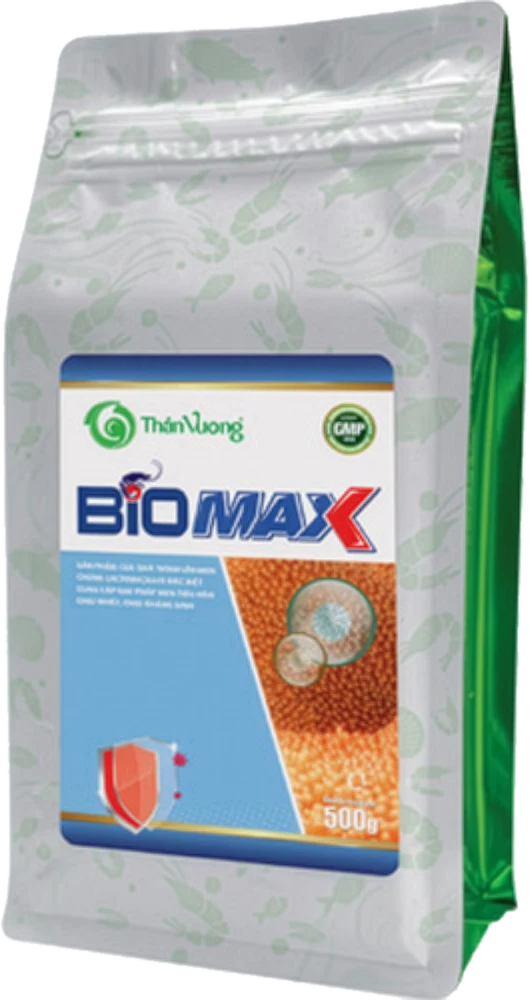
500 g · Reg. No. 01040127 · TCCS 01:2023/TV
How it works
What BIO MAX does in the shrimp gut — in 31 seconds
A postbiotic is inactivated microbial cells plus the compounds they make during fermentation — cell walls, exopolysaccharides, peptides, organic acids. BIO MAX uses exactly that part of a Lactobacillus strain to do five jobs:
- 1Sticks to the gut lining — forms a shield so germs cannot attach and invade.
- 2Neutralizes toxins, holds back germs — harmful bacteria survive less.
- 3Keeps the gut wall joints tight — a sealed gut wall, fewer floating feces.
- 4Stimulates natural immunity — shrimp resist disease better.
- 5Helps good bacteria grow — longer villi, better nutrient uptake.
Benefits
Five benefits for the shrimp pond
Supports a healthy hepatopancreas and lowers the risk of white feces.
Shrimp digest protein and nutrients better and use feed more efficiently.
Raises the non-specific immune response.
Protects the gut lining and helps good bacteria fight germs.
Raises survival rate, growth rate and yield.
What makes it different
Not a live probiotic — so it works where live probiotics struggle
- Helps shrimp keep the gut and hepatopancreas stable when disease pressure in the pond is high.
- Strong bacteria control, supports digestion.
- Works well in soil with heavy metals not fully removed, especially aluminum-rich acid sulfate soil.
Recovery period
- 1Use BIO MAX at the dose printed on the label.
- 2Mix it in a separate batch, not together with medicated feed.
- 3Shrimp on prescribed medication: ask your veterinarian before adding any product.
Technical data
Evidence from the BIO MAX technical sheet
The images and charts below are kept exactly as in the printed sheet. All are in-vitro and culture-model experiments — not pond trial results.
Protects tight junctions and keeps the gut barrier intact
Microscope images of the gut lining. The red band is tight-junction protein — the more continuous the band, the better sealed the gut wall.
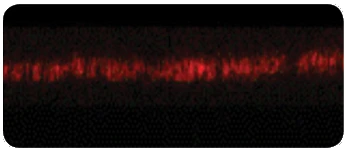
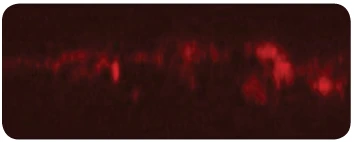
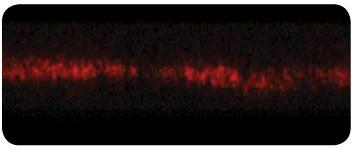
What weakens tight junctions? Unwanted bacteria · NSAID anti-inflammatories and aspirin · stressful feed · local or whole-body inflammation.
Result: BIO MAX has been shown to protect tight junctions from aspirin/NSAID damage in vitro. (NSAIDs are non-steroidal anti-inflammatory drugs.)
Helps native good bacteria (Bifidobacteria) thrive
Microbiota make-up over 24 hours of gut fermentation, lab model: ex-vivo fecal samples inoculated with water or with BIO MAX. Each bar is one sample, measured from 0 to 24 hours.
Swipe sideways to see both charts →
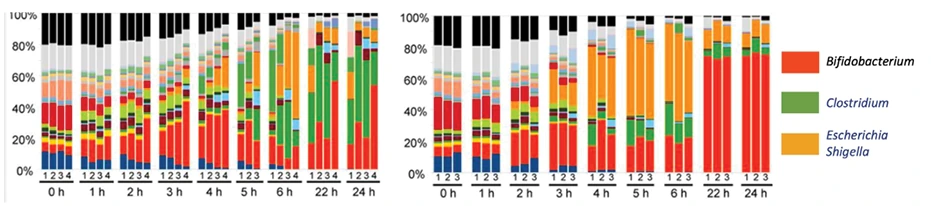
- Red — Bifidobacterium (beneficial): fills almost the whole bar in the right chart after 22 – 24 hours.
- Green — Clostridium
- Orange — Escherichia / Shigella: groups that can cause disease.
Sticks firmly to the gut lining, holds back germs
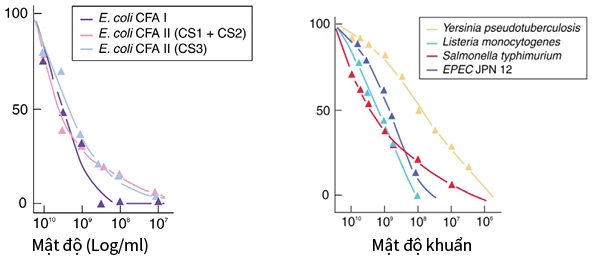
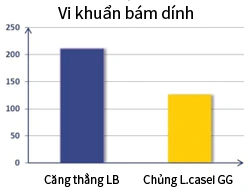
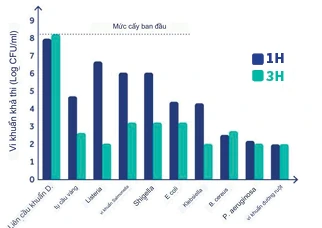
Attaches to gut lining cells to form a barrier that stops germs attaching and invading; reduces the survival of harmful bacteria in vitro and in vivo.
Directions
Dosage
| Use case | Dose | Effect | Notes |
|---|---|---|---|
| Shrimp 7 – 30 days | 5 g/kg feed | Steadies digestion, prevents gut disease, raises resistance | Feed 1 – 2 times/day |
| Shrimp over 30 days | 7 – 10 g/kg feed | ||
| Shrimp with gut problems: loose, broken, floating or white feces | 10 g/kg feed | Lowers bacteria counts, faster recovery, steadier digestion | Feed continuously until shrimp are stable |
| After a course of medication | 5 g/kg feed |
How much BIO MAX to weigh out
Enter the feed for one meal and choose the stage.
How to use
Mix into feed in four steps
Weigh the amount
Weigh BIO MAX by the dose and the feed for that meal.
Dissolve in clean water
Use just enough water to wet the feed evenly.
Mix and coat
Mix evenly into the feed, then coat with ATOMIC or a suitable binder.
Dry for 20 minutes
Wait for the coating to dry before feeding.
Note: the dose may change with shrimp health and pond conditions. Seal the bag with its zip right after use if not finished.
Specifications
Product profile
| Composition | Fermentation product of a special Lactobacillus strain — postbiotic |
|---|---|
| Quality specs (label) | Saccharomyces cerevisiae (min) 1.0 × 10⁷ CFU/kg · Moisture · Carrier (dextrose, lactic acid) to 100% |
| Form | Powder, mixed into feed |
| Pack size | 500 g (Thần Vương Nutrition) · 1 kg (Thần Vương Green) |
| Registration no. | 01040127 |
| Company standard | TCCS 01:2023/TV |
| Category | TABS |
| For | Farmed shrimp (a separate line for fish) |
| Storage | Dry, cool, ventilated place, away from direct sunlight |
FAQ
Common questions
How is a postbiotic different from a live probiotic?
A probiotic is live microbes that must survive heat and the gut environment to work. A postbiotic is inactivated cells plus what they made during fermentation, so heat during mixing does not harm it, and it still does the main jobs: coating the lining, neutralizing toxins, keeping the gut wall joints tight.
Can BIO MAX be used while shrimp are on prescribed medication?
Mix prescribed medication in its own batch, at the right dose and for the full course, as your veterinarian directs. Ask the vet before adding BIO MAX or any other product. In the recovery period afterwards, use BIO MAX at the label dose to support the gut.
When should I start using it?
From day 7 of culture: 5 g/kg feed until day 30, then 7 – 10 g/kg, fed 1 – 2 times/day.
Can I use it when shrimp have white feces?
Yes. For loose, broken, floating or white feces: 10 g/kg feed, fed continuously until shrimp are stable. Long-lasting white feces needs an added protocol — ask the Thần Vương technical team.
Can it be used for fish?
There is a separate BIO MAX line for fish (1 kg): 3 – 5 g/kg feed, 1 – 2 times/day during culture; 7 – 10 g/kg, once a day when fish have digestive upset, undigested feces, poor appetite or after a course of medication.
Loose feces, floating feces or a weak gut?
Send the Thần Vương technical team photos of the gut and feces plus the culture day — get a stage-right protocol the same day.