01 / CURRENT STATUS
Asian sea bass — an alternative to shrimp
Asian sea bass (Lates calcarifer, also known as barramundi) is being farmed more and more along India's coast, in states such as Tamil Nadu, Andhra Pradesh and Gujarat. Farmers choose it because it is hardy, tolerates a wide range of salinities and fetches good prices in the domestic market, and to spread risk rather than farm shrimp alone.
According to FAO data, India produced 7,147 tonnes in 2024, up from 5,311 tonnes in 2020; industry estimates put the figure closer to 9,000 tonnes. This is still small compared with Thailand (58,462 tonnes) and Malaysia (55,563 tonnes), the two leading producers.

How farms are run: fingerlings of 50–100 g are stocked to reduce cannibalism in the early weeks; density is 1,000–3,000 fish per acre (2,470–7,410 fish/ha), depending on aeration and management skill; the fish are grown for 6–8 months and harvested at 700 g to 1.5 kg. Well-managed farms reach 60–80% survival and an FCR of about 1.4 on suitable formulated feed. According to the authors, regular grading and close tracking of biomass are what set disciplined farms apart from casual ones.
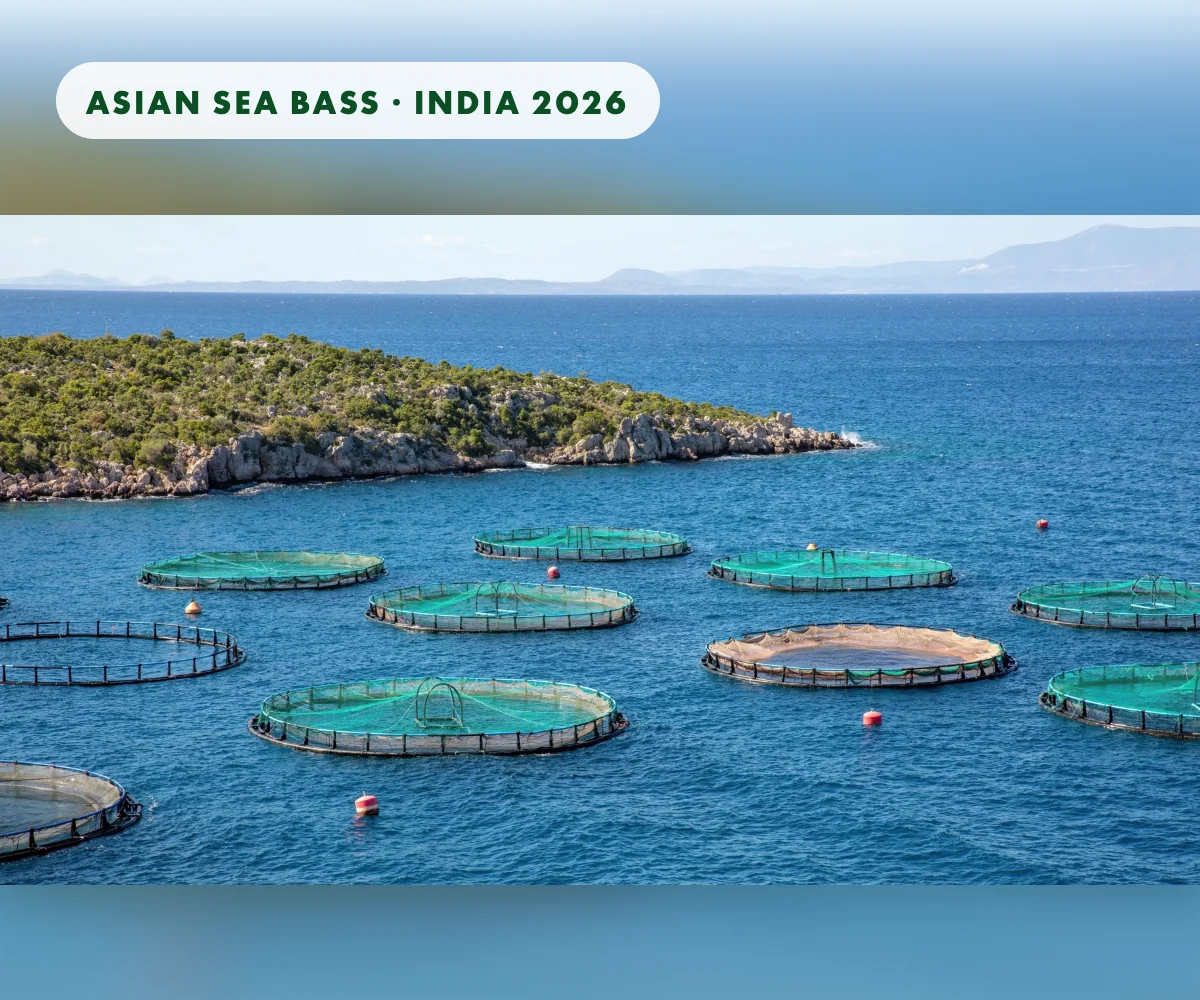
Farming systems: earthen brackish-water ponds dominate, and many were converted from shrimp; cages in estuaries and sheltered waters allow higher densities but are exposed to storms, currents and swings in water quality; recirculating aquaculture systems (RAS) are still rare and used mainly for nursery work or trials.
“Sea bass farming in India is advancing and has significant growth potential, but it is still at an early stage.”
Michael I. Jegan, A. Jemila Thangarani
02 / BOTTLENECKS
Five things holding farmers back
- Seed: seasonal shortages, especially from December to March, when salinity drops after the monsoon and broodstock spawn poorly. Seed quality is uneven; seed that is not yet weaned onto pellet feed eats slowly, stresses easily, grows unevenly and turns to cannibalism. There is no seed certification system yet.
- Feed: 55–65% of total costs, and rising ingredient prices squeeze margins. Some farms still feed trash fish because it is cheaper in the short run, but the fish grow unevenly, the water gets dirty and disease comes more easily — over the whole crop it usually costs more.
- Disease: common problems are vibriosis (Vibrio bacteria), streptococcosis (Streptococcus), parasites (especially in cages) and secondary infections after temperature stress. Diagnostic tools for sea bass are limited, biosecurity is uneven, seed is not screened routinely and vaccines are almost non-existent — so farmers usually act only once disease has broken out.
- Weather: in hot weather dissolved oxygen falls and more fish die; in cold weather the fish grow slowly; heavy rain, cyclones and sudden changes in temperature and salinity add to the risk.
- Sales: most fish are sold through commission agents, who decide the price and the timing of harvest and sometimes pay late; farmers have little direct access to the market.
“Feed is still the biggest single cost – usually 55–65 percent of total expenses.”
Michael I. Jegan, A. Jemila Thangarani
03 / THAN VUONG'S VIEW
Steps you can take now
The authors propose a way forward for the whole sector: make feed-weaned seed the standard, certify seed, offer disease diagnosis at the level of farm clusters, invest in vaccines and support farmer groups in selling their fish. At farm level — including sea bass ponds and cages in Vietnam — some steps can be taken right away:

- Seed: stock only uniform fingerlings already weaned onto pellet feed, and check seed health before stocking.
- Density and grading: stock according to what the pond or cage and its aerators can really support; grade regularly so that large fish do not eat small ones.
- Records: weigh samples and record biomass and FCR for each pond and each cage — the basis for adjusting feed and working out profit and loss.
- Feed: phase out trash fish and use formulated feed of the right size for the fish; in hot weather choose a suitable ration, increase aeration and adjust the stocking calendar.
- Prevention first: keep up biosecurity and keep ponds and cages clean; when the fish show unusual signs, call a technician to take samples for diagnosis before deciding on any treatment. See our marine fish farming solutions and products for fish.