01 / NEW SPECIES
Why Indian pompano was chosen
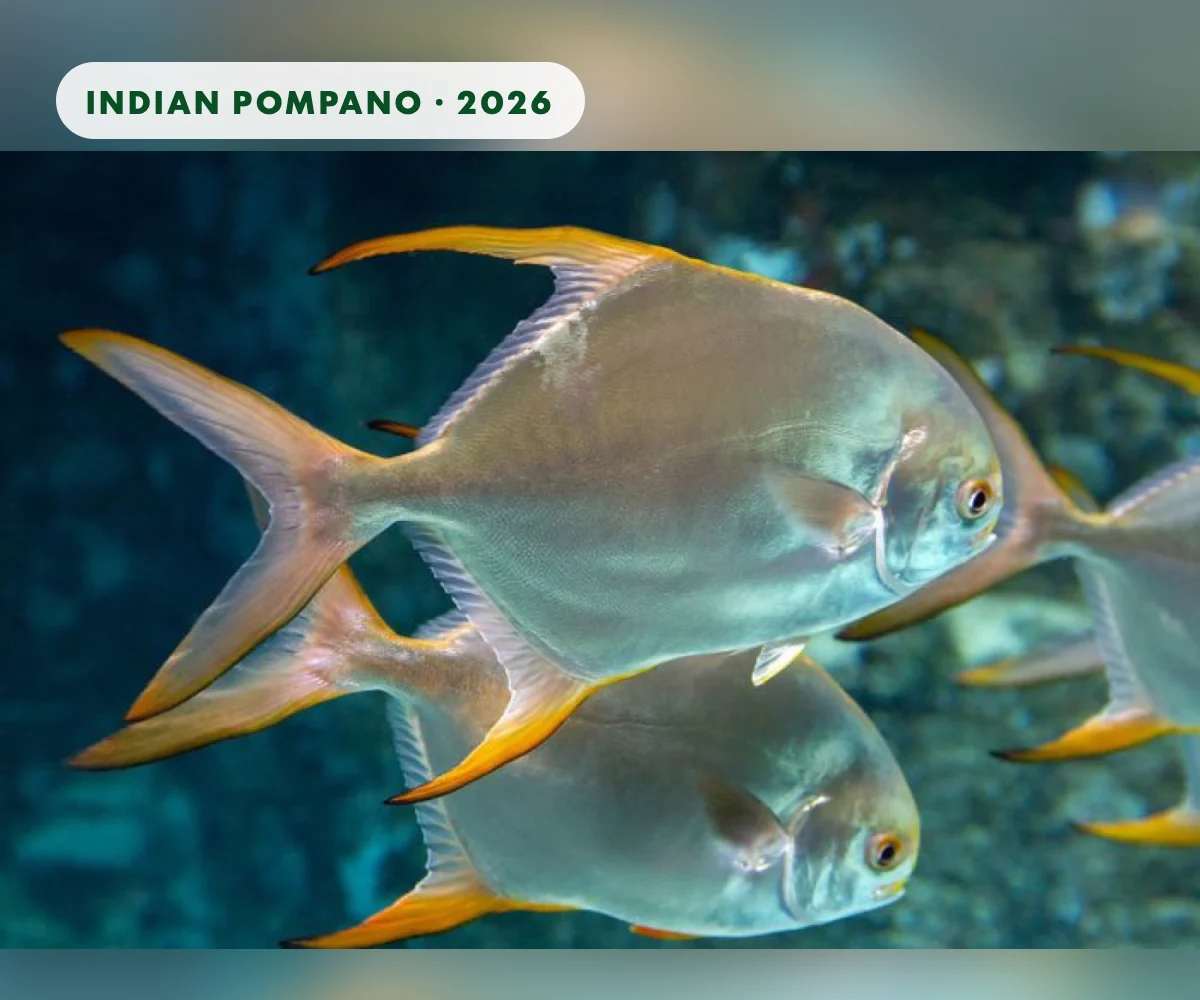
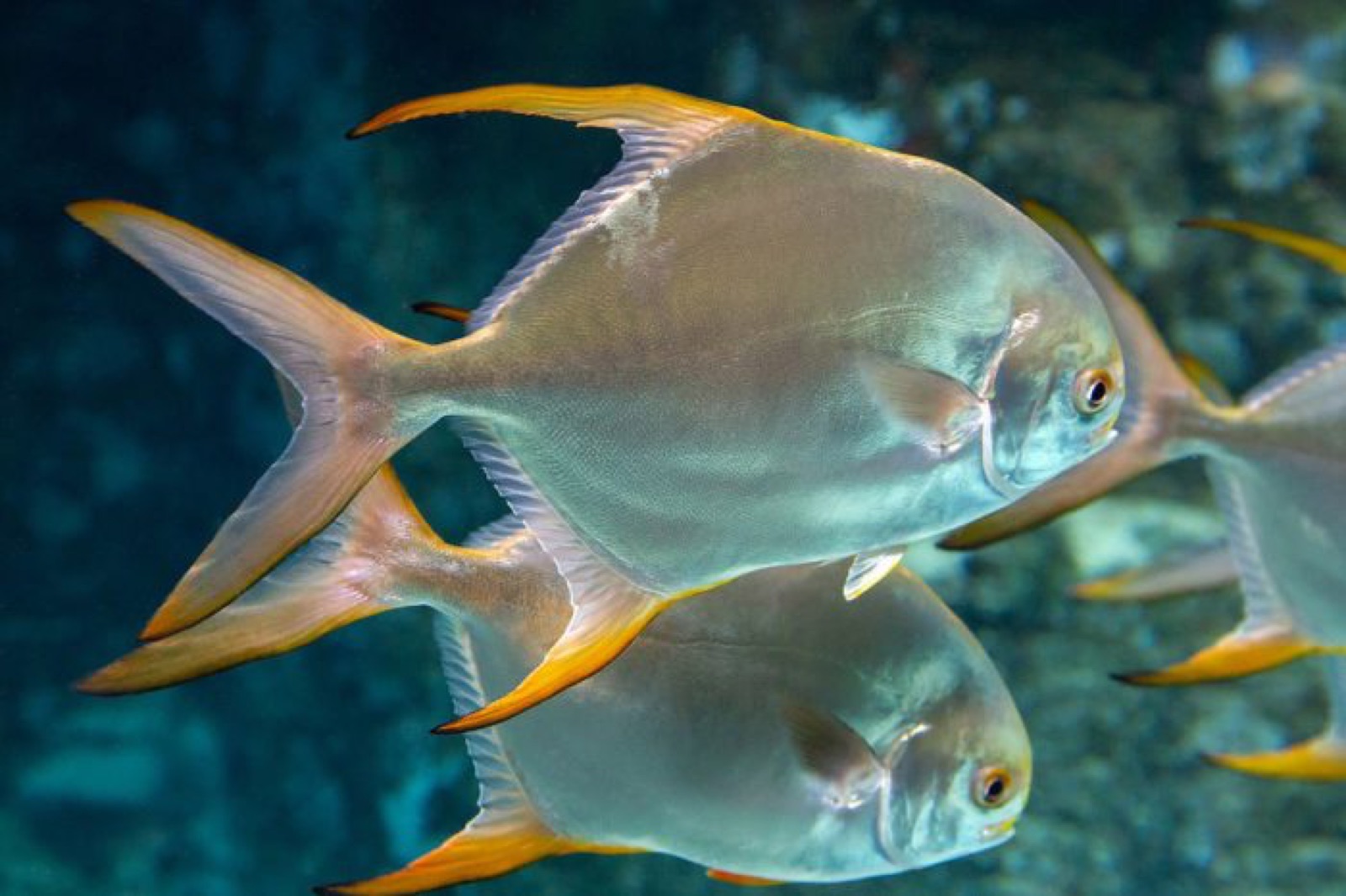
India ranks second in the world in aquaculture and leads in brackish-water shrimp farming, but its mariculture is still very small: the potential is estimated at 4–8 million tonnes a year, while current production is below 0.1 million tonnes. Government research institutes have bred more than a dozen marine and brackish-water fish species in captivity, and six have been introduced for farming: Asian sea bass, pearl spot (Etroplus suratensis), cobia, orange-spotted grouper, golden pompano (Trachinotus blochii) and Indian pompano (Trachinotus mookalee).
According to the authors, Indian pompano has many advantages for farmers:
- it is easy to breed, adapts to many farming systems, grows at a moderate rate and shows little cannibalism;
- it takes formulated pellet feed straight away;
- it can be farmed at salinities of 5–35 ppt, and together with whiteleg shrimp, mullet and milkfish;
- it looks attractive and tastes good, and is popular in both domestic and export markets.
“The Indian pompano is one of the fast-emerging candidate marine finfish for mariculture and coastal aquaculture.”
ICAR-CMFRI authors
The CMFRI Visakhapatnam Regional Centre achieved captive breeding and seed production in 2016. Farming methods for sea cages, coastal cages and earthen ponds were then tested, standardized and demonstrated on a large scale. The nursery stage has proved well suited to recirculating aquaculture systems (RAS).
02 / FOUR SYSTEMS
Stocking density, culture period and harvest size
The article sums up four farming methods that have been tested and demonstrated. The figures below are for Indian pompano farmed under Indian conditions:

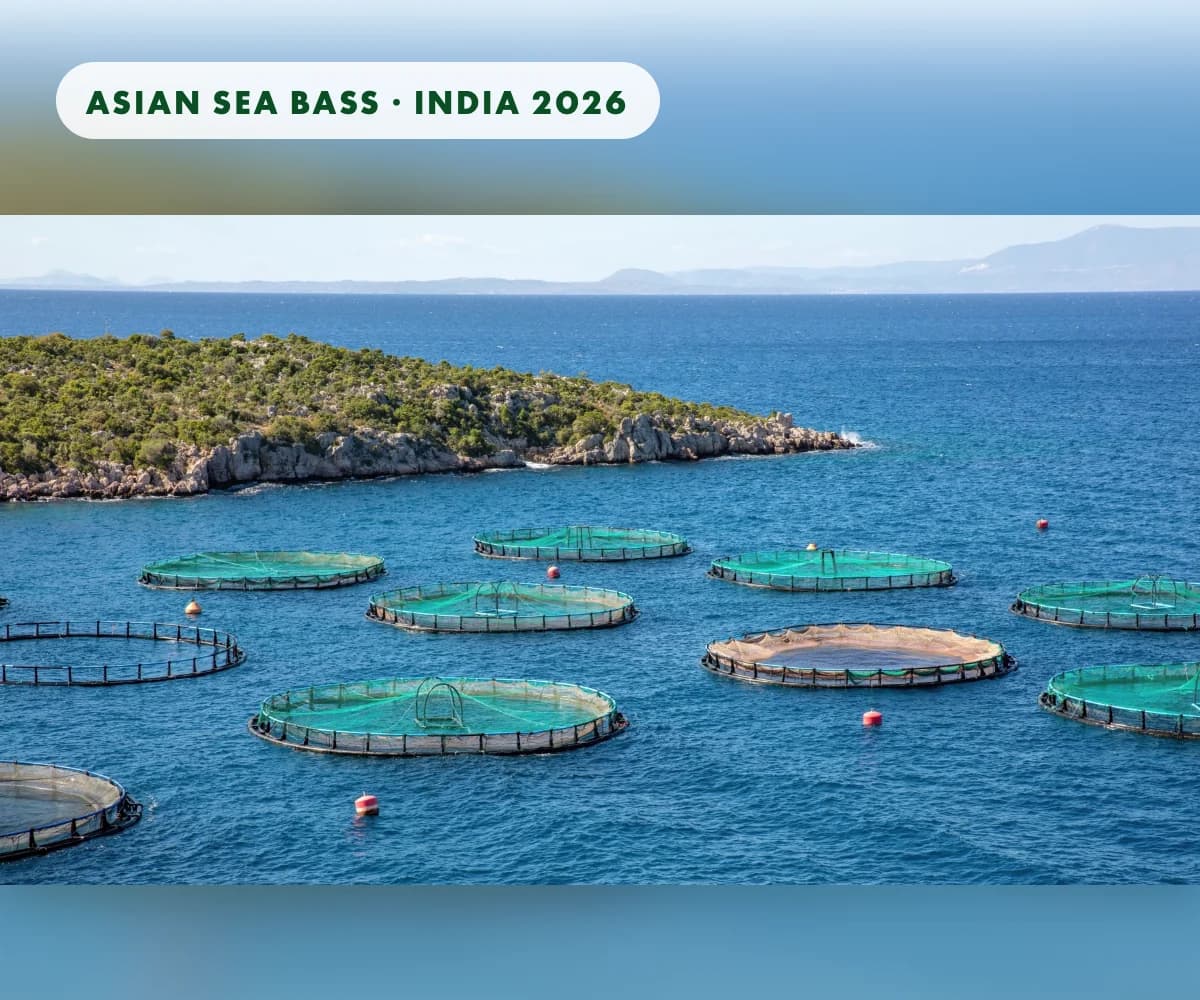
- Sea cages: HDPE frames 6 m in diameter and 4 m deep (about 110 m³). Fingerlings of about 20 g are stocked at 25 fish/m³; after about 10 months the fish reach 750–900 g. FCR 1.8–2.2; maximum carrying capacity 15–18 kg/m³. The institute is now testing cages 15 m in diameter.
- Coastal cages (backwaters, lagoons and other brackish waters): galvanized iron pipe cages of 5 × 5 m with a 3 m net depth (about 75 m³). Fish of 15–20 g are stocked at 20 fish/m³ and reach 650–700 g in 7 months. Floating pellet feed with 40–45% protein and 10% fat; FCR 1.7–1.9. Each crop lasts no more than 7–8 months because of the monsoon seasons. More than 300 cages have been demonstrated.
- Coastal earthen ponds: 10 g fingerlings are stocked at 1.5 fish/m² and reach 850–1,000 g in 11–12 months, with a maximum yield of 8.5–9 t/ha. The model now covers about 100 ha in several states.
- Pompano–shrimp rotation: nursery-reared fish of 30–35 g are stocked, grown for 5–6 months and harvested at 500 g; the same pond is then used for shrimp. Feed with 40–45% protein and 10% fat; FCR 1.5–1.8, and lower in ponds rich in natural food. Farmers choose this approach to depend less on a single shrimp crop.

Economics: a cluster of 10 sea cages earns an estimated profit of INR 1.7–2.0 million a year (about USD 20,000–23,500 at the source's rate of USD 1 = INR 85); coastal cages earn INR 70,000–85,000 per cage (about USD 820–1,000); rotation with shrimp gives an average margin of INR 100 per kg of fish (about USD 1.2). The authors note that profit depends on feed cost, FCR and the farmgate price.
“…the lack of seed availability is a bottleneck to its potential expansion.”
ICAR-CMFRI authors
03 / THAN VUONG'S VIEW
Applying it to pompano cages and ponds in Vietnam
The figures in the article are for Indian pompano under Indian conditions. The golden pompano farmed in Vietnam belongs to the same genus, Trachinotus, so the farming methods are similar, but actual growth and FCR will differ with the seed, the feed and the farming area. A few points farmers can take away:
- Seed: choose fingerlings of even size that are already used to pellet feed, and nurse them to a good size before they go into cages (the source stocks cages from 15–20 g and rotation ponds from 30–35 g).
- Density matched to carrying capacity: work out the harvest biomass in advance; in an overloaded cage the fish grow slowly, get sick more easily and use more feed.
- Track FCR: weigh samples regularly and record the feed used in each cage and each pond; floating pellets let you see how the fish are eating and cut down on leftover feed.
- Plan crops around the storm season: just as coastal cages in India are farmed for only 7–8 months because of the monsoon; strengthen cage moorings before the storm season.
- Environment and resilience: keep cage nets and pond bottoms clean, and support the fish's resilience when the weather changes. See our pompano farming solutions and products for fish.