A recent report published in Aquaculture International has provided further insights into the role of electrolyte water supplementation in improving shrimp productivity and survival rates.
Illustration: i2.wp.com
According to the American Chemical Society, electrolytes come in various forms, including sodium, chloride, potassium, phosphate, magnesium, and calcium. Essentially, electrolytes are salts. Their role in the body is to dissolve, helping to conduct electricity in water and improve water absorption.
The supplementation of electrolyte solutions is no longer unfamiliar to aquaculture farmers in Vietnam and worldwide. In Vietnam, Dr. Le Quang Tien Dung and his colleagues from the University of Science, Hue University, have successfully researched and applied anolyte solution – electrolyte water – in aquaculture water treatment. Anolyte solution is a disinfectant agent with many superior properties, high disinfection efficiency, rapid elimination of various bacteria, easy production, low cost, and environmental friendliness.
Electrochemical activated anolyte solution, also known as electrolyzed oxidizing water, was discovered by Russian engineer V. Bakhir in 1972. Anolyte, with the English term Electro-Chemical Activation (ECA), is an electrochemical activated solution, colorless, with a slight chlorine odor, prepared by electrolyzing an NaCl (salt) solution. If the process involves activating water from pure NaCl, the anolyte composition contains ions: Na+, Cl-, ClO-,..

Catholytes are also products of the water activation process by electrochemical activation (Electro Chemical Activation - abbreviated as ECA). Source: Researchgate
Role of electrolyte water supplementation for farmed shrimp
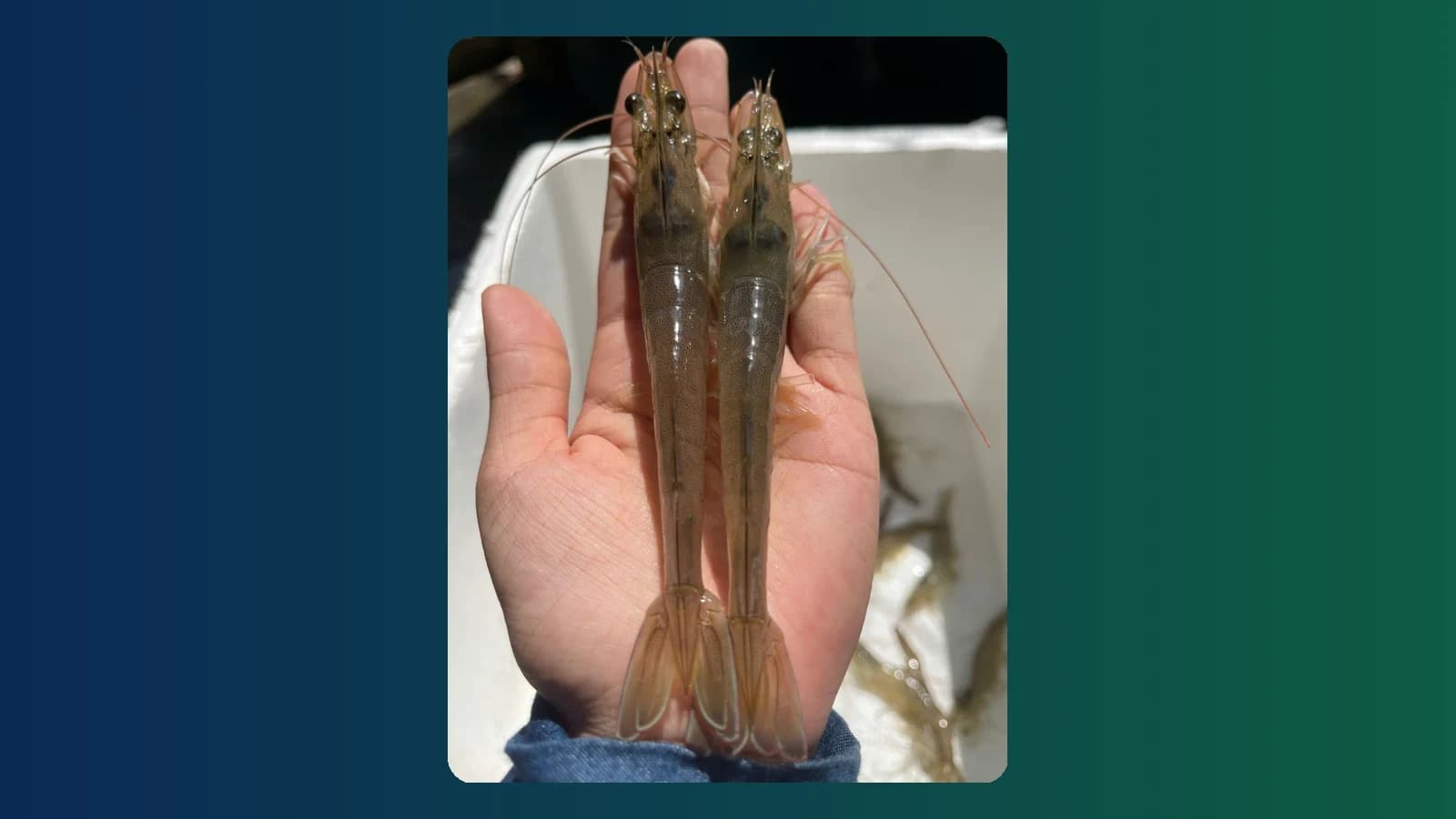
In this study, electrolyte water – water containing electrochemical activated solutions (EW) – was used to determine their effects on freshwater giant prawn farming in recirculating systems.
Electrolyte water supplementation concentrations for giant prawns
In experiment 1: Giant prawns (Macrobrachium rosenbergii) were exposed to different concentrations of electrolyte water solutions.
Electrochemical activated solution was added to the water in treatment group A1, comprising 1% anolyte and 0.5% catholyte.
In the respective treatments, the ratios of anolytes and catholytes were as follows:
- Group B1 (1% anolyte and 1% catholyte),
- Group C1 (2% anolyte and 0.5% catholyte),
- Group D1 (2% anolyte and 1% catholyte),
- Control shrimp group (without EW).
All these treatments were tested with three replicates.
Results:
In the first experiment, the growth of giant prawn M. rosenbergii supplemented with 1% anolyte and 0.5% catholyte in group A1 showed significantly different growth compared to the control shrimp group after 56 days.
The highest shrimp survival rate was observed in treatment A1 (73%), followed by group B1 (70%) and the control (63%), with treatments C1 (53%) and D1 (50%) being the lowest.
Optimal combination in Recirculating Aquaculture System (RAS) model

Diagram for the recirculating aquaculture system (RAS) used in the experiment. Water passes through three types of filters, including a physical filter (aquarium), a chemical filter (oyster shells), and a biological filter (Bio-ball) before being pumped back into the culture tank.
In the second experiment, the treatment groups were established using an EW concentration of 1% anolyte and 0.5% catholyte – identified as the most suitable concentration for shrimp farming – and tested in combination with a recirculating aquaculture system (RAS).
The treatments used in the second experiment were group A2 (Electrolyte supplementation only - EW), B2 (Combination of EW electrolyte solution and shrimp farming in RAS), C2 (RAS shrimp farming only), and Control.
Results: Treatment B2 (electrolyte solution supplementation and recirculating system shrimp farming) showed significantly higher growth rates and survival rates compared to other treatments.
Colony Forming Units (CFU) showed lower bacterial counts in all experiments using electrochemical activated solution compared to the control.
A concentration of 1% anolyte and 0.5% catholyte has been shown to improve the growth rate and survival rate of giant prawn M. rosenbergii cultured in a recirculating aquaculture system (RAS).
From the two studies above, it is evident that in addition to its disinfectant properties, as shown in previous research, electrochemical solutions also help shrimp increase survival rates and promote growth. The research also demonstrated that using electrolyte solutions is more optimal in recirculating aquaculture systems (RAS). And with the outstanding advantages of activated solutions being low cost and environmentally friendly, they are fully capable of being applied and scaled up in aquaculture.
English report on: Aquaculture International Journal
VAN THAI (Abstracted)