Working hours: Mon - Fri | 08:00 - 17:00HOTLINE: 0867 95 7568
Technical Article

Shrimp Reaches 69/kg in Just 54 Days — A Real Pond Case Study on Feed Control and 25% Water Exchange Reduction

A shrimp pond applying Than Vuong's environmental management and nutrition protocol achieved remarkable results: shrimp reached a size of 69 pieces per kilogram at 54 days of culture, with an FCR of 1.0 and a 25% reduction in water exchange compared to conventional methods. This article breaks down the complete protocol and the product combination behind these outcomes.

Technical articleShrimpMay 27, 2026👁 263 views
Click to listen to an AI-narrated summary
Full Article
Shrimp Reaches 69/kg in Just 54 Days — A Real Pond Case Study on Feed Control and 25% Water Exchange Reduction

Shrimp Reaches 69/kg in Just 54 Days — A Real Pond Case Study on Feed Control and 25% Water Exchange Reduction

Summary: A shrimp pond applying Than Vuong's environmental management and nutrition protocol achieved remarkable results: shrimp reached a size of 69 pieces per kilogram at 54 days of culture, with an FCR of 1.0 and a 25% reduction in water exchange compared to conventional methods. This article breaks down the complete protocol and the product combination behind these outcomes.


1. Real Results from the Pond

After 54 days of culture, the pond achieved the following indicators:

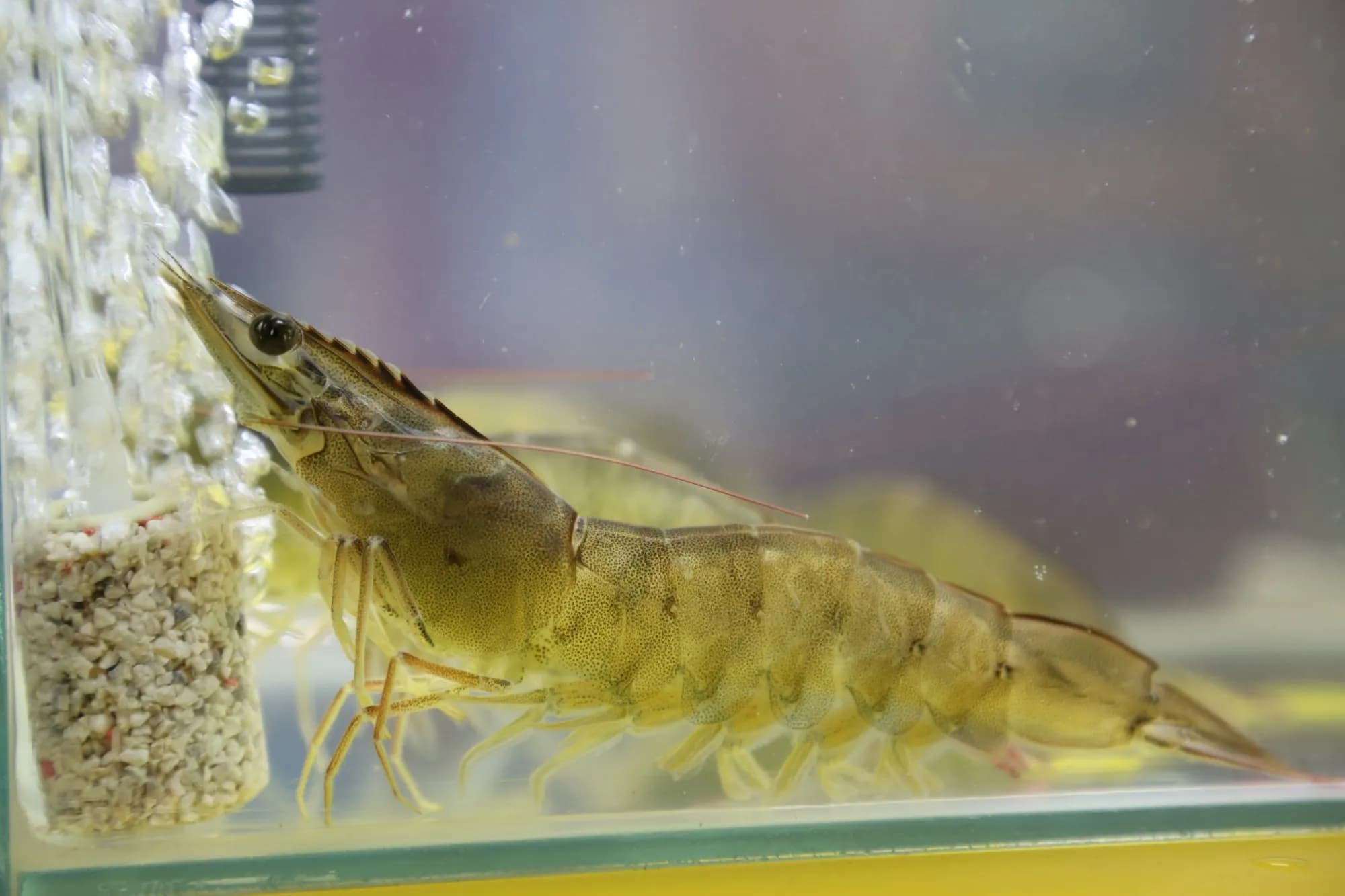
  • Shrimp size: 69 pcs/kg — fast and uniform growth

  • Morphology: glossy shells, full gut, healthy hepatopancreas

  • Feed Conversion Ratio (FCR): reduced to 1.0 — significant feed savings

  • Water exchange: 25% less compared to conventional practices

These outcomes are the result of three integrated factors: precise feed control — pond bottom and water management — targeted nutritional support for gut and hepatopancreas health.


2. Smart Water Management: 25% Reduction in Water Exchange

Instead of large periodic water changes, the pond applied this strategy:

  • Three small water exchanges per day — maintaining environmental stability

  • Strict feed control → less waste accumulation → cleaner pond bottom

  • Result: total water exchange volume reduced by 25% compared to conventional methods

Twin benefits of reduced water exchange

  • Lower pumping and water treatment costs

  • Reduced risk of introducing pathogens from external water sources

  • Stable key parameters: pH, alkalinity, algae density

Core principle: Feed accurately, sufficiently, and consistently — with no surplus. When feed waste is eliminated, pond water naturally maintains its quality without heavy exchange.


3. Daily Pond Environment Management

A healthy shrimp pond starts with a clean bottom and stable water. This is the role of the SOILMAX + OZYME+ combination.

SoilMax — Pond Bottom Treatment

  • Decomposes residual organic matter, dead algae, and shrimp feces

  • Reduces formation of toxic gases (NH₃, NO₂, H₂S)

  • Prevents accumulation of black sludge on the pond bottom

Ozyme+ — Multi-Strain Probiotic

  • Clarifies water and stabilizes algae color

  • Outcompetes harmful bacteria, including Vibrio spp.

  • Maintains a healthy beneficial microbiome in the pond

Outcomes from daily application

  • Pond bottom stays consistently clean

  • Stable water — no need for frequent exchange

  • Shrimp live in an optimal environment → strong feeding, rapid growth


4. Daily Nutrition Strategy — Two Feedings per Day

The Core Combination: AQUAMOS + PRO GUT

This is the foundation for gut health and overall shrimp condition, applied twice daily:

Aquamos

  • Strengthens natural immunity

  • Protects the hepatopancreas — the organ that determines growth rate and disease resistance

Pro Gut

  • Specialized intestinal probiotic

  • Supports complete digestion of feed → the key to FCR reduction

  • Produces firm feces, full gut, and optimal nutrient absorption


5. Targeted Support: FLASH + CLEVER — Alternating Every Other Day

In addition to the core combination, these two products are applied on a rotating schedule for enhanced performance:

Flash

  • Stimulates feeding appetite

  • Encourages strong, uniform growth

Clever

  • Stabilizes the gut

  • Supports firm feces and a full intestinal tract

Weekly Feeding Schedule

FeedingProductFeeding 1Aquamos + Pro GutFeeding 2Aquamos + Pro GutEvery other day (1 feeding)Flash or Clever


6. Summary of Protocol Benefits

When Than Vuong's integrated environmental and nutritional protocol is applied, farmers can expect:

  • ✅ 25% less water exchange → savings in electricity, water, and labor

  • ✅ Lower FCR (down to 1.0) → significant feed cost reduction — the largest expense in shrimp farming

  • ✅ Faster, more uniform growth → higher market price and shorter culture cycle

  • ✅ Reduced disease risk from external water sources


7. Is Your Pond Facing Challenges?

If your pond is showing any of these signs, contact Than Vuong for a tailored protocol consultation:

  • Slow growth and abnormally high FCR

  • Frequent water exchange without improvement in shrimp health

  • Pale hepatopancreas, empty gut, loose feces

  • Black sludge accumulation, elevated NH₃ / NO₂ levels


Contact Information

THAN VUONG CO., LTD. 🏭 GMP-WHO Certified Manufacturing Facility — Tây Ninh, Vietnam 📞 Hotline: +84 867 95 7568 | +84 919 849 568 🌐 Website: thanvuong.vn 📧 Email: duytran@thanvuong.com
Quick Q&A

Frequently asked questions on this topic

What does "Shrimp Reaches 69/kg in Just 54 Days — A Real Pond Case Study on Feed Control and 25% Water Exchange Reduction" cover?

A shrimp pond applying Than Vuong's environmental management and nutrition protocol achieved remarkable results: shrimp reached a size of 69 pieces per kilogram at 54 days of culture, with an FCR of 1.0 and a 25% reduction in water exchange compared to conventional methods. This article breaks down the complete protocol and the product combination behind these outcomes.

1. Real Results from the Pond — what are the details?

Shrimp Reaches 69/kg in Just 54 Days — A Real Pond Case Study on Feed Control and 25% Water Exchange ReductionSummary: A shrimp pond applying Than Vuong's environmental management and nutrition protocol achieved remarkable results: shrimp reached a size of 69 pieces per kilogram at 54 days of culture, with an FCR of 1.0 and a 25% reduction in water exchange compared to conventional methods.

2. Smart Water Management: 25% Reduction in Water Exchange — what are the details?

After 54 days of culture, the pond achieved the following indicators:Shrimp size: 69 pcs/kg — fast and uniform growthMorphology: glossy shells, full gut, healthy hepatopancreasFeed Conversion Ratio (FCR): reduced to 1.0 — significant feed savingsWater exchange: 25% less compared to conventional practicesThese outcomes are the result of three integrated factors: precise feed control — pond bottom and water management — targeted nutritional…

3. Daily Pond Environment Management — what are the details?

Instead of large periodic water changes, the pond applied this strategy:Three small water exchanges per day — maintaining environmental stabilityStrict feed control → less waste accumulation → cleaner pond bottomResult: total water exchange volume reduced by 25% compared to conventional methodsTwin benefits of reduced water exchangeLower pumping and water treatment costsReduced risk of introducing pathogens from external water sourcesStable key…

Which species does this article apply to?

Shrimp

Related Products

Products linked to this topic

GRO C30
ShrimpThan Vuong Blue

GRO C30

Supplies vitamin C to increase resistance and reduce stress

MIX 400
ShrimpThan Vuong Nutrition

MIX 400

Supply minerals, stabilize alkalinity and pH

AQUA PRO4000X
ShrimpThan Vuong Nutrition

AQUA PRO4000X

Microbial control of algae and harmful bacteria in water

BACWAT New
ShrimpThan Vuong Nutrition

BACWAT New

Comprehensive microbial solution for super-intensive ponds

More Reading

Related technical articles

SHRIMP FEED MANAGEMENT IN OUTDOOR PONDS FOR WHITELEG SHRIMP
Protocol•Shrimp•January 27, 2026

SHRIMP FEED MANAGEMENT IN OUTDOOR PONDS FOR WHITELEG SHRIMP

Feed is the highest variable cost in shrimp production, and feed management has a greater impact on the feed conversion ratio (FCR)[...]

NETTLE IN AQUACULTURE FEED: A TERRESTRIAL GREEN POWERHOUSE FOR IMPROVING FISH HEALTH
Protocol•Shrimp•November 14, 2024

NETTLE IN AQUACULTURE FEED: A TERRESTRIAL GREEN POWERHOUSE FOR IMPROVING FISH HEALTH

By Emeritus Professor Simon J Davies, Harper Adams University and John Hardy, UrticaPlus, United Kingdom

FEED PROTEIN AND SHRIMP GROWTH
Protocol•Shrimp•May 4, 2023

FEED PROTEIN AND SHRIMP GROWTH

Issues related to feed protein content and shrimp growth

Ask Than Vuong

Aquaculture technical assistant

Hello there 👋

Describe your pond issue or pick a question below.