1. Origin and severity
- Highly lethal Vibrio disease (HLVD), also called translucent post-larvae disease (TPD) or glass post-larvae disease (GPD), is an emerging disease that causes acute, mass mortality in shrimp post-larvae (Zou et al., 2020; Yang et al., 2022).
- The disease was first reported in shrimp hatcheries in Ecuador in 2015 (Zeigler, 2023). It then appeared in south-eastern China in late 2019 and eventually spread across the whole country. HLVD is now widespread in the major shrimp farming regions of China and Vietnam and has become the main cause of mortality at the post-larval stage.
- Typically, the morbidity of an affected population can reach 60% on the second day after abnormal individuals are first seen, and even 90–100% on the third day in severe cases.
Map (© Shuang Liu): TPD positive rates at sampling sites in China. Legend: 8%–16%, 16%–28%, 28%–50% and 50%–100% positive; green dots mark negative sites.
Clinical course (external signs)
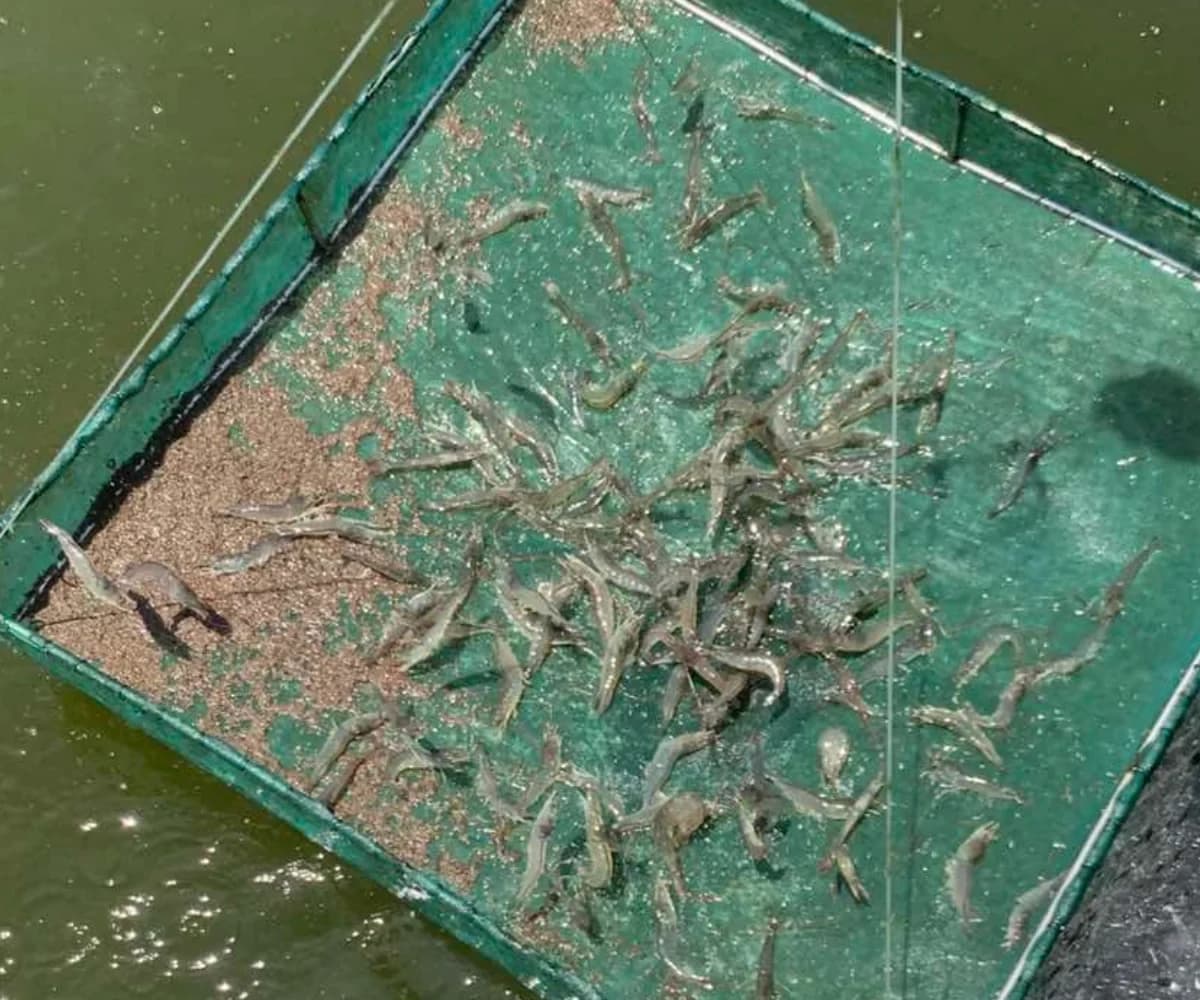
- Speed of spread and mortality: the disease breaks out suddenly and progresses rapidly. Cumulative mortality can exceed 70% within 5 days in the hatchery.
- Under experimental conditions (Hung et al., 2025), 15-day-old post-larvae (PL15) infected at high doses (105 and 106 CFU/mL) showed close to 100% mortality within 72 hours.
- Susceptibility decreases with size: larger post-larvae (PL30) were less susceptible, with low mortality (only 20% at the highest dose), and did not show the clear pathological signs seen in PL15.
- Characteristic signs:
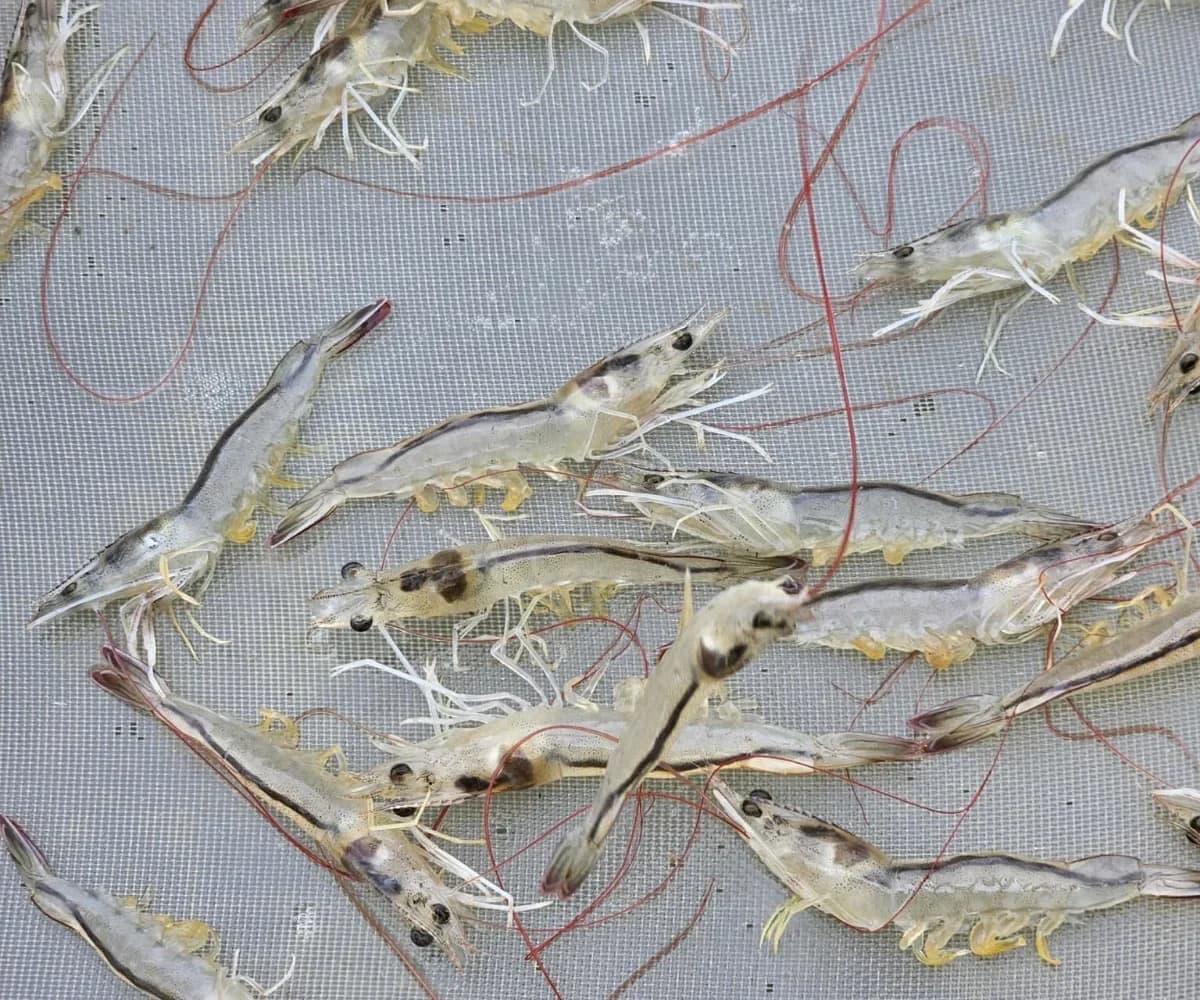
- Translucent body: the most prominent clinical sign, making the shrimp look see-through.
- Pale/colourless hepatopancreas: the hepatopancreas (digestive gland) loses its colour or is abnormally pale.
- Empty digestive tract: the gut contains no feed.
2. The real culprit: not the bacterium, but the gene
- Zou et al. (2020) fulfilled Koch's postulates, convincingly showing that the V. parahaemolyticus strain Vp-JS20200428004-2 causes TPD. The paper established that strain Vp-JS20200428004-2 does not carry the toxin genes pirA and pirB (which cause AHPND). This suggested that the virulence genes might sit on a plasmid, which matches the later finding by Liu et al. (2023) that this strain carries the disease-causing genes on a large plasmid.
Plasmids are mobile genetic elements that can be transferred between bacteria, allowing virulence traits to spread within and between populations (Dong et al., 2019; Xiao et al., 2017; Yan et al., 2024).
To pinpoint the location of these two new virulence genes, researchers carried out whole-genome sequencing (WGS) of the strain VpTPD AG1 (Hung et al., 2025):
- Number and size of chromosomes: the VpTPD AG1 genome consists of two circular chromosomes:
- Chromosome 1: 3.36 Mb
- Chromosome 2: 1.94 Mb
- Total: 5.30 Mb
- Location of the TPD virulence genes:
- Gene vhvp-1: located on Chromosome 1 of strain VpTPD AG1.
- Gene vhvp-2: located on Chromosome 2 of strain VpTPD AG1.
Figure (© Shuang Liu): (A) circular maps of the two VpTPD chromosomes (3,527,627 bp and 1,887,516 bp); (B) circular maps of the two chromosomes of a comparison V. parahaemolyticus strain (3,288,162 bp and 1,923,178 bp); (C) the three VpTPD plasmids (212,543 bp, 187,791 bp and 60,506 bp); (D) linear gene map of plasmid 2 (1 to 187,790 bp) showing genomic islands, repeats, genes and tRNA; (E) conserved domains of VHVP-1 (2,545 amino acids: VRP1 superfamily, neuraminidase, TcA_RBD, TcA_TcB_BD) and VHVP-2 (1,250 amino acids: SpvB superfamily, TcdB_toxin_midN, TcdB_toxin_midC).
How to read the figure
Figures (A), (B), (C):
- Inner circle: the original plasmid carrying vhvp-2.
- Outer rings: plasmids of different Vibrio strains, aligned by homologous regions.
- Orange/red: highly homologous gene regions (conserved regions).
- Green/purple: strain-specific or inserted regions (variable regions).
3. Explanation
Figures (b) and (c) compare plasmids across several Vibrio strains.
- The region carrying vhvp-2 lies at the centre of the plasmid's conserved region. This shows that the gene moves together with the plasmid and is very highly conserved across different strains.
In part (d), the gene blocks are aligned (synteny plot):
- Red arrows: plasmid structural genes (tra, mob, rep).
- Blue arrows: virulence genes (vhvp-2 and related ORF regions).
The match between many plasmids shows that this MGE has spread horizontally across many Vibrio species.
4. How it causes death
- VHVP-2 (Vibrio High Virulent Protein-2) is a protein toxin encoded by the plasmid.
- This protein attacks the hepatopancreas cells and intestinal epithelium of the shrimp, causing acute necrosis and making the shrimp body translucent, the typical sign of TPD.
- When the genes vhvp-1, vhvp-2 and vhvp-3 occur together, virulence rises sharply, leading to mass mortality.
- Experiments that removed vhvp-2 (gene knock-out technique) showed that the bacteria completely lost their ability to cause death, proving that it is the main virulence gene.
Figure (© Shuang Liu):
- (A) A Vibrio parahaemolyticus culture was centrifuged, resuspended, ruptured by ultrasound and filtered, then separated into protein fractions of >100 kDa, 50–100 kDa, 30–50 kDa, 10–30 kDa and <10 kDa, each tested on shrimp.
- (B) Mortality (%) from 0 to 40 hours post infection (hpi), sampled at 0, 8, 16, 24, 32 and 40 hpi, for the negative control (PBS), the positive control (live VpTPD) and each VpTPD+U fraction. The positive control and the >100 kDa fraction rose to close to 100% mortality, while the other fractions stayed near the negative control.
- Workflow: a Vp strain goes through genome analysis (virulence genes) and protein analysis (virulence proteins), combined with an epidemiological investigation of shrimp from TPD cases and healthy shrimp, to separate VpTPD strains carrying the vhvp-2 gene from non-VpTPD strains lacking it.
5. Stages of the disease
Hung et al. (2025) ran challenge experiments with V. parahaemolyticus AG1 and V. alginolyticus AY7 in whiteleg shrimp PL15. The course of the disease can be summarised as follows:
Histology figure: (C) hepatopancreas and intestine of control shrimp (PBS) compared with VpTPD-infected shrimp; (D) hepatopancreas and intestine at 16, 24, 32 and 40 hpi.
| Disease stage | Hepatopancreas (HP) | Intestine |
|---|---|---|
| Early phase | Hepatopancreas tubules shrink and show signs of mild necrosis. | The peritrophic membrane around the feed is still intact, and the epithelial cells are orderly. |
| Middle phase | Tubule epithelial cells detach and slough into the lumen (epithelial cell sloughing). Bacterial invasion sometimes occurs. | The intestine contains no feed. Epithelial cells begin to slough. |
| Late/severe phase | Extensive tubular necrosis and severe structural degradation. The round/oval shape of the tubule lumen is completely lost. Massive bacterial colonization. | Characteristic hemocytic enteritis appears, shown by loss of the mucosal epithelium, intense inflammation and a thick hemocyte layer. Bacteria invade the intestinal epithelium massively. |
6. Gene location and biological meaning: from "mobile" to "permanent", a long-term threat
- Once the bacterium has integrated the toxin gene into its chromosome, the gene can no longer be removed by losing the plasmid.
- Virulence genes being integrated into the main chromosomes (instead of sitting on mobile genetic elements such as plasmids) points to an evolutionary mechanism by which the bacteria have stabilised these virulence factors, making their ability to spread and cause disease more durable.
- These strains have already appeared outside China and spread to Vietnam, Thailand and India.
7. Solutions: from "reactive" to "proactive"
TPD prevention and control must follow a "proactive approach" (proactive and integrated):
| Solution | Description | Purpose |
|---|---|---|
| Active surveillance | Use qPCR and gene sequencing to detect vhvp-2 early. | Prevent spread within the nursery. |
| Strict biosecurity | Apply SPF protocols; process water and equipment before stocking. | Block the source of pathogens. |
| Genetic resistance | Select shrimp lines with TPD-resistant traits through breeding selection. | Reduce long-term losses. |
| Natural interventions | Use postbiotics, peptides, organic acids, essential oils and probiotics that inhibit Vibrio. | Reduce antibiotic pressure and protect the microbiome. |
For ponds located in an outbreak area:
- Stock post-larvae at PL30 or older to reduce the risk of disease.
- Strictly control pathogens coming from the hatchery, and regularly quantify Vibrio spp. on the farm.
- Use an integrated disease-prevention approach and nurse the post-larvae in isolation from the grow-out area to limit the spread of pathogens from outside. When an outbreak erupts and the shrimp turn opaque, the outbreak should be stamped out; do not try to rescue the batch.
8. Antibiotics to which TPD Vibrio is sensitive
Disease caused by TPD Vibrio progresses quickly and the chance of successful control is low, so it should be prevented from the start with biological solutions; when carrier shrimp are detected early, antibiotics are the only option for handling it.
| Antibiotic group | Antibiotic | Concentration (µg/disc) | Inhibition zone, V.P. AG1 (mm) | * | Inhibition zone, V.P. A3 (mm) | * |
|---|---|---|---|---|---|---|
| Penicillins (β-lactams) | Penicillin (PEN) | 10 units | 0 | R | 0 | R |
| Penicillins (β-lactams) | Ampicillin (AMP) | 10 | 0 | R | 0 | R |
| Penicillins (β-lactams) | Amoxicillin/Clavulanic acid (AMX) | 30 | 25 | S | 23 | S |
| Aminoglycosides | Gentamicin (GEN) | 10 | 21.5 | S | 19.5 | S |
| Aminoglycosides | Streptomycin (STR) | 10 | 22.5 | S | 19.5 | S |
| Tetracyclines | Tetracycline (TE) | 30 | 30 | S | 27 | S |
| Tetracyclines | Minocycline (MI) | 30 | 26.5 | S | 24.5 | S |
| Fluoroquinolones | Enrofloxacin (ENO) | 5 | 25.5 | S | 24 | S |
| Fluoroquinolones | Levofloxacin (LE) | 5 | 30 | S | 23.5 | S |
| Fluoroquinolones | Ciprofloxacin (CIP) | 5 | 29 | S | 26 | S |
| Sulfonamides | Sulfamethoxazole/Trimethoprim (SXT) | 25 | 31 | S | 26.5 | S |
| Amphenicols | Chloramphenicol (CHL) | 30 | 32.5 | S | 30 | S |
*R = resistant; *S = sensitive.
Source: https://doi.org/10.1371/journal.pone.0331862.t003
9. Conclusion
- TPD is a "gene disease", not a bacterial disease.
- The vhvp-2 gene is a "mobile weapon" that can turn any Vibrio into a highly virulent pathogenic strain.
- Control requires a systems approach: molecular biology + pond management + disease-resistant breeding + symbiotic microbes.
References
- Liu S, Wang W, Jia T, Xin L, Xu T, Wang C, Xie G, Luo K, Li J, Kong J, Zhang Q. 2023. Vibrio parahaemolyticus becomes lethal to post-larvae shrimp via acquiring novel virulence factors. Microbiol Spectr 11:e00492-23. https://doi.org/10.1128/spectrum.00492-23
- CP Foods & CP Florida. Highly Lethal Vibrio Disease (HLVD) – A Global Aquaculture Concern. Internal Technical Bulletin, Bangkok, Thailand. 2024.
- Dinh-Hung N, Mai HN, Matthews M, Wright H, Dhar AK. Isolation, characterization, and pathogenicity of a Vibrio parahaemolyticus strain causing translucent post-larvae disease in Penaeus vannamei outside China. PLoS One 2025;20(9):e0331862.
- Zou Y, Xie G, Jia T, et al. Determination of the Infectious Agent of Translucent Post-Larva Disease (TPD) in Penaeus vannamei. Pathogens. 2024;13(4):283. doi:10.3390/pathogens13040283.
- Xue M, Gao Q, Yan R, Liu L, Wang L, Wen B, Wen C. Comparative Genomic Analysis of Shrimp-Pathogenic Vibrio parahaemolyticus LC and Intraspecific Strains with Emphasis on Virulent Factors of Mobile Genetic Elements. Microorganisms 2023;11(11):2752. doi:10.3390/microorganisms11112752.
English text adapted from Than Vuong's original Vietnamese infographic.