At FARM 2025 in Jakarta, Genics CEO Melony Sellars called on Indonesian shrimp farmers to strengthen their biosecurity measures and testing practices. She stressed the importance of proactive prevention, accurate diagnosis and the shared responsibility of the entire supply chain in protecting the shrimp farming industry from global disease threats.
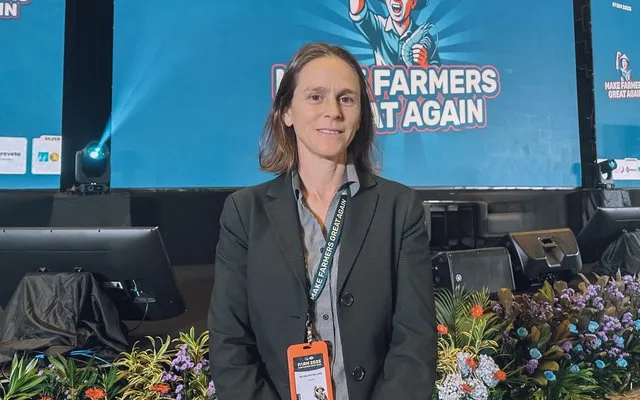
Diseases and pathogens are not limited by national borders, and lessons from Vietnam, Nigeria and Ecuador are all important warnings for Indonesia. Looking at the global picture, Melony Sellars, CEO of Genics, called on farmers at FARM 2025 in Jakarta to act locally by strengthening their biosecurity practices.
Disease is the biggest cause of losses in shrimp farming worldwide. From WSSV and EHP to AHPND, pathogens and the diseases they cause have become unwelcome but increasingly common “characters” in aquaculture. The problem is even more complex because Indonesia, like Brazil, also faces the threat of IMNV. This leaves the country especially vulnerable to 4 commercially devastating pathogens, some of which occur as multifactorial infections.
Ms Sellars explained that pathogens can spread through many different routes. There are 6 main transmission routes, particularly in Indonesia, including:
- Broodstock infected through being fed wild-caught polychaete worms
- Equipment shared between farms
- Movement of post-larvae carrying pathogens
- Pathogens persisting from the previous crop
- Intake water that has not been properly treated
- Animals (birds, crabs, insects, etc.) moving between ponds
Each route on its own may look insignificant, but added together they make up a very large risk.
A real case shows how urgent the problem is. In Vietnam, a laboratory issued negative test results for broodstock exported to Nigeria. However, the shrimp were later found to carry an infectious virus and had to be quarantined and destroyed. The cause was a false-negative PCR result in Vietnam. According to Ms Melony, this case shows that biosecurity is a shared responsibility. Farmers cannot rely only on regulations or paperwork; they need to demand high standards from their suppliers and make sure every step is verified.
Melony stressed the importance of statistically meaningful sampling. Farmers often receive pathogen-free certificates that in reality mean very little, because the number of samples is far too small compared with the total population. She compared this to testing only a few people in a crowded room for COVID-19. If the sample size is not large enough, the results can suggest that everything is safe while infection is actually present. For farmers in Indonesia, this means insisting on suppliers that carry out statistically meaningful sampling and use PCR tests that have been scientifically proven to be fit for purpose. Otherwise, false-negative results will keep appearing, putting entire crops (and the whole country) at risk.
She also urged caution when interpreting wet-mount microscopy and bacterial culture results. Farmers often believe they are detecting Vibrio or EHP, but these traditional methods are no longer reliable. Advanced technologies such as PCR give far more accurate results and can detect pathogens even in the early incubation stage. For Melony, relying on outdated methods is like trying to navigate at sea with an old chart that no longer shows the currents and reefs.
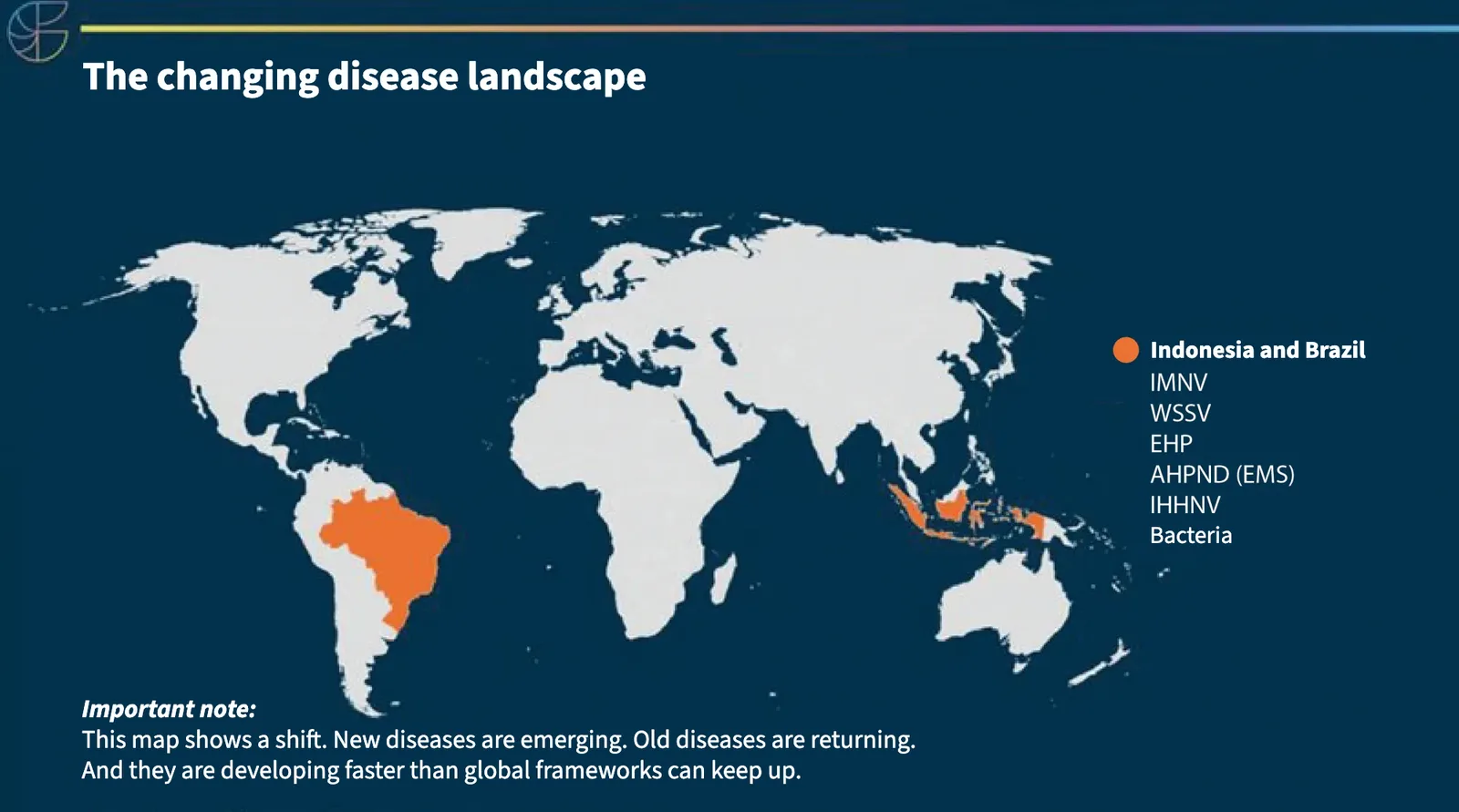
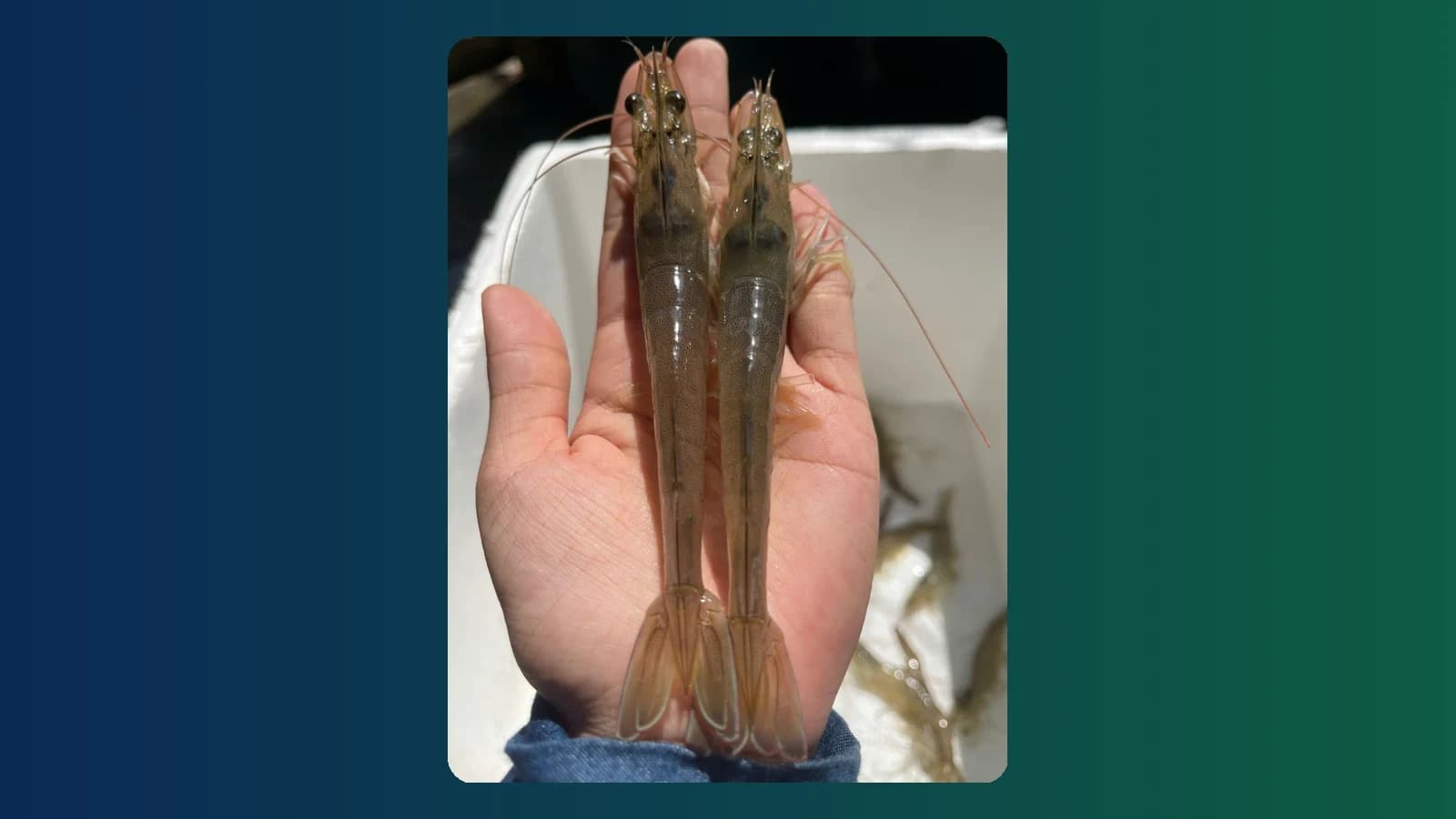
Figure 1. Indonesia, like Brazil, faces the threat of IMNV. Photo: Melony Sellars
Smarter practices
Prevention is better than cure, and biosecurity is the first line of defence. At farm level, this means controlling who and what comes in and out, disinfecting equipment, making sure water is properly treated and carefully preparing pond liners between crops, Ms Melony said. Farmers should test pond sediment and harvested shrimp to identify pathogens before stocking, and adjust pond preparation accordingly. In many cases, simple measures such as proper liming or repairing pond liners can save money and avoid major losses.
She spoke about the role of water management, stressing that chlorine, UV and ozone disinfection systems only work if they are operated correctly. Farmers often install these systems but do not maintain them or measure how well they perform. An uncalibrated UV lamp, or chlorine stored in the sun, gives nothing more than a false sense of security. She encouraged farmers to test their systems before and after water treatment, using sensitive, accurate (fit-for-purpose) PCR methods, to confirm that pathogens have really been removed.
Another major issue is the use of wild-caught polychaete worms to feed broodstock. Even when the shrimp are certified pathogen-free, feeding them infected polychaetes recreates exactly the risks farmers are trying to avoid. Ms Melony urged farmers to demand broodstock raised on pathogen-free feed, describing this practice as one of the biggest biosecurity breaches in the industry.
Looking beyond the farm, she spoke about the importance of national and global cooperation. Disease knows no borders, and Indonesia is part of a global shrimp production network. That is why transparency, data sharing and continuous education are so important. She praised Indonesia's supply of clean SPF broodstock and SPF post-larvae from specialised local producers in Bali, but also warned that this system needs to be protected.
Melony highlighted new approaches, such as nursery systems that give shrimp a head start before they are moved into grow-out ponds. She also talked about microbiome analysis, a modern tool that helps farmers understand the bacterial communities in their ponds and confirm whether their probiotics and water treatment systems are really working. These innovations, she said, can help farmers move from reactive to proactive management, lowering risk and improving profitability.
It is important to remember that biosecurity is not a one-off checklist but a process of continuous improvement. Every shrimp farmer, hatchery, supplier and regulator has a role to play. When a shipment is rejected or a disease spreads, the damage spreads across the whole industry. But when biosecurity is strengthened, the benefits are shared too, from healthier shrimp to stronger market confidence.
Source: hatcheryfm.com
THAN VUONG – SHARING OPTIMAL SOLUTIONS
Than Vuong stands alongside farmers with science, transparency and sustainable value.
Translated by: Than Vuong Marketing Department