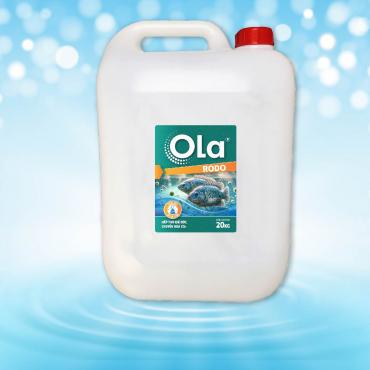
Application of OLA - RODO in H2S Treatment
- Rhodobacter spp and Rhodococcus spp, two types of photosynthetic bacteria proven to be valuable for improving pond water quality and detoxifying H2S gas.
- OLA - RODO - autotrophic microorganisms that convert CO2 into O2 without the need for algal photosynthesis, a crucial characteristic for increasing oxygen in the water and reducing the photosynthetic impact of algae.
- Has the ability to rapidly proliferate in the pond environment, which is an advantage for their water treatment capability.
- Limits oxygen imbalance in cases of high organic matter, algal collapse, etc.
- The product contains specific Rhodo microbial strains for improving water quality and detoxifying H2S. The difference with OLA - RODO is that its carrier is a nutrient system that always ensures the "Live to treat" activity.
- Absorbs toxic H2S gas and limits anaerobic zones in the pond.
- Partially meets the oxygen demand in the pond due to its ability to convert CO2 in water without the need for algal conversion.
Directions for Use:
- During farming cycle: 1 – 2 kg/1,000 – 2,000 m3 of pond water. Apply periodically to help stabilize pond water and increase beneficial microbial density. Most effective when broadcasted between 9 – 10 AM.
- For fish ponds with difficult water exchange, high organic sludge at the bottom, and abundant algae: 3 kg/1,000 m3 of water, helps neutralize toxic gases, improve pond water, and control bacteria and algae in the pond. Broadcast continuously for 2 – 3 days.
- For ponds recently desilted, with foul or fishy smelling water: 2 - 3 kg/1,000 m3 of water, helps decompose organic matter and stabilize pond water parameters. Broadcast after water exchange.
Note:
- Dosage may vary depending on actual pond conditions such as fish density, water quality, and weather.
- Gently shake the product evenly before use.
- Conduct regular water quality checks to adjust dosage and maintain balance in the pond.
- If there are signs of H2S or an antibacterial foul odor, dosage or frequency of use may be increased.
- Use the product continuously throughout the farming cycle to achieve optimal effectiveness.
- Combine with other management measures such as feed control and stocking density to optimize farming production.
- Close the bottle/container lid tightly immediately after use if the product is not fully used.