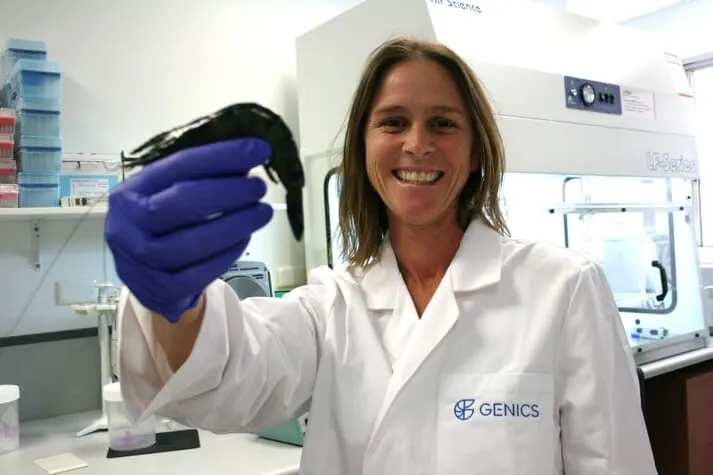
 Melony Sellars founded Genics in 2018. Sellars has researched and identified solutions for the global shrimp industry for 20 years
Pathogen and Disease Monitoring in Shrimp Farming
Sellars noted that the shrimp industry began to develop before many disease detection strategies were implemented. Shrimp farmers quickly learned that there is a long list of pathogens in the farming environment at any given time – and increased stocking densities will increase the types and numbers of pathogens present in their ponds. Disease outbreaks remain one of the biggest challenges in the global shrimp farming industry – degrading product quality and reducing farmer profits.
However, researchers have made many breakthroughs in disease detection and monitoring since the industry's inception. Sellars stated: “We have gained a significant understanding of the causative agents of various clinical signs – or the disease signs we see in shrimp. Veterinarians have also learned more about the epidemiology of different shrimp pathogens. Information on how these viruses, bacteria, and fungi operate in aquaculture environments and how they proliferate has been established. This makes it easier to develop detection and treatment protocols."
Beyond these ecological parameters, scientists have learned more about gene sequencing and the ability to detect unique DNA signatures of pathogens. Researchers can now use assays – or laboratory procedures that can detect and measure the presence, quantity, or activity of a target object – to determine the DNA profile of individual pathogens. When these assays are based on polymerase chain reaction (PCR), a chemical reaction that rapidly amplifies DNA strands from a tissue sample, researchers can build powerful tools that can measure the presence and prevalence of disease-causing pathogens in aquaculture environments.
Despite this progress, researchers still face many challenges in pathogen monitoring and when establishing systems to test for new pathogens in shrimp. One is the presence of PCR inhibitors like chitin – the main component of the shrimp exoskeleton – in clinical samples. Chitin can prevent the reaction from occurring and lead to false negatives in PCR data. To overcome this, researchers need to use additional control PCR assays to ensure that the amount of chitin or other inhibitory material in the sample does not impede the PCR reaction.
Accounting for these assay requirements can be costly, so researchers are finding ways to keep pathogen detection financially viable for shrimp farmers. Sellars said that the research team at Genics has successfully paired pathogen detection and control assays together in a single test. This “multiplex” approach – where single assays can detect multiple target pathogens in one reaction – can turn what would be two or more reactions into fewer or one reaction.
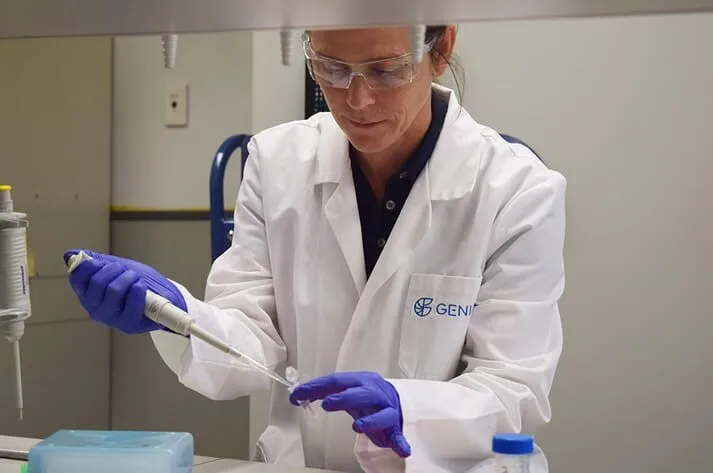 Dr. Sellars' laboratory at Genics in Australia
The fact that many pathogens are present in aquaculture environments is another obstacle. Shrimp can be infected with up to four different pathogens simultaneously – and because there is a long list of endemic pathogens in shrimp farming regions, farmers can never be sure which pathogens are in their ponds. This means that very few farmers fully test for all potential pathogens in their shrimp – primarily due to cost constraints.
Sellars stated that the shrimp industry needs access to practical tools that can accurately and reliably detect the presence of multiple pathogens in a tissue sample. The creation and commercialization of these tools will ensure that the shrimp industry stays ahead of diseases and can monitor the low-level presence and prevalence of pathogens in farming systems, predicting and mitigating disease risks.
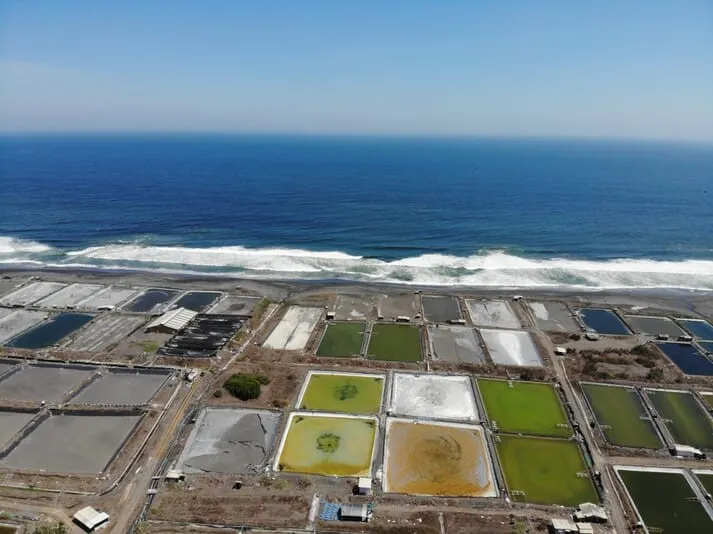 Shrimp ponds in Indonesia. Since shrimp ponds can contain multiple pathogens at any given time, maintaining biosecurity protocols is essential.
What is the future of shrimp disease testing?
According to Sellars, the shrimp industry is likely to shift from on-farm testing to laboratory-based disease control. Instead, the industry will likely adopt technologies that can detect the presence of pathogens weeks before farmers notice clinical signs of disease in their shrimp. Shifting objectives from identifying pathogens during an outbreak to early detection of their presence, combined with appropriate management decisions, will prevent shrimp mortality and make farms more profitable.
Concerns about Stocking Density
While early pathogen detection will be a game-changer for farming cycles, Sellars sees a prominent challenge ahead: stocking density. Shrimp farmers have many economic and environmental incentives to increase farm output and production density, but producing more shrimp in a smaller land area will increase the incidence of pathogens in the farm environment.
Sellars concluded: “The shrimp industry needs to find better ways to manage disease risks and improve their methods for early identification and understanding of those risks during production – before shrimp exhibit clinical signs of disease or mortality.”
Megan Howell, thefishsite