Working hours: Mon - Fri | 08:00 - 17:00HOTLINE: 0867 95 7568
Technical Article

Another potential shrimp species for aquaculture

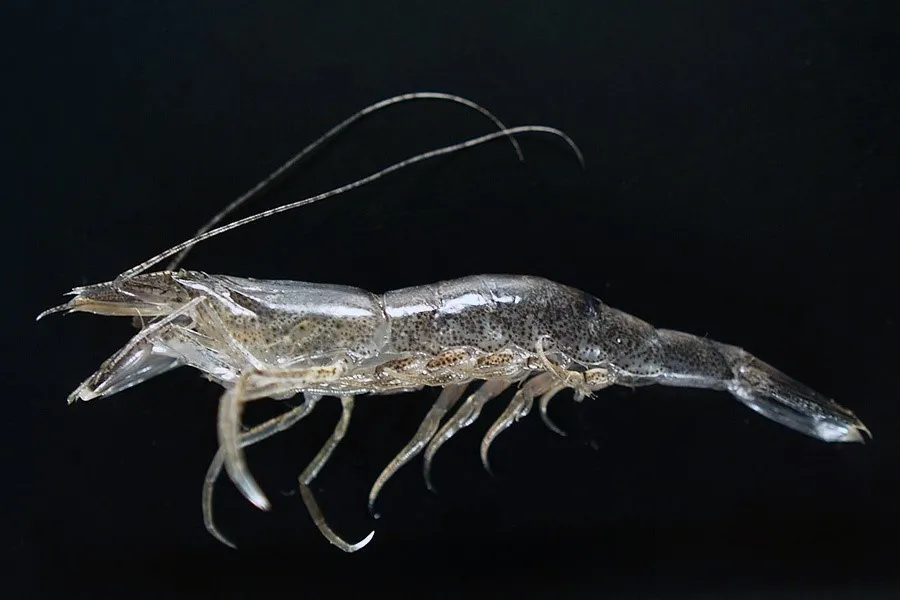
European brown shrimp (Crangon crangon) is a high-value commercial species in Europe - with 26,000 tons of shrimp, valued at approximately 100 million euros, harvested in the Netherlands, Germany, Belgium, France, Denmark, and the United Kingdom in 2016.

ProtocolShrimpApril 26, 2019👁 227 views
Click to listen to an AI-narrated summary
Full Article
Another potential shrimp species for aquaculture

brown_shrimp

European brown shrimp (Crangon Crangon)

The successful establishment of a European brown shrimp larval rearing system can be used to develop large-scale rearing systems for C. crangon larvae in both flow-through and recirculating systems.

The European brown shrimp (Crangon crangon) is a highly valuable commercial species in Europe – with 26,000 tons of shrimp, worth approximately 100 million euros, harvested in the Netherlands, Germany, Belgium, France, Denmark, and the United Kingdom in 2016.

However, a shift in the market presents a new opportunity for the aquaculture of this species, once certain challenges are overcome.

In recent years, the demand for large live shrimp (>70 mm) has increased, with selling prices 20-30% higher than for cooked brown shrimp. This increased demand and high commercial value could make this species an attractive candidate for aquaculture.

Researchers suggest that the failure of previous research projects on rearing European brown shrimp (Crangon Crangon), dating back to the mid-1960s, was due to several factors (feed, density, pond) that still needed optimization before this species could be effectively cultured. Therefore, to help overcome these challenges, they investigated a method for rearing brown shrimp larvae, and in the process, optimized the design and operational procedures of a small-scale static larval rearing system. The project focused on optimizing larval survival rates through water temperature, feed selection, feeding regimes, and density.

The researchers achieved several breakthroughs, concluding that: Experiments showed larvae could be reared at a high density of 300 individuals/L with a high survival rate of 73.5 (± 5.4)% under laboratory conditions.

In these systems, larvae could be fed solely Artemia nauplii following a feeding regime adjusted based on molting. Supplementing with microalgae could further increase survival by 10%. The information gathered during this research can be applied to further optimize the development of brown shrimp larvae in flow-through or recirculating systems.

This work presents a complete larval culture system from hatching to post-larval rearing and represents a new step forward for the commercial aquaculture of this species.

Source: Tép Bạc
Quick Q&A

Frequently asked questions on this topic

What does "Another potential shrimp species for aquaculture" cover?

European brown shrimp (Crangon crangon) is a high-value commercial species in Europe - with 26,000 tons of shrimp, valued at approximately 100 million euros, harvested in the Netherlands, Germany, Belgium, France, Denmark, and the United Kingdom in 2016.

Which species does this article apply to?

Shrimp — Water & environment

Related Products

Products linked to this topic

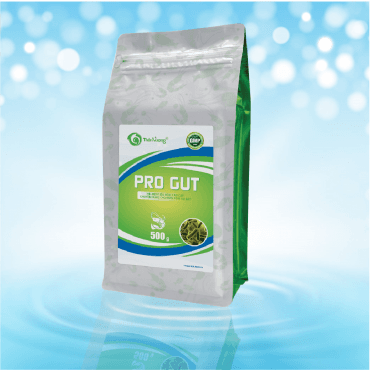
PRO GUT
ShrimpThan Vuong Blue

PRO GUT

Premium digestive probiotics specifically for shrimp farming in lined ponds

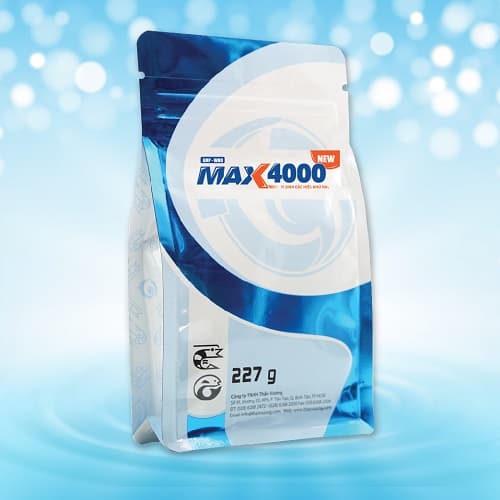
MAX 4000
tom / ca / ocThan Vuong Blue

MAX 4000

Probiotic that helps reduce the toxic gases NH3, H2S and NO2

HERB GUARD
ShrimpThan Vuong Blue

HERB GUARD

Enhance liver function, improve color of hepatopancreas

More Reading

Related technical articles

CHANGES IN GUT MICROBIOTA DUE TO GLOBAL WARMING. REGULATING HOST HEALTH AND DISEASE STATUS IN POIKILOTHERMIC ANIMALS
Research Insight•Shrimp•February 28, 2026

CHANGES IN GUT MICROBIOTA DUE TO GLOBAL WARMING. REGULATING HOST HEALTH AND DISEASE STATUS IN POIKILOTHERMIC ANIMALS

Global warming alters the gut microbiota of Pacific whiteleg shrimp by restructuring enterotypes, increasing the risk of diseases su[...]

Minimizing Risks Lies in a Systems Management Approach
Protocol•Shrimp•February 23, 2026

Minimizing Risks Lies in a Systems Management Approach

In modern shrimp farming, there's a rather "painful" reality that many farmers still haven't accepted: Risk mitigation doesn't lie i[...]

TREATMENT PROTOCOL FOR YELLOW MOUTH DISEASE IN WHITELEG SHRIMP
Protocol•Shrimp•January 29, 2026

TREATMENT PROTOCOL FOR YELLOW MOUTH DISEASE IN WHITELEG SHRIMP

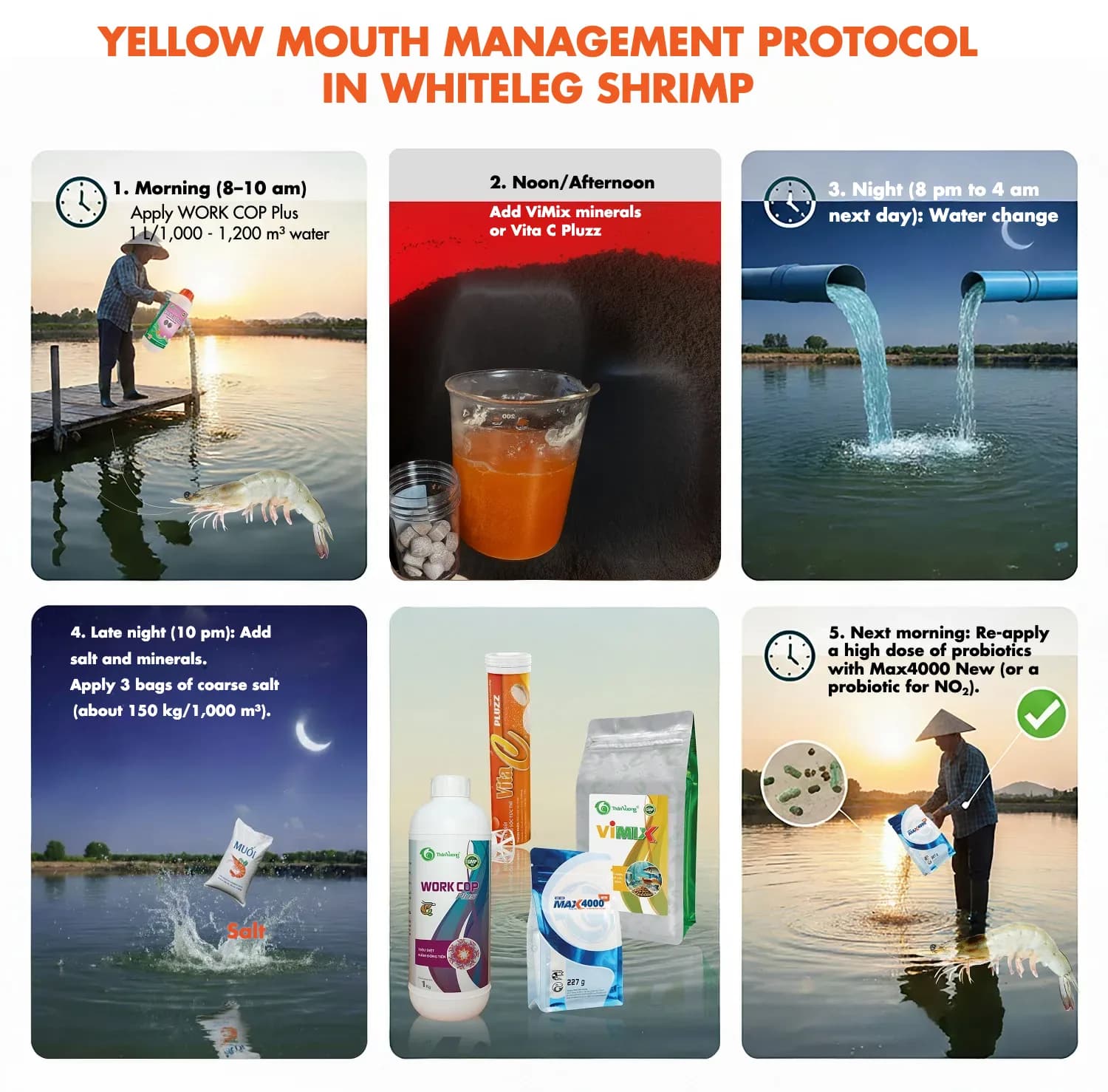
Yellow mouth disease (often accompanied by yellow gills) is an indication that the pond environment is at low salinity (5ppt) or exp[...]

Ask Than Vuong

Aquaculture technical assistant

Hello there 👋

Describe your pond issue or pick a question below.