Working hours: Mon - Fri | 08:00 - 17:00HOTLINE: 0867 95 7568
Technical Article

THE IMPORTANCE OF WATER ENVIRONMENT STABILITY

Water quality is one of the decisive factors for the success of a farming season, especially now that whiteleg shrimp are farmed using high-density super-intensive models, making the risks of disease, controlling water quality, and increasing the carrying capacity of the pond environment more challenging.

ProtocolShrimpJuly 5, 2024👁 239 views
Click to listen to an AI-narrated summary
Full Article
THE IMPORTANCE OF WATER ENVIRONMENT STABILITY

Water quality in super-intensive farming

The quality of the water environment is one of the decisive factors for the success of a crop. This is especially true now that whiteleg shrimp are farmed in high-density, super-intensive systems, where managing disease risk, controlling water quality and increasing the carrying capacity of the pond environment have all become more difficult.

The early stage: stable water and beneficial algae

Across all development stages, and in the shrimp's early stage in particular, when the water environment is kept stable at suitable levels, the beneficial algae in the pond are not only a natural food source for the shrimp during the nursery-pen stage. They also act as a shield that limits direct sunlight reaching the pond bottom, holding back the growth of bottom algae and thermal stratification in the pond. When shrimp are free from stress, their resistance and immune system work well, forming a solid defensive barrier against pathogens such as viruses and bacteria.

Two possible approaches

This can be done in 2 ways:

  1. Split and transfer the shrimp continuously after each 20–30-day culture period, to reduce costs and reduce the pathogen load.
  2. If we do not have many ponds, the water supply is limited, and to reduce stress on the shrimp: siphon thoroughly after every feeding and use SOILMAX to improve water quality and the pond bottom.

Focus by stage

  • Nursery-pen stage: maintain a high level of specific bacteria to reduce the impact of TPD.
  • After day 25: maintain water quality and reduce the formation of NH3 and NO2, thereby INCREASING THE CARRYING CAPACITY OF THE POND WATER during the large-shrimp stage.

SOILMAX for a stable water environment

SOILMAX combines beneficial microbial strains, Bacillus spp. and Pediococcus acidilactici, which adapt well to pond conditions and help make the water environment stable.

  • Helps control toxic algae, stabilise pH and maintain a tea-coloured water throughout the crop.
  • Helps break down organic debris and leftover feed and clean the pond bottom.
  • Helps control toxic gases and overcome scattered shrimp deaths on the pond bottom.
  • Helps increase the beneficial microbial population in the pond and reduce pressure from pathogenic Vibrio.

English text adapted from Than Vuong's original Vietnamese infographic.
Quick Q&A

Frequently asked questions on this topic

What does "THE IMPORTANCE OF WATER ENVIRONMENT STABILITY" cover?

Water quality is one of the decisive factors for the success of a farming season, especially now that whiteleg shrimp are farmed using high-density super-intensive models, making the risks of disease, controlling water quality, and increasing the carrying capacity of the pond environment more challenging.

Which species does this article apply to?

Shrimp — Water & environment

Related Products

Products linked to this topic

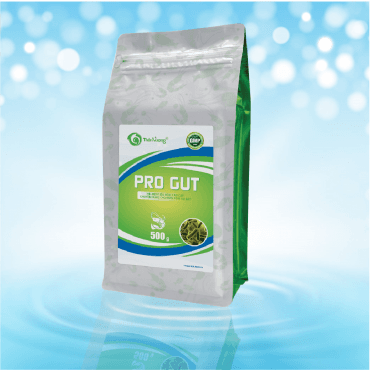
PRO GUT
ShrimpThan Vuong Blue

PRO GUT

Premium digestive probiotics specifically for shrimp farming in lined ponds

MAX 4000
tom / ca / ocThan Vuong Blue

MAX 4000

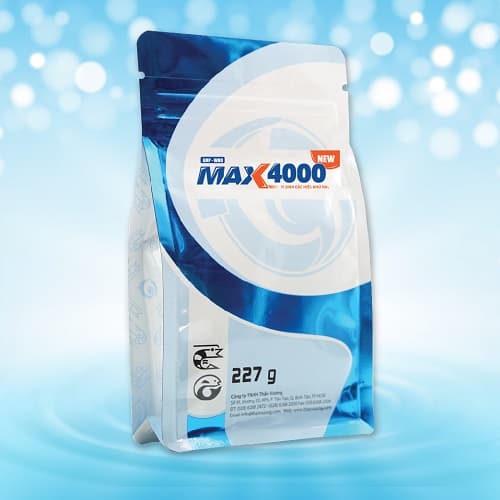
Probiotic that helps reduce the toxic gases NH3, H2S and NO2

HERB GUARD
ShrimpThan Vuong Blue

HERB GUARD

Enhance liver function, improve color of hepatopancreas

More Reading

Related technical articles

CHANGES IN GUT MICROBIOTA DUE TO GLOBAL WARMING. REGULATING HOST HEALTH AND DISEASE STATUS IN POIKILOTHERMIC ANIMALS
Research Insight•Shrimp•February 28, 2026

CHANGES IN GUT MICROBIOTA DUE TO GLOBAL WARMING. REGULATING HOST HEALTH AND DISEASE STATUS IN POIKILOTHERMIC ANIMALS

Global warming alters the gut microbiota of Pacific whiteleg shrimp by restructuring enterotypes, increasing the risk of diseases su[...]

Minimizing Risks Lies in a Systems Management Approach
Protocol•Shrimp•February 23, 2026

Minimizing Risks Lies in a Systems Management Approach

In modern shrimp farming, there's a rather "painful" reality that many farmers still haven't accepted: Risk mitigation doesn't lie i[...]

TREATMENT PROTOCOL FOR YELLOW MOUTH DISEASE IN WHITELEG SHRIMP
Protocol•Shrimp•January 29, 2026

TREATMENT PROTOCOL FOR YELLOW MOUTH DISEASE IN WHITELEG SHRIMP

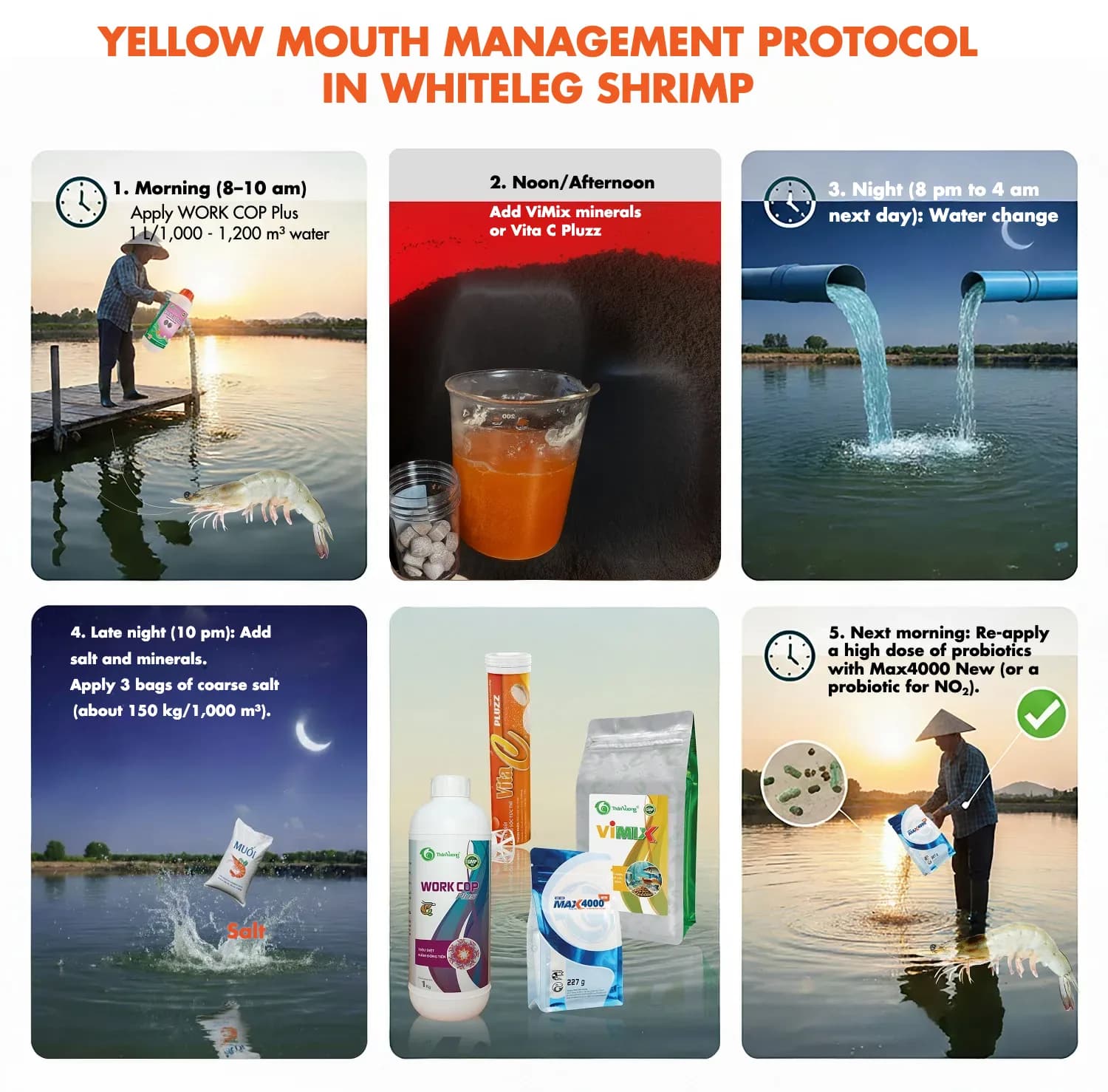
Yellow mouth disease (often accompanied by yellow gills) is an indication that the pond environment is at low salinity (5ppt) or exp[...]

Ask Than Vuong

Aquaculture technical assistant

Hello there 👋

Describe your pond issue or pick a question below.