Comparing resource utilization in shrimp farming - Part 1: Land
Shrimp farming productivity can be significantly increased without needing to expand the production land area for shrimp farms.
ProtocolShrimpJune 9, 2022👁 214 views
Click to listen to an AI-narrated summary
Full Article
In these first three parts, Professor Boyd discusses land use in shrimp farming in five major farmed shrimp exporting countries - Ecuador, India, Indonesia, Thailand, and Vietnam - and suggests that shrimp productivity can be greatly increased without expanding land area for shrimp farms. Photo by Darryl Jory.
Land use is one of the most important issues in natural resource conservation. There is a two-way concern between conserving natural habitats and having enough arable land to meet current and future food production needs.
The amount of food produced globally has more than tripled since 1950, but the world population has also tripled. Per capita food availability today is actually slightly higher than in the 1950s. However, agricultural land use is only about 10% greater than in 1950. About 38% of the world's land area is used for food production; therefore, if agriculture does not become more intensive, there will not be enough land to supply food for humans and their livestock.
Land Use in Shrimp Farming
The data presented here on land use in shrimp farming were collected from surveys of Pacific white shrimp (Litopenaeus vannamei) farms in five major farmed shrimp exporting countries. The number of farms included: 101 farms in Ecuador; 89 in India; 1,341 in Indonesia; 34 in Thailand; and 30 in Vietnam.
Shrimp farming requires land to construct and operate farms. The land required for farms is typically 1.2 to 2.2 times the water surface area of the production ponds. In the survey, the average land-to-water ratio (LWR) ranged from 1.22 in Ecuador to 2.04 in Thailand (Table 1). The average LWR for the five leading shrimp exporting countries was 1.67.
Area (ha/farm)
Country
LWR
Ponds
Reservoirs
Canals
Settling areas
Dikes and other structures
Ecuador
1.24
141
8.76
9.03
11.29
5.6
India
1.33
5.15
0.34
0.2
---
1.15
Indonesia
1.77
2.79
1.08
1.32
0.1
0.65
Thailand
2.04
6.84
3.6
Quick Q&A
Frequently asked questions on this topic
What does "Comparing resource utilization in shrimp farming - Part 1: Land" cover?
Shrimp farming productivity can be significantly increased without needing to expand the production land area for shrimp farms.
Which species does this article apply to?
Shrimp — Water & environment
Related Products
Products linked to this topic
ShrimpThan Vuong Blue
PRO GUT
Premium digestive probiotics specifically for shrimp farming in lined ponds
tom / ca / ocThan Vuong Blue
MAX 4000
Probiotic that helps reduce the toxic gases NH3, H2S and NO2
ShrimpThan Vuong Blue
HERB GUARD
Enhance liver function, improve color of hepatopancreas
More Reading
Related technical articles
Research Insight•Shrimp•February 28, 2026
CHANGES IN GUT MICROBIOTA DUE TO GLOBAL WARMING. REGULATING HOST HEALTH AND DISEASE STATUS IN POIKILOTHERMIC ANIMALS
Global warming alters the gut microbiota of Pacific whiteleg shrimp by restructuring enterotypes, increasing the risk of diseases su[...]
Protocol•Shrimp•February 23, 2026
Minimizing Risks Lies in a Systems Management Approach
In modern shrimp farming, there's a rather "painful" reality that many farmers still haven't accepted: Risk mitigation doesn't lie i[...]
Protocol•Shrimp•January 29, 2026
TREATMENT PROTOCOL FOR YELLOW MOUTH DISEASE IN WHITELEG SHRIMP
Yellow mouth disease (often accompanied by yellow gills) is an indication that the pond environment is at low salinity (5ppt) or exp[...]
Ask Than Vuong
Aquaculture technical assistant
Hello there 👋
Describe your pond issue or pick a question below.

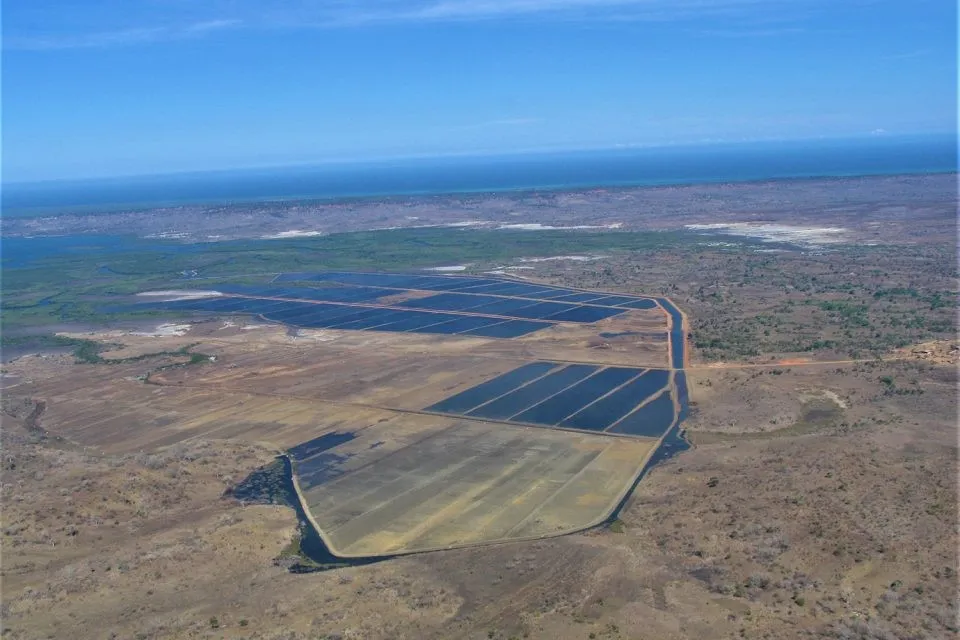 In these first three parts, Professor Boyd discusses land use in shrimp farming in five major farmed shrimp exporting countries - Ecuador, India, Indonesia, Thailand, and Vietnam - and suggests that shrimp productivity can be greatly increased without expanding land area for shrimp farms. Photo by Darryl Jory.