Assessment reveals factors reducing productivity, proposes management improvements
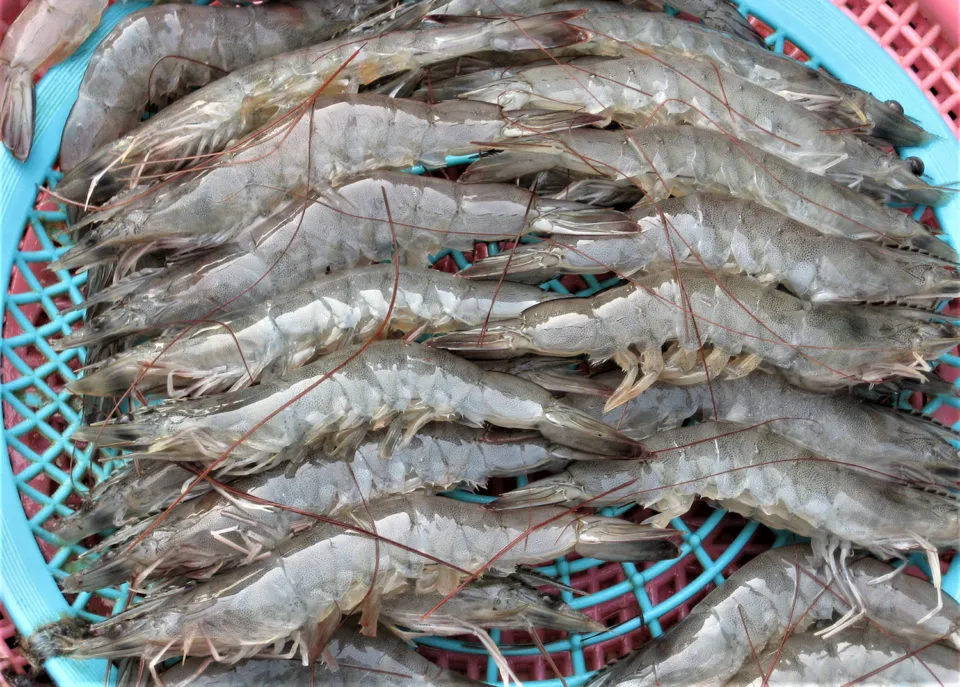
Closed shrimp farming systems have been developed in recent years to mitigate some environmental issues and disease risks in shrimp. Super-intensive farming systems that minimize water exchange are evolving and promise new aquaculture technologies that can conserve land and water resources and reduce environmental impact. Some recent studies have evaluated optimal conditions for shrimp biomass. However, few studies have examined the balance between the costs and benefits of closed farming in commercial production. Ways to optimize profits and address issues arising when these systems are implemented have not yet been deeply researched.
Numerical model-based simulations can provide insights into how to achieve better management strategies. Bioeconomic models are one suitable approach for studying the complex interactions between various factors affecting aquaculture production. In this regard, several recent studies have used bioeconomic approaches that are very useful in improving shrimp farming strategies in intensive and semi-intensive systems.
Study Setup
We used a facility with an Indoor Shrimp Production System (ISPS) located in Myoko City, Niigata Prefecture (Japan), as the study site. Farming data for 8 batches of Pacific white shrimp Litopenaeus vannamei were provided by the aquaculture system operator (IMT Engineering Inc.). The ISPS is a super-intensive closed farming system that recirculates culture water, with virtually no water inflow or outflow between the inside and outside. Environmental factors can be easily maintained, as controlling this system is easier than conventional aquaculture systems.
Furthermore, shrimp prices were determined by cross-trading and did not fluctuate with market supply and demand, and shrimp were typically sold out in every culture cycle. We believe that this system involves few risk factors regarding both farming conditions and the market, making it suitable for analyzing production factors and economic benefits.
To establish a model aimed at optimizing the production plan at the study site, we performed path analysis using a structural equation model (SEM). This process involved screening key factors determining shrimp production dynamics at the chosen study site by comprehensively analyzing the relationships between daily changes in environmental factors, farming conditions, growth rate, and mortality rate. We focused on the grow-out phase (after the nursery phase), because shrimp biomass primarily increases during this period, and thus, this is the most critical part of the process to target for overall production efficiency improvement. Subsequently, we established density-dependent models.
Models were developed to estimate profitability; harvesting is also a means to control density fluctuations in the culture environment by reducing future dead biomass through decomposition. Accordingly, the harvesting model includes removal as a measure to mitigate mortality risk and improve overall productivity, leading to economic returns. Economic productivity can be calculated directly using the harvesting model, independent of shrimp market influences, as prices are fixed by cross-trading. Profit per crop and annual profit can be calculated based on the balance between output and total production costs.
Results and Discussion
In this study, we aimed to develop an optimal aquaculture strategy using bioeconomic models. Closed shrimp farming systems have been developed in recent years to minimize some environmental problems and disease risks in shrimp. Super-intensive farming systems that minimize water exchange are developing and promise new aquaculture technologies that can conserve land and water resources and reduce environmental impact. Shrimp — Water & Environment A recent report published in the journal Aquaculture International has provided further insight into the role of electrolyte supplem[...] Full-year 2025 global shrimp trade summary: Ecuador leads exports at 1.39M MT (+15%), EU imports surge 21%, US tariff shifts reshape[...] Global warming alters the gut microbiota of Pacific whiteleg shrimp by restructuring enterotypes, increasing the risk of diseases su[...]Frequently asked questions on this topic
What does "ECONOMIC ANALYSIS OF SUPER-INTENSIVE CLOSED-SYSTEM SHRIMP FARMING MODELS IN JAPAN" cover?
Which species does this article apply to?
Products linked to this topic
Related technical articles

THE ROLE OF ELECTROLYTE SUPPLEMENTATION FOR SHRIMP

Global Shrimp Market 2025 Overview — Shrimp Insights Bulletin February 2026

CHANGES IN GUT MICROBIOTA DUE TO GLOBAL WARMING. REGULATING HOST HEALTH AND DISEASE STATUS IN POIKILOTHERMIC ANIMALS