Working hours: Mon - Fri | 08:00 - 17:00HOTLINE: 0867 95 7568
Technical Article

Controlling Oyster Spat in Shrimp Ponds

Oyster spat comes in with the source water when it is not prepared thoroughly: chlorine and potassium permanganate doses are too low, water is prepared in a rush before filling the pond, and hard water lets the spat settle and grow after stocking.

ProtocolShrimpJune 15, 2024👁 228 views
Click to listen to an AI-narrated summary
Full Article
Controlling Oyster Spat in Shrimp Ponds

Controlling oyster spat in shrimp ponds

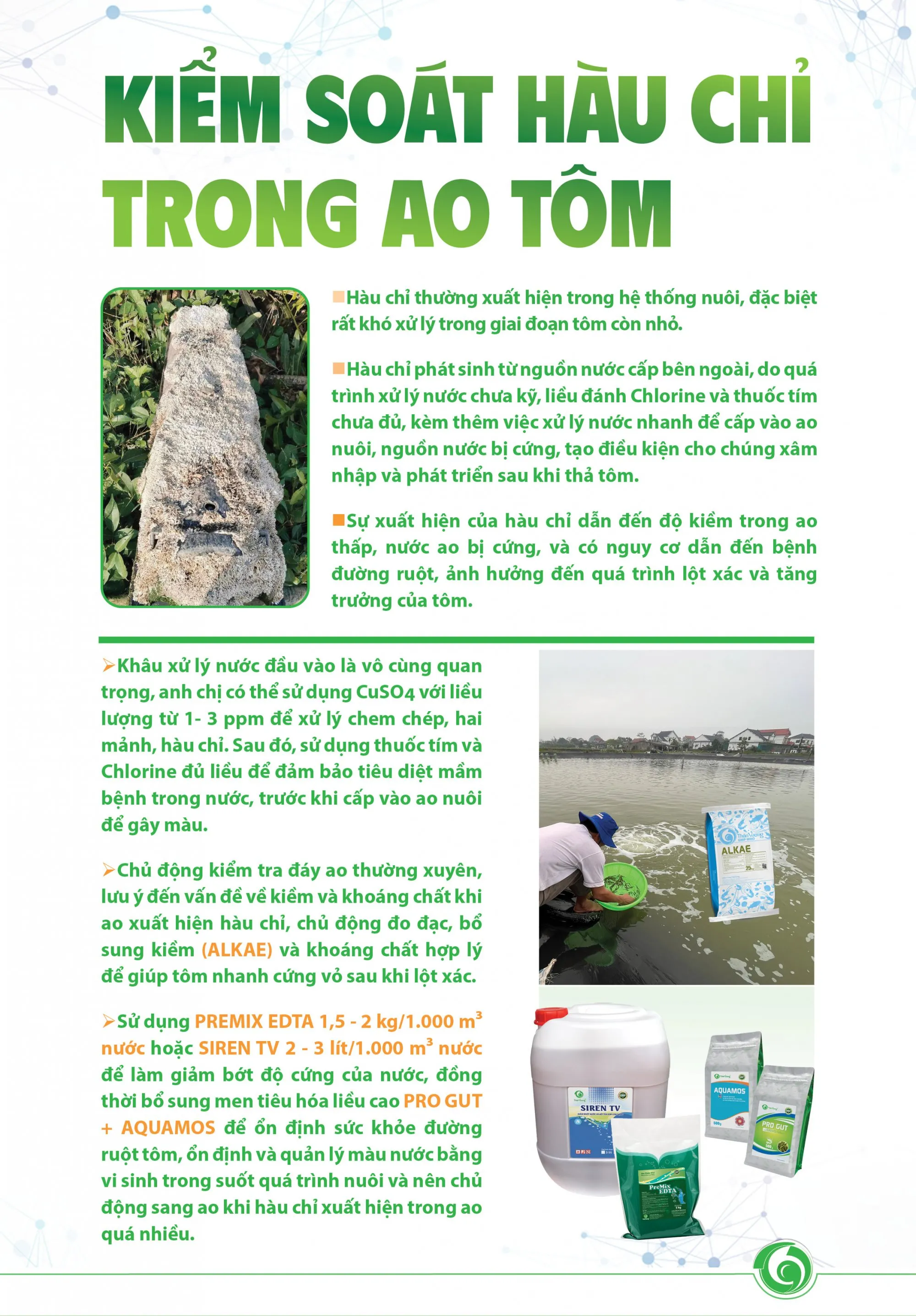
  • Oyster spat often appear in culture systems and are especially difficult to deal with while the shrimp are still small.
  • Oyster spat come from the external supply water. The causes are water preparation that is not thorough enough, chlorine and potassium permanganate doses that are too low, rushing the water preparation in order to fill the pond, and hard source water. These conditions let the spat get in and develop after the shrimp are stocked.
  • When oyster spat appear, pond alkalinity drops and the pond water becomes hard. This brings a risk of intestinal disease and affects moulting and shrimp growth.

What to do

  • Preparing the inlet water properly is extremely important. You can use CuSO4 at 1–3 ppm to deal with mussels, bivalves and oyster spat. Then use potassium permanganate and chlorine at the full dose to disinfect the water thoroughly before supplying it to the pond for building up the water colour.
  • Check the pond bottom regularly. When oyster spat appear, pay attention to alkalinity and minerals: measure them and supplement alkalinity (ALKAE) and minerals appropriately to help shrimp harden their shells quickly after moulting.
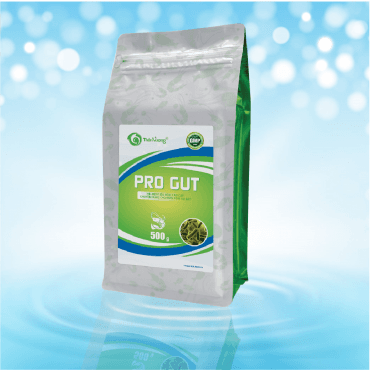
  • Reduce water hardness with PREMIX EDTA at 1.5–2 kg/1,000 m³ of water or SIREN TV at 2–3 litres/1,000 m³ of water. At the same time, supplement high-dose digestive probiotics PRO GUT + AQUAMOS to keep the shrimp gut healthy and stable.
  • Stabilise and manage the water colour with beneficial microbes throughout the culture period, and be ready to transfer the shrimp to another pond when too many oyster spat appear.

English text adapted from Than Vuong's original Vietnamese infographic.
Quick Q&A

Frequently asked questions on this topic

What does "Controlling Oyster Spat in Shrimp Ponds" cover?

Oyster spat comes in with the source water when it is not prepared thoroughly: chlorine and potassium permanganate doses are too low, water is prepared in a rush before filling the pond, and hard water lets the spat settle and grow after stocking.

Which species does this article apply to?

Shrimp — Water & environment

Related Products

Products linked to this topic

PRO GUT
ShrimpThan Vuong Blue

PRO GUT

Premium digestive probiotics specifically for shrimp farming in lined ponds

MAX 4000
tom / ca / ocThan Vuong Blue

MAX 4000

Probiotic that helps reduce the toxic gases NH3, H2S and NO2

HERB GUARD
ShrimpThan Vuong Blue

HERB GUARD

Enhance liver function, improve color of hepatopancreas

More Reading

Related technical articles

CHANGES IN GUT MICROBIOTA DUE TO GLOBAL WARMING. REGULATING HOST HEALTH AND DISEASE STATUS IN POIKILOTHERMIC ANIMALS
Research Insight•Shrimp•February 28, 2026

CHANGES IN GUT MICROBIOTA DUE TO GLOBAL WARMING. REGULATING HOST HEALTH AND DISEASE STATUS IN POIKILOTHERMIC ANIMALS

Global warming alters the gut microbiota of Pacific whiteleg shrimp by restructuring enterotypes, increasing the risk of diseases su[...]

Minimizing Risks Lies in a Systems Management Approach
Protocol•Shrimp•February 23, 2026

Minimizing Risks Lies in a Systems Management Approach

In modern shrimp farming, there's a rather "painful" reality that many farmers still haven't accepted: Risk mitigation doesn't lie i[...]

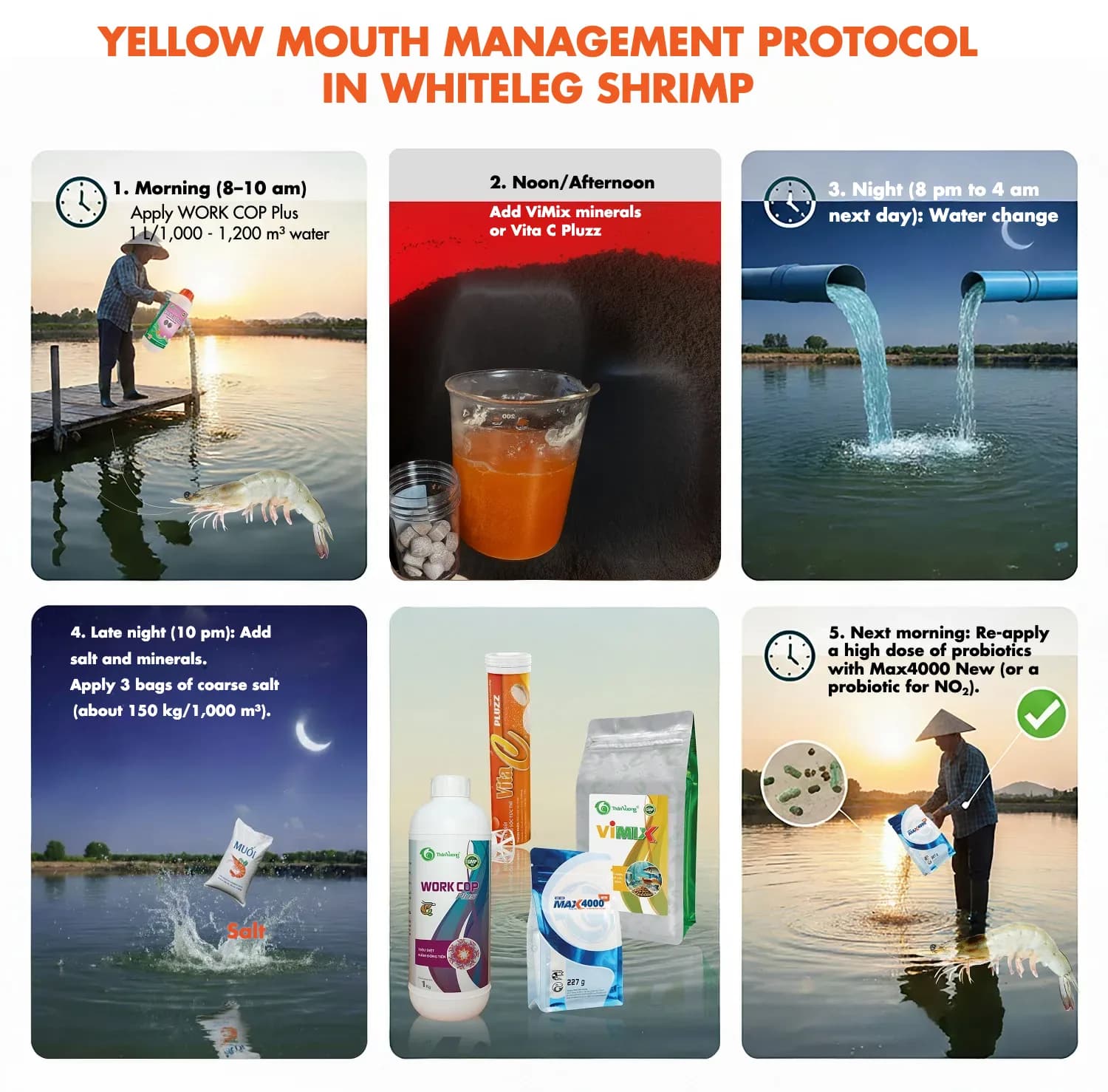
TREATMENT PROTOCOL FOR YELLOW MOUTH DISEASE IN WHITELEG SHRIMP
Protocol•Shrimp•January 29, 2026

TREATMENT PROTOCOL FOR YELLOW MOUTH DISEASE IN WHITELEG SHRIMP

Yellow mouth disease (often accompanied by yellow gills) is an indication that the pond environment is at low salinity (5ppt) or exp[...]

Ask Than Vuong

Aquaculture technical assistant

Hello there 👋

Describe your pond issue or pick a question below.