
New research finds conclusive evidence that EHP is not the sole pathogen associated with the occurrence of White Feces Syndrome in Pacific white shrimp
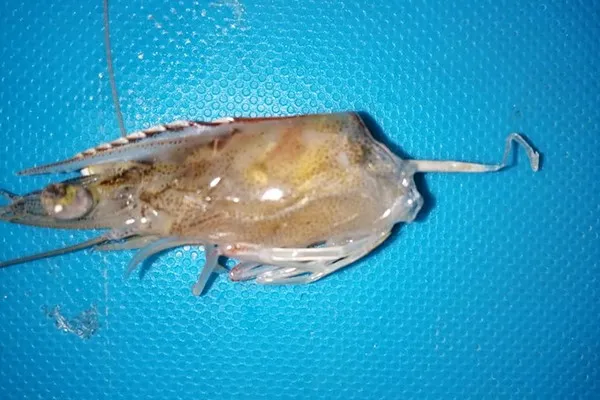
The cephalothorax of Pacific white shrimp (Litopenaeus vannamei) shows white discoloration in the digestive tract. The results of this study are the first to demonstrate the occurrence of WFS under laboratory conditions when shrimp are co-infected with EHP and V. parahaemolyticus
The shrimp gut microbiota is fundamental for nutrient absorption, immune enhancement, and shrimp homeostasis. Due to their voracious appetite, shrimp are often omnivorous, including cannibalism, making them highly susceptible to external pathogens. The presence of other bacteria can easily disrupt gut balance, leading to dysbiosis of the gut microbiota, affecting shrimp's absorption capacity and growth.
Although there is limited information on the specific immune mechanisms provided by the shrimp gut microbiota, there is evidence of its interaction with digestive activities directly affecting shrimp growth and disease severity. Similarly, emerging diseases have been found to target the shrimp hepatopancreas (digestive gland) and cause growth inhibition, size variation, anorexia, and sporadic mortality. Recently identified shrimp diseases exhibiting these signs are hepatopancreatic microsporidiosis (HPM) caused by Enterocytozoon hepatopenaei (EHP) and White Feces Syndrome (WFS), for which the causative agent has not yet been definitively identified.
HPM is a hepatopancreatic disease in penaeid shrimp caused by several microsporidian species, including EHP. This microsporidian has been found in several Asian countries such as China, Vietnam, Malaysia, Indonesia, Thailand, and India. Recently, EHP has also been found in South America. The main clinical sign of EHP is stunted shrimp growth, leading to size variation and an increased feed conversion ratio (FCR). During the disease progression, EHP-infected shrimp often exhibit soft shells and sporadic mortality. EHP has been detected in several cultured penaeid shrimp species, including P. monodon, L. vannamei, and P. stylirostris. EHP is an intracellular parasite that proliferates in the cytoplasm of affected tubule epithelial cells in the hepatopancreas.
WFS is characterized by white fecal strings floating along the water surface in commercial ponds. Shrimp in these ponds exhibit abnormal signs such as poor growth rate, size variation, digestive tract discoloration from yellow to white, rough shells, and sporadic mortality. Although a link between EHP microsporidiosis and WFS has long been suggested, no study has successfully established this syndrome under laboratory conditions. Even when severe EHP infections occur, WFS does not always manifest, and these observations suggest that WFS is the result of the interplay of multiple microorganisms and other as-yet-unidentified pathogenic agents.
Study Setup
Specific Pathogen-Free (SPF) Pacific white shrimp were obtained from the Oceanic Institute (Oahu, Hawaii). For at least two consecutive years, this population tested negative by PCR for all OIE-listed and non-OIE-listed pathogens, including EHP. Bioassays were conducted at the Aquaculture Pathology Laboratory of the University of Arizona. All sampling and shrimp infection procedures were performed according to guidelines established by the American Veterinary Medical Association.
Results and Discussion
The study results describe WFS infection in Pacific white shrimp with EHP (primary pathogen) and a specific V. parahaemolyticus species (secondary pathogen) isolated from the digestive tract of WFS-infected shrimp.
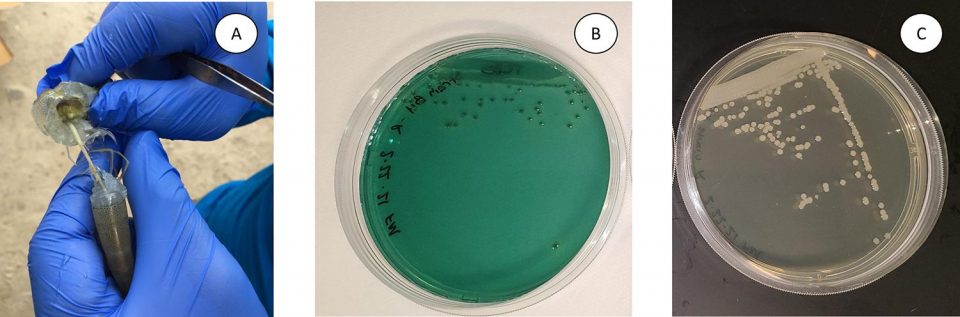
Figure 1. *Vibrio parahaemolyticus* isolation from the digestive gland of WFS-infected *Litopenaeus vannamei*
(a) Pacific white shrimp with white digestive tract, a clinical manifestation of WFS. A portion of the digestive tract was cultured on TCBS agar plates.
(b) *Vibrio parahaemolyticus* bacteria growing on TCBS plates.
Frequently asked questions on this topic
What does "WHITE FECES SYNDROME IN SHRIMP MAY BE CAUSED BY MULTIPLE PATHOGENS" cover?
The cephalothorax of Pacific whiteleg shrimp (Litopenaeus vannamei) showed white discoloration in the digestive tract. The results of this study for the first time demonstrated the occurrence of WFS under laboratory conditions when shrimp were co-infected with EHP and V. parahaemolyticus.
Which species does this article apply to?
Shrimp — Gut Health, Hepatopancreas, Immunity & Microbiome, White Feces
Products linked to this topic


Related technical articles

THE ROLE OF ELECTROLYTE SUPPLEMENTATION FOR SHRIMP
A recent report published in the journal Aquaculture International has provided further insight into the role of electrolyte supplem[...]

Global Shrimp Market 2025 Overview — Shrimp Insights Bulletin February 2026
Full-year 2025 global shrimp trade summary: Ecuador leads exports at 1.39M MT (+15%), EU imports surge 21%, US tariff shifts reshape[...]

CHANGES IN GUT MICROBIOTA DUE TO GLOBAL WARMING. REGULATING HOST HEALTH AND DISEASE STATUS IN POIKILOTHERMIC ANIMALS
Global warming alters the gut microbiota of Pacific whiteleg shrimp by restructuring enterotypes, increasing the risk of diseases su[...]