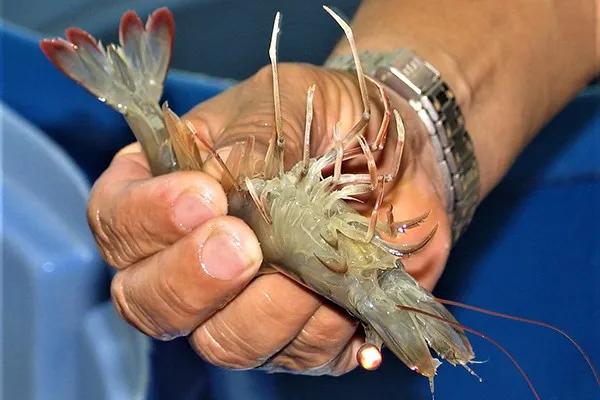
 In this study, the pharmacokinetics of eugenol in Pacific whiteleg shrimp were evaluated by immersing shrimp during a simulated transport period. The tested treatments were shown to be effective in minimizing the stress response of the animals after handling and transport, and the results indicated rapid absorption and elimination of eugenol in L. vannamei, with a recommended withdrawal period of 2 to 48 hours for treatments of 10–300 mg/L. Photo by Darryl Jory.
 Fish and crustaceans are often subjected to several stressors during farming, including capture, handling, high stocking density, reproduction, and transport, which affect physiological stress responses and mechanical abrasion. Therefore, various anesthetics are effective in reducing stress and the risk of injury during aquaculture procedures. Among these, eugenol – a liquid extracted from cloves, basil, nutmeg, cinnamon, and other plants – is the most commonly used anesthetic and has demonstrated its efficacy, safety, and potential as an anesthetic for crustaceans. However, the efficacy of eugenol is closely related to various factors, leading to variations in induction and recovery times. Therefore, the safety of eugenol should be evaluated when used for specific species.
Pacific whiteleg shrimp (Litopenaeus vannamei) is the most important farmed shrimp species globally. Large quantities of shrimp are frequently transported live worldwide, and they can suffer abrasion and stress during capture, handling, and crowding during transport, leading to high disease incidence and low post-transport survival rates. There have been no relevant studies on the anesthetic efficacy and safety of eugenol in Pacific whiteleg shrimp.
Study Setup
Approximately 1,500 whiteleg shrimp (12 ± 2g) were purchased from Shanghai (China) and divided into 6 fully aerated 800-liter tanks. Shrimp were acclimated for 21 days, and 6 shrimp were tested to confirm the absence of eugenol in the hemolymph, hepatopancreas, and muscle.
To investigate the anesthetic efficacy of high eugenol concentrations in shrimp by immersing shrimp in immersion tanks, eugenol dissolved in 95% ethanol (eugenol to ethanol ratio, 1:9) at 100, 150, 200, 300, and 400 mg/liter eugenol was evaluated at 20 ± 0.5 °C. 10 shrimp were immersed at each concentration.
Results and Discussion
Anesthetics have been widely used for aquaculture animals to prevent injury and stress, ensuring adequate quality and safety for the animals during handling and transport. Therefore, it is crucial to evaluate the efficacy of anesthetic doses in different aquatic species.
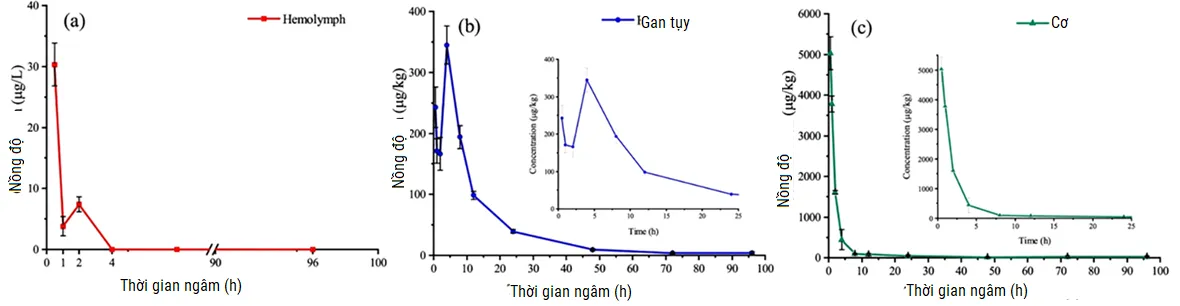 Time-concentration curve of eugenol in hemolymph (a), hepatopancreas (b), and muscle (c) after 5-minute immersion at 300 mg per liter in Pacific whiteleg shrimp.
Observations also showed that the elimination rate of eugenol in shrimp was faster than in some fish species. Similar results have been reported by various authors regarding the elimination of other drugs such as sulfamethoxazole, oxytetracycline, and trimethoprim in shrimp compared to some fish species, which can be attributed to the unique anatomy and physiology of shrimp, with its open circulatory system, leading to rapid drug excretion via hemolymph and hepatopancreas.
Perspective
Based on our results, eugenol concentrations of 10 and 300 mg per liter are effective and suitable for anesthesia and sedation in Pacific whiteleg shrimp weighing 12 ± 2g, and are effective in minimizing stress responses after shrimp handling and transport, improving biochemical responses, and reducing mortality rates.
The pharmacokinetics of eugenol showed rapid absorption and elimination in shrimp. To ensure safe consumption of whiteleg shrimp, shrimp treated with eugenol require a minimum of 2 days for the substance to be eliminated before being used as human food. Future studies will further evaluate potential effects and concentrations for other shrimp sizes.
Tang, Y. et al. 2022.