Working hours: Mon - Fri | 08:00 - 17:00HOTLINE: 0867 95 7568
Technical Article

2 New Disease-Resistant Whiteleg Shrimp Varieties

Praphan Leepayakul, Deputy Director-General of the Department of Fisheries, stated that the new strains – Petchada 1, a fast-growing genotype, and Sida 1, a disease-resistant genotype – will help safeguard the domestic shrimp farming industry. The Department has been working with the Agricultural Research Development Agency to revive the number of whiteleg shrimp farms, which has declined since 2012 due to outbreaks of Early Mortality Syndrome, also known as Acute Hepatopancreatic Necrosis Disease (EMS/AHPND).

Research InsightShrimpJanuary 5, 2024👁 242 views
Click to listen to an AI-narrated summary
Full Article
2 New Disease-Resistant Whiteleg Shrimp Varieties
Screenshot-29-1-600x400

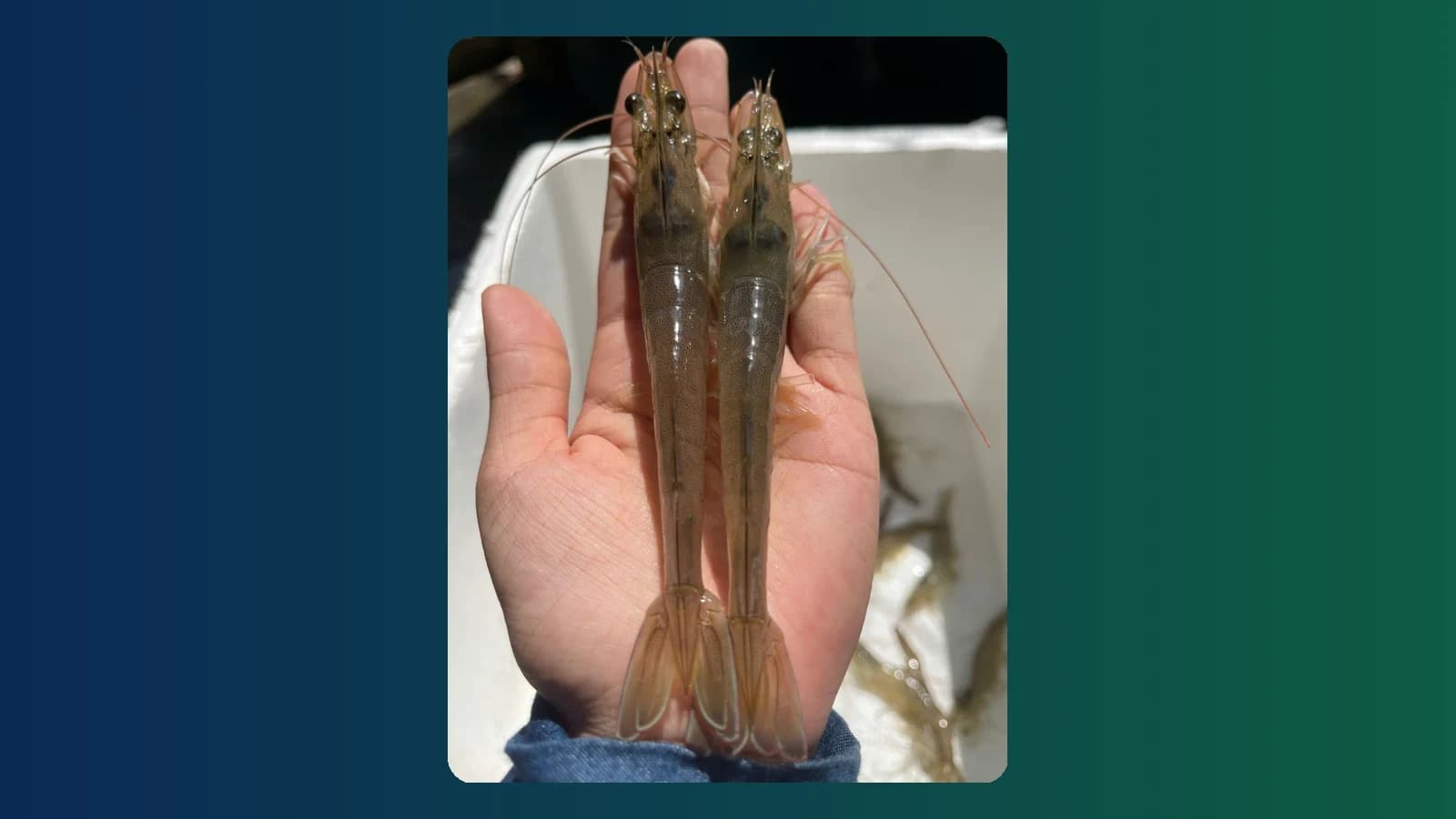
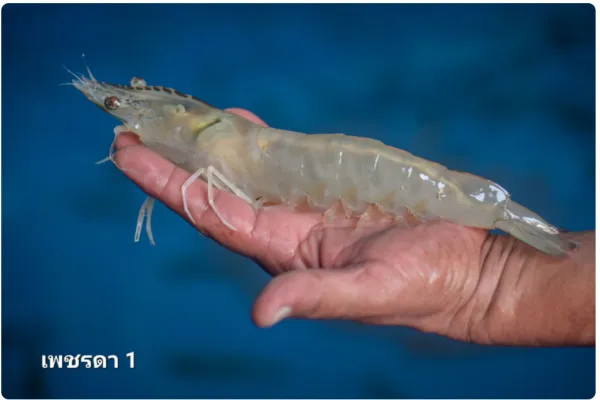
Petchada 1 strain was selected for its fast growth rate, and is one of two new whiteleg shrimp strains that researchers will help revive the aquaculture industry

According to the Thai Department of Fisheries, two new whiteleg shrimp strains have been successfully developed to strengthen Thailand's aquaculture industry, and this was reported in the Bangkok Post.

Praphan Leepayakul, Deputy Director-General of the Department of Fisheries, stated that the new strains – Petchada 1, a fast-growing genotype, and Sida 1, a disease-resistant genotype – will help safeguard the domestic shrimp farming industry. The Department has been working with the Agricultural Research Development Agency to revive the number of whiteleg shrimp farms, which has declined since 2012 due to outbreaks of Early Mortality Syndrome, also known as Acute Hepatopancreatic Necrosis Disease (EMS/AHPND).

Mr. Praphan said that the bacterial disease has caused significant damage to Thailand's aquaculture industry.

Whiteleg shrimp are in high demand in both domestic and international markets. It is a major export earner, generating an average income of 100 billion baht annually.

Mr. Praphan stated: "This development can help build a sustainable shrimp industry."

The new strains were developed by a team of marine biologists using selective breeding and molecular genetic markers.

To assess genetic diversity and study disease-free DNA, the research team selected various whiteleg shrimp strains from the United States, Guam, and Thailand.

The shrimp were fed in a biosecure system to study their growth potential and genetic diversity.

The study showed that Thailand's indigenous lines were best as a base population.

The Petchada 1 strain, developed at the Genetic Aquatic Animal Research and Development Center in Phetchaburi province, has high growth potential when compared to shrimp from other sources.

The Sida 1 strain, from the Genetic Aquatic Animal Research and Development Center in Nakhon Si Thammarat province, has the highest survival rate against EMS/AHPND compared to other strains.

Mr. Praphan stated: "It is still under research and development."

"The next step is commercial-scale testing. We hope that this will be a significant step towards a sustainable shrimp industry by reducing losses for shrimp farmers."

Source: Aquaasiapac

Translated by: Trần Thị Thúy Quyên
Quick Q&A

Frequently asked questions on this topic

What does "2 New Disease-Resistant Whiteleg Shrimp Varieties" cover?

Praphan Leepayakul, Deputy Director-General of the Department of Fisheries, stated that the new strains – Petchada 1, a fast-growing genotype, and Sida 1, a disease-resistant genotype – will help safeguard the domestic shrimp farming industry. The Department has been working with the Agricultural Research Development Agency to revive the number of whiteleg shrimp farms, which has declined since 2012 due to outbreaks of Early Mortality Syndrome, also known as Acute Hepatopancreatic Necrosis…

Which species does this article apply to?

Shrimp — EMS / AHPND, Hepatopancreas, Water & environment

Related Products

Products linked to this topic

PRO GUT
ShrimpThan Vuong Blue

PRO GUT

Premium digestive probiotics specifically for shrimp farming in lined ponds

MAX 4000
tom / ca / ocThan Vuong Blue

MAX 4000

Probiotic that helps reduce the toxic gases NH3, H2S and NO2

HERB GUARD
ShrimpThan Vuong Blue

HERB GUARD

Enhance liver function, improve color of hepatopancreas

More Reading

Related technical articles

CHANGES IN GUT MICROBIOTA DUE TO GLOBAL WARMING. REGULATING HOST HEALTH AND DISEASE STATUS IN POIKILOTHERMIC ANIMALS
Research Insight•Shrimp•February 28, 2026

CHANGES IN GUT MICROBIOTA DUE TO GLOBAL WARMING. REGULATING HOST HEALTH AND DISEASE STATUS IN POIKILOTHERMIC ANIMALS

Global warming alters the gut microbiota of Pacific whiteleg shrimp by restructuring enterotypes, increasing the risk of diseases su[...]

BLACK SPOTS (MELANIN) IN SHRIMP LIVER – GOOD OR BAD?
Protocol•Shrimp•January 8, 2026

BLACK SPOTS (MELANIN) IN SHRIMP LIVER – GOOD OR BAD?

In shrimp farming (especially whiteleg shrimp Litopenaeus vannamei), black spots or black streaks in the hepatopancreas often cause[...]

HEPATOPANCREAS PROTECTION – THE KEY TO IMPROVING SUCCESS RATES IN SHRIMP FARMING
Solution Track•Shrimp•January 6, 2026

HEPATOPANCREAS PROTECTION – THE KEY TO IMPROVING SUCCESS RATES IN SHRIMP FARMING

The hepatopancreas is the most important and multi-functional organ in shrimp, performing roles such as: digestion – nutrient absorp[...]

Ask Than Vuong

Aquaculture technical assistant

Hello there 👋

Describe your pond issue or pick a question below.