Working hours: Mon - Fri | 08:00 - 17:00HOTLINE: 0867 95 7568
Technical Article

WILL BLACK TIGER SHRIMP FARMING INCREASE?

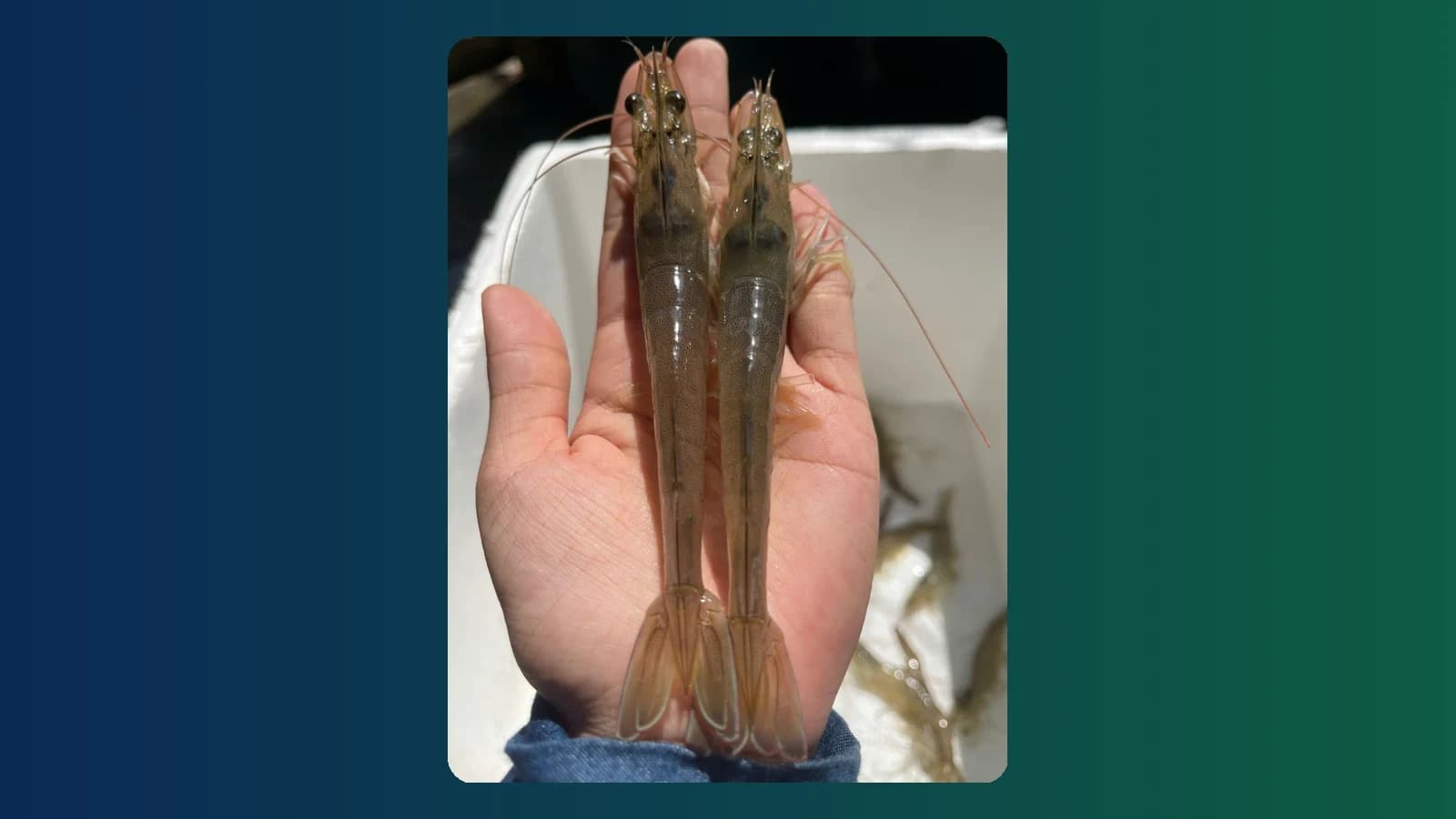
At the recently held Global Shrimp Forum (GSF), Mr. Robins Mcintosh stated that the increase in black tiger shrimp production in some countries, especially in China, was largely due to the availability of CPF's domesticated specific pathogen-free (SPF) broodstock. Regarding the resurgence of black tiger shrimp farming in India, the increase in production came from imported Moana broodstock. India now has a new broodstock multiplication center (BMC), which has been operational since September 2, 2022.

ProtocolShrimpSeptember 24, 2022👁 293 views
Click to listen to an AI-narrated summary
Full Article

Increased Demand and New Genetic Improvements

Demand has started to increase in India since BMC company introduced SPF black tiger shrimp broodstock in 2021. Post-larvae production has increased from 300 post-larvae in 2021 to 1 billion post-larvae by the current time in 2022. The breeding and selection work for black tiger shrimp began in 2014. The average daily growth (ADG) improved from 0.3 g/day in 2013 to 0.5 g/day in 2021. Additionally, the survival rate also improved from 81% to 93%.

There have been significant genetic advancements in Moana black tiger shrimp since they were first introduced to India in 2008–2009. From 2021 to the present, genetic improvements in Moana black tiger shrimp, now in their 19th generation, have achieved an average growth rate of 50g per individual after 120 days of farming through breeding.

It can be said that the resurgence in black tiger shrimp farming is not only due to new genetic improvements but also because black tiger shrimp are more tolerant to Enterocytozoon hepatopenaei (EHP) and White Feces Syndrome (WFS) compared to whiteleg shrimp. Furthermore, in India, they also show resistance to certain diseases and can withstand harsh environments, especially high temperatures. Other factors driving the black tiger shrimp farming industry's comeback include their higher economic value compared to whiteleg shrimp, with less investment.

McIntosh stated that the domestication of black tiger shrimp has gone through many generations, with an initial survival rate of 30% gradually increasing to 85% for post-larvae to date.

Growth of post-larvae by broodstock source (g)

Days of Culture (DOC)

Wild broodstock

Moana broodstock (2008 – 2009)

Moana broodstock (2021 – 2022)

150 – 30

1.5 – 3.0

1.5 – 3.0

6.0 – 7.0

50 – 60

6.0 – 8.0

6.0 – 8.0

12.0 – 15.0

80 – 90

13.0 – 16.0

13.0 – 16.0

22.0 – 25.0  

110 – 120

24.0 – 28.5

27.0 – 33.0

45.0 – 50.0

140 – 150

32.5 – 36.5

44.0 – 50.0

58.0 – 66.0


Table: Growth of black tiger shrimp from wild and Moana broodstock (Source: Dhaval Contractor)

Higher Yield

Notably, black tiger shrimp production increased by approximately 42% in two years from 2019–2021, rising from 382,000 tons to 546,000 tons. This increase in production has been observed in many countries: Vietnam, Thailand, China, India, Malaysia, Bangladesh, and Madagascar.

Market Reflections

The resurgence of black tiger shrimp production in farms will directly compete with large-sized whiteleg shrimp.

The value of large black tiger shrimp is suitable for the foodservice segment due to their excellent color and distinctive flavor.

And a point to note: “mass production goes against the balance for a niche market.”

According to AAP

Quick Q&A

Frequently asked questions on this topic

What does "WILL BLACK TIGER SHRIMP FARMING INCREASE?" cover?

At the recently held Global Shrimp Forum (GSF), Mr. Robins Mcintosh stated that the increase in black tiger shrimp production in some countries, especially in China, was largely due to the availability of CPF's domesticated specific pathogen-free (SPF) broodstock. Regarding the resurgence of black tiger shrimp farming in India, the increase in production came from imported Moana broodstock.

Which species does this article apply to?

Shrimp — White feces, Water & environment

Related Products

Products linked to this topic

PRO GUT
ShrimpThan Vuong Blue

PRO GUT

Premium digestive probiotics specifically for shrimp farming in lined ponds

MAX 4000
tom / ca / ocThan Vuong Blue

MAX 4000

Probiotic that helps reduce the toxic gases NH3, H2S and NO2

HERB GUARD
ShrimpThan Vuong Blue

HERB GUARD

Enhance liver function, improve color of hepatopancreas

More Reading

Related technical articles

CHANGES IN GUT MICROBIOTA DUE TO GLOBAL WARMING. REGULATING HOST HEALTH AND DISEASE STATUS IN POIKILOTHERMIC ANIMALS
Research Insight•Shrimp•February 28, 2026

CHANGES IN GUT MICROBIOTA DUE TO GLOBAL WARMING. REGULATING HOST HEALTH AND DISEASE STATUS IN POIKILOTHERMIC ANIMALS

Global warming alters the gut microbiota of Pacific whiteleg shrimp by restructuring enterotypes, increasing the risk of diseases su[...]

HEPATOPANCREAS PROTECTION – THE KEY TO IMPROVING SUCCESS RATES IN SHRIMP FARMING
Solution Track•Shrimp•January 6, 2026

HEPATOPANCREAS PROTECTION – THE KEY TO IMPROVING SUCCESS RATES IN SHRIMP FARMING

The hepatopancreas is the most important and multi-functional organ in shrimp, performing roles such as: digestion – nutrient absorp[...]

White Feces Management Protocol (EHP and Algae)
Protocol•Shrimp•September 23, 2025

White Feces Management Protocol (EHP and Algae)

Shrimp feeding poorly and showing early signs of white feces are a warning of crop failure. Than Vuong shares a white feces manageme[...]

Ask Than Vuong

Aquaculture technical assistant

Hello there 👋

Describe your pond issue or pick a question below.