pH, dissolved oxygen, and gut bacteria are indicators that help prevent disease
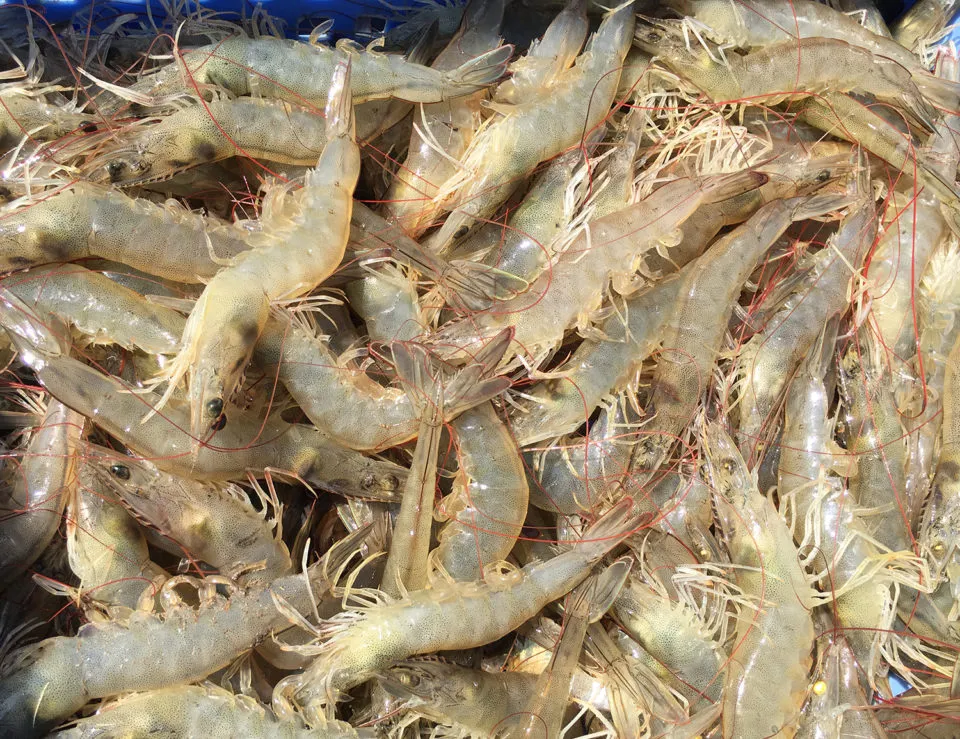
White Feces Disease (WFD) has been present in shrimp farming in Asia since 2009 and severely affects shrimp survival rates in ponds, characterized by the presence of floating white fecal strings in the culture pond. It typically occurs after about 50 days of culture, leading to slow shrimp growth and even mass mortality.
Changes in the hepatopancreas and intestine of affected shrimp related to white feces disease indicate a pathological process in the shrimp gut. Enterocytozoon hepatopenaei (EHP) has been reported as a potential causative agent of white feces disease. Deteriorated water quality with oxygen concentrations below 3 mg/liter and alkalinity below 80 ppm has been reported to be associated with causing the highest mortality rates during white feces disease outbreaks. However, the origin of white feces disease in shrimp ponds remains undetermined.
We believe that more extensive information is needed on the dynamics of microbial communities, including pathogenic bacteria in pond water and those associated with shrimp in diseased and non-diseased stages, to understand and prevent white feces disease and treat affected shrimp. We further propose that sudden changes in water quality will first affect the microbial community in the pond water and then the shrimp's physiology and their gut microbiota.
Study Setup
The evaluated shrimp ponds were located in Rembang Regency, Central Java, Indonesia. Water samples were collected from one healthy Pacific white shrimp pond (P1 control) and three ponds (P2, P3, and P4) that experienced white feces disease around 50-70 days into the culture period. All ponds were lined with high-density polyethylene (HDPE) plastic and disinfected with Chlorine 2 weeks before shrimp stocking. The initial stocking density was 40 (P2) and 90 specific pathogen-free (SPF) post-larvae (PL) 15 days old (P1, P3, and P4), with all post-larvae originating from the same hatchery.
For microbial community analysis, 10 white fecal strings were collected from the feeding trays of each pond with infected shrimp. 10 healthy shrimp from P1 were collected using feeding trays and immediately placed on ice. These were then dissected in the laboratory to collect their entire guts. All samples were immediately preserved and stored at -20°C until DNA extraction and other analyses.
Results and Discussion
To better understand white feces disease outbreaks in Pacific white shrimp farming, we measured water quality and analyzed the dynamics of microbial communities in shrimp ponds. Based on visual estimation of the number of white fecal strings in the pond, we divided white feces disease into two stages: disease onset (initial symptoms), represented by P3 and P4, with a lower number of white FS; and early outbreak, represented by P2, with a higher number of white fecal strings. Since microbial communities in shrimp feces and in the guts of healthy Pacific white shrimp have been shown to be comparable, we dissected the guts of healthy shrimp and analyzed them along with fecal strings collected from diseased shrimp.
Results showed that white feces disease occurred when pH ranged from 7.71 - 7.84, and bacterial species Alteromonas, Pseudoalteromonas, and Vibrio dominated the microbial community in the water. Disease severity correlated with an increase in the proportion of Alteromonas, Photobacterium, Pseudoalteromonas, and Vibrio in shrimp feces. These opportunistic pathogenic bacteria accounted for up to 60% and 80% respectively in samples from the early and advanced stages of the outbreak, and showed a high degree of co-occurrence.
Microbial activities – including organic matter decomposition, respiration, and nitrification, accumulating dissolved CO2 – will reduce pH and alkalinity, as observed in ponds with diseased shrimp. Conversely, external intervention by regularly adding lime and reactive silicate can buffer pH and alkalinity levels, which we observed in ponds with healthy shrimp.
The study also indicated that a sudden decrease in pH (< 8) and dissolved oxygen (< 6 mg/liter), and an increase in inorganic substances as observed in P2-P4, can affect shrimp and the microbial community in shrimp pond water. This causes stress in shrimp, which can then lead to changes in the gut microbial community, resulting in opportunistic pathogenic bacteria – such as Alteromonas, Marinomonas, Photobacterium, Pseudoalteromonas, and Vibrio – becoming dominant in the microbial community of white fecal strings.
Changes in the gut microbial community can be closely linked to the severity of shrimp disease. This hypothesis is supported by previous studies, which reported that changes in shrimp gut microbiota occur in parallel with changes in disease severity, reflecting a shift from a healthy to a diseased state.
Photobacterium, Pseudoalteromonas, and Vibrio correspond to species previously observed to be associated with white feces disease. However, some genera such as Aeromonas, Candidatus Bacilloplasma, Phascolarctobacterium, and Staphylococcus, reported in previous studies, were not present in our samples. Nevertheless, it is important to consider that geographical location, farm management, and different approaches can influence the detection of bacterial taxa.
Based on the analysis results, we propose that low pH alters the growth rate of heterotrophic bacteria, leading to the dominance of opportunistic, potentially pathogenic bacteria such as Alteromonas, Pseudoalteromonas, and Vibrio in pond water.
The decomposition of feces will facilitate bacterial dispersal, as well as enrich protein and inorganic nutrients. The increase in opportunistic pathogenic bacteria correlates with disease severity and the number of infected shrimp. This is reflected in significantly higher concentrations of certain genes in pond water samples from the early outbreak stage compared to ponds with initial symptoms.
Furthermore, if a larger number of pathogenic bacteria are discharged into the pond water and combine with organic matter, it will increase the rate of disease spread to shrimp. Therefore, in this case, bacteria in fecal strings not only contribute to the abundance of bacteria and the composition of the culture water but also cause adverse consequences for shrimp health.
Considering the differences in gut microbial communities of healthy shrimp and non-diseased pond water compared to white feces disease samples, we emphasize that dysbiosis (microbial imbalance or deviation within the body) in the gut microbiota contributes to the origin of the studied white feces disease outbreak.
Immediately readjusting water quality parameters – specifically adjusting pH > 8 – will cease the outbreak, followed by recovery and no shrimp mortality. This implies the resilience of microbial communities in shrimp pond water after short disturbances, as can also be observed in other environments.
Our findings on the application of probiotics to treat white feces disease in shrimp indicate that probiotic bacteria such as Lactobacillus were not present in pond water, gut microbiota, and fecal string bacteria, suggesting that such application was not effective. Lactobacillus was no longer detected after being diluted in shrimp pond water. Instead of broadcasting probiotics into the pond water, we suggest adding them to feed pellets for shrimp to consume. In this way, the colonization of probiotic bacteria in the shrimp gut can occur more effectively.
Perspective
The study results show that environmental stress factors – particularly a decrease in pH and dissolved oxygen – caused significant changes in the microbial community in pond water and affected shrimp physiology, leading to changes in the gut microbial community and subsequently the occurrence of white feces disease. Furthermore, we observed several opportunistic bacteria – such as Arcobacter, Alteromonas, Marinomonas, Photobacterium, and Pseudoalteromonas – that may contribute to causing white feces disease.
To prevent losses, shrimp farming management should focus on maintaining water quality (pH, dissolved oxygen, turbidity, nutrients, and suspended solids), as well as promoting a stable composition of the gut microbial community, where beneficial bacteria – even at low proportions – can inhibit the pathogenicity of Vibrio.
Conclusion
Pond water pH is a reliable indicator of the risk of white feces disease outbreaks; dissolved oxygen and the composition of water and gut bacteria can also serve as indicators for better white feces disease prevention.
Source: https://www.aquaculturealliance.org/
Translated by: Trần Thị Thúy Quyên