Working hours: Mon - Fri | 08:00 - 17:00HOTLINE: 0867 95 7568
Technical Article

CHANGES IN GUT MICROBIOTA DUE TO GLOBAL WARMING. REGULATING HOST HEALTH AND DISEASE STATUS IN POIKILOTHERMIC ANIMALS

Global warming alters the gut microbiota of Pacific whiteleg shrimp by restructuring enterotypes, increasing the risk of diseases such as White Feces Syndrome (WFS) and hepatopancreatic necrosis syndrome. This study identifies temperature as the primary driver of microbial structure and proposes "enterotypes" as a key ecological indicator for predicting the health of poikilothermic animals in the context of climate change.

Research InsightShrimpFebruary 28, 2026👁 649 views
Click to listen to an AI-narrated summary
AI Summary

Generate an English summary for CHANGES IN GUT MICROBIOTA DUE TO GLOBAL WARMING. REGULATING HOST HEALTH AND DISEASE STATUS IN POIKILOTHERMIC ANIMALS

AI-generated summary based on the full article content below.

Editorial Framing

Why this article matters

    Full Article
    CHANGES IN GUT MICROBIOTA DUE TO GLOBAL WARMING. REGULATING HOST HEALTH AND DISEASE STATUS IN POIKILOTHERMIC ANIMALS

    Summary of main content: Global warming alters the gut microbiota of Pacific whiteleg shrimp by restructuring enterotypes, increasing the risk of diseases such as white feces syndrome (WFS) and hepatopancreatic necrosis syndrome. This study identifies temperature as the primary driver of microbial structure and proposes "enterotypes" as a key ecological indicator to predict the health of poikilothermic animals in the context of climate change.

    1. Introduction

    With modern industrialization and urbanization, global warming has become a serious threat to ecosystems, especially affecting poikilothermic animals (species whose body temperature depends on the environment) such as fish and shrimp. Unlike mammals, poikilothermic animals are extremely sensitive to temperature changes, which affects their distribution, behavior, physiology, metabolism, and immune function.

    One of the most affected systems is the intestinal microbiota (IM). IM is a sensitive indicator of temperature changes and plays a crucial role in the host's metabolism and immune processes.

    To better understand the changes in IM, microbial communities are often classified into distinct types called "enterotypes" – groups of microbial components dominated by different key bacterial genera.

    2. Study Subject: Pacific Whiteleg Shrimp (Litopenaeus vannamei)

    Pacific whiteleg shrimp is a major aquaculture species, with production exceeding 5.6 million tons worldwide in 2022. However, it faces major disease threats such as:

    Acute Hepatopancreatic Necrosis Disease (AHPND).

    Hepatopancreatic Necrosis Syndrome (HPNS).

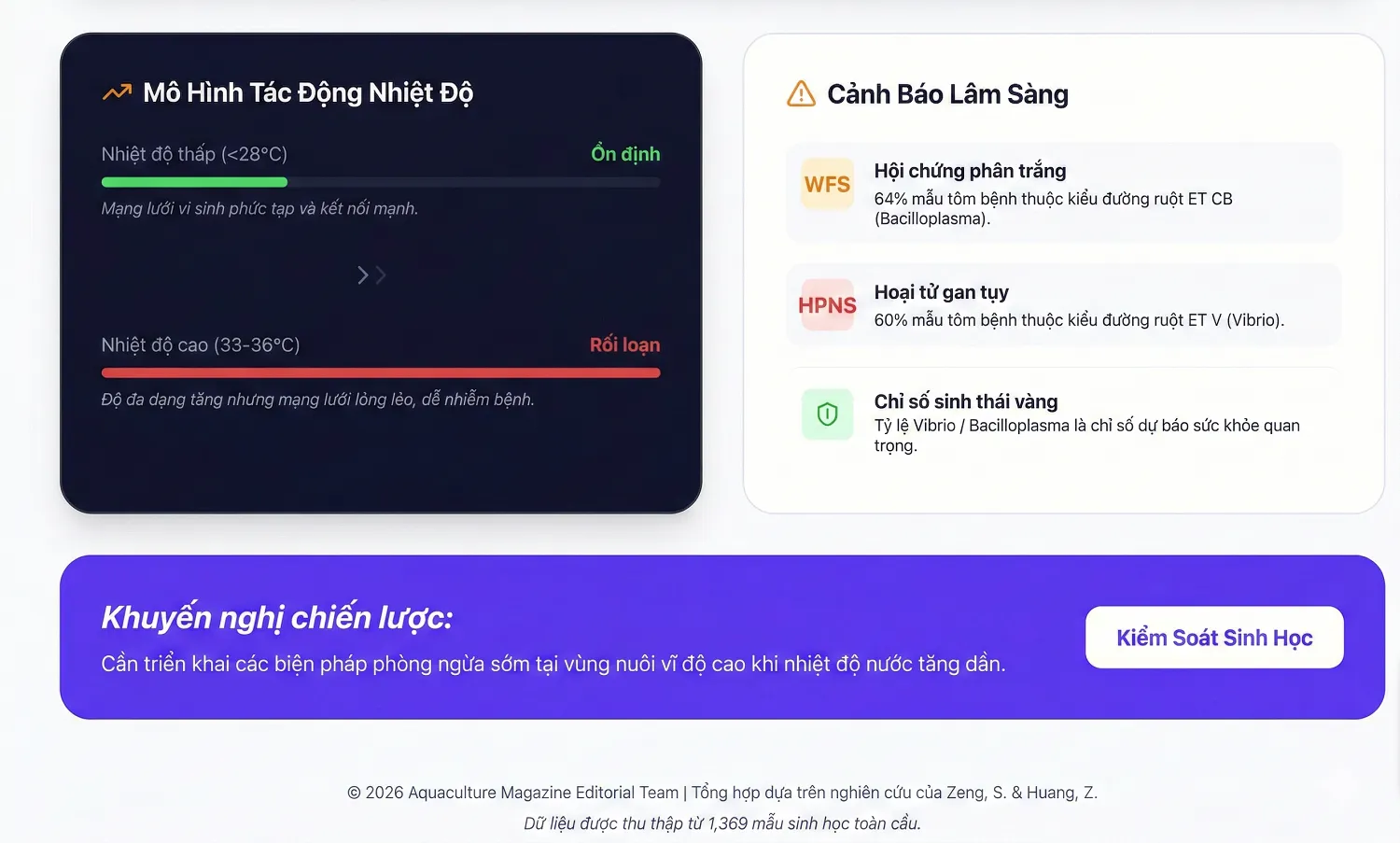
    White Feces Syndrome (WFS). All are associated with gut microbiota dysbiosis. Notably, WFS outbreaks significantly increase at high temperatures (33 - 34°C).

    3. Methods and Results

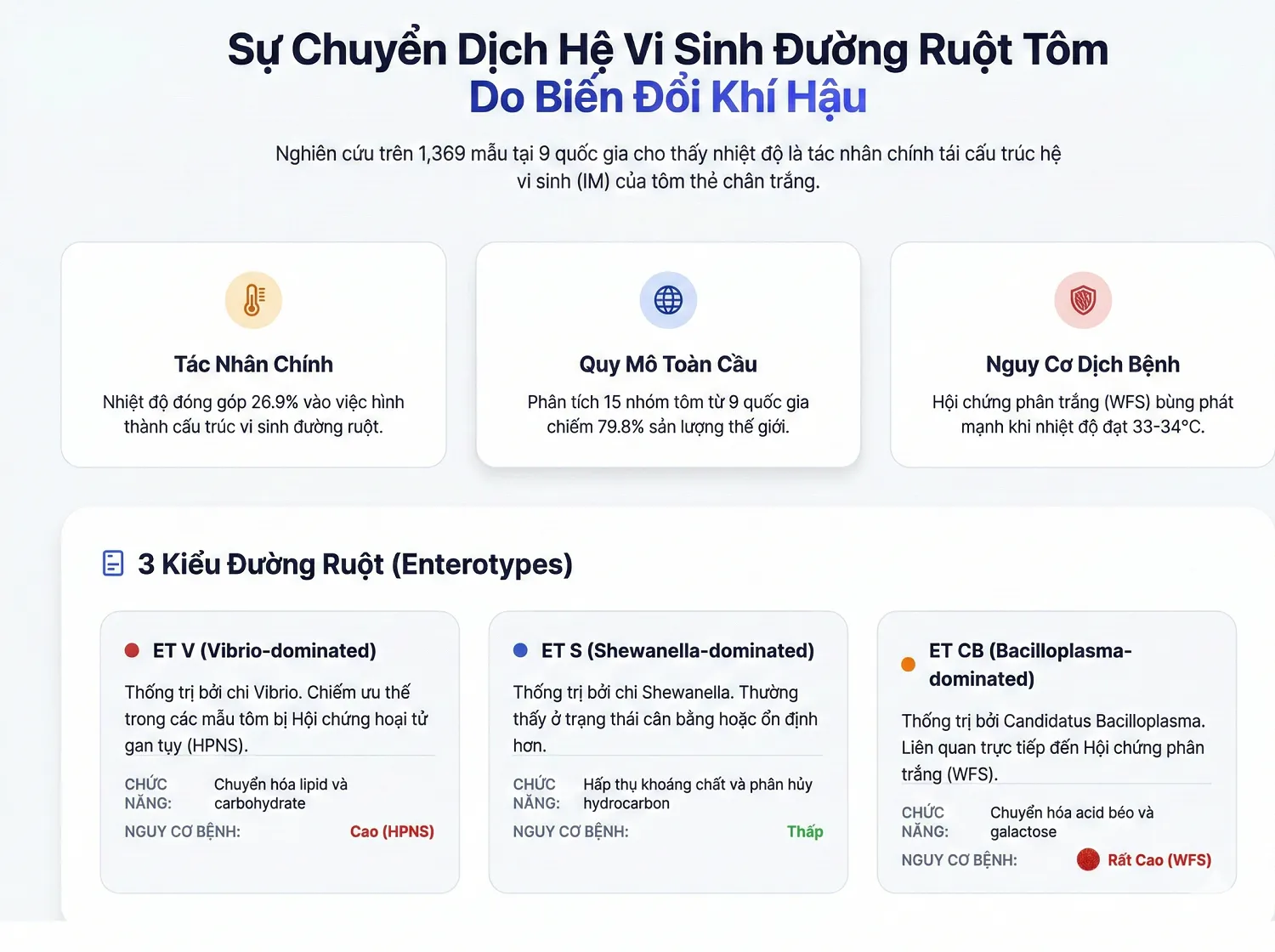
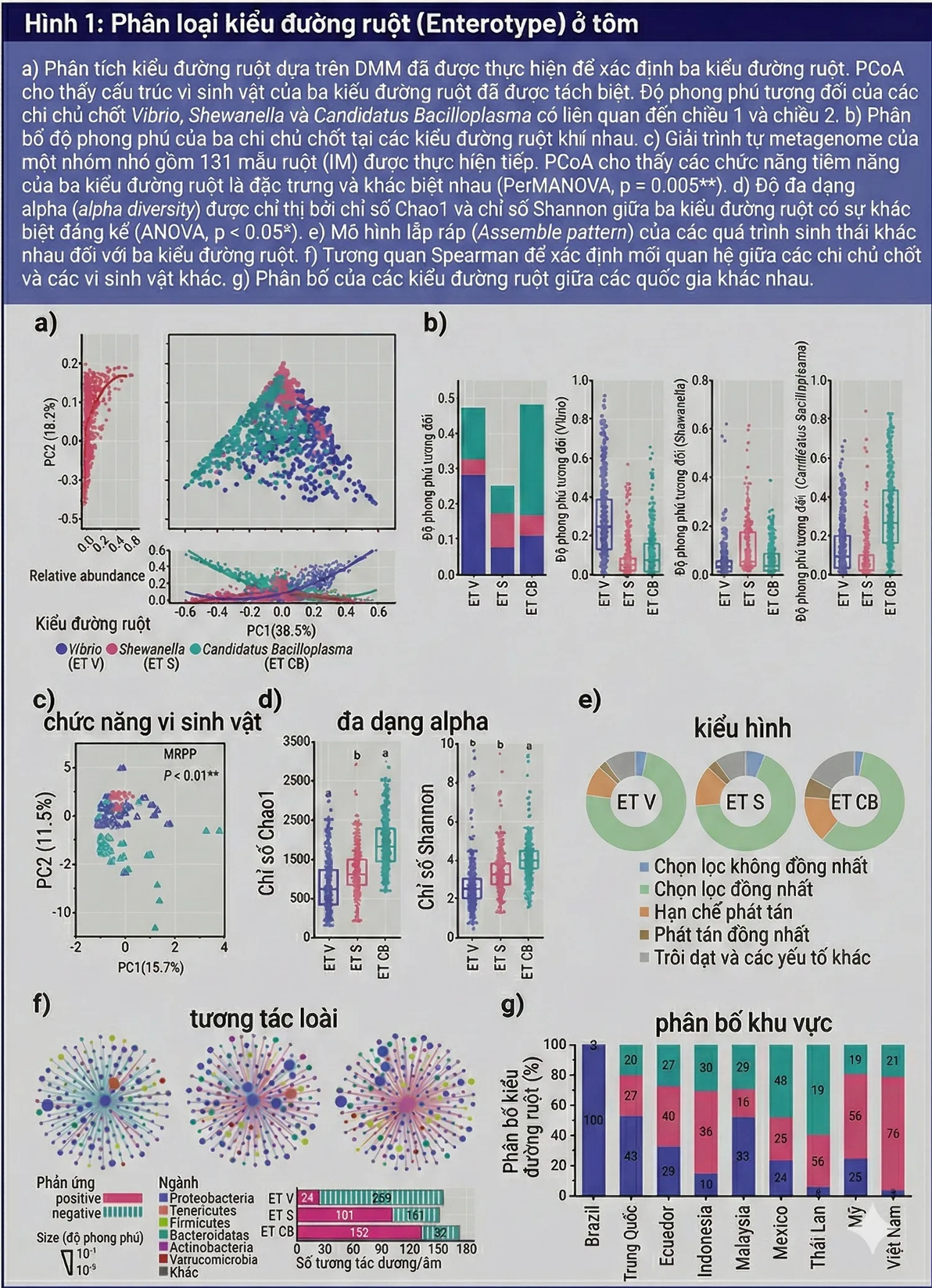
    The study analyzed 1,369 IM samples from 15 shrimp cohorts in 9 major shrimp-producing countries (accounting for approximately 79.8% of global production).

    Classification of 3 main Enterotypes:

    ET V: Dominated by the genus Vibrio (predominant in samples affected by hepatopancreatic necrosis syndrome - HPNS).

    ET S: Dominated by the genus Shewanella.

    ET CB: Dominated by the genus Candidatus Bacilloplasma (predominant in samples affected by white feces syndrome - WFS).
    Gemini_Generated_Image_8feyqf8feyqf8fey

     Figure_1

    Key findings:

    Temperature is the most critical factor: Analysis showed that temperature contributed 26.9% to the formation of gut microbial structure, surpassing geographical factors.

    Temperature-dependent changes: As temperature increased, Alpha diversity (Chao1 and Shannon indices) increased, but microbial interaction networks became less stable and less connected.

    Controlled experiment: At 36°C, shrimp survival rates decreased and the microbiota shifted significantly towards the ET CB (Candidatus Bacilloplasma) enterotype.

    Gene analysis: Transcriptomic analysis revealed 2,276 differentially expressed genes (DEGs) in response to temperature, including antimicrobial peptides (PENs, ALFs) associated with microbial changes.
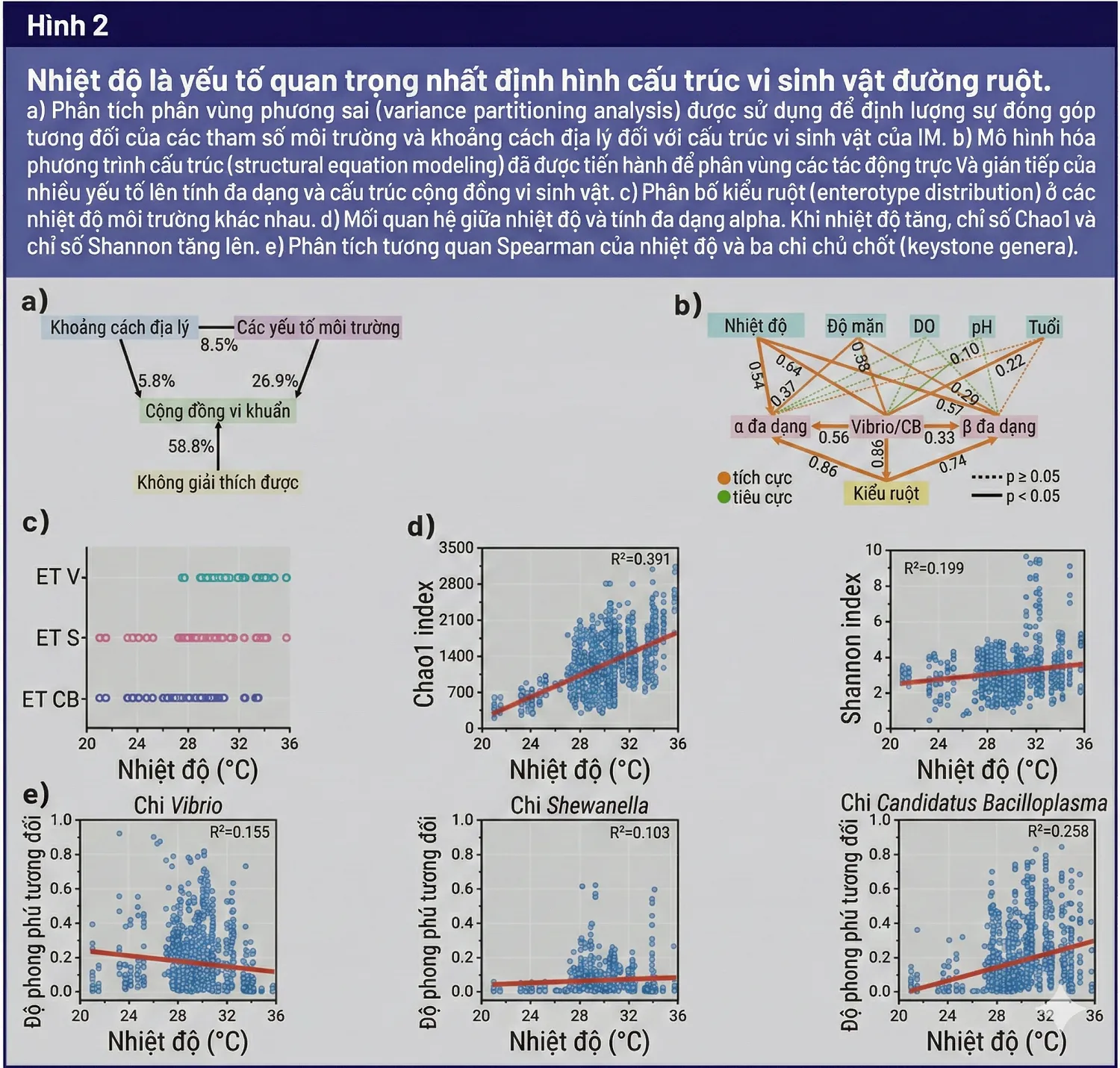
    Figure_2

    4. Discussion and Conclusion

    The study emphasizes that increasing temperature alters the gut microbial composition of shrimp by restructuring enterotypes, thereby increasing the likelihood of disease outbreaks such as WFS and EMS (Early Mortality Syndrome).

    Vibrio / Candidatus Bacilloplasma ratio: Considered a crucial ecological indicator closely linked to enterotypes and health status.

    Regional impact: Warmer regions like Thailand and China showed greater diversity in enterotype distribution, whereas regions with narrower temperature ranges like Brazil exhibited only one enterotype (ET V).

    Resilience: High temperatures reduced the resilience of the microbial system, creating conditions for opportunistic pathogens to thrive.
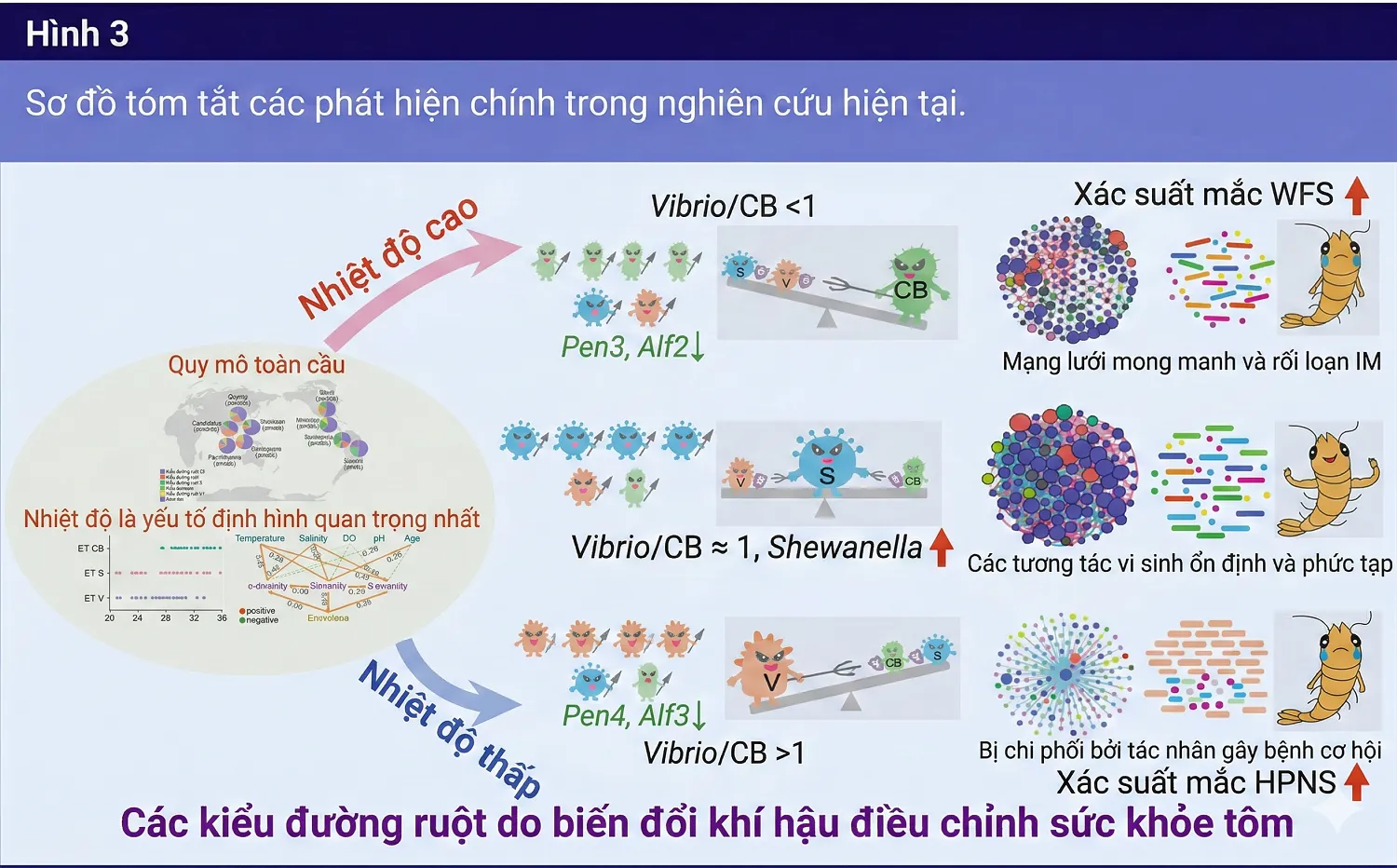
    Figure_3

    Call to action: With white feces syndrome (WFS) spreading to higher latitude regions in recent years, the study calls for immediate preventive strategies in aquaculture to mitigate risks caused by climate change. Shrimp enterotypes can serve as valuable ecological indicators to monitor the impact of global warming on poikilothermic animals.
    Gemini_Generated_Image_lgrtolgrtolgrtol

    Summary source from the article by the author group: Zeng, S. and Huang, Z. (Sun Yat-sen University, China) and colleagues from Thailand and the network of aquaculture centers in Asia-Pacific.

    Quick Q&A

    Frequently asked questions on this topic

    What does "CHANGES IN GUT MICROBIOTA DUE TO GLOBAL WARMING. REGULATING HOST HEALTH AND DISEASE STATUS IN POIKILOTHERMIC ANIMALS" cover?

    Global warming alters the gut microbiota of Pacific whiteleg shrimp by restructuring enterotypes, increasing the risk of diseases such as White Feces Syndrome (WFS) and hepatopancreatic necrosis syndrome. This study identifies temperature as the primary driver of microbial structure and proposes "enterotypes" as a key ecological indicator for predicting the health of poikilothermic animals in the context of climate change.

    2. Study Subject: Pacific Whiteleg Shrimp (Litopenaeus vannamei) — what are the details?

    Summary of main content: Global warming alters the gut microbiota of Pacific whiteleg shrimp by restructuring enterotypes, increasing the risk of diseases such as white feces syndrome (WFS) and hepatopancreatic necrosis syndrome. This study identifies temperature as the primary driver of microbial structure and proposes "enterotypes" as a key ecological indicator to predict the health of poikilothermic animals in the context of climate change. 1.

    3. Methods and Results — what are the details?

    Pacific whiteleg shrimp is a major aquaculture species, with production exceeding 5.6 million tons worldwide in 2022. However, it faces major disease threats such as: Acute Hepatopancreatic Necrosis Disease (AHPND). Hepatopancreatic Necrosis Syndrome (HPNS). White Feces Syndrome (WFS). All are associated with gut microbiota dysbiosis. Notably, WFS outbreaks significantly increase at high temperatures (33 - 34°C).

    Which species does this article apply to?

    Shrimp — Gut Health, EMS / AHPND, Hepatopancreas, Immunity & Microbiome

    Related Products

    Products linked to this topic

    Product reference for PRO GUT
    shrimpThần Vương Blue

    PRO GUT

    Premium digestive probiotics specifically for shrimp farming in lined ponds

    Product reference for AQUAMOS
    shrimpThần Vương Blue

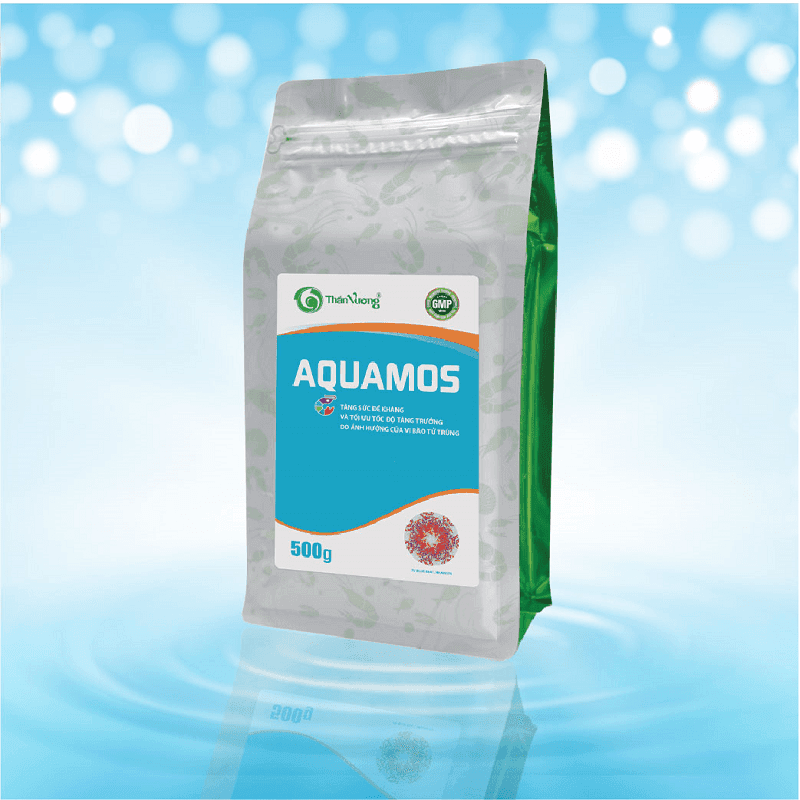
    AQUAMOS

    Enhance resistance and optimize growth rate

    Product reference for LALPACK PROBIO
    allNguyên liệu

    LALPACK PROBIO

    Gut protection for better performance — a synergistic probiotic blend for shrimp and […]

    More Reading

    Related technical articles

    VAI TRÒ CỦA BỔ SUNG NƯỚC ĐIỆN GIẢI CHO TÔM
    Protocol•Shrimp•November 22, 2018

    THE ROLE OF ELECTROLYTE SUPPLEMENTATION FOR SHRIMP

    A recent report published in the journal Aquaculture International has provided further insight into the role of electrolyte supplem[...]

    Toàn cảnh thị trường tôm thế giới 2025 — Dữ liệu từ Shrimp Insights (Tháng 2/2026)
    Technical article•Shrimp•April 9, 2026

    Global Shrimp Market 2025 Overview — Shrimp Insights Bulletin February 2026

    Full-year 2025 global shrimp trade summary: Ecuador leads exports at 1.39M MT (+15%), EU imports surge 21%, US tariff shifts reshape[...]

    CÁ HỒI TRONG ĐIỀU KIỆN STRESS: CỦNG CỐ TUYẾN PHÒNG THỦ ĐẦU TIÊN
    Solution Track•Shrimp•February 27, 2026

    SALMON UNDER STRESS CONDITIONS: REINFORCING THE FIRST LINE OF DEFENSE

    As the aquaculture industry increasingly develops strategies for animal health protection, functional nutrition has become a key fac[...]

    Ask Than Vuong

    Aquaculture technical assistant

    Hello there 👋

    Describe your pond issue or pick a question below.