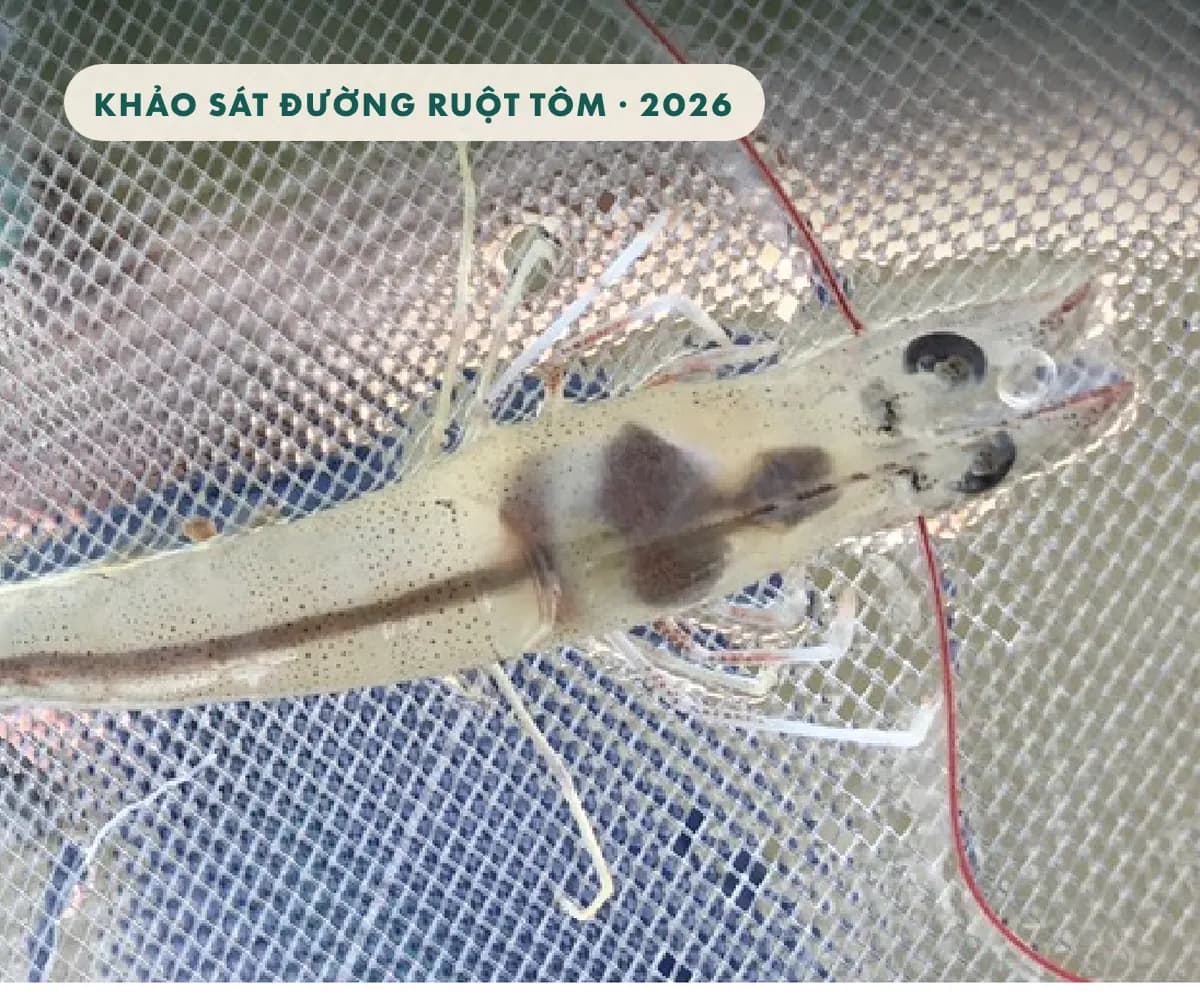
Finding Vibrio in a pond or in shrimp gut is normal. Brackish and marine water always carry this bacterial group. A positive test does not mean the shrimp are necessarily diseased.
Disease breaks out when the balance tips: pathogens become more numerous and more virulent than the shrimp's capacity to cope. Good management keeps that balance tilted toward the shrimp — rather than chasing the near-impossible goal of “eliminating Vibrio” in saline water.
Four things to remember first
- There is no universal “safe” Vibrio threshold for every pond.
- TCBS plates count colonies; they do not tell you whether a strain is virulent.
- A positive PCR means “detected”, not yet “diseased”.
- Trends across repeated measurements plus shrimp behaviour are more reliable than a single figure.
Mental model: the disease-risk balance
Load × Virulence × Stress × Exposure
divided by
Immunity × Gut barrier × Microbial competition × Hepatopancreas recovery
This is not a calculation. Its value is forcing the manager to look at the whole system instead of a single TCBS plate or PCR result.
Immune-support products and probiotics do not replace oxygen, feed management, waste handling and biosecurity. They make the balance easier to tilt toward the shrimp — once the fundamentals are handled.
Five things to keep separate
- Species — taxonomic name. Knowing the species is not enough to know it is harmful.
- Strain — lines within one species can differ enormously in virulence.
- Load — bacterial counts, or measured target DNA.
- Virulence — ability to attach, invade, secrete enzymes/toxins and cause damage.
- Clinical disease — the end result of pathogen–host–environment interaction.
On AHPND: AHPND is mainly linked to strains carrying the PirA/PirB toxin genes. Not every V. parahaemolyticus causes AHPND — and other Vibrio species can acquire the same virulence factor.
How Vibrio persists in a pond
- Organic matter accumulates: excess feed, faeces, dead algae.
- Bacteria colonise liners, pipes and sludge → biofilm forms.
- Biofilm sheds back into the water column.
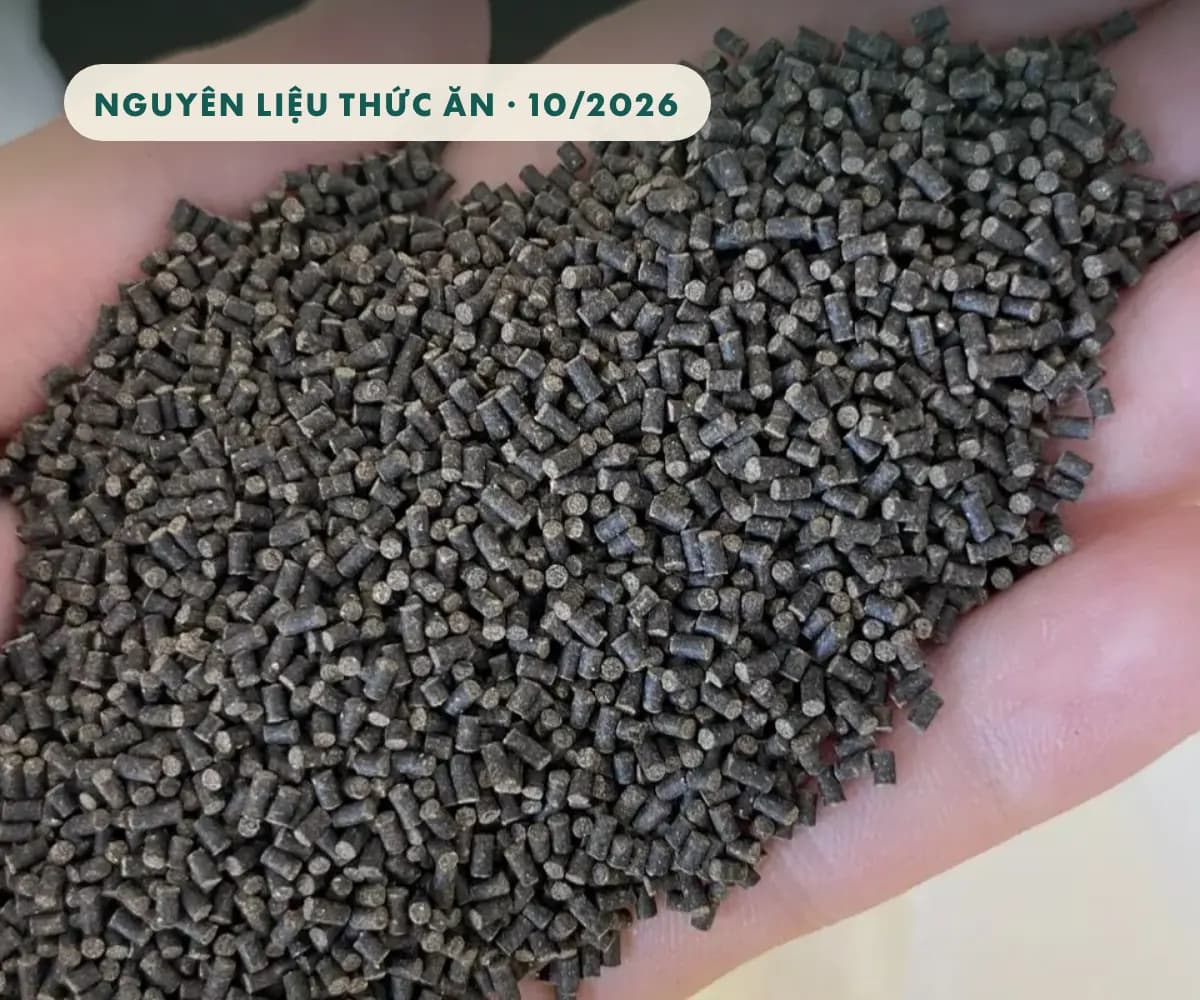
- Shrimp ingest water, detritus and carrier organisms.
- Vibrio increases in the gut where nutrients and free space allow.
- Shrimp shed bacteria back; diseased carcasses spike the load.
→ A low water count does not rule out reservoirs in sludge, biofilm, or the shrimp population itself.
What “resistance” actually consists of
Shrimp rely mainly on innate immunity. In pond management, resistance should be understood more broadly than a blood index: the overall capacity to block attachment/invasion, recognise and clear agents, tolerate stress, repair tissue and return to balance. Five layers work together:
- Gut barrier — epithelium, peritrophic membrane, mucus, motility and faecal transit. A damaged gut offers more attachment sites and more food for opportunists.
- Cellular immunity (hemocytes) — phagocytosis, nodulation, encapsulation, coagulation. Quality of response and available energy matter more than raw counts.
- Humoral immunity — phenoloxidase and melanisation, lectins, antimicrobial peptides, lysozyme and regulatory signalling.
- Hepatopancreas — the recovery hub — enzyme secretion, absorption, lipid storage, metabolism and detoxification. A weak hepatopancreas leaves too little energy for immunity and moulting.
- Nutritional and physiological base — digestible protein, amino acids, phospholipids, sterols, vitamins, trace minerals, antioxidants.
Principle: stronger immunity is not automatically better. Excessive or prolonged responses burn energy, increase tissue damage and slow growth. The goal is a proportionate response and fast recovery.
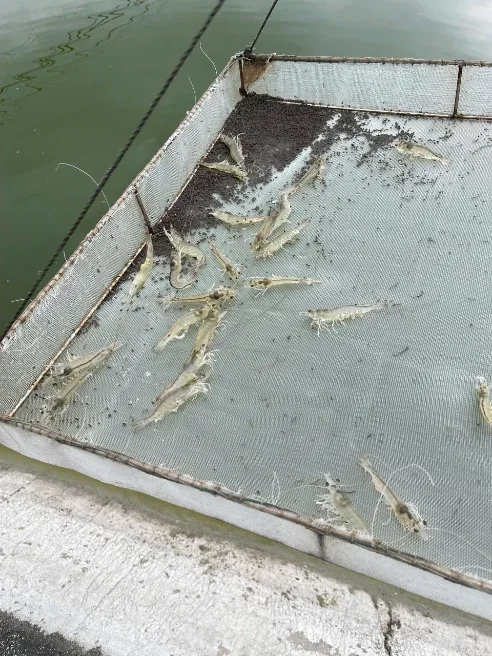
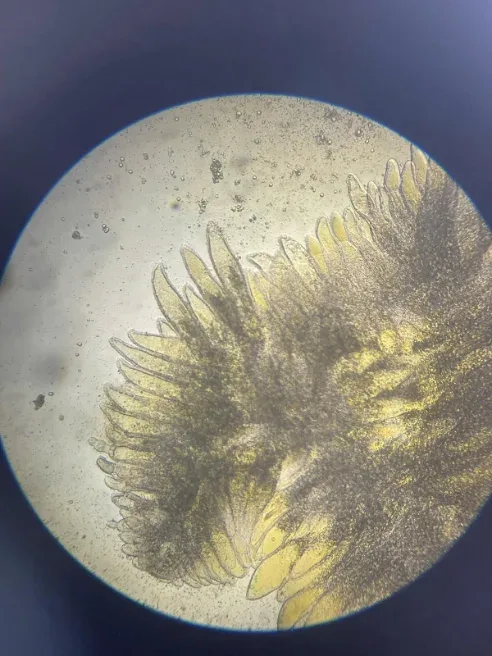
Gut microbiome and balance
The shrimp gut is a microbial community — not merely a list of bacteria, but populations, genes and functions. It aids digestion, produces beneficial compounds, occupies attachment sites and communicates with the immune system. There is no single “healthy gut formula” that fits every pond.
Covered in the full 18-page monograph
- Colonisation resistance; dysbiosis and the common downward spiral
- White faeces and “spring gut”
- Reading laboratory results correctly: CFU, TCBS selective media, common misinterpretations and sources of error
- PCR & qPCR — detecting correctly and interpreting correctly; a combined interpretation framework
- Factors pushing a pond toward disease: organics and excess feed, dissolved oxygen, toxic gases, density and biosecurity, EHP and underlying disease
- Monitoring programme: daily, scheduled, and risk-triggered
- Risk matrix and Green–Amber–Orange SOPs; dedicated SOPs after heavy rain and after disinfection
- Five real-world cases for practising data interpretation
- Where LALPACK IMMUNE fits in an overall management programme; dosing and SOP integration
- Stage-by-stage farm recommendations and a field checklist
- Selected references with notes on evidence quality
📘 Read the full monograph (PDF, 18 pages)
Prepared for training and technical management. In case of abnormal mortality or suspected infectious disease, consult a laboratory and a qualified aquatic veterinarian.